


Who Are the Top Mobile Excavator Manufacturers in China?

China’s mobile excavator market brings together established construction-equipment groups and specialist manufacturers. Their machines may look similar in a product photo, yet differ sharply on a muddy site, a narrow city street, or a roadwork project with frequent stops. For buyers, the useful questions are practical: How quickly can the excavator travel between work areas? Does its hydraulic system respond smoothly under load? Are parts and trained service technicians available nearby?

This guide examines leading Chinese manufacturers through those details, rather than relying on rankings alone. It considers product range, operating performance, manufacturing experience, service support, and the kinds of jobs each brand is suited to. A compact machine may reach a restricted urban site, while a larger wheeled excavator may better handle repeated movement between road projects. Neither is automatically the right choice. Tire condition, attachment compatibility, operator comfort, and maintenance access matter, too.

A note on attribution: no source articles or verifiable expert quotation were provided, so I cannot responsibly invent a named specialist’s words. That caution reflects a real limitation of manufacturer comparisons: specifications are not the whole story, and claims should be checked against current product documentation and local dealer support. A closer look at China’s top Mobile Excavator manufacturers can help buyers build a shortlist, but site conditions and service access should guide the final decision.
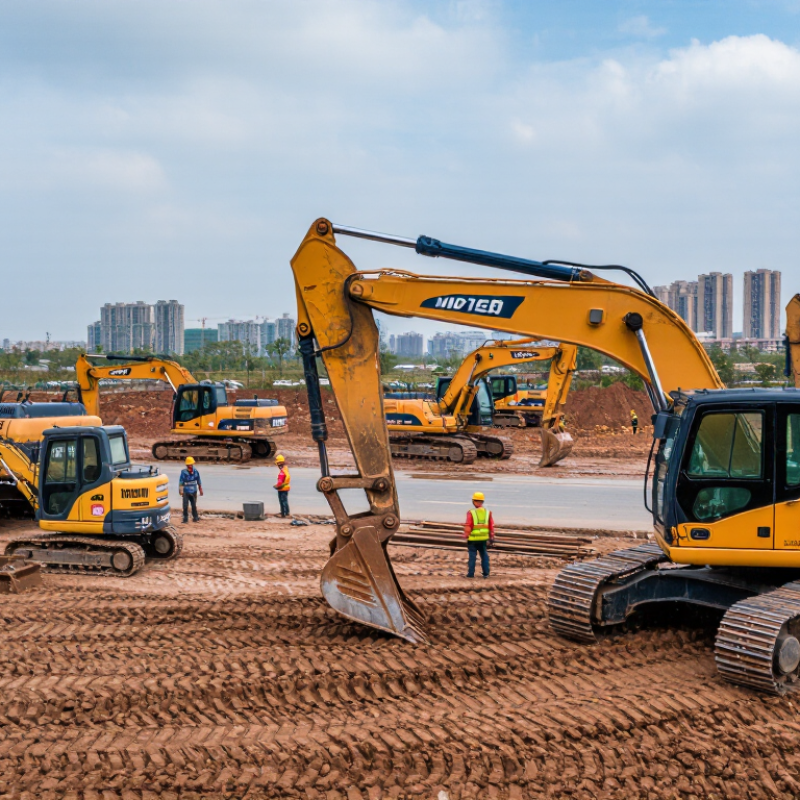
Who Are the Top Mobile Excavator Manufacturers in China?

What Defines a Mobile Excavator?

A mobile excavator is a hydraulic excavator mounted on wheels, rather than continuous tracks. Its upper structure rotates, while the boom, stick, and bucket dig, lift, and load. The wheeled undercarriage lets it move between nearby work areas without a transport trailer. That distinction matters. Mobility does not mean every machine can travel legally on every public road; weight, speed, and local rules still apply. Many models use a dozer blade or outriggers to steady the chassis during digging. On firm pavement, wheels are quick and convenient. On wet clay, loose gravel, or steep ground, they can lose traction and stability.

For buyers, “mobile” describes a trade-off, not a promise of better performance everywhere. Check travel speed, axle configuration, ground pressure, turning clearance, and support-leg setup against the actual site. A machine that shifts quickly between roadside drainage jobs may be less suitable for soft, uneven excavation. The UNEP Global Status Report for Buildings and Construction 2024/2025 reports that the sector used 34% of global energy and produced 37% of energy- and process-related CO₂ emissions in 2022. Those figures cover buildings and construction broadly, not excavators alone, so they should not be read as machine-level data. Still, fuel use and idle time deserve attention. I would also inspect tire wear and stabilizer response; mobility is useful, but it can be overrated.


How China’s Mobile Excavator Market Has Developed

China’s mobile excavator market has gradually moved from a specialized choice toward a practical option for jobs requiring frequent relocation. Wheeled machines can travel between nearby sites without a low-bed trailer, helping crews handle municipal repairs, roadside drainage, and utility maintenance. That convenience matters on narrow streets. It does not suit every site: soft ground, steep slopes, and demanding excavation can still favor tracked machines.

Buyers increasingly compare more than purchase price. Fuel use, hydraulic response, operator visibility, tire wear, service access, and resale value all influence decisions. Product development has brought more attention to compact layouts, cab comfort, and attachment compatibility. Digital diagnostics and cleaner power options are also gaining visibility. Progress remains uneven, though. Technician coverage and replacement-part availability can vary by region. A polished specification sheet is not field evidence.

Tips: Match operating weight and tire setup to real ground conditions. Request a supervised demonstration with the attachments your crew will use. Check turning radius and local road requirements. Ask about service response times, then record fuel use and cycle times during a trial. Small details matter.

Leading Chinese Manufacturers of Mobile Excavators

China’s leading mobile excavator manufacturers build wheeled machines for roadwork, utility repairs, and jobs that move between sites. Their designs balance travel speed with digging stability. A useful comparison starts with operating weight, reach, bucket capacity, and transport dimensions. These figures affect how a machine performs in a narrow street or beside a drainage trench.

Look closely at the hydraulic system, axle rating, braking performance, and outrigger design. On uneven ground, stable outriggers can make a clear difference. Check whether common attachments fit securely and whether service points are easy to reach. A mechanic should be able to inspect filters and hoses without removing half the machine. Small details matter. Ask manufacturers for test records, parts availability, warranty terms, and references from similar working conditions. Claims are easier to trust when supported by specific documents.

No single machine suits every project. A compact model may turn neatly in a city lane but feel underpowered on deeper excavation. A heavier unit may dig confidently yet consume more fuel during frequent travel. Even a well-built excavator can disappoint if local technicians lack training or spare parts arrive slowly. Brochures help, but a live demonstration on firm and uneven ground reveals more. Listen for pump noise, watch boom response, and check for hydraulic leaks after the machine has worked under load.

How Major Brands Compare in Product Range and Technology

Chinese mobile excavator manufacturers cover a broad range, from compact machines for narrow streets to heavier units for roadwork and site preparation. Wheeled models can move between nearby jobs without a transport trailer, while tracked versions suit softer ground. A city crew clearing a roadside drain may value a tight turning radius more than maximum digging depth. There is no single best configuration.

Product differences also show up in the cab and hydraulic system. Some machines offer adjustable flow for attachments such as breakers or grapples, while others prioritize smooth, familiar controls. Digital displays may track fuel use, service intervals, and machine warnings. Useful, but only if operators can read them quickly in bright sunlight. Technology on paper is not always technology that helps on site.

When comparing manufacturers, examine operating weight, reach, bucket options, and transport dimensions alongside headline power. Ask how easily filters and hydraulic lines can be reached; a cramped service panel costs time. Telematics can help fleet managers spot idle hours, though signal coverage and software support vary. Still, a tidy specification sheet can mislead. Request a live demonstration with the attachment and ground conditions you actually use, then check parts availability and service response in your region.

Who Are the Top Mobile Excavator Manufacturers in China? - How Major Brands Compare in Product Range and Technology

Comparison Dimension Compact Wheeled Excavators Mid-Size Wheeled Excavators Heavy Wheeled Excavators
Typical operating-weight range Approximately 6–10 tonnes Approximately 10–16 tonnes Approximately 16–23 tonnes
Typical bucket capacity About 0.2–0.4 m³ About 0.3–0.6 m³ About 0.5–1.0 m³
Common applications Urban utility work, landscaping, small construction sites, and roadside maintenance Municipal construction, road projects, drainage, and general-purpose excavation Large infrastructure projects, material handling, and higher-volume excavation
Mobility strengths Compact dimensions and convenient movement between nearby work areas Balances road mobility with digging capacity for varied job sites Offers greater working capacity; transport and access requirements need closer planning
Common product-range considerations Check overall width, tail swing, and compatibility with attachments for confined sites Compare boom and arm options, stabilizer configurations, and attachment hydraulics Review axle loading, lifting requirements, transport limits, and available counterweight options
Hydraulic and control technology Load-sensing hydraulics and proportional auxiliary controls may be available, depending on configuration Compare hydraulic flow settings, multi-function performance, and operator-adjustable work modes Assess sustained hydraulic performance, precision controls, and suitability for heavy attachments
Engine and emissions checks Confirm the engine rating and emissions certification for the machine’s intended market Check applicable non-road emissions requirements, after-treatment equipment, and service access Verify local compliance, fuel requirements, and maintenance needs for emissions-control systems
Cab and operator technology Look for clear displays, ergonomic controls, visibility, and optional rear-view assistance Compare camera availability, adjustable work modes, and in-cab diagnostic information Prioritize visibility, comfort for long shifts, and monitoring features suited to intensive operation
Best fit when selecting a machine Frequent short moves and restricted work areas matter most A single machine must cover a broad mix of municipal and construction tasks Higher capacity is essential and the site can accommodate the machine’s size and load

Figures are indicative ranges for common wheeled-excavator classes, not specifications for any particular manufacturer or model. Actual operating weight, bucket capacity, equipment, and emissions certification vary by configuration and destination market.

What to Consider When Choosing a Chinese Mobile Excavator

A Chinese mobile excavator should fit the jobsite, not just look strong on a specification sheet. Check operating weight, digging depth, travel speed, and lifting capacity against your daily tasks. A wheeled model can move quickly between paved work areas, but soft ground may demand different tires or support. Measure access points too: a few centimeters can decide whether the machine reaches a narrow site.

The McKinsey Global Institute’s 2017 report, Reinventing Construction, estimated that construction labor productivity had grown about 1% annually over the previous two decades, compared with 3.6% in manufacturing. This makes uptime and cycle time practical buying criteria. Ask for fuel-use figures under comparable working conditions, not just ideal test results. Inspect service access, parts availability in your region, warranty terms, and the local technician response time. A lower purchase price can be costly if routine maintenance keeps the machine parked.

Tips: Bring your common attachments to a demonstration. Test turning, braking, and digging on ground similar to your site. Check the cab sightlines, too. A polished demo may not reflect a full shift, so request references from operators with similar work. No single specification settles the choice.

Powder Coat Booths

For those larger-sized parts, or smaller quantity runs, we have 2 independent powder coat booths and ovens. The quality, durability and affordability of today’s powder coating finishes make this the process of choice for world-class companies.

Powder coating advantages over other forms of coating are many. Materials used in the Powder coating process can be metals and non-metals that come in a multitude of thicknesses, textures, colors, etc. Another of Powder coating’s biggest advantages over conventional coatings is its ability to create finishes in many different textures. Powder Coating Booths allow us the ability to apply these advantages to large products.

Wet Paint Line

Tri-State Fabricators runs a full-service conveyor line for painting. Wet painting can provide protection or decoration to many different part styles. From start to finish, every project is easier to undergo random and point-based inspection by our skilled painting team.

Advantages to our Wet Paint Line are these lines start with product prep and ends with a thorough inspection of a high quality finished product. Our ability to complete large and small projects with a superior finish and doing so in a timely and economical fashion. This passes along the savings in production to our customers. When powder coating ins not an option, our Wet Paint Line gets the job done right the first time.

Wet Paint Booths

When the parts get big and heavy we roll-out our custom paint racks and oversize booth. By utilizing our partnerships with all the major paint brands, we can match virtually any color with wet paint.

The advantages of having access to a Wet Paint Booth are many. Large projects of many different shapes can be loaded into the booth. The Wet Paint Booth offers an environment that is much more controlled than a typical parts painting operation.

Not only are they used because of their controlled environment, but they’re are also advantageous when it comes to applying paint to parts that are needed in industries that require specialty coatings such as medical, aerospace, etc.

Military CARC

Our military forces have some very high standards when it comes to the finish of their vehicles and equipment. From the first pre-treatment step to final coat, it takes a great deal of knowledge and experience to protect the men and women of our armed forces. They deserve only the best, and Tri-State Fabricators provides it.

All of our processes are closely monitored by our staff and management teams. Both of which are highly trained in the processes of metal fabrication and finishing. Tri-State Fabricators’ goal is to always fully satisfy each and every customer, including the military. We will always put a 110% into what we do.

Glass-Bead Blasting

Abrasive media blasting is an excellent way to remove old paint, rust, and increase the paint/powder adhesion. Glass beads produce a much smoother and brighter finish than angular abrasives; leaving the part clean yet without any dimensional change. Chemically inert and environmentally friendly, we can recycle our beads approximately 30 times; making them a more preferred method of metal cleaning or surface finishing.

Advantages to Glass Bead Blasting are many. Glass bead blast media is used when a project is needing rough surfaces need to become smooth for applications of coatings such as paint. It is typically used to clean paint and rust from a product surface without deforming the surface it is being used on. Overall, compared to many other blasting media, Glass Bead Blasting is a very economical choice and those savings are always passed on to our customers.

Part Washing

Tri-State Fabricators utilize a zinc phosphate wash to clean and etch the material to ensure the best paint adhesion possible. The unique design of our 3-stage wash system does the work like a 5-stage. From Cleaning and rinsing to conversion coating and post-treatment, Our Part Washing process is a complete service and works throughout the fabrication service and the finishing service.

Along with the previously mentioned benefits, Curing is a vital chemical reaction that leaves the product finish hard and relatively safe from mild abrasion and aggressive corrosion. This process can be done in more than one way; ambient air-dry or in curing ovens at temps that exceed 240°.

Burn-Off Oven

From fixing paint mistakes (someone else’s of course) to simply cleaning our paint line hooks, our burn-off oven is put to good use. After a quick burn-off, a little clean up, and a fresh coat of paint, your parts will look better than new.

Why does our Burn-Off Oven work so well? Because super heating the air around parts turns the materials into ashes. From paint and powder coatings to rubber and machining oils, high temps do the job without degrading the integrity of the part.

Masking

Masking is a vital part of producing high quality products. We have die-cut masking patterns to protect machined surfaces as well as a wide range of plugs and caps to protect threaded holes and bolts. We provide permanent and temporary masking.

Masking allows the selected sections of a product to be protected from a fabrication or finishing service. This can be with both chemicals when etching and tapes, paints when only finishing just a section of the product. Masking is great in aiding the customization process of a project.

Screen Printing

Screen printing is a photographic process that transfers artwork onto a porous nylon screen which allows colored ink to flow through the screen and be deposited on an aluminum or plastic component. We can generally have just about any design created onto a screen for your parts.

Some of the advantages of Screen Printing are, brand recognition for your business displaying on your products, assembly instructions, product warnings/hazards, etc. Tri-State Fabricators produces Screen Printing of the highest quality so you know it’s durable.

Metal Finishing

Metal Finishing is the art of treating the exterior portion of product, often metal but can also be made of other materials, so that the surface is clean and free of any debris. Then the process of applying coats or either paint of powder coat takes place. This coating process improves the quality of the product in both appearance and resistance to wear and corrosion.

Tri-State Fabricators, Inc., understands that a project typically isn’t complete until a high-quality finish has been added to your product. This is why our painting and powder coating teams continuously inspect the products throughout the Metal Finishing process.
