


Selecting the right Mine Exhaust Fans is a safety decision, not merely an equipment purchase. Underground workings depend on reliable airflow to dilute methane, diesel particulate matter, heat, and blasting fumes. A fan may look powerful on a specification sheet. Its real value appears underground, beside long duct runs, bends, dust, and changing resistance.
The International Energy Agency’s Global Critical Minerals Outlook 2024 highlights expanding mineral demand and deeper, more energy-intensive operations. That trend increases pressure on mine ventilation systems. The World Bank’s Minerals for Climate Action report projects mineral production could rise by nearly 500% by 2050. More production will require stronger airflow planning, efficient motors, and dependable controls. These reports do not rank fan brands. They show why selection standards must be rigorous.
NIOSH guidance consistently emphasizes airflow measurement, contaminant control, system redundancy, and worker exposure protection. The Global Mining Guidelines Group also recommends evaluating ventilation through the complete network, rather than judging one fan alone. That approach matters. An efficient impeller cannot compensate for leaking stoppings or undersized ducting. Top Mine Exhaust Fans should therefore be compared through airflow volume, static pressure, efficiency, noise, vibration, monitoring options, and maintenance access. Field experience adds another lesson: corrosion and dust often reduce performance sooner than expected. Some published efficiency claims also assume clean, stable conditions. Real mines are rarely so cooperative. This article examines leading fan solutions through technical performance, operating reliability, lifecycle cost, and documented ventilation practice. The final choice should still follow a site-specific survey and qualified engineering review.
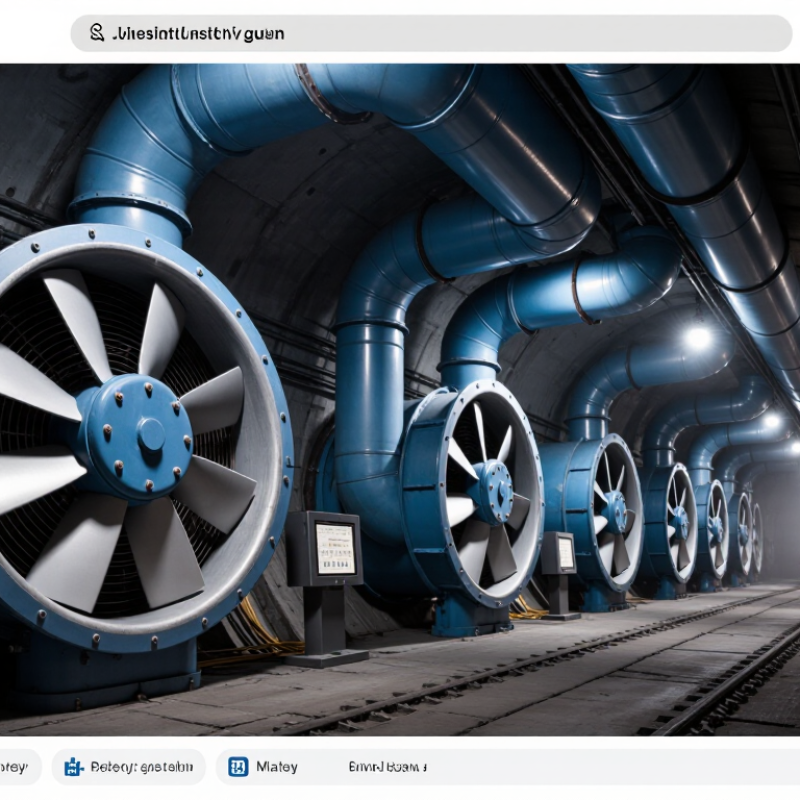
What Are Mine Exhaust Fans and Why Are They Important?
Mine exhaust fans are powerful ventilation machines that remove contaminated air from underground workings. They pull out dust, heat, fumes, and gases through shafts, raises, or ventilation ducts. Fresh air then replaces the extracted air. This continuous movement helps workers breathe more safely and keeps equipment operating in difficult conditions.
Top-performing mine exhaust fans are not judged by size alone. Their value depends on airflow, pressure, energy use, noise, durability, and control accuracy. A fan moving air through a long, narrow tunnel faces more resistance than one serving a wide chamber. Poorly sealed doors and damaged ducting can also reduce performance. In practice, technicians often check vibration, bearing temperature, airflow readings, and motor condition during inspections. Small warning signs matter. I have learned that a quiet fan is not always a healthy fan.
Tips: Match the fan to the ventilation network, not just the rated airflow. Inspect blades and guards regularly. Measure airflow at working areas, not only near the fan. Keep maintenance records with dates, readings, and unusual sounds. Variable-speed controls can reduce wasted power when demand changes. However, controls need qualified setup and regular testing. A rushed adjustment may create uneven ventilation. Airflow plans should be reviewed when mine layouts, production levels, or equipment change. Safety assumptions can become outdated faster than expected.

Mine exhaust fans remove contaminated air, heat, dust, diesel particulate matter, and potentially hazardous gases from underground workings. The chart shows representative airflow ranges commonly used for different mine ventilation duties. Actual fan selection depends on mine layout, airway resistance, depth, gas conditions, and required ventilation volume.
Representative engineering planning ranges; values are not manufacturer ratings and should be verified through a mine ventilation survey and system-resistance calculation.
Mine exhaust fans create the pressure difference that moves air through underground workings. Their rotating impellers pull used air toward a surface exhaust shaft. Fresh air then enters through intake shafts, declines, or dedicated openings. That pressure difference drives airflow. Regulators, doors, and stoppings guide air toward active work areas. A small leakage path can weaken the entire ventilation circuit.
Axial fans suit systems requiring high air volume with moderate pressure. Centrifugal fans generally handle higher resistance from long ducts, bends, and restrictive passages. The best mine exhaust fan depends on airway length, required airflow, pressure loss, dust exposure, and operating conditions. Variable-speed drives can adjust fan output as production areas change. This can reduce energy waste, but poor control settings may create unstable airflow. Fan selection should follow measured ventilation data, engineering calculations, and applicable mine safety standards.
Ventilation teams should monitor airflow, pressure, temperature, vibration, and motor performance. During inspections, unusual noise or rising vibration may reveal damaged blades, bearing wear, or imbalance. A fan may sound normal and still deliver inadequate air. That is easy to miss. Regular instrument checks matter more than appearance alone. Emergency airflow reversal may also be required in some mine designs, but it needs careful testing and clear procedures. No fan works alone. Duct leaks, poorly sealed stoppings, or an open door can undermine a well-sized system. Calculations provide a strong foundation, yet underground conditions often change faster than drawings.
Mine exhaust fans are selected by airflow, pressure, gas conditions, and tunnel geometry. Axial fans suit large air volumes with modest resistance. They commonly serve main shafts, declines, and long return-air routes. Their compact blades also simplify installation underground. Centrifugal fans generate higher pressure. They work better where ducts are narrow, bends are frequent, or regulators create resistance. Mixed-flow fans occupy the middle ground. They can balance pressure and airflow when mine layouts change.
Auxiliary exhaust fans remove contaminated air from headings and blind tunnels. A flexible duct trails behind the advancing face, pulling dust and diesel fumes toward the return airway. For larger headings, twin fans can provide stronger extraction and some operational redundancy. Main exhaust systems usually require fixed-duty fans, standby capacity, vibration monitoring, and variable-speed control. Poor damper settings can waste energy and reduce face ventilation. The mistake is common.
The International Energy Agency’s Global Methane Tracker 2024 estimated about 40 million tonnes of methane emissions from coal operations in 2023. Effective ventilation and monitoring therefore support both worker protection and emissions management. NIOSH ventilation research also emphasizes matching fan performance with duct leakage and system resistance. A fan may look powerful on paper. Field measurements matter more. Airflow surveys, pressure readings, gas sensors, and maintenance records reveal whether the selected type actually performs underground. Survivability is often overlooked. Temperature, dust, moisture, and electrical protection can change the decision.
Comparing mine exhaust fan performance starts with the duty point, not the catalogue headline. Record airflow, total pressure, air density, and operating hours at the mine site. A fan delivering 250 m³/s at 3,000 Pa may outperform a larger fan operating far from its best-efficiency point. ISO 5801 testing helps compare airflow and pressure under controlled conditions. Yet field results can differ because of leakage, dust, bends, and worn impellers.
Energy deserves equal attention. Industry studies reported through Australia’s ACARP research program commonly estimate ventilation uses about 40–50% of underground mine electricity. This makes fan efficiency a major operating issue. Compare shaft power, motor efficiency, variable-speed control, and annual energy use. Check the complete system, too. A highly efficient fan cannot correct a poorly sealed airway. NIOSH mine ventilation research also stresses reliable airflow measurement and effective monitoring. One weakness remains: predicted savings often look cleaner than real mine conditions.
Tips: Ask for certified performance curves, not only peak efficiency. Measure airflow and pressure during different production periods. Inspect doors, stoppings, seals, and duct joints before upgrading equipment. Review noise, vibration, maintenance access, and backup capacity. A small error in pressure measurement can distort the comparison. Recheck the numbers.
What Are the Top Mine Exhaust Fans?
The best mine exhaust fan is not always the largest or fastest model. Selection begins with airflow demand, static pressure, tunnel length, and ventilation resistance. A reliable fan should maintain steady air movement under changing underground conditions. Look for strong housing materials, protected motors, secure guards, and controls suited to dust, moisture, and temperature changes. Equipment certification must match the mine’s operating environment and local safety requirements. Quiet operation also matters, because abnormal noise can hide warning signs.
Safety depends on more than fan capacity. Installers should confirm airflow direction, emergency isolation, and access for inspections. Vibration, rising motor temperature, loose bolts, and damaged blades need prompt attention. During maintenance, isolate the power supply and follow approved site procedures. Keep inspection records specific. Note the date, readings, unusual sounds, and corrective action. Small details can reveal larger failures. A clean-looking fan may still have worn bearings or electrical faults.
Tips: Check actual airflow after installation, not only the design calculation. Inspect guards and fasteners each shift when conditions are harsh. Clean dust from accessible surfaces without damaging components. Replace questionable parts rather than delaying repairs. A specification sheet can look perfect, yet field conditions may expose weaknesses. No selection is flawless, so review performance after seasonal changes, extensions, or ventilation modifications.
| Fan Type | Typical Mining Application | Airflow and Pressure Characteristics | Key Safety Considerations | Maintenance Priorities | Selection Rating | Best Selection Factors |
|---|---|---|---|---|---|---|
| Large Axial Main Fan | Primary ventilation for underground mines, shafts, declines, and large production areas. | Very high airflow with low-to-moderate pressure. Airflow can be reversed on suitable designs for emergency or planned ventilation changes. | Use guarded rotating parts, emergency shutdown controls, vibration monitoring, fire protection, and electrical equipment suitable for the classified area. | Inspect blades, hub assembly, bearings, couplings, belt drives, vibration levels, casing, and emergency controls. Keep an operating log for airflow, pressure, temperature, and vibration. | Excellent for main ventilation | Required airflow, total system resistance, reversal capability, noise limits, motor power, duty-cycle reliability, and available installation space. |
| Centrifugal Main Fan | High-resistance mine ventilation systems, deep shafts, long airways, and applications requiring stable pressure. | Moderate-to-high pressure capability and stable performance across a broad operating range. Usually less compact than an axial fan at the same duty. | Provide secure inlet and outlet guards, overspeed protection where applicable, electrical isolation, fire-resistant construction where required, and protection against excessive vibration. | Check impeller balance, shaft alignment, bearings, seals, belts or couplings, casing wear, and dust buildup. Verify that the fan remains within its approved operating curve. | Excellent for high resistance | System pressure, dust loading, impeller wear, efficiency at the duty point, access for maintenance, and foundation requirements. |
| Auxiliary Axial Fan | Secondary ventilation for headings, tunnels, development drives, raises, and localized work areas. | High airflow in a compact form. Commonly used with ventilation ducting; actual delivered airflow decreases as duct length, leakage, and resistance increase. | Protect workers from rotating parts, prevent damaged ducting from restricting airflow, use suitable electrical protection, and maintain adequate clearance around the fan. | Inspect fan guards, blades, motor connections, duct joints, hanging supports, and airflow direction. Repair duct leaks and remove obstructions promptly. | Excellent for localized ventilation | Required face airflow, duct diameter, duct length, leakage rate, pressure loss, portability, starting current, and ease of relocation. |
| Mixed-Flow Fan | Ventilation systems requiring a balance between axial-fan airflow and centrifugal-fan pressure performance. | Moderate-to-high airflow with moderate pressure capability. Often suitable where system resistance is higher than a conventional axial fan can efficiently handle. | Use correct motor protection, guarding, vibration monitoring, and controls suitable for the mine environment. Confirm the fan will not operate in an unstable region of its performance curve. | Monitor bearings, impeller condition, vibration, motor temperature, and casing wear. Check performance after ductwork or airway changes. | Very good for balanced duties | Pressure stability, airflow range, energy efficiency, installation orientation, access to components, and compatibility with variable-speed control. |
| Explosion-Protected Auxiliary Fan | Areas where methane, combustible dust, or other hazardous atmospheres may be present, subject to local regulations and mine risk assessment. | Airflow and pressure are selected according to the ventilation circuit; the defining feature is compliance with the required hazardous-location protection level. | Use certified equipment appropriate to the hazardous classification. Control ignition sources, maintain electrical integrity, bond and ground equipment where required, and follow gas-monitoring procedures. | Inspect certified enclosures, cable glands, grounding connections, seals, guards, and protective devices. Do not modify certified components without approval. | Essential where hazards require it | Hazard classification, certification requirements, gas-monitoring strategy, motor protection, cable routing, local regulations, and authorized maintenance capability. |
| Variable-Speed Mine Fan | Main or auxiliary systems with changing production schedules, variable airway resistance, or demand-controlled ventilation. | Adjustable airflow and pressure allow ventilation to match demand. Lower speed generally reduces power consumption, but the operating point must remain within the approved fan curve. | Use compatible drives, motor insulation, emergency bypass or shutdown arrangements, harmonic mitigation where needed, and safeguards against unintended restart. | Inspect drive cooling, filters, electrical connections, motor temperature, vibration, and control alarms. Verify sensors and setpoints during planned inspections. | Excellent for energy management | Required control range, minimum stable speed, motor-drive compatibility, harmonic effects, response time, energy targets, and operator training. |
| Portable Auxiliary Fan | Temporary ventilation during construction, maintenance, emergency response, or changing underground work locations. | Usually lower capacity than a main fan, with quick deployment and flexible duct connection. Performance depends strongly on duct configuration and leakage. | Provide stable mounting, protected electrical connections, safe lifting points, guarded inlets and outlets, and clear escape routes. Prevent duct movement or collapse near workers. | Check wheels or lifting devices, mounting brackets, guards, power cables, duct connections, and motor condition before each relocation. | Excellent for temporary duties | Weight, portability, power supply, setup time, duct compatibility, noise, durability, and ease of inspection. |
| Energy-Efficient High-Efficiency Fan | Continuous-duty ventilation systems where electrical consumption and operating cost are major concerns. | Designed to deliver the required duty point with reduced losses. The highest efficiency is achieved only when the fan, motor, controls, and ventilation network are correctly matched. | Efficiency must not compromise required airflow, redundancy, emergency performance, or safety controls. Confirm operation under normal and emergency ventilation modes. | Maintain clean air passages, correct blade settings, aligned drives, adequate lubrication, and accurate sensors. Compare measured performance with commissioning data. | Excellent for long-term operation | Life-cycle cost, duty-point efficiency, motor efficiency, variable-speed suitability, reliability, spare-parts availability, and measured commissioning results. |


For those larger-sized parts, or smaller quantity runs, we have 2 independent powder coat booths and ovens. The quality, durability and affordability of today’s powder coating finishes make this the process of choice for world-class companies.
Powder coating advantages over other forms of coating are many. Materials used in the Powder coating process can be metals and non-metals that come in a multitude of thicknesses, textures, colors, etc. Another of Powder coating’s biggest advantages over conventional coatings is its ability to create finishes in many different textures. Powder Coating Booths allow us the ability to apply these advantages to large products.
Tri-State Fabricators runs a full-service conveyor line for painting. Wet painting can provide protection or decoration to many different part styles. From start to finish, every project is easier to undergo random and point-based inspection by our skilled painting team.
Advantages to our Wet Paint Line are these lines start with product prep and ends with a thorough inspection of a high quality finished product. Our ability to complete large and small projects with a superior finish and doing so in a timely and economical fashion. This passes along the savings in production to our customers. When powder coating ins not an option, our Wet Paint Line gets the job done right the first time.
When the parts get big and heavy we roll-out our custom paint racks and oversize booth. By utilizing our partnerships with all the major paint brands, we can match virtually any color with wet paint.
The advantages of having access to a Wet Paint Booth are many. Large projects of many different shapes can be loaded into the booth. The Wet Paint Booth offers an environment that is much more controlled than a typical parts painting operation.
Not only are they used because of their controlled environment, but they’re are also advantageous when it comes to applying paint to parts that are needed in industries that require specialty coatings such as medical, aerospace, etc.
Our military forces have some very high standards when it comes to the finish of their vehicles and equipment. From the first pre-treatment step to final coat, it takes a great deal of knowledge and experience to protect the men and women of our armed forces. They deserve only the best, and Tri-State Fabricators provides it.
All of our processes are closely monitored by our staff and management teams. Both of which are highly trained in the processes of metal fabrication and finishing. Tri-State Fabricators’ goal is to always fully satisfy each and every customer, including the military. We will always put a 110% into what we do.
Abrasive media blasting is an excellent way to remove old paint, rust, and increase the paint/powder adhesion. Glass beads produce a much smoother and brighter finish than angular abrasives; leaving the part clean yet without any dimensional change. Chemically inert and environmentally friendly, we can recycle our beads approximately 30 times; making them a more preferred method of metal cleaning or surface finishing.
Advantages to Glass Bead Blasting are many. Glass bead blast media is used when a project is needing rough surfaces need to become smooth for applications of coatings such as paint. It is typically used to clean paint and rust from a product surface without deforming the surface it is being used on. Overall, compared to many other blasting media, Glass Bead Blasting is a very economical choice and those savings are always passed on to our customers.
Tri-State Fabricators utilize a zinc phosphate wash to clean and etch the material to ensure the best paint adhesion possible. The unique design of our 3-stage wash system does the work like a 5-stage. From Cleaning and rinsing to conversion coating and post-treatment, Our Part Washing process is a complete service and works throughout the fabrication service and the finishing service.
Along with the previously mentioned benefits, Curing is a vital chemical reaction that leaves the product finish hard and relatively safe from mild abrasion and aggressive corrosion. This process can be done in more than one way; ambient air-dry or in curing ovens at temps that exceed 240°.
From fixing paint mistakes (someone else’s of course) to simply cleaning our paint line hooks, our burn-off oven is put to good use. After a quick burn-off, a little clean up, and a fresh coat of paint, your parts will look better than new.
Why does our Burn-Off Oven work so well? Because super heating the air around parts turns the materials into ashes. From paint and powder coatings to rubber and machining oils, high temps do the job without degrading the integrity of the part.
Masking is a vital part of producing high quality products. We have die-cut masking patterns to protect machined surfaces as well as a wide range of plugs and caps to protect threaded holes and bolts. We provide permanent and temporary masking.
Masking allows the selected sections of a product to be protected from a fabrication or finishing service. This can be with both chemicals when etching and tapes, paints when only finishing just a section of the product. Masking is great in aiding the customization process of a project.
Screen printing is a photographic process that transfers artwork onto a porous nylon screen which allows colored ink to flow through the screen and be deposited on an aluminum or plastic component. We can generally have just about any design created onto a screen for your parts.
Some of the advantages of Screen Printing are, brand recognition for your business displaying on your products, assembly instructions, product warnings/hazards, etc. Tri-State Fabricators produces Screen Printing of the highest quality so you know it’s durable.
Metal Finishing is the art of treating the exterior portion of product, often metal but can also be made of other materials, so that the surface is clean and free of any debris. Then the process of applying coats or either paint of powder coat takes place. This coating process improves the quality of the product in both appearance and resistance to wear and corrosion.
Tri-State Fabricators, Inc., understands that a project typically isn’t complete until a high-quality finish has been added to your product. This is why our painting and powder coating teams continuously inspect the products throughout the Metal Finishing process.

