


What Are the Top Metal Panel Wall Section Types in 2026?

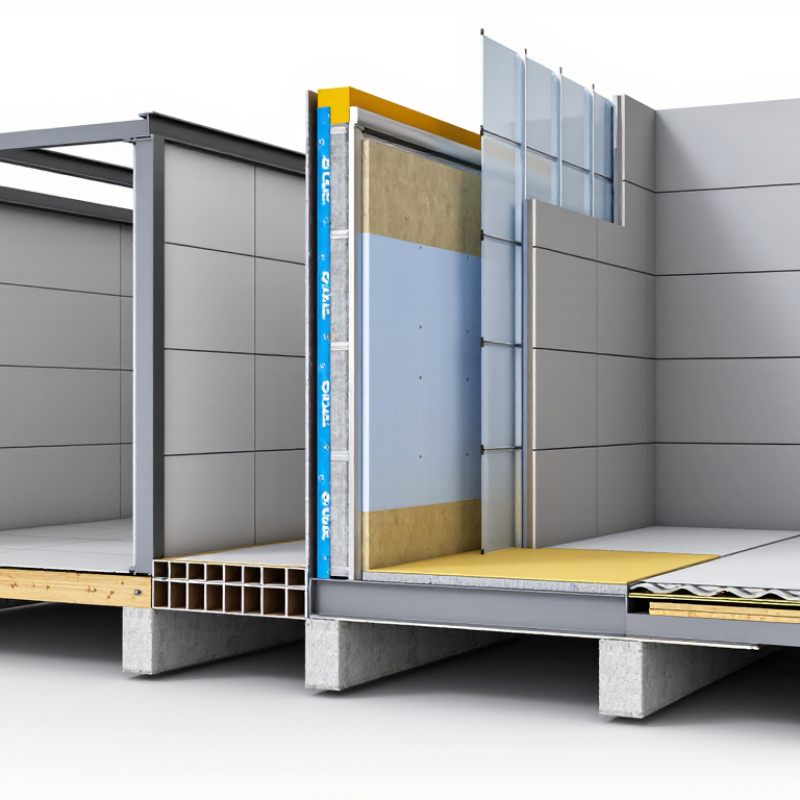
A Metal Panel Wall Section is more than a finish attached to a frame. It is a layered assembly that must control rain, air, heat, and vapor while accommodating movement. In 2026, designers commonly compare single-skin panels over girts, insulated metal panels, and rainscreen systems with drained cavities. Each creates a different balance of installation speed, thermal continuity, appearance, and repair access. Small details matter. A loose fastener, poorly lapped flashing, or interrupted insulation can undermine an otherwise sound design.

The U.S. Energy Information Administration’s 2018 Commercial Buildings Energy Consumption Survey reported 6.8 quadrillion Btu of energy use in U.S. commercial buildings. That figure does not measure metal-wall performance, but it shows why envelope decisions deserve careful review. The Metal Construction Association’s life-cycle assessment work on metal roofing and siding also provides useful context for comparing material impacts over a building’s service life. Neither source replaces project-specific testing.

Building-science expert Joseph Lstiburek’s published rain-control guidance emphasizes treating water, air, vapor, and heat as distinct control layers. That principle is especially practical at panel joints, window heads, and slab edges. A neat elevation can hide a weak section. The best choice depends on climate, structure, fire requirements, budget, and maintenance access—not appearance alone. Some projects still select a system before resolving those conditions. That is worth reconsidering. This guide compares the leading wall-section types, explains their trade-offs, and identifies the details teams should verify before specifying them.
What Are the Top Metal Panel Wall Section Types in 2026?

How Metal Panel Wall Sections Are Classified

Metal panel wall sections are best classified by their visible profile, fastening method, core construction, and intended function. Profile describes the panel’s shape after installation. Flat panels create a smooth, modern surface, while ribbed and corrugated panels add visible lines and stiffness. Narrow ribs can cast crisp shadows across a wall. Wider corrugations tend to look more industrial.

Fastening is another useful distinction. Exposed-fastener sections show screw heads along the panel face, making inspection straightforward. Concealed-fastener systems hide clips or interlocking edges for a cleaner appearance. Panels can also be single-skin sheets or insulated assemblies with a foam or mineral-fiber core. The categories sometimes overlap: an insulated panel may have a ribbed exterior and concealed attachment. That can make comparisons less tidy than product labels suggest.

Tips: Check section drawings, not just sample photos. Confirm panel depth, joint direction, support spacing, and corner details before comparing options. A small sample helps reveal the finish and shadow lines. Ask how cut edges and penetrations are handled; these details are easy to overlook.


Single-Skin Panels: Profiles, Materials, and Uses

What Are the Top Metal Panel Wall Section Types in 2026?
Single-Skin Panels: Profiles, Materials, and Uses

Single-skin panels use one formed metal sheet, without a factory-applied insulation core. Common sections include corrugated waves, trapezoidal ribs, and flat or lightly profiled panels. Corrugations suit agricultural buildings and utility walls; deeper ribs add stiffness to broad industrial elevations. Flat profiles create a quieter, cleaner look, but show dents and uneven substrates more readily. Panels may use exposed fasteners or concealed clips, depending on the profile and design.

Coated steel is a practical choice for long walls and demanding service areas. Aluminum weighs less and resists corrosion, making it useful near coastal conditions when the coating and details are suitable. The International Aluminium Institute reports that recycling aluminum uses about 95% less energy than producing primary aluminum. Recycled content can support material goals, but it does not guarantee a lower-impact project by itself. Single-skin panels provide little thermal resistance; specify continuous insulation and condensation control where the wall assembly requires them. That detail is easy to overlook.

Tips: Check the panel’s tested span, finish warranty, and fastener layout against the project exposure. Ask for cut sheets and installation guidance, then inspect a sample edge and coating. A small mismatch at a corner can become a very visible problem.

What Are the Top Metal Panel Wall Section Types in 2026?

Single-Skin Panels: Profiles, Materials, and Uses

Single-skin panels are formed from one layer of profiled metal sheet. Steel and aluminum are common choices for wall cladding; zinc and copper are also used in some architectural applications. The chart compares approximate metal densities, not panel weight, which also depends on sheet thickness and profile.

Insulated Metal Panels: Core Types and Performance

Insulated metal panels (IMPs) combine exterior and interior metal facings with an insulating core. In 2026, common core types include polyisocyanurate (PIR), polyurethane (PUR), and mineral wool. PIR and PUR cores can provide strong thermal resistance in relatively slim wall sections. Mineral wool is selected where noncombustible core materials and sound control matter. Each choice brings trade-offs.

A thicker panel does not guarantee a better-performing wall. Joint design, fasteners, and careful installation affect heat loss and air or water leakage. On site, even a small gap at a panel joint can interrupt the insulation layer. That detail matters. Compare tested assembly data, not just advertised core values, and check the project’s fire and climate requirements with a qualified design professional. Mineral wool panels may also need different support and handling because of their weight. Still, no panel type solves every problem. The right choice depends on the building, the exposure, and the quality of the finished details.

Rainscreen and Composite Panel Systems

Rainscreen and composite panel systems solve different parts of the wall. A rainscreen uses an outer metal panel, a drained cavity, and a continuous water-control layer over the backup wall. The cavity helps manage water that passes the panel joints. It does not replace careful flashing, air sealing, or insulation. Details matter. The 2024 Global Status Report for Buildings and Construction, published by UNEP and the Global Alliance for Buildings and Construction, estimates that buildings and construction used 32% of global energy in 2023 and produced 34% of energy-related CO₂ emissions. That context makes envelope design important, but a metal skin alone does not guarantee energy savings. Insulation continuity and thermal bridges at brackets deserve close review.

Composite panels are a separate panel type often installed as part of a rainscreen assembly. Metal composite material panels typically have two thin metal faces bonded to a core; insulated metal panels combine metal faces with a thicker insulating core. The former can create crisp folds and narrow reveals, while the latter can simplify wall assembly. Check the specified panel core, joint design, attachment method, and tested wall assembly—not just the face material. Wind pressure, cavity drainage, fire performance, and movement at long panel runs all affect the result. On drawings, a tidy joint can look convincing; on site, a slightly uneven substrate may expose every alignment decision. That is easy to miss.

How to Compare Wall Section Types for 2026 Projects

For 2026 projects, compare metal wall sections by thermal performance, moisture control, span, and installation sequence. Single-skin panels are light and economical, but usually need separate insulation and interior lining. Insulated metal panels combine facings and a foam core, reducing layers and speeding enclosure work. Their joints still demand careful detailing. Small gaps matter.

Rainscreen sections add a drained, ventilated cavity behind the cladding, which can help manage incidental water. They also need brackets and cavity space, affecting cost and usable wall depth. Cassette panels offer crisp, articulated façades, but folded edges and support layouts can complicate replacement. Check tested assembly performance, not just panel-core ratings. The 2024 Global Status Report for Buildings and Construction from UNEP attributes 32% of global energy demand and 34% of energy- and process-related carbon emissions to buildings and construction. That makes whole-wall thermal bridges worth checking. DOE also reports that buildings use about 40% of U.S. energy. Compare whole-assembly U-factors, fire-test documentation, air and water results, and local climate requirements. One awkward detail: the cheapest section on paper may require more field labor at corners and window heads. Ask for mock-up details and installed-system data before comparing bids.

What Are the Top Metal Panel Wall Section Types in 2026? — How to Compare Wall Section Types for 2026 Projects

Wall Section Type Typical Section Build-Up Attachment and Joint Approach Thermal and Moisture Characteristics Common Applications Key Comparison Points
Exposed-Fastener Single-Skin Panel Profiled metal sheet fixed over girts or another supporting substrate; insulation and interior layers are typically separate. Screws pass through the panel face into supports. Side laps and end laps are arranged to shed water according to the panel orientation and details. The panel alone provides little insulation. Thermal performance depends on the separate insulation and air-control layers; fasteners can create thermal bridges. Agricultural, industrial, utility, and other cost-conscious buildings. Compare installed cost, support spacing, fastener exposure, corrosion protection, movement detailing, and maintenance access.
Concealed-Fastener or Interlocking Panel Formed metal panels attached over framing or a substrate, often with clips or concealed fixing points. Interlocking seams or concealed clips reduce visible face fasteners. The assembly still requires properly designed joints, flashings, and terminations. Insulation is generally provided by separate layers. A drained and ventilated cavity may be included, depending on the wall design. Commercial and institutional façades where a cleaner panel appearance is desired. Check allowable movement, clip design, panel flatness, support requirements, wind-load capacity, and how openings and corners are detailed.
Insulated Metal Panel (IMP) Factory-made metal facings bonded to a rigid insulating core, forming a single panel assembly. Panels connect through side joints and are fastened to the building structure or subframing. Joint design and sealant requirements vary by system. Provides integrated insulation and can support continuous air and water control when joints and transitions are correctly designed. Joint details remain critical. Warehouses, food and cold-storage facilities, manufacturing buildings, and commercial enclosures. Compare required thermal resistance, panel thickness, fire and code compliance, joint performance, lifting and installation needs, and transition detailing.
Metal Plate Cassette Rainscreen Metal plate panels formed into cassettes over a subframe, with a cavity and a separately designed backup wall. Cassettes attach to rails or clips. Open-joint or gasketed arrangements may be used; the backup wall typically provides the primary air and water control. The cavity can help drain water and promote drying when properly designed. Insulation and air-control layers are located behind the subframe and cladding. Commercial, civic, and institutional façades requiring a durable, articulated exterior. Assess panel material and thickness, cassette size, subframe thermal bridging, cavity ventilation, drainage, and access for replacement.
Metal Composite Panel Rainscreen Composite panels with metal skins and a lightweight core, commonly fabricated into routed-and-folded cassettes over a support system. Panels are secured to rails, clips, or a carrier system. Joint layout and backing-wall details determine how the rainscreen manages water. Cladding panels are not, by themselves, a complete insulated wall. Thermal, air, and water-control layers are generally provided by the backup assembly. Architectural façades where low panel weight, crisp folds, or varied layouts are useful. Verify applicable fire-code requirements for the panel and core, tested assembly conditions, panel dimensions, finish durability, and repair method.
Deep-Rib Structural Wall Panel Deep-profile metal panels span between structural supports and may serve as exterior cladding or as part of a building’s structural wall system. Panels are mechanically fastened to supports; sidelaps and end laps are detailed for the specified structural and weathering role. Insulation and interior finishes are usually separate. Air, vapor, and water-control layers depend on the complete wall assembly and climate conditions. Industrial and agricultural buildings, and selected low-rise commercial applications. Confirm whether the panel is intended to carry structural loads, then compare span tables, support conditions, deflection limits, and tested weather performance.
Perforated Metal Screen over a Backup Wall Perforated or expanded metal screen mounted outside a separate weather-resistive wall, often with an intervening cavity. Screen panels attach to a secondary frame or subframe. The screen is generally a shading or architectural layer, not the primary water barrier. Openings allow air and water to pass through the screen. The backup wall must provide the required air, water, and thermal control. Solar-shading façades, equipment screens, parking structures, and ventilated architectural screens. Compare open area, shading needs, wind loads, corrosion exposure, cleaning access, and the independent performance of the backup wall.

Comparison note: Performance depends on the complete wall assembly, project location, exposure, support structure, detailing, and applicable codes. Confirm design loads, fire requirements, thermal targets, air and water control, and tested system limitations with the project design team.

Powder Coat Booths

For those larger-sized parts, or smaller quantity runs, we have 2 independent powder coat booths and ovens. The quality, durability and affordability of today’s powder coating finishes make this the process of choice for world-class companies.

Powder coating advantages over other forms of coating are many. Materials used in the Powder coating process can be metals and non-metals that come in a multitude of thicknesses, textures, colors, etc. Another of Powder coating’s biggest advantages over conventional coatings is its ability to create finishes in many different textures. Powder Coating Booths allow us the ability to apply these advantages to large products.

Wet Paint Line

Tri-State Fabricators runs a full-service conveyor line for painting. Wet painting can provide protection or decoration to many different part styles. From start to finish, every project is easier to undergo random and point-based inspection by our skilled painting team.

Advantages to our Wet Paint Line are these lines start with product prep and ends with a thorough inspection of a high quality finished product. Our ability to complete large and small projects with a superior finish and doing so in a timely and economical fashion. This passes along the savings in production to our customers. When powder coating ins not an option, our Wet Paint Line gets the job done right the first time.

Wet Paint Booths

When the parts get big and heavy we roll-out our custom paint racks and oversize booth. By utilizing our partnerships with all the major paint brands, we can match virtually any color with wet paint.

The advantages of having access to a Wet Paint Booth are many. Large projects of many different shapes can be loaded into the booth. The Wet Paint Booth offers an environment that is much more controlled than a typical parts painting operation.

Not only are they used because of their controlled environment, but they’re are also advantageous when it comes to applying paint to parts that are needed in industries that require specialty coatings such as medical, aerospace, etc.

Military CARC

Our military forces have some very high standards when it comes to the finish of their vehicles and equipment. From the first pre-treatment step to final coat, it takes a great deal of knowledge and experience to protect the men and women of our armed forces. They deserve only the best, and Tri-State Fabricators provides it.

All of our processes are closely monitored by our staff and management teams. Both of which are highly trained in the processes of metal fabrication and finishing. Tri-State Fabricators’ goal is to always fully satisfy each and every customer, including the military. We will always put a 110% into what we do.

Glass-Bead Blasting

Abrasive media blasting is an excellent way to remove old paint, rust, and increase the paint/powder adhesion. Glass beads produce a much smoother and brighter finish than angular abrasives; leaving the part clean yet without any dimensional change. Chemically inert and environmentally friendly, we can recycle our beads approximately 30 times; making them a more preferred method of metal cleaning or surface finishing.

Advantages to Glass Bead Blasting are many. Glass bead blast media is used when a project is needing rough surfaces need to become smooth for applications of coatings such as paint. It is typically used to clean paint and rust from a product surface without deforming the surface it is being used on. Overall, compared to many other blasting media, Glass Bead Blasting is a very economical choice and those savings are always passed on to our customers.

Part Washing

Tri-State Fabricators utilize a zinc phosphate wash to clean and etch the material to ensure the best paint adhesion possible. The unique design of our 3-stage wash system does the work like a 5-stage. From Cleaning and rinsing to conversion coating and post-treatment, Our Part Washing process is a complete service and works throughout the fabrication service and the finishing service.

Along with the previously mentioned benefits, Curing is a vital chemical reaction that leaves the product finish hard and relatively safe from mild abrasion and aggressive corrosion. This process can be done in more than one way; ambient air-dry or in curing ovens at temps that exceed 240°.

Burn-Off Oven

From fixing paint mistakes (someone else’s of course) to simply cleaning our paint line hooks, our burn-off oven is put to good use. After a quick burn-off, a little clean up, and a fresh coat of paint, your parts will look better than new.

Why does our Burn-Off Oven work so well? Because super heating the air around parts turns the materials into ashes. From paint and powder coatings to rubber and machining oils, high temps do the job without degrading the integrity of the part.

Masking

Masking is a vital part of producing high quality products. We have die-cut masking patterns to protect machined surfaces as well as a wide range of plugs and caps to protect threaded holes and bolts. We provide permanent and temporary masking.

Masking allows the selected sections of a product to be protected from a fabrication or finishing service. This can be with both chemicals when etching and tapes, paints when only finishing just a section of the product. Masking is great in aiding the customization process of a project.

Screen Printing

Screen printing is a photographic process that transfers artwork onto a porous nylon screen which allows colored ink to flow through the screen and be deposited on an aluminum or plastic component. We can generally have just about any design created onto a screen for your parts.

Some of the advantages of Screen Printing are, brand recognition for your business displaying on your products, assembly instructions, product warnings/hazards, etc. Tri-State Fabricators produces Screen Printing of the highest quality so you know it’s durable.

Metal Finishing

Metal Finishing is the art of treating the exterior portion of product, often metal but can also be made of other materials, so that the surface is clean and free of any debris. Then the process of applying coats or either paint of powder coat takes place. This coating process improves the quality of the product in both appearance and resistance to wear and corrosion.

Tri-State Fabricators, Inc., understands that a project typically isn’t complete until a high-quality finish has been added to your product. This is why our painting and powder coating teams continuously inspect the products throughout the Metal Finishing process.
