


What Are the Top Massage Table Types in 2026?

What Are the Top Massage Table Types in 2026? The answer depends on where, how, and by whom the table will be used. A mobile therapist carrying equipment up narrow stairs has different needs from a spa setting up a dedicated treatment room. Weight, stability, padding, adjustability, and cleaning requirements all matter. There is no single best table for every practice.

Demand for qualified massage services provides useful context. The U.S. Bureau of Labor Statistics projects employment of massage therapists to grow 18% from 2023 to 2033, much faster than the average for all occupations. That projection does not measure massage table sales, but it points to a growing professional field where practical equipment choices matter. A table that is easy to transport, quick to adjust, or comfortable during longer sessions can affect everyday workflow.

This guide compares portable folding, stationary, electric lift, hydraulic, and specialty Massage Table designs. It looks at real-world details: carrying weight, working height, face-cradle fit, frame construction, and the space needed around the table. Manufacturer specifications are useful, but they do not replace hands-on testing or checking warranty terms. Some published weight limits can also be confusing; static capacity is not always the same as working capacity. That distinction deserves more attention than it often gets.

The goal is not to crown one universal winner. It is to help readers match table type to treatment style, budget, client needs, and room layout—while recognizing that a promising specification on paper may feel different in practice.
What Are the Top Massage Table Types in 2026?

Massage Tables in 2026: Types, Uses, and Key Specifications

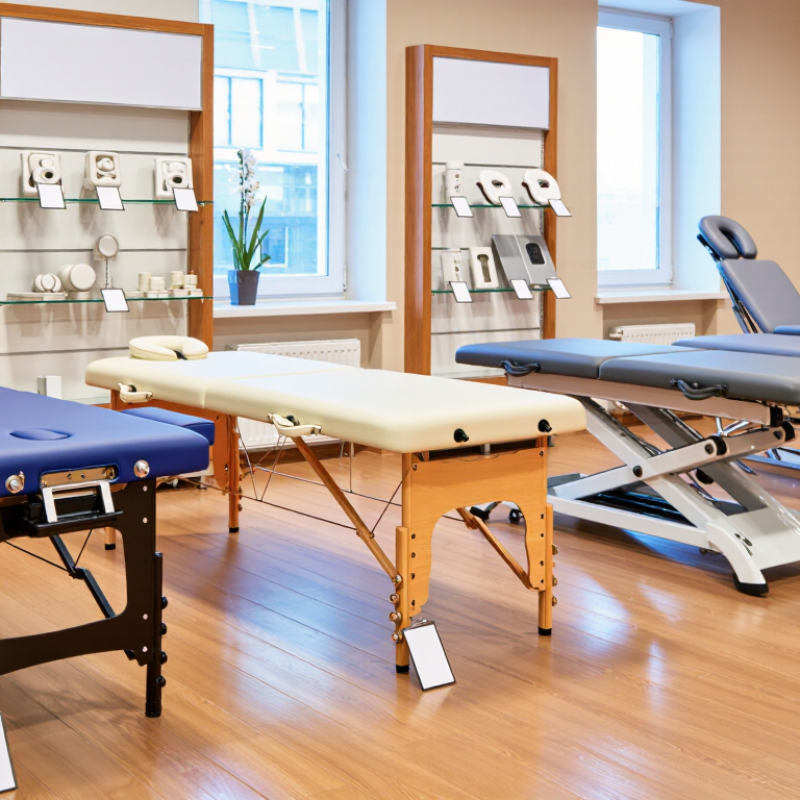
Massage tables in 2026 generally fall into three practical categories: portable, stationary, and electric. Portable tables suit mobile therapists and small rooms; folding legs and a carry handle make transport easier. They often weigh about 25–40 pounds, though lighter models may feel less stable. Check both the working-weight rating and the table’s own weight. These are not the same. A rating should reflect pressure from movement, not just a client lying still.

Stationary tables are a steady choice for dedicated treatment rooms. Wider tops can help larger clients feel secure, while adjustable legs accommodate therapists of different heights. Electric tables raise and lower with a foot control, useful when clients need easier access or treatments require frequent height changes. Look for a clear height range, a stable base, and controls that remain reachable during a session. Foam thickness and density affect comfort; upholstery should wipe clean without feeling cold or slippery. Small details matter. Test the face cradle, arm supports, and hinge locks before buying. Specifications can look convincing on paper, but a table that wobbles on your actual floor is still a poor fit.


Portable Massage Tables: Compare Weight, Width, and Manufacturer-Rated Load Capacity

Portable massage tables are often judged by weight, but the lightest model is not automatically the best fit. A table weighing 12 to 15 kilograms may be easier to carry up stairs, yet width matters once a client lies down. Narrow tables can help practitioners reach across the body without leaning. Wider surfaces may feel more secure for larger clients, but can make positioning and close work harder. Measure the room and your usual transport route. A doorway can change the decision.

Check the manufacturer-rated load capacity in the product manual, not just a number on a listing. Rating terms and test methods can differ, so confirm what the stated limit includes. Do not assume a static rating covers repeated movement or extra pressure during treatment. Leave a practical margin for the client and any equipment placed on the table.

I would not choose by capacity alone; that shortcut can backfire if the table is awkward to move or too wide for your work. Before a session, check that the legs lock firmly and the support cables show no damage.

Small details matter. Width is easy to overlook.

Stationary Tables: Evaluate Frame Construction and Treatment-Room Fit

Stationary massage tables suit treatment rooms with a consistent layout and dependable daily use. The U.S. Bureau of Labor Statistics projects 18% employment growth for massage therapists from 2023 to 2033. That forecast does not dictate table design, but it makes durable, practical room planning worth considering. A stable frame matters. Wood frames can feel substantial; metal frames may be easier to move and clean. Compare rated working weight, joint construction, and warranty terms rather than relying on appearance alone.

Measure the room with the table open, not folded against a wall. Include space for the therapist’s knees, a stool, linens, and the client’s step-on area. The 2010 ADA Standards specify a 60-inch turning space and, generally, a 36-inch minimum accessible-route width. These figures are useful planning references in applicable settings, though they do not guarantee a comfortable treatment workflow. Door swings and cabinets can quietly consume that clearance.

A wider table may feel reassuring, yet it can force awkward reaches in a narrow room. A narrower model may improve access but feel less suitable for some clients. Test the setup with the table at working height and walk around both sides. One imperfect detail: paper floor plans rarely reveal how crowded a room feels once a therapist and client are moving.

Electric and Hydraulic Tables: Compare Powered Height Adjustment and Lift Capacity

What Are the Top Massage Table Types in 2026?
Electric and Hydraulic Tables: Compare Powered Height Adjustment and Lift Capacity

Electric and hydraulic tables both reduce the effort of changing working height, but they do it differently. An electric model uses a motor and hand or foot control, allowing small adjustments while the client remains on the table. A hydraulic model usually relies on a foot pedal and pump. It needs no electrical outlet, though repeated pumping can take more effort. Smooth movement matters. A sudden shift can interrupt positioning and feel unsettling.

Tips: Compare the table’s rated lift capacity with the combined weight of the client and any equipment placed on it. Check whether the rating applies across the full height range, and leave a practical safety margin. Test the controls with the table unloaded and loaded, if possible.

Look beyond the headline capacity. A stable base, firm locking components, and even lifting matter during transfers and treatment. Electric models may suit busy rooms where height changes happen often; hydraulic ones can work well where power access is limited. Neither type is automatically better. Also consider service needs, noise, and how easily the table fits your room. Specifications help, but they do not tell the whole story. That trade-off is not always tidy.

What Are the Top Massage Table Types in 2026? — Electric and Hydraulic Tables: Compare Powered Height Adjustment and Lift Capacity
Comparison Dimension Electric Massage Table Hydraulic Massage Table What to Check Before Buying
How height is adjusted An electric motor raises or lowers the table, usually with a hand control, foot control, or both. A foot-operated hydraulic pump raises the table; a release control allows it to descend. Check which controls are included and whether they can be operated from your usual working position.
Adjustment during a session Height can generally be changed with the client on the table, provided the table’s instructions and rated capacity are followed. Height can generally be changed with the client on the table by pumping the pedal; lowering may require the client’s weight or another load. Confirm the manufacturer’s operating instructions, especially for lowering under load.
Typical height range Many models offer an adjustable range of roughly 18–36 in (46–91 cm), but the range varies. Many models offer an adjustable range of roughly 19–36 in (48–91 cm), but the range varies. Compare the listed minimum and maximum heights, measured with the table’s standard top and accessories.
Lift capacity Capacity is model-specific. Published ratings differ, so there is no single standard capacity for electric tables. Capacity is model-specific. Published ratings differ, so there is no single standard capacity for hydraulic tables. Compare the rated working load and how it is defined. Do not assume a static or evenly distributed load rating equals a working-load rating.
Power requirements Typically requires a mains connection or a rechargeable battery, depending on the model. Height adjustment is powered by a manual hydraulic pump and typically does not require electricity. For electric models, check voltage, cord placement, battery runtime, and charging requirements. For hydraulic models, check pump and service requirements.
Adjustment effort Low physical effort at the control; convenient when height changes are frequent. Requires repeated foot-pedal pumping to raise the table; effort varies with the design and load. Consider how often you adjust height and whether the pedal position works with your room setup.
Noise and movement The motor can make noise while the table moves; sound and movement vary by model. Pumping may produce some sound and requires repeated pedal movement. If a quiet room is important, review product demonstrations or test the table before purchase.
Best suited to Practices that prioritize convenient, frequent height changes and powered operation. Practices that want powered lifting without an electrical connection and are comfortable using a foot pump. Match the mechanism to treatment workflow, available space, budget, and access to power.
Maintenance considerations May require attention to the motor, controls, power supply, or battery, as specified by the manufacturer. May require inspection of the hydraulic system, pump, and release mechanism, as specified by the manufacturer. Review the warranty, service availability, inspection schedule, and instructions for safe operation.

Note: Height ranges and lift capacities are not standardized and vary by model. Use the manufacturer’s specifications for the exact table, and compare working-load ratings on the same basis.

Specialty Tables: Match Pregnancy, Reiki, and Spa Designs to Treatment Needs

Specialty massage tables work best when their shape supports the treatment, not just the room’s appearance. Pregnancy tables should allow comfortable positioning without pressing on the abdomen. Many practitioners use adjustable side-lying supports or carefully arranged cushions instead. Check each client’s comfort throughout the session; needs can change quickly. Comfort comes first. A dramatic belly cutout may look purpose-built, but it will not suit every stage of pregnancy or every body.

Reiki tables often prioritize quiet, uncluttered access around the client. Rounded corners, a stable frame, and a face cradle that adjusts smoothly can make positioning easier. Some practitioners prefer extra width for relaxed arm placement, while others need a lighter table they can move between rooms. Less hardware can help. Still, “simple” should not mean unstable; test the table for movement and listen for creaks before use.

Spa tables face a different mix of needs: frequent cleaning, oils, warm treatments, and long appointment days. Look for upholstery that tolerates the products used in your practice, plus a frame rated for the intended load. A warmer can add comfort, but check temperature controls and follow its care instructions. Details matter here. I have seen attractive tables become awkward when storage blocks access or the face cradle is slow to adjust, so test the setup with real treatment routines before choosing.

Article Source:

Powder Coat Booths

For those larger-sized parts, or smaller quantity runs, we have 2 independent powder coat booths and ovens. The quality, durability and affordability of today’s powder coating finishes make this the process of choice for world-class companies.

Powder coating advantages over other forms of coating are many. Materials used in the Powder coating process can be metals and non-metals that come in a multitude of thicknesses, textures, colors, etc. Another of Powder coating’s biggest advantages over conventional coatings is its ability to create finishes in many different textures. Powder Coating Booths allow us the ability to apply these advantages to large products.

Wet Paint Line

Tri-State Fabricators runs a full-service conveyor line for painting. Wet painting can provide protection or decoration to many different part styles. From start to finish, every project is easier to undergo random and point-based inspection by our skilled painting team.

Advantages to our Wet Paint Line are these lines start with product prep and ends with a thorough inspection of a high quality finished product. Our ability to complete large and small projects with a superior finish and doing so in a timely and economical fashion. This passes along the savings in production to our customers. When powder coating ins not an option, our Wet Paint Line gets the job done right the first time.

Wet Paint Booths

When the parts get big and heavy we roll-out our custom paint racks and oversize booth. By utilizing our partnerships with all the major paint brands, we can match virtually any color with wet paint.

The advantages of having access to a Wet Paint Booth are many. Large projects of many different shapes can be loaded into the booth. The Wet Paint Booth offers an environment that is much more controlled than a typical parts painting operation.

Not only are they used because of their controlled environment, but they’re are also advantageous when it comes to applying paint to parts that are needed in industries that require specialty coatings such as medical, aerospace, etc.

Military CARC

Our military forces have some very high standards when it comes to the finish of their vehicles and equipment. From the first pre-treatment step to final coat, it takes a great deal of knowledge and experience to protect the men and women of our armed forces. They deserve only the best, and Tri-State Fabricators provides it.

All of our processes are closely monitored by our staff and management teams. Both of which are highly trained in the processes of metal fabrication and finishing. Tri-State Fabricators’ goal is to always fully satisfy each and every customer, including the military. We will always put a 110% into what we do.

Glass-Bead Blasting

Abrasive media blasting is an excellent way to remove old paint, rust, and increase the paint/powder adhesion. Glass beads produce a much smoother and brighter finish than angular abrasives; leaving the part clean yet without any dimensional change. Chemically inert and environmentally friendly, we can recycle our beads approximately 30 times; making them a more preferred method of metal cleaning or surface finishing.

Advantages to Glass Bead Blasting are many. Glass bead blast media is used when a project is needing rough surfaces need to become smooth for applications of coatings such as paint. It is typically used to clean paint and rust from a product surface without deforming the surface it is being used on. Overall, compared to many other blasting media, Glass Bead Blasting is a very economical choice and those savings are always passed on to our customers.

Part Washing

Tri-State Fabricators utilize a zinc phosphate wash to clean and etch the material to ensure the best paint adhesion possible. The unique design of our 3-stage wash system does the work like a 5-stage. From Cleaning and rinsing to conversion coating and post-treatment, Our Part Washing process is a complete service and works throughout the fabrication service and the finishing service.

Along with the previously mentioned benefits, Curing is a vital chemical reaction that leaves the product finish hard and relatively safe from mild abrasion and aggressive corrosion. This process can be done in more than one way; ambient air-dry or in curing ovens at temps that exceed 240°.

Burn-Off Oven

From fixing paint mistakes (someone else’s of course) to simply cleaning our paint line hooks, our burn-off oven is put to good use. After a quick burn-off, a little clean up, and a fresh coat of paint, your parts will look better than new.

Why does our Burn-Off Oven work so well? Because super heating the air around parts turns the materials into ashes. From paint and powder coatings to rubber and machining oils, high temps do the job without degrading the integrity of the part.

Masking

Masking is a vital part of producing high quality products. We have die-cut masking patterns to protect machined surfaces as well as a wide range of plugs and caps to protect threaded holes and bolts. We provide permanent and temporary masking.

Masking allows the selected sections of a product to be protected from a fabrication or finishing service. This can be with both chemicals when etching and tapes, paints when only finishing just a section of the product. Masking is great in aiding the customization process of a project.

Screen Printing

Screen printing is a photographic process that transfers artwork onto a porous nylon screen which allows colored ink to flow through the screen and be deposited on an aluminum or plastic component. We can generally have just about any design created onto a screen for your parts.

Some of the advantages of Screen Printing are, brand recognition for your business displaying on your products, assembly instructions, product warnings/hazards, etc. Tri-State Fabricators produces Screen Printing of the highest quality so you know it’s durable.

Metal Finishing

Metal Finishing is the art of treating the exterior portion of product, often metal but can also be made of other materials, so that the surface is clean and free of any debris. Then the process of applying coats or either paint of powder coat takes place. This coating process improves the quality of the product in both appearance and resistance to wear and corrosion.

Tri-State Fabricators, Inc., understands that a project typically isn’t complete until a high-quality finish has been added to your product. This is why our painting and powder coating teams continuously inspect the products throughout the Metal Finishing process.
