


What Are the Top Types of Marine Batteries in 2026?

Choosing the right Marine Batteries can shape every trip, from a quiet afternoon cruise to a demanding offshore passage. In 2026, boat owners can compare flooded lead-acid, AGM, gel, and lithium iron phosphate batteries. Each chemistry offers different strengths in cost, weight, maintenance, starting power, and usable capacity.

No single battery wins every boat. A small fishing boat may still benefit from a dependable flooded battery and simple charging equipment. A cruising yacht might prefer lithium batteries for their lower weight and deeper usable capacity. AGM batteries can suit owners who want sealed construction without immediately changing their entire electrical system. Gel batteries remain useful in selected applications, but their charging requirements deserve careful attention.

Real-world performance depends on more than the label. Battery temperature, engine alternator settings, cable size, ventilation, and charging profiles can change the result. Experienced marine electricians often begin with the boat’s daily energy audit. They measure pumps, navigation displays, radios, refrigerators, and inverters under actual conditions. Manufacturer datasheets and certified installation guidance should support that decision. Marketing claims can sound impressive. They are not always the complete story.

This guide examines the top Marine Batteries for 2026 and explains where each type fits best. It also considers lifespan, safety features, maintenance demands, and total ownership cost. Lithium systems may deliver excellent efficiency, yet they require compatible chargers and reliable battery management systems. Even experienced owners can overlook those details. That is worth checking twice.
What Are the Top Types of Marine Batteries in 2026?

Marine Battery Categories and Selection Criteria for 2026

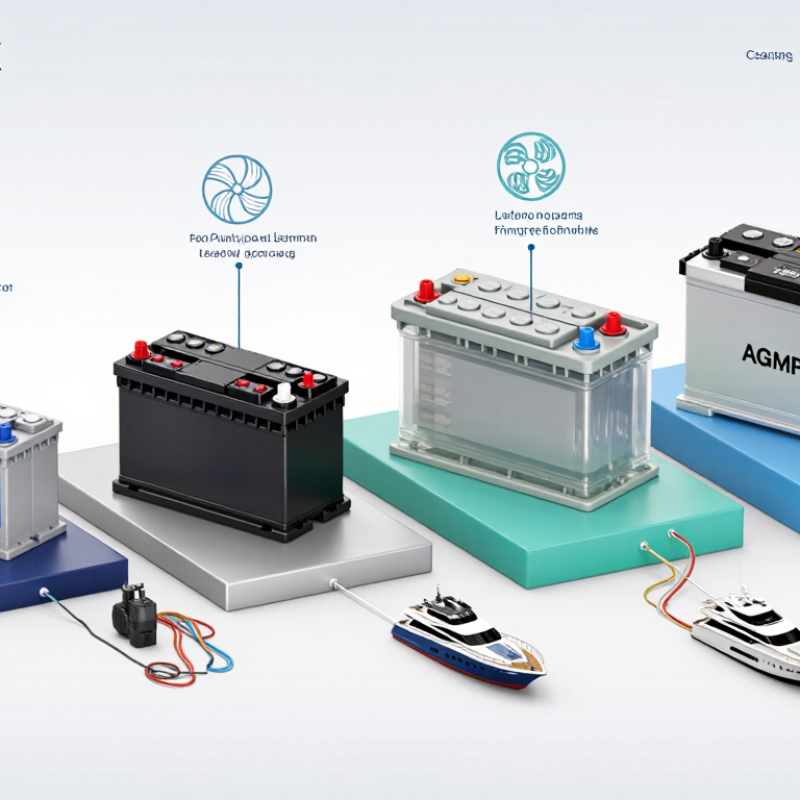
In 2026, marine battery selection is less about a single “best” chemistry. The right choice depends on the boat’s electrical rhythm, storage space, and charging equipment. Flooded lead-acid batteries remain practical for starting engines and basic house loads. They cost less, tolerate simple charging, and require ventilation and regular inspection. AGM batteries resist vibration and spills, making them useful in enclosed compartments. Gel batteries offer stable deep-cycle service, but their charging limits demand careful setup. Lithium iron phosphate batteries reduce weight and provide more usable energy. They need compatible chargers and a battery management system. They are not plug-and-play.

Battery role matters as much as chemistry. A starting battery must deliver high cranking current for a cold engine. A deep-cycle battery supports repeated loads from lights, electronics, refrigeration, or trolling motors. A dual-purpose design can bridge both jobs, though compromises are possible. Measure amp-hours, reserve capacity, and expected daily consumption before choosing size. Leave room for charging losses and unusually long nights at anchor. Check terminal orientation, hold-down security, cable length, and compartment temperature.

From practical installations, poor fit causes more trouble than low capacity. A battery may look powerful but fail when cables are undersized or charging is mismatched. Confirm the alternator, solar controller, shore charger, and battery chemistry can work together. Use documented marine ratings and follow the vessel’s installation requirements. I still prefer a measured load test over optimistic label claims. It is slower, but more honest. Even careful estimates can miss a refrigerator cycling overnight. That uncertainty deserves a safety margin, not guesswork.


Starting Batteries for Reliable Marine Engine Cranking

What Are the Top Types of Marine Batteries in 2026?

For reliable engine cranking, starting batteries remain essential aboard recreational vessels.

Flooded lead-acid batteries deliver strong short-duration current at a relatively low purchase cost. AGM batteries provide higher vibration resistance and reduced maintenance. Lithium iron phosphate batteries offer lower weight, but require compatible charging equipment and a proper battery-management system. Choose by cold-cranking amps, reserve capacity, terminal layout, and engine specifications. Amp-hours alone can mislead.

The NMMA 2024 Statistical Abstract reported approximately 11.6 million registered recreational boats in the United States during 2023. That large fleet includes many different engine sizes and electrical loads. A practical dockside check matters. Measure voltage after rest, inspect cable lugs, and test cranking voltage under load. A battery may show 12.7 volts, then sag sharply when the starter engages. Watch the details.

The U.S. Coast Guard’s 2023 Recreational Boating Statistics recorded 3,844 accidents, 564 deaths, and 2,126 injuries. These figures are not battery-specific, but they reinforce the need for dependable starting systems and maintenance.

ABYC E-10 guidance also emphasizes secure installation, ventilation, overcurrent protection, and correct charging practices. Lithium systems can be excellent, yet their higher cost and electronic safeguards deserve careful evaluation.

I would not trust a headline CCA number without checking temperature, cable length, and actual load conditions. Small oversights remain common.

Deep-Cycle Batteries for Electronics and Auxiliary Loads

What Are the Top Types of Marine Batteries in 2026?

Deep-cycle batteries are built for steady energy delivery, not brief engine-starting surges. They support chartplotters, radios, cabin lights, pumps, refrigeration, and other auxiliary loads. Common choices include flooded lead-acid, AGM, and lithium iron phosphate batteries. Each option has different charging needs, weight, lifespan, and maintenance demands.

In practical installations, AGM batteries suit enclosed spaces because they resist spills and require little routine care. Flooded batteries can cost less, but they need ventilation, water checks, and careful mounting. Lithium batteries provide more usable capacity and lower weight. However, they require a compatible charger and a reliable battery management system. My early mistake was comparing only amp-hour ratings. Usable energy, discharge limits, temperature protection, and charging behavior matter more on long trips. A battery that looks powerful on paper may disappoint in rough weather.

Tips: List every auxiliary load and its running hours. Include startup surges from pumps and refrigeration. Add a realistic reserve for cloudy days or delayed charging. Keep fuses close to the battery, and inspect terminals for heat or corrosion. Follow the battery maker’s charging limits. Never mix battery types without proper isolation and charge control. A professional inspection can reveal hidden voltage drop in old cables. I still recheck calculations after installation, because real onboard usage often differs from the original estimate.

What Are the Top Types of Marine Batteries in 2026? - Deep-Cycle Batteries for Electronics and Auxiliary Loads

Battery Type Typical Chemistry Recommended Usable Depth of Discharge Typical Cycle Life* Charging Profile Key Advantages Important Limitations Best Use for Electronics and Auxiliary Loads
Flooded Lead-Acid Deep-Cycle Liquid electrolyte with lead plates Up to about 50% Approximately 300–700 cycles Requires a staged lead-acid charging profile; periodic full charging is beneficial Low initial cost, widely available, and relatively tolerant of occasional overcharging Heavy, requires ventilation, may require electrolyte maintenance, and can release hydrogen gas while charging Basic lighting, pumps, radios, and moderate auxiliary loads where weight and maintenance are acceptable
AGM Deep-Cycle Absorbent glass mat sealed lead-acid Up to about 50% Approximately 400–1,000 cycles Needs a regulated AGM-compatible charging profile; overcharging should be avoided Sealed construction, low maintenance, good vibration resistance, and higher charge acceptance than many flooded batteries Heavier than lithium batteries, sensitive to excessive voltage, and generally more expensive than flooded lead-acid Chart plotters, sonar, navigation equipment, communications systems, and general house loads
Gel Deep-Cycle Gelled electrolyte lead-acid Up to about 50% Approximately 500–1,200 cycles Requires a lower-voltage gel-specific charging profile to prevent gas pockets and damage Sealed, low maintenance, good resistance to vibration, and suitable for slower discharge applications Charging is less forgiving, high charging currents can cause damage, and energy density is lower than lithium Steady auxiliary loads, monitoring equipment, cabin electronics, and installations with limited ventilation
LiFePO4 Lithium Deep-Cycle Lithium iron phosphate Typically 80–100% Approximately 2,000–5,000 cycles Requires a lithium-compatible charger and a battery management system; charging below freezing may be restricted Low weight, high usable capacity, stable voltage during discharge, fast charging, and long service life Higher purchase price, requires compatible charging equipment, and must be protected against overcharge, over-discharge, and unsuitable temperatures High-demand electronics, long-duration house loads, electric appliances, communications, and weight-sensitive vessels
Lithium-Titanate Deep-Cycle Lithium-titanate cells Often 80–100% Approximately 5,000–15,000 cycles Requires a compatible lithium charging system and battery management system Very high cycle durability, excellent high-current performance, rapid charging capability, and strong low-temperature performance Higher cost, lower energy density than many other lithium chemistries, and limited availability for recreational marine installations Frequent cycling, high-power auxiliary systems, commercial marine equipment, and demanding duty cycles
Dual-Purpose Marine Battery Lead-acid or lithium design combining starting and deep-cycle functions Usually about 30–50% for lead-acid designs Approximately 300–800 cycles, depending on chemistry and operating conditions Must follow the charging requirements of the specific chemistry Saves space by combining engine-starting capability with moderate auxiliary-load support Usually delivers less starting power than a dedicated starter battery and less deep-cycle life than a dedicated house battery Smaller boats with limited electrical loads, compact installations, or systems that need one general-purpose battery

*Cycle-life figures are typical industry ranges under controlled conditions. Actual results depend on discharge depth, temperature, charging quality, storage practices, vibration, and the battery’s construction. A battery bank should be sized using the vessel’s daily amp-hour demand, required reserve capacity, charging capability, and installation environment.

Dual-Purpose Batteries for Combined Starting and House Power

Dual-purpose marine batteries remain a practical choice for boat owners in 2026.

They support engine starting and house power from one battery system. Their internal design balances high starting current with steady energy delivery. This makes them useful on small fishing boats, runabouts, and weekend cruisers. However, the compromise matters. A dual-purpose battery may not crank a large cold engine like a dedicated starting battery. It may also provide less deep-cycle endurance than a dedicated house battery. Real performance depends on engine size, onboard electronics, and daily usage.

Tips: Check cold-cranking amps, reserve capacity, and amp-hour ratings before buying. Match the battery to your engine’s requirements. Measure the battery compartment first. Leave room for cables and ventilation. Keep terminals clean and firmly tightened. Do not rely on appearance alone.

A reliable installation needs correct charging equipment and suitable cable sizes. Alternators, solar chargers, and shore chargers should follow the battery’s chemistry and specifications. Lead-acid models need regular inspection, especially after heavy use.

Lithium-based models can reduce weight, but they require compatible management systems and charging protection. That detail is easy to miss. In practice, frequent short trips may leave a battery undercharged, even when the engine starts normally. A monthly voltage check can reveal that hidden weakness. Battery life also suffers from heat, vibration, and repeated deep discharge. Simpler is not always better.

Lithium, AGM, Gel, and Flooded Marine Battery Technologies

What Are the Top Types of Marine Batteries in 2026?

Lithium marine batteries remain popular for boats needing low weight and long usable capacity. They deliver steady voltage, support deep discharges, and recharge quickly. A battery management system is essential for protection and cell balancing. Charging must match the battery’s chemistry. Cold-weather charging also requires attention, because freezing temperatures can damage lithium cells.

Lithium is powerful, but it is not automatically the best choice.

AGM batteries use absorbed electrolyte and sealed construction. They resist vibration, require little maintenance, and suit starting or house-bank duties. However, AGM batteries are heavy and dislike repeated over-discharge.

Gel batteries also use sealed construction, but their electrolyte is immobilized in silica gel. They perform well in deep-cycle applications and reduce spill concerns. Incorrect charging voltage can permanently reduce their capacity.

Small details matter.

Flooded lead-acid batteries remain practical where budget and easy replacement matter most. They need ventilation, upright installation, and regular electrolyte checks. Their charging area should stay clean and dry. Marine technicians often inspect terminals for white corrosion before testing voltage.

A voltage reading alone can mislead you. Load testing reveals more.

My judgment would change after checking engine-starting demand, cabin loads, storage time, and charging equipment. Even an efficient battery can disappoint when the charger uses the wrong profile.

Powder Coat Booths

For those larger-sized parts, or smaller quantity runs, we have 2 independent powder coat booths and ovens. The quality, durability and affordability of today’s powder coating finishes make this the process of choice for world-class companies.

Powder coating advantages over other forms of coating are many. Materials used in the Powder coating process can be metals and non-metals that come in a multitude of thicknesses, textures, colors, etc. Another of Powder coating’s biggest advantages over conventional coatings is its ability to create finishes in many different textures. Powder Coating Booths allow us the ability to apply these advantages to large products.

Wet Paint Line

Tri-State Fabricators runs a full-service conveyor line for painting. Wet painting can provide protection or decoration to many different part styles. From start to finish, every project is easier to undergo random and point-based inspection by our skilled painting team.

Advantages to our Wet Paint Line are these lines start with product prep and ends with a thorough inspection of a high quality finished product. Our ability to complete large and small projects with a superior finish and doing so in a timely and economical fashion. This passes along the savings in production to our customers. When powder coating ins not an option, our Wet Paint Line gets the job done right the first time.

Wet Paint Booths

When the parts get big and heavy we roll-out our custom paint racks and oversize booth. By utilizing our partnerships with all the major paint brands, we can match virtually any color with wet paint.

The advantages of having access to a Wet Paint Booth are many. Large projects of many different shapes can be loaded into the booth. The Wet Paint Booth offers an environment that is much more controlled than a typical parts painting operation.

Not only are they used because of their controlled environment, but they’re are also advantageous when it comes to applying paint to parts that are needed in industries that require specialty coatings such as medical, aerospace, etc.

Military CARC

Our military forces have some very high standards when it comes to the finish of their vehicles and equipment. From the first pre-treatment step to final coat, it takes a great deal of knowledge and experience to protect the men and women of our armed forces. They deserve only the best, and Tri-State Fabricators provides it.

All of our processes are closely monitored by our staff and management teams. Both of which are highly trained in the processes of metal fabrication and finishing. Tri-State Fabricators’ goal is to always fully satisfy each and every customer, including the military. We will always put a 110% into what we do.

Glass-Bead Blasting

Abrasive media blasting is an excellent way to remove old paint, rust, and increase the paint/powder adhesion. Glass beads produce a much smoother and brighter finish than angular abrasives; leaving the part clean yet without any dimensional change. Chemically inert and environmentally friendly, we can recycle our beads approximately 30 times; making them a more preferred method of metal cleaning or surface finishing.

Advantages to Glass Bead Blasting are many. Glass bead blast media is used when a project is needing rough surfaces need to become smooth for applications of coatings such as paint. It is typically used to clean paint and rust from a product surface without deforming the surface it is being used on. Overall, compared to many other blasting media, Glass Bead Blasting is a very economical choice and those savings are always passed on to our customers.

Part Washing

Tri-State Fabricators utilize a zinc phosphate wash to clean and etch the material to ensure the best paint adhesion possible. The unique design of our 3-stage wash system does the work like a 5-stage. From Cleaning and rinsing to conversion coating and post-treatment, Our Part Washing process is a complete service and works throughout the fabrication service and the finishing service.

Along with the previously mentioned benefits, Curing is a vital chemical reaction that leaves the product finish hard and relatively safe from mild abrasion and aggressive corrosion. This process can be done in more than one way; ambient air-dry or in curing ovens at temps that exceed 240°.

Burn-Off Oven

From fixing paint mistakes (someone else’s of course) to simply cleaning our paint line hooks, our burn-off oven is put to good use. After a quick burn-off, a little clean up, and a fresh coat of paint, your parts will look better than new.

Why does our Burn-Off Oven work so well? Because super heating the air around parts turns the materials into ashes. From paint and powder coatings to rubber and machining oils, high temps do the job without degrading the integrity of the part.

Masking

Masking is a vital part of producing high quality products. We have die-cut masking patterns to protect machined surfaces as well as a wide range of plugs and caps to protect threaded holes and bolts. We provide permanent and temporary masking.

Masking allows the selected sections of a product to be protected from a fabrication or finishing service. This can be with both chemicals when etching and tapes, paints when only finishing just a section of the product. Masking is great in aiding the customization process of a project.

Screen Printing

Screen printing is a photographic process that transfers artwork onto a porous nylon screen which allows colored ink to flow through the screen and be deposited on an aluminum or plastic component. We can generally have just about any design created onto a screen for your parts.

Some of the advantages of Screen Printing are, brand recognition for your business displaying on your products, assembly instructions, product warnings/hazards, etc. Tri-State Fabricators produces Screen Printing of the highest quality so you know it’s durable.

Metal Finishing

Metal Finishing is the art of treating the exterior portion of product, often metal but can also be made of other materials, so that the surface is clean and free of any debris. Then the process of applying coats or either paint of powder coat takes place. This coating process improves the quality of the product in both appearance and resistance to wear and corrosion.

Tri-State Fabricators, Inc., understands that a project typically isn’t complete until a high-quality finish has been added to your product. This is why our painting and powder coating teams continuously inspect the products throughout the Metal Finishing process.
