


10 Best Marble Suppliers for Global Buyers?

Choosing a reliable marble supplier can shape an entire construction project, from visual quality to installation costs. Global buyers need more than polished photographs and attractive quotations. They need evidence.

This guide examines ten marble suppliers serving international markets, using practical standards that experienced purchasing teams often apply. These standards include quarry ownership, block selection, slab consistency, finishing accuracy, production capacity, and export experience. We also consider product documentation, sample policies, packaging methods, and communication during long-distance orders. A carefully packed crate matters when fragile slabs travel thousands of kilometres.

The best supplier is not always the largest one. Some companies offer distinctive stone varieties, while others provide stronger quality control or more flexible customization. Buyers should request recent samples, technical specifications, inspection records, and clear delivery terms before making commitments. Certifications can support credibility, but they should not replace independent verification.

No supplier performs perfectly in every category. That is worth remembering. A company may offer excellent marble but slower responses. Another may provide competitive prices but limited color consistency between batches. Regional shipping conditions, currency changes, and project deadlines can also influence the final decision. This overview aims to provide a balanced starting point for architects, contractors, importers, and distributors. It highlights trustworthy capabilities while leaving room for careful questions. Real confidence develops through transparent evidence, not confident marketing language.
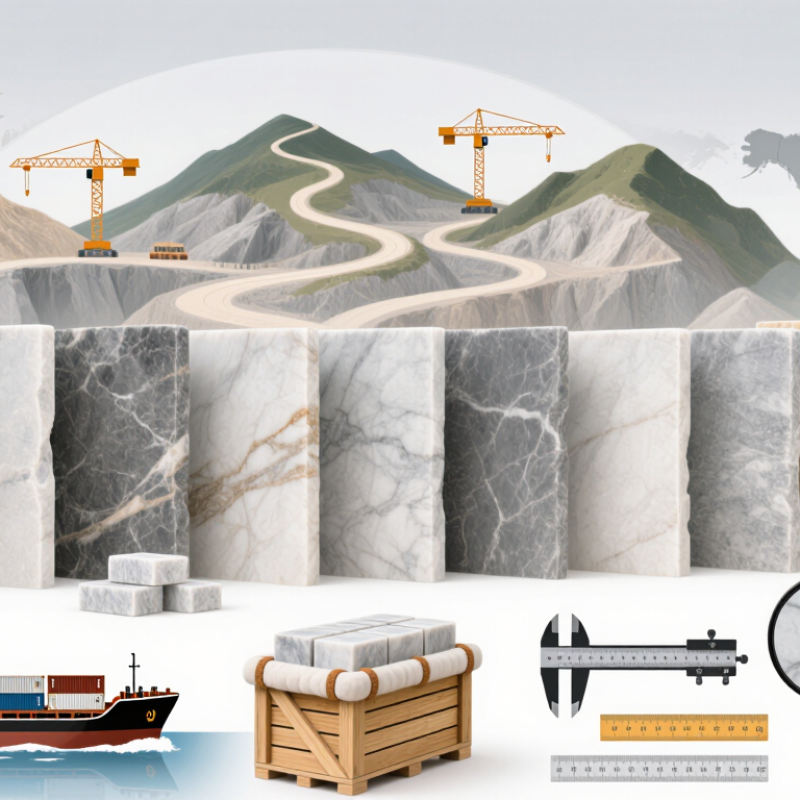
10 Best Marble Suppliers for Global Buyers?

What Defines a Reliable Marble Supplier for International Buyers

10 Best Marble Suppliers for Global Buyers?

A reliable marble supplier offers more than attractive slabs and competitive prices. International buyers need consistent quality, clear communication, and documented production controls. Ask where the stone is quarried, how blocks are selected, and whether each batch receives inspection reports. Useful records include water absorption, density, compressive strength, and surface finish details. These figures help architects match marble with flooring, façades, bathrooms, or heavy-use areas.

Export experience also matters. A capable supplier understands moisture protection, crate reinforcement, container loading, and destination requirements. Request current photos, small samples, dimensional tolerances, and packing lists before placing a large order. During sourcing, I have found that a polished sample can hide shade variation within the same block. That matters. A trustworthy supplier admits this risk and explains acceptable limits instead of promising perfect uniformity. Response speed is useful, but careful answers are more valuable. A rushed quotation may leave important details missing.

Tips: Compare samples under natural and indoor light. Confirm thickness, finish, quantity, lead time, payment terms, and inspection procedures in writing. Check whether the supplier can trace slabs to a quarry or production batch. Ask for references from comparable international projects, while verifying them independently. No supplier is flawless. Reliability comes from transparent correction, stable quality, and practical solutions when something goes wrong.

10 Best Marble Suppliers for Global Buyers? – What Defines a Reliable Marble Supplier for International Buyers
Supplier Profile Major Sourcing Region Common Product Range Typical Export Readiness Typical Lead Time Quality Evidence to Request Best Fit for Global Buyers Reliability Score
Large quarry-integrated exporter Turkey Slabs, tiles, cut-to-size panels, blocks Usually experienced with container loading, export documentation, and international payment procedures 4–8 weeks after approval of drawings and finish samples Block or slab photos, batch references, dimensional inspection, water-absorption and flexural-strength reports High-volume commercial, hospitality, and residential projects High
Premium natural-stone processor Italy Book-matched slabs, polished slabs, bespoke interior components Strong technical support and finishing expertise; generally suitable for specification-led projects 6–12 weeks for customized orders Approved sample, vein-layout drawings, finish-control photos, and project references Luxury interiors and high-end architectural applications High
Competitive mid-market fabricator China Tiles, slabs, vanity tops, stair treads, custom cut-to-size products Often offers broad fabrication capacity and container consolidation for overseas buyers 5–10 weeks depending on customization and production schedule Pre-production samples, shop drawings, packing list, crate photos, and third-party inspection option Developers, distributors, and projects requiring varied custom items Medium–High
Quarry and slab exporter Greece White and light-colored slabs, tiles, blocks, exterior and interior stone Good access to Mediterranean shipping routes and established stone-export practices 4–9 weeks, subject to quarry availability Current quarry photos, slab grading, shade variation statement, and test documentation Projects seeking bright marble with consistent visual presentation High
Regional quarry producer Spain Slabs, tiles, façades, flooring, and architectural stonework Typically provides European technical documentation and regulated commercial invoicing 5–10 weeks for standard products; longer for special fabrication Technical data sheet, CE-related documentation where applicable, finish sample, and tolerance schedule European construction and specification-driven projects High
Value-focused export manufacturer India Tiles, slabs, countertops, monuments, and cut-to-size products Commonly supports private-label packing, mixed containers, and overseas wholesale orders 6–12 weeks including production and export preparation Production sample, container loading plan, moisture protection details, and inspection report Wholesalers and buyers balancing price with customization Medium–High
Regional quarry and processor Portugal Slabs, flooring, wall cladding, stair components, and custom pieces Generally familiar with European standards, palletized packing, and international freight coordination 4–8 weeks for standard orders Petrographic description, technical performance data, sample approval, and packing specifications Residential, hospitality, and façade projects in Europe and nearby markets High
North American stone distributor-fabricator United States and Canada Imported slabs, countertops, prefabricated components, and local fabrication Strong local inventory and installation coordination; international export capability varies 1–6 weeks for stocked products; 6–12 weeks for imported replenishment Inventory confirmation, slab photography, fabrication tolerances, and installation guidelines Buyers prioritizing local service, rapid delivery, and project support Medium–High
Middle Eastern stone exporter Egypt Tiles, slabs, blocks, flooring, façades, and project cut-to-size stone Often competitive for container-scale orders and regional export routes 5–10 weeks depending on quarry, processing, and port schedule Material origin, production photos, test reports, crate design, and independent pre-shipment inspection Large flooring, façade, and infrastructure-related orders Medium–High
Specialty quarry and custom fabricator Brazil Distinctive slabs, book-matched panels, tiles, and custom architectural elements Suitable for international projects when the supplier provides clear logistics and slab-selection support 6–12 weeks, with additional time for special finishing High-resolution slab inventory, resin-treatment disclosure, finish sample, and export packing plan Design-led projects requiring distinctive color or veining Medium–High
Buyer verification note: Lead times, minimum order quantities, prices, shipping costs, and test results vary by quarry, finish, quantity, season, and destination. Before placing an order, request a physical sample, current production photos, technical documentation, written tolerances, Incoterms, packaging details, and an independent pre-shipment inspection.

Key Marble-Producing Regions and Their Export Strengths

10 Best Marble Suppliers for Global Buyers?

Key Marble-Producing Regions and Their Export Strengths

Global buyers often begin with appearance, but reliable sourcing starts with geography. Italy is recognized for refined white marble and advanced processing expertise. Turkey offers extensive reserves, competitive capacity, and blocks for large projects. Greece supplies bright crystalline stone with consistent decorative appeal. Spain provides varied colors and dependable export logistics. India is valued for distinctive textures and darker marble varieties.

Brazil offers dramatic patterns and strong demand for statement interiors. Portugal is known for softer tones and established quarrying experience. Egypt provides abundant limestone-based marble and competitive pricing. Iran has substantial reserves and diverse colors, although buyers should assess logistics carefully. China remains important for fabrication, finishing, and large-scale production. Regional strengths do not guarantee every shipment. Quarry performance can change by season, block location, and production planning.

Tips: Request recent quarry photos, independent test reports, and exact block dimensions. Check water absorption, flexural strength, surface finish, and color variation. Confirm packaging before loading. Wooden crates and reinforced corners reduce transit damage. Ask for a small sample, but remember samples cannot show every natural vein. My practical caution is simple: a famous marble region may still deliver inconsistent batches. Verify the quarry, not only the country.

How to Evaluate Marble Quality, Selection, and Processing Services

10 Best Marble Suppliers for Global Buyers?

Choosing among ten marble suppliers requires more than comparing prices. Start with the stone itself. Ask for the quarry location, block photos, and a recent technical report. Check the background color, veining, crystal size, and filled fissures under natural light. A polished sample can hide weak areas. Request an unsealed offcut. Test water absorption, density, and flexural strength through an independent laboratory. These figures matter for kitchens, facades, and floors. Not every pale stone suits heavy traffic.

Selection should match the project, not a catalog photograph. Ask how each slab is bookmatched, labeled, and stored. Confirm thickness tolerance, resin treatment, polishing sequence, and edge finishing. Run a wet test on a sample. Some colors change noticeably. I have seen clients approve a small tile, then reject full slabs because the vein direction differed. That mistake is avoidable, but digital images remain imperfect. Demand batch photos and signed sample approval.

Processing service separates a capable supplier from a simple stone trader. Review CNC cutting accuracy, sink cutout templates, miter joints, and replacement procedures. Clarify drawing approval, packaging, inspection points, and shipping protection. Timber crates should prevent corner impact and allow ventilation. Ask for production records and dimensional inspection reports. A reliable supplier explains defects before payment, not after installation. Still, no report replaces physical inspection. Hire a local inspector when the order is large. Small omissions can become expensive corrections.

10 Best Marble Suppliers for Global Buyers: Evaluation Priorities

A practical buyer evaluation model showing the relative importance of marble quality, product selection, processing capability, and export support.

Quality and consistency should receive the highest weighting because water absorption, strength, finish stability, and batch uniformity directly affect long-term project performance. Selection range, precision processing, packaging, documentation, and delivery reliability are also essential when comparing suppliers for international projects.

Comparing Prices, Certifications, Logistics, and Minimum Order Terms

Choosing among the 10 best marble suppliers requires more than comparing price per square meter. Request the same specification: stone grade, thickness, finish, tolerance, packing, and delivery term. A polished 20-millimeter slab may look affordable until crates, inland transport, insurance, and port fees appear separately.

Certification also needs careful checking. Ask for recent test reports covering water absorption, flexural strength, and slip performance. ASTM C503 and EN 1469 provide useful reference points for dimension stone and slabs. ISO 9001 supports process control, but it does not prove that every block has consistent color. That distinction is often missed. The Natural Stone Institute recommends evaluating testing and fabrication details, not certificates alone. Sample approval should include daylight photographs and a physical piece.

Logistics can change the cheapest offer. UNCTAD’s Review of Maritime Transport reports that shipping carries over 80% of global merchandise trade by volume. Therefore, container planning matters. Compare FOB, CFR, and DDP quotations carefully, including port handling and demurrage exposure. Ask suppliers for loading photos, crate dimensions, container capacity, and a realistic production schedule. Minimum order terms deserve equal attention. A lower MOQ may suit a boutique project, while full-container orders usually reduce freight cost per square meter. Still, one container can contain mixed shades. I would confirm block numbers before payment. Prices remain imperfect benchmarks because quarry yield, finish, thickness, currency, and freight rates change quickly. A written validity period is essential.

How to Choose the Best Marble Supplier for Your Project

Choosing a marble supplier starts with your project conditions, not a glossy catalog. Record slab dimensions, expected quantity, finish, edge profile, and installation location. A bathroom vanity needs different protection from an outdoor terrace exposed to frost and rain. Ask for recent quarry and factory details, including cutting capacity and quality-control procedures. A reliable supplier should explain where each batch was quarried and how variations are managed.

Request physical samples, not only high-resolution photographs. Place them under your planned lighting, because white marble can look warmer indoors. Inspect veining, resin repairs, thickness, flatness, and polished edges. For larger orders, approve a signed control sample before production begins. Clarify tolerances, packaging, moisture protection, inspection timing, and replacement terms in writing. Freight damage is easier to resolve when photographs and responsibilities are agreed before loading. Check references for projects with similar volume and technical demands. One attractive sample proves very little.

Pricing deserves careful comparison. A low quotation may exclude crating, customs documents, breakage allowance, or port handling. Compare the delivered cost and payment schedule, not just the price per square meter. Ask how the supplier responds to shade differences or delayed shipments. Clear answers reveal practical experience, but confidence alone is not proof. Request test reports when slip resistance, water absorption, or durability affects the specification. I have seen projects lose time because teams trusted images and skipped batch approval. That mistake is avoidable, though real-world variation still remains.

Article Source:

Powder Coat Booths

For those larger-sized parts, or smaller quantity runs, we have 2 independent powder coat booths and ovens. The quality, durability and affordability of today’s powder coating finishes make this the process of choice for world-class companies.

Powder coating advantages over other forms of coating are many. Materials used in the Powder coating process can be metals and non-metals that come in a multitude of thicknesses, textures, colors, etc. Another of Powder coating’s biggest advantages over conventional coatings is its ability to create finishes in many different textures. Powder Coating Booths allow us the ability to apply these advantages to large products.

Wet Paint Line

Tri-State Fabricators runs a full-service conveyor line for painting. Wet painting can provide protection or decoration to many different part styles. From start to finish, every project is easier to undergo random and point-based inspection by our skilled painting team.

Advantages to our Wet Paint Line are these lines start with product prep and ends with a thorough inspection of a high quality finished product. Our ability to complete large and small projects with a superior finish and doing so in a timely and economical fashion. This passes along the savings in production to our customers. When powder coating ins not an option, our Wet Paint Line gets the job done right the first time.

Wet Paint Booths

When the parts get big and heavy we roll-out our custom paint racks and oversize booth. By utilizing our partnerships with all the major paint brands, we can match virtually any color with wet paint.

The advantages of having access to a Wet Paint Booth are many. Large projects of many different shapes can be loaded into the booth. The Wet Paint Booth offers an environment that is much more controlled than a typical parts painting operation.

Not only are they used because of their controlled environment, but they’re are also advantageous when it comes to applying paint to parts that are needed in industries that require specialty coatings such as medical, aerospace, etc.

Military CARC

Our military forces have some very high standards when it comes to the finish of their vehicles and equipment. From the first pre-treatment step to final coat, it takes a great deal of knowledge and experience to protect the men and women of our armed forces. They deserve only the best, and Tri-State Fabricators provides it.

All of our processes are closely monitored by our staff and management teams. Both of which are highly trained in the processes of metal fabrication and finishing. Tri-State Fabricators’ goal is to always fully satisfy each and every customer, including the military. We will always put a 110% into what we do.

Glass-Bead Blasting

Abrasive media blasting is an excellent way to remove old paint, rust, and increase the paint/powder adhesion. Glass beads produce a much smoother and brighter finish than angular abrasives; leaving the part clean yet without any dimensional change. Chemically inert and environmentally friendly, we can recycle our beads approximately 30 times; making them a more preferred method of metal cleaning or surface finishing.

Advantages to Glass Bead Blasting are many. Glass bead blast media is used when a project is needing rough surfaces need to become smooth for applications of coatings such as paint. It is typically used to clean paint and rust from a product surface without deforming the surface it is being used on. Overall, compared to many other blasting media, Glass Bead Blasting is a very economical choice and those savings are always passed on to our customers.

Part Washing

Tri-State Fabricators utilize a zinc phosphate wash to clean and etch the material to ensure the best paint adhesion possible. The unique design of our 3-stage wash system does the work like a 5-stage. From Cleaning and rinsing to conversion coating and post-treatment, Our Part Washing process is a complete service and works throughout the fabrication service and the finishing service.

Along with the previously mentioned benefits, Curing is a vital chemical reaction that leaves the product finish hard and relatively safe from mild abrasion and aggressive corrosion. This process can be done in more than one way; ambient air-dry or in curing ovens at temps that exceed 240°.

Burn-Off Oven

From fixing paint mistakes (someone else’s of course) to simply cleaning our paint line hooks, our burn-off oven is put to good use. After a quick burn-off, a little clean up, and a fresh coat of paint, your parts will look better than new.

Why does our Burn-Off Oven work so well? Because super heating the air around parts turns the materials into ashes. From paint and powder coatings to rubber and machining oils, high temps do the job without degrading the integrity of the part.

Masking

Masking is a vital part of producing high quality products. We have die-cut masking patterns to protect machined surfaces as well as a wide range of plugs and caps to protect threaded holes and bolts. We provide permanent and temporary masking.

Masking allows the selected sections of a product to be protected from a fabrication or finishing service. This can be with both chemicals when etching and tapes, paints when only finishing just a section of the product. Masking is great in aiding the customization process of a project.

Screen Printing

Screen printing is a photographic process that transfers artwork onto a porous nylon screen which allows colored ink to flow through the screen and be deposited on an aluminum or plastic component. We can generally have just about any design created onto a screen for your parts.

Some of the advantages of Screen Printing are, brand recognition for your business displaying on your products, assembly instructions, product warnings/hazards, etc. Tri-State Fabricators produces Screen Printing of the highest quality so you know it’s durable.

Metal Finishing

Metal Finishing is the art of treating the exterior portion of product, often metal but can also be made of other materials, so that the surface is clean and free of any debris. Then the process of applying coats or either paint of powder coat takes place. This coating process improves the quality of the product in both appearance and resistance to wear and corrosion.

Tri-State Fabricators, Inc., understands that a project typically isn’t complete until a high-quality finish has been added to your product. This is why our painting and powder coating teams continuously inspect the products throughout the Metal Finishing process.


