Top 10 Types of Machine Tools for Global Buyers
Machine tools are the production backbone behind aircraft parts, vehicle components, medical devices, and precision hardware. For global buyers, choosing the right Machine Tool involves more than comparing prices or spindle speeds. Factory layout, material type, tolerance requirements, operator skills, energy use, and after-sales support all influence the real investment.
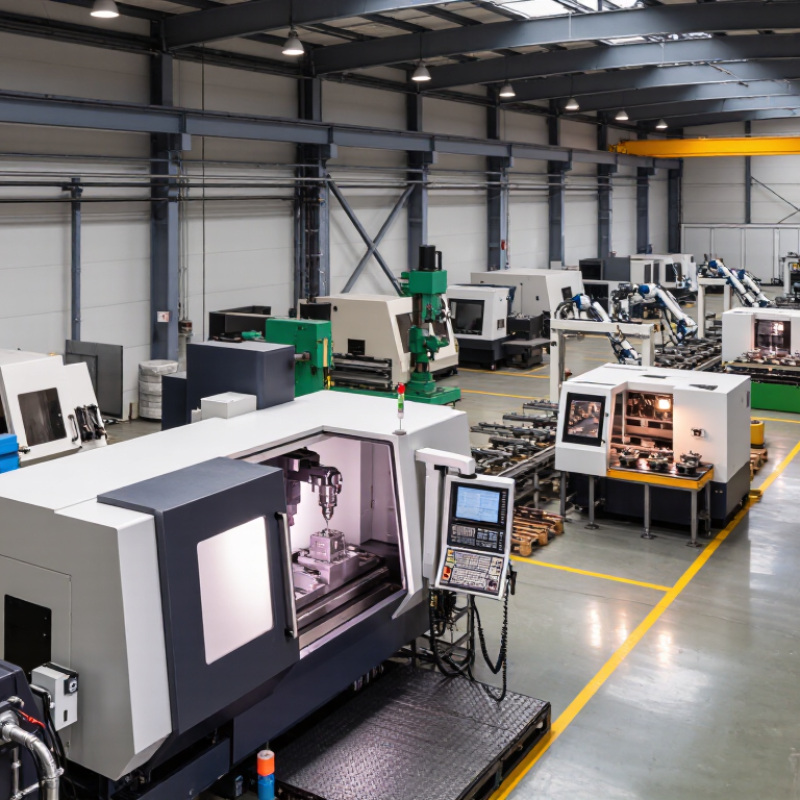
Grand View Research estimates that the global machine tools market was valued at approximately US$102 billion in 2023. Its report also expects continued growth, driven by automotive modernization, aerospace demand, and industrial automation. Meanwhile, the International Federation of Robotics reported more than 541,000 industrial robots installed worldwide in 2023. This trend matters because modern machining increasingly connects CNC equipment, robots, sensors, and production software.
This guide examines ten important types of machine tools, including CNC machining centers, lathes, milling machines, grinding machines, drilling machines, and electrical discharge machines. Each category serves a different manufacturing problem. A lathe may produce a smooth shaft in minutes, while a wire EDM machine can cut complex shapes through hardened metal. The boundaries can blur in real factories. Some buyers may also overestimate automation and underestimate maintenance.
That is worth questioning.
The best choice depends on measurable production goals, not impressive specifications alone. Readers should verify supplier claims, request sample parts, inspect service networks, and compare total ownership costs. Industry reports provide useful direction, but actual performance depends on installation quality, workholding, tooling, programming, and daily discipline.
Machine Tool Classification by Function, Motion, and Manufacturing Process
Top 10 Types of Machine Tools for Global Buyers
Machine tools are easier to compare when classified by function, motion, and manufacturing process. Turning machines rotate the workpiece while a cutting tool removes material. Milling machines move rotary cutters across fixed or moving workpieces. Drilling machines create accurate holes with axial tool motion. Boring machines enlarge existing holes and improve alignment. Grinding machines use abrasive wheels for tight tolerances and fine surfaces. These five types often appear in metalworking plants, but their capabilities differ sharply.
Gear-cutting machines form teeth through controlled rotary and linear motion. Broaching machines pull or push a toothed tool through a part, producing repeated profiles quickly. Sawing machines separate stock with continuous blade motion. Electrical discharge machines remove conductive material through controlled sparks, without direct cutting force. Laser or plasma machines use thermal energy for fast sheet processing. The classification is not perfect; some modern equipment combines several processes. In practice, published specifications may also hide differences in rigidity, control response, and achievable accuracy.
Tips: Start with the required part geometry, material, tolerance, and production volume. Check axis travel, spindle speed, work envelope, and maintenance access. Ask for sample parts or documented test results. A machine that looks powerful may perform poorly on thin walls or interrupted cuts. Review local power standards, operator training, tooling supply, and service response before purchasing. I would not choose solely by price; that shortcut often creates higher setup and downtime costs.
Ten Essential Machine Tool Types Used in Global Manufacturing
Ten Essential Machine Tool Types Used in Global Manufacturing
Global buyers usually compare ten core machine tool types: CNC milling machines, turning centers, drilling machines, grinding machines, gear-cutting machines, EDM machines, laser cutters, press brakes, waterjet cutters, and sawing machines. Each solves a different production problem. Milling shapes complex surfaces, while turning produces accurate cylindrical parts. Grinding improves final tolerances. EDM handles hard conductive materials. Laser, waterjet, and sawing machines support efficient material separation. Press brakes form sheet metal. Gear-cutting machines support power-transmission components.
The International Federation of Robotics recorded 541,302 industrial robot installations worldwide in 2023. This growth increases demand for machine tools with stable interfaces, repeatable accuracy, and reliable automation. The report also shows that manufacturing is becoming more data-driven, although connectivity alone cannot fix poor maintenance. Buyers should inspect spindle speed, axis travel, thermal stability, tool capacity, and local service response. A low purchase price may hide expensive downtime. That mistake is common.
Tips: Match the machine to material, tolerance, batch size, and operator skill. Request sample cutting tests before ordering. Check electrical standards, training support, spare-part access, and software compatibility. Industry reports provide useful direction, but factory conditions differ. A machine that performs well in one plant may disappoint elsewhere. Small details matter.
Key Features and Applications of Each Machine Tool Type
Top 10 Types of Machine Tools for Global Buyers
CNC milling machines use rotating cutters for pockets, slots, and complex surfaces. They suit aerospace parts, molds, and precision fixtures. CNC turning machines rotate the workpiece against a fixed tool. They efficiently produce shafts, bushings, and threaded components. Drilling machines create accurate holes with simple, economical tooling. Grinding machines remove tiny amounts of material. They deliver fine surfaces on bearings, tools, and hardened parts. Electrical discharge machines, or EDMs, shape conductive materials through controlled electrical sparks. They are valuable for intricate cavities and narrow slots.
Laser cutting machines focus heat into a small beam. They process sheet metal quickly, but thick materials may need careful edge inspection. Waterjet machines cut stone, metal, and composites without a heat-affected zone. Press brakes bend sheet metal with controlled force and repeatable angles. Gear hobbing machines generate teeth for transmissions and industrial reducers. Bandsaws and circular saws provide fast stock preparation before machining. They are less glamorous, but production often depends on them.
The International Federation of Robotics reported 541,302 industrial robot installations worldwide in 2023. This figure shows why automation-ready interfaces matter when buyers compare machine tools. The World Machine Tool Survey by Gardner Intelligence also emphasizes regional differences in consumption, capacity, and investment cycles. In practice, spindle speed is not enough. Buyers should check rigidity, thermal stability, controller compatibility, service access, and operator training. A high-speed machine can still disappoint. Poor fixturing, unstable power, or weak inspection systems can erase its advantages. My practical preference is to test representative parts before purchase. Catalog specifications rarely reveal every shop-floor limitation.
Top 10 Types of Machine Tools for Global Buyers
Typical spindle-speed ranges and primary applications of each machine-tool type. Values are representative industrial ranges and vary by machine configuration, tooling, and material.
How to read the chart: The bars show representative lower and upper spindle-speed limits in revolutions per minute (RPM). High speed is generally associated with smaller tools, lighter cutting, finishing, drilling, grinding, or electrical discharge processes, while lower speed is common in heavy turning, boring, and large-part machining.
How to Compare Machine Tools for Different Production Requirements
Top 10 Types of Machine Tools for Global Buyers
How to Compare Machine Tools for Different Production Requirements
Choosing a machine tool starts with the part, not the catalogue. A CNC turning center suits round components, while a machining center handles multiple milling operations. Drilling machines work well for repeated holes. Grinding machines support tight finishing requirements. EDM equipment helps produce complex shapes in hardened materials. The correct choice depends on the production problem.
In shop-floor evaluations, I compare material, part size, tolerance, batch volume, and cycle time. A small aluminum housing may need high spindle speed and rapid tool changes. A steel shaft may require stronger cutting power and steady workholding. Check the working envelope carefully. A machine that is too small creates extra setups. One that is too large may waste floor space and energy. Review axis travel, tool capacity, coolant control, automation options, and operator access.
Cost needs a wider view. Purchase price is only one part. Maintenance access, spare components, training, energy use, and local technical support affect long-term reliability. Ask for sample parts and measured results. Do not trust attractive tolerances without production evidence. I have seen buyers select impressive specifications, then struggle with unstable fixtures and poor programming. That mistake is easy to repeat. A practical comparison should include trial runs, inspection records, delivery conditions, and realistic service response times.
Global Purchasing Factors: Precision, Capacity, Automation, and Cost
Top 10 Types of Machine Tools for Global Buyers
Global buyers should compare machine tools through measurable production needs, not attractive catalog images.
Precision comes first: review positioning accuracy, repeatability, thermal stability, and achievable surface finish. A tolerance of ±0.01 mm may be suitable for one component but excessive for another. Request test-cut results using similar materials and tool paths. Measure the real need.
Capacity must match both current orders and possible growth. Check the work envelope, maximum part weight, spindle power, table load, and usable stroke. A large machine can waste floor space and energy when most parts are small. An undersized model creates repeated setups, slower cycles, and avoidable quality risks. Confirm electrical standards, installation space, coolant handling, and operator access before purchase.
Automation can improve consistency, but it is not automatically economical. Evaluate tool changers, robotic loading, sensors, probing, and software compatibility as one workflow. Ask how quickly operators can recover from alarms and adjust programs. Cost includes shipping, installation, training, tooling, maintenance, energy, and downtime. A lower purchase price may hide expensive service delays. Compare the expected cost per finished part, not only the invoice value.
My own review process would still leave room for doubt: supplier data may reflect ideal conditions, while factory floors contain vibration, temperature changes, and rushed setups. Use clear acceptance tests and independent technical checks where possible.





