


China Top Low Profile CPU Cooler Manufacturers

China’s top low-profile CPU cooler manufacturers serve builders who need effective heat control in tight spaces. A compact cooler may sit beneath a low case panel, beside tall memory modules, or inside a small-form-factor computer. Clearance is not a minor detail. It determines what fits.

A Low Profile Cpu Cooler must balance height, airflow, noise, and heat dissipation. Buyers should compare measured dimensions with their case limits, then check memory clearance, socket compatibility, and the processor’s real workload. A slim heatsink with a dense fin stack can look capable, but restricted airflow may limit its performance. Fan size and speed matter, too. Small differences show up under sustained rendering or gaming.

“Compact cooling is a balance between available space, airflow, and heat load,” says thermal-design specialist Jakob Dellinger, a practical principle for evaluating this category. Manufacturers in China vary in engineering resources, testing practices, and quality control. Brand claims alone are not enough. Look for clear compatibility tables, repeatable thermal results, documented noise conditions, and responsive technical support. Ask how tests were run. Room temperature can change the outcome.

The comparison ahead considers product range, manufacturing capability, customization, and evidence behind performance claims. It also recognizes a limitation: published test results do not always reflect every case or processor. Buyers should verify fit before ordering. Small cooler. Tight margins. A careful review can separate genuinely useful designs from models that merely appear compact.
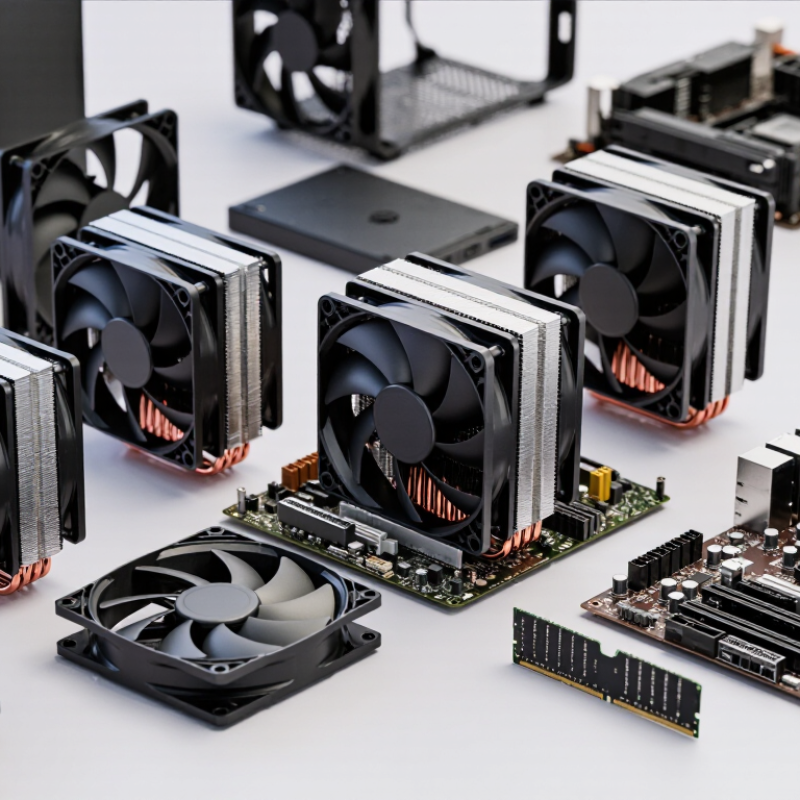
China Top Low Profile CPU Cooler Manufacturers

What Is a Low-Profile CPU Cooler?

A low-profile CPU cooler is a compact heatsink-and-fan assembly designed for computers with limited vertical clearance. It sits closer to the motherboard than a typical tower cooler, making it useful in small desktop cases and slim builds. Many models direct air downward across the heatsink, helping cool nearby motherboard components as well. The label can mislead. Cooler height alone does not tell you how well it will handle heat.

Inside, a metal base transfers heat from the processor into fins, sometimes through heat pipes. A fan moves air between those fins, but its size and speed affect both cooling and noise.

Check the cooler’s listed height against the case’s maximum CPU-cooler clearance, then consider RAM height and motherboard layout. Clearance matters. A fan can fit on paper yet press against tall memory modules.

Also compare the cooler’s rated thermal capacity with your processor’s expected power draw; manufacturer ratings are useful, but real temperatures depend on airflow, room temperature, and workload.

A low-profile design may be the practical choice, not the quietest one. Small cases can trap warm air.

That part is easy to overlook.

How Low-Profile CPU Coolers Are Designed and Manufactured

Design begins with a tight envelope. A low-profile CPU cooler must fit beneath nearby memory, graphics cards, and case panels. Engineers measure these clearances before choosing the heatsink shape, fan size, and mounting hardware. Small mistakes here can make a well-cooled design unusable.

The base is commonly made from copper or aluminum, then finished to contact the processor evenly. Heat pipes are bent and positioned to carry heat toward thin fin stacks. Their placement affects both heat transfer and airflow. Crowded fins may improve surface area but restrict the fan. It is a trade-off. Prototypes are checked for dimensions, mounting pressure, and thermal performance under controlled loads. Engineers also listen for vibration and measure fan noise, since a compact cooler sits close to other components. Still, lab results do not perfectly predict every cramped case. That part deserves more thought.

Manufacturing relies on repeatable steps: forming fins, joining them to the base or heat pipes, and inspecting each assembly. A small gap or uneven joint can reduce heat flow. Final tests help catch these faults, though inspection is never flawless. There is room to improve. A cooler that performs well on paper may still be awkward to install, so practical fit checks matter as much as the thermal figures.

Overview of China’s Low-Profile CPU Cooler Manufacturers

China’s low-profile CPU cooler manufacturers serve compact desktops, small-form-factor workstations, and space-limited office systems. Their products often combine a shallow fin stack with a compact fan, leaving room for memory modules and nearby components. Some factories handle machining, fin forming, heat-pipe assembly, and fan integration in-house; others rely on specialist suppliers. This difference can affect lead times and quality control.

Fit matters. Buyers should check cooler height, socket compatibility, mounting pressure, and clearance around the motherboard. A cooler’s advertised thermal capacity is only a guide. Case airflow, processor power limits, and fan speed also shape real-world temperatures. Ask suppliers for test conditions, noise readings, and sample units, then compare results using the same setup. Small details count.

Manufacturing strength is not just about output volume. Consistent fin spacing, flat contact surfaces, secure fasteners, and repeatable assembly are practical signs to inspect. Request drawings and production samples before confirming a custom design. Some suppliers may offer quick revisions, but that should be verified rather than assumed. A small test order can reveal issues that a polished specification sheet misses. Even careful testing has limits; results from one compact case may not transfer to another.

Key Features and Differences Among Chinese Manufacturers

China’s low-profile CPU cooler manufacturers differ less by headline specifications than by engineering priorities. Some focus on compact dimensions for slim cases, while others emphasize heat dissipation under sustained workloads. Fin spacing, base contact, and heat-pipe placement can matter more than a large advertised fan diameter.

For buyers, ask for verified cooler height, socket compatibility, and clearance around memory modules. A sample build can reveal conflicts that a drawing misses. Fit is unforgiving. Fan performance also varies: blade shape and bearing quality affect noise at low speeds. Check test conditions, including processor power, ambient temperature, and case airflow, before comparing thermal figures. Numbers need context.

Manufacturing capabilities range from standard catalog products to custom tooling, surface finishes, and packaging. Stronger suppliers document material specifications and repeatable inspection steps, such as fin alignment and base flatness. Request batch-level test records when consistency matters. Still, a polished specification sheet cannot prove quiet operation in every case. I would test a production sample; this step is often skipped, and that can be costly.

China Top Low Profile CPU Cooler Manufacturers – Key Features and Differences Among Chinese Manufacturers

Comparison of common supplier capability profiles, not a company ranking. Actual specifications, production capacity, certifications, and lead times should be verified directly with each supplier.

Supplier Profile Typical Strength Low-Profile Design Focus Common Trade-Off Questions to Verify
OEM-focused supplier Manufacturing to a buyer’s drawings, specifications, or approved reference design. Consistent dimensions, repeatable assembly, and adaptation to a defined chassis envelope. Design changes may require buyer-provided engineering details and validation. Can the supplier provide tolerance reports, sample approval records, and production-control documentation?
ODM-focused supplier In-house product development and options for adapting an existing cooler platform. Balancing cooler height, fin area, fan placement, and mounting hardware for a compact system. Customization may be limited by the existing platform or tooling. Which dimensions, materials, mounting parts, and fan specifications can be changed?
Thermal-engineering-focused supplier Emphasis on thermal design, airflow evaluation, and application-specific testing. Heat-pipe layout, fin geometry, fan curve, and clearance around nearby components. Performance results can differ significantly with the test setup and system airflow. Are test results provided with ambient temperature, workload, fan speed, noise, and mounting details?
Cost-focused volume supplier Production-oriented designs intended to control part count and manufacturing complexity. Compact extruded or stamped-fin constructions and standardized fan or mounting components. Fewer material, finish, acoustic, or customization options may be available. What inspection criteria, component substitutions, and change-notification procedures apply?
Export-oriented supplier Experience preparing product documentation, packaging, and shipments for overseas buyers. Clear compatibility information, installation instructions, and packaging suited to the target market. Export experience alone does not establish cooling performance or product compliance. Which product-specific reports, declarations, labels, and packaging tests are available?

Technical Factors to Compare

Factor Why It Matters Useful Comparison Data
Overall height and clearance The cooler must fit the case and avoid interference with memory, motherboard components, and the side panel. Maximum assembled height, footprint, RAM clearance, and mounting dimensions.
Heat-sink materials and construction Material and geometry affect heat spreading, mass, cost, and manufacturability. Copper generally conducts heat better than aluminum, while aluminum is lighter and commonly used for fins. Base and fin materials, heat-pipe count and dimensions, joining method, and surface finish.
Fan and acoustics Fan size, speed, airflow path, and control behavior influence cooling and operating noise. Fan dimensions, speed range, connector, rated airflow, noise test method, and replacement availability.
Socket mounting and compatibility Mounting hardware must match the motherboard socket and provide suitable contact pressure. Supported socket list, included brackets, backplate requirements, and installation instructions.
Thermal test method Cooling results are meaningful only when the test conditions are stated and comparable. Test processor or heater, power level, ambient temperature, fan setting, case airflow, and measurement method.
Quality and production control Consistent dimensions, assembly, and fan operation matter for repeatable production. Incoming inspection, in-process checks, final inspection, traceability, and defect-handling process.

How to Evaluate and Select a Low-Profile CPU Cooler Manufacturer

How to Evaluate and Select a Low-Profile CPU Cooler Manufacturer

Canalys estimated global PC shipments reached 262.7 million units in 2024, up 3.8% from 2023. That scale makes consistent production important, not just a convincing prototype. Ask manufacturers for batch inspection records, production capacity, and documented defect rates. A polished sample can hide uneven fin spacing or weak solder joints. Request several units from different production batches.

Check engineering evidence, too. Require a compatibility matrix covering socket type, memory clearance, and case height, with measurements rather than vague claims. Ask for thermal test conditions: processor power, ambient temperature, fan speed, and noise measurement distance. Compare results only when test setups match. Fit matters. A cooler that clears a memory module by one millimeter may still vibrate against it after installation. ISO 9001 certification can support confidence in quality processes, but it does not prove cooling performance. Review the actual test data.

A supplier should also provide material specifications, tolerance limits, warranty terms, and a clear process for handling failures. Ask how performance changes when dust builds up or a fan slows; many evaluations overlook these ordinary conditions. I would not trust one impressive temperature chart alone. Independent retesting costs time, and sometimes the first result will not repeat. That is useful evidence, not a reason to skip verification.

China Top Low Profile CPU Cooler Manufacturers — How to Evaluate and Select a Low-Profile CPU Cooler Manufacturer

This chart presents a suggested evaluation framework, not measured market statistics. Give priority to cooling performance and case compatibility, then assess noise, build quality, customization, and supplier reliability. Adjust the weights to suit your thermal, space, and purchasing requirements.

Powder Coat Booths

For those larger-sized parts, or smaller quantity runs, we have 2 independent powder coat booths and ovens. The quality, durability and affordability of today’s powder coating finishes make this the process of choice for world-class companies.

Powder coating advantages over other forms of coating are many. Materials used in the Powder coating process can be metals and non-metals that come in a multitude of thicknesses, textures, colors, etc. Another of Powder coating’s biggest advantages over conventional coatings is its ability to create finishes in many different textures. Powder Coating Booths allow us the ability to apply these advantages to large products.

Wet Paint Line

Tri-State Fabricators runs a full-service conveyor line for painting. Wet painting can provide protection or decoration to many different part styles. From start to finish, every project is easier to undergo random and point-based inspection by our skilled painting team.

Advantages to our Wet Paint Line are these lines start with product prep and ends with a thorough inspection of a high quality finished product. Our ability to complete large and small projects with a superior finish and doing so in a timely and economical fashion. This passes along the savings in production to our customers. When powder coating ins not an option, our Wet Paint Line gets the job done right the first time.

Wet Paint Booths

When the parts get big and heavy we roll-out our custom paint racks and oversize booth. By utilizing our partnerships with all the major paint brands, we can match virtually any color with wet paint.

The advantages of having access to a Wet Paint Booth are many. Large projects of many different shapes can be loaded into the booth. The Wet Paint Booth offers an environment that is much more controlled than a typical parts painting operation.

Not only are they used because of their controlled environment, but they’re are also advantageous when it comes to applying paint to parts that are needed in industries that require specialty coatings such as medical, aerospace, etc.

Military CARC

Our military forces have some very high standards when it comes to the finish of their vehicles and equipment. From the first pre-treatment step to final coat, it takes a great deal of knowledge and experience to protect the men and women of our armed forces. They deserve only the best, and Tri-State Fabricators provides it.

All of our processes are closely monitored by our staff and management teams. Both of which are highly trained in the processes of metal fabrication and finishing. Tri-State Fabricators’ goal is to always fully satisfy each and every customer, including the military. We will always put a 110% into what we do.

Glass-Bead Blasting

Abrasive media blasting is an excellent way to remove old paint, rust, and increase the paint/powder adhesion. Glass beads produce a much smoother and brighter finish than angular abrasives; leaving the part clean yet without any dimensional change. Chemically inert and environmentally friendly, we can recycle our beads approximately 30 times; making them a more preferred method of metal cleaning or surface finishing.

Advantages to Glass Bead Blasting are many. Glass bead blast media is used when a project is needing rough surfaces need to become smooth for applications of coatings such as paint. It is typically used to clean paint and rust from a product surface without deforming the surface it is being used on. Overall, compared to many other blasting media, Glass Bead Blasting is a very economical choice and those savings are always passed on to our customers.

Part Washing

Tri-State Fabricators utilize a zinc phosphate wash to clean and etch the material to ensure the best paint adhesion possible. The unique design of our 3-stage wash system does the work like a 5-stage. From Cleaning and rinsing to conversion coating and post-treatment, Our Part Washing process is a complete service and works throughout the fabrication service and the finishing service.

Along with the previously mentioned benefits, Curing is a vital chemical reaction that leaves the product finish hard and relatively safe from mild abrasion and aggressive corrosion. This process can be done in more than one way; ambient air-dry or in curing ovens at temps that exceed 240°.

Burn-Off Oven

From fixing paint mistakes (someone else’s of course) to simply cleaning our paint line hooks, our burn-off oven is put to good use. After a quick burn-off, a little clean up, and a fresh coat of paint, your parts will look better than new.

Why does our Burn-Off Oven work so well? Because super heating the air around parts turns the materials into ashes. From paint and powder coatings to rubber and machining oils, high temps do the job without degrading the integrity of the part.

Masking

Masking is a vital part of producing high quality products. We have die-cut masking patterns to protect machined surfaces as well as a wide range of plugs and caps to protect threaded holes and bolts. We provide permanent and temporary masking.

Masking allows the selected sections of a product to be protected from a fabrication or finishing service. This can be with both chemicals when etching and tapes, paints when only finishing just a section of the product. Masking is great in aiding the customization process of a project.

Screen Printing

Screen printing is a photographic process that transfers artwork onto a porous nylon screen which allows colored ink to flow through the screen and be deposited on an aluminum or plastic component. We can generally have just about any design created onto a screen for your parts.

Some of the advantages of Screen Printing are, brand recognition for your business displaying on your products, assembly instructions, product warnings/hazards, etc. Tri-State Fabricators produces Screen Printing of the highest quality so you know it’s durable.

Metal Finishing

Metal Finishing is the art of treating the exterior portion of product, often metal but can also be made of other materials, so that the surface is clean and free of any debris. Then the process of applying coats or either paint of powder coat takes place. This coating process improves the quality of the product in both appearance and resistance to wear and corrosion.

Tri-State Fabricators, Inc., understands that a project typically isn’t complete until a high-quality finish has been added to your product. This is why our painting and powder coating teams continuously inspect the products throughout the Metal Finishing process.

