


China has become an important sourcing destination for lithium battery chargers, serving applications from e-bikes and power tools to industrial equipment. Yet a supplier’s product page rarely tells the whole story. Buyers need to assess battery chemistry, charging voltage, current limits, thermal protection, documentation, and production consistency. These details affect whether a charger works safely and reliably with a specific battery pack.
Battery expert Isidor Buchmann, founder of Cadex Electronics and Battery University, has long emphasized matching charging methods to battery characteristics. His guidance can be summarized this way: “A charger must match the battery chemistry and its charging limits.” This is a paraphrase, not a verbatim quotation. It captures a practical point: a charger designed for one lithium-based chemistry may not suit another. Check technical specifications rather than relying on a broad “lithium compatible” label.
Small details matter. A clear datasheet, readable safety markings, and responsive engineering support can help buyers compare suppliers more confidently. This guide examines China’s lithium battery charger suppliers through practical criteria, including product range, customization, quality controls, and communication. It also considers questions worth asking before requesting samples or placing an order. Supplier comparisons are not always straightforward; public information can be incomplete, and a polished website is not proof of consistent manufacturing. Treat claims as starting points, verify important details, and match every charger to its intended battery and application.
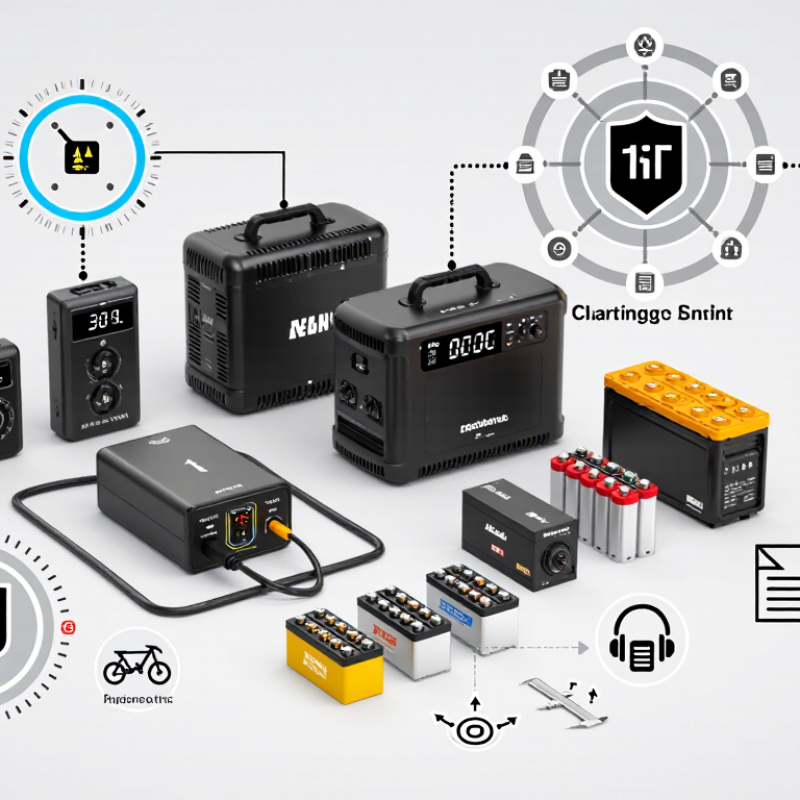
Lithium battery chargers are not interchangeable, even when their plugs fit. Many lithium-ion packs use a constant-current, constant-voltage charging profile. The charger supplies controlled current, then holds voltage as current gradually falls. Lithium iron phosphate packs need different voltage limits, so chemistry must be confirmed before selection. Small details matter. A reliable supplier should state output voltage, current range, supported chemistries, and any battery management system requirements. Check these against the pack label and technical data, not connector shape alone.
Compact single-cell chargers suit small devices and test setups, where modest charging current helps limit heat. Multi-cell balance chargers monitor individual cells and are useful for removable packs used in equipment or hobby applications. Larger chargers serve electric vehicles, warehouse equipment, and stationary storage; they may include temperature sensing, cooling, or communication with the battery system. Match charging current to the battery maker’s specification, especially for a pack used daily. On a workbench, an unexpectedly warm case or a charge that stops early deserves investigation. One point is easy to overlook: a charger can meet its rated output and still perform poorly with a mismatched battery or weak connection.

Representative charger output power varies by device, battery pack, and charging standard.
USB-C chargers serve portable electronics, while higher-power chargers are used for cordless tools and e-bikes. Electric vehicles use onboard AC chargers or external DC fast chargers. Values are representative examples; actual power ratings vary. The vertical axis uses a logarithmic scale.
China’s lithium battery charger supplier market includes large-scale manufacturers, engineering-focused factories, and trading companies coordinating production. Suppliers often serve electric mobility, energy storage, industrial equipment, and consumer device projects. Their capabilities vary: some offer standard charger models, while others adjust voltage, current, connectors, or communication functions for a specific battery system.
For buyers, technical matching matters more than a broad catalog. A charger must suit the battery’s chemistry, voltage range, and charging profile, and work reliably with its battery management system. Ask for product specifications, test records, sample units, and clear information about thermal and overcurrent protection. Small details matter. A connector that looks right may still have a different pin arrangement.
Supplier evaluation should include production consistency, engineering response times, and the process for handling design changes. Factory visits or third-party inspections can help verify equipment and quality controls, though neither guarantees future performance. That sounds neat on paper. It is not always simple. Specifications may be incomplete, and samples can differ from later production. Clear acceptance criteria and regular communication reduce avoidable surprises when moving from prototype to volume orders.
Chinese lithium battery charger suppliers generally specialize by application rather than offering one universal design. Some focus on onboard chargers for electric vehicles, where compact size, thermal control, and communication with the battery management system matter. Others build high-frequency industrial units for forklifts, warehouse vehicles, and stationary storage. Portable chargers often prioritize simple controls and clear fault indicators. A useful sample test includes checking connector temperature, charge stability, and behavior after a battery fault.
Market growth makes product fit especially important. The International Energy Agency’s Global EV Outlook 2024 reports that electric-car battery demand reached about 750 GWh in 2023, with China accounting for nearly 60 percent. The China Electric Vehicle Charging Infrastructure Promotion Alliance reported more than 8.5 million charging points nationwide by the end of 2023. That figure covers charging infrastructure broadly, not lithium-battery charger sales. The distinction is easy to miss.
When comparing suppliers, buyers should request charging curves, efficiency figures, protection details, and test conditions—not just a rated power. Check whether the unit supports the battery’s chemistry and voltage range, then verify performance under the intended load. Look closely at cable strain relief and enclosure sealing; these details matter in dusty workshops. Some catalogs still leave test methods unclear. That deserves a follow-up question.
China Top Lithium Battery Charger Suppliers?
Key Factors for Evaluating Charger Suppliers
Choosing a charger supplier starts with battery compatibility, not a low quote. Confirm the charger matches the battery’s chemistry, voltage, capacity, and required charging profile. Ask for clear specifications on output current, temperature limits, and protection against overvoltage or overheating. Small details matter. A charger that works well in a cool test room may behave differently inside a warm enclosure.
Check whether the supplier can provide test records, wiring diagrams, and clear operating instructions. Ask how each unit is inspected and how faults are handled after delivery. If your battery system uses communication between the charger and battery management system, verify the interface with a real sample. Do not rely on a brochure alone. I would also compare production lead times and technical response times, though these can change during busy periods. A spreadsheet can miss the quality of support.
Tips: Send suppliers the same battery specifications and test questions. Request a sample, then check charging behavior under your expected load and temperature conditions. Record any unclear answers; they may reveal gaps in documentation.
| Evaluation Dimension | What to Verify | Useful Evidence or Questions | Why It Matters |
|---|---|---|---|
| Battery chemistry and charge profile | Confirm that the charger supports the exact battery chemistry, cell count, and charge limits specified by the battery manufacturer. Lithium-ion and LiFePO₄ batteries require different voltage limits. | Request the charge-voltage and termination-current settings for the intended battery. For reference, some conventional lithium-ion cells use a 4.20 V-per-cell charge limit and some LiFePO₄ cells use 3.65 V per cell; the battery specification must determine the actual values. | An incorrect charge profile can reduce battery life or create a safety risk. |
| Output voltage and current | Check the permitted output range, rated current, current tolerance, and behaviour at low or high input voltage. | Compare the datasheet with the battery pack’s maximum charging voltage and allowable charge current. Ask for test results at the intended load and operating conditions. | The charger must meet the pack’s limits without relying on a generic current or voltage rating. |
| Charging control and termination | Verify the charging sequence, current regulation, voltage regulation, termination method, and response to a depleted or disconnected battery. | Request a charge-cycle diagram or test report showing charge stages, termination conditions, and restart behaviour. | Defined control behaviour supports consistent charging and helps prevent overcharging. |
| Protection and fault handling | Review protection against overvoltage, overcurrent, short circuit, overheating, and reverse connection where relevant to the design. | Ask which protections are built into the charger and which depend on the battery pack’s battery-management system (BMS). Request fault-condition test records. | Protection responsibilities should be clear across the charger, battery, and end product. |
| Temperature monitoring | Check operating-temperature limits and whether charging is inhibited or adjusted outside the battery’s permitted temperature range. | Confirm whether temperature sensing uses a pack thermistor or another specified signal, and ask how open-circuit or out-of-range sensor readings are handled. | Lithium batteries have chemistry- and cell-specific charging temperature limits. |
| Electrical safety and compliance | Identify the product’s intended market, power category, and applicable safety and electromagnetic-compatibility requirements. Applicability depends on the product and destination market. | Request current test reports and certificates for the exact charger model. IEC 60335-2-29 is a relevant safety standard for many battery chargers; confirm applicability with the compliance team or testing laboratory. | Certificates should match the delivered model and intended market; a standard or certificate should not be assumed to apply universally. |
| Quality management and traceability | Assess documented production controls, incoming inspection, calibration, change management, and lot-level traceability. | Ask for the quality-management certificate scope and validity, sample inspection records, and a description of how components and finished units are tracked by lot. | Traceability and controlled processes help identify and manage defects or design changes. |
| Validation and production testing | Check whether prototypes and production units are tested against agreed electrical, thermal, and fault-condition requirements. | Request a test plan and sample reports covering output accuracy, temperature rise, protection operation, and final production inspection. | Test evidence helps show that production units match the approved design. |
| Communication and system integration | For smart chargers, confirm supported communication interfaces, command definitions, fault reporting, and compatibility with the battery BMS or host system. | Request the protocol specification, interface details, and integration test results. Confirm whether communication is required for safe operation or only for monitoring. | Clear interface requirements reduce integration issues and ambiguous fault handling. |
| Customization, supply, and after-sales support | Review engineering-change control, sample and production lead times, component availability, warranty terms, and technical support arrangements. | Ask for written delivery assumptions, minimum order quantities, warranty coverage, spare-unit arrangements, and notification procedures for design or component changes. | Supply and support terms affect product continuity after qualification and launch. |
When comparing China-based lithium battery charger suppliers, judge the evidence, not the brochure. Ask which safety and performance standards apply to your charger type and sales market. Requirements differ by destination and product design. Request current test reports and certificates, then check that the listed factory, model number, and rated output match the quotation. A certificate for a similar model is not enough. Verify the issuing laboratory independently, and confirm the document covers the complete charger rather than one component.
Check the physical product, too. Review sample labels, cable markings, ventilation, and the clarity of charging instructions. Ask how the supplier tests overvoltage, temperature rise, and charging cut-off, and request dated inspection records. A short video can help, but it cannot replace a witnessed test or a suitable third-party assessment. Paperwork can look convincing. It can still be incomplete.
Production controls deserve attention: ask how component changes are approved and how finished units are traced by batch. One awkward detail often gets missed: confirm who pays for retesting if a design changes. Supplier verification is never perfectly tidy; records may be delayed or translated unevenly, so clarify gaps before placing a production order.


For those larger-sized parts, or smaller quantity runs, we have 2 independent powder coat booths and ovens. The quality, durability and affordability of today’s powder coating finishes make this the process of choice for world-class companies.
Powder coating advantages over other forms of coating are many. Materials used in the Powder coating process can be metals and non-metals that come in a multitude of thicknesses, textures, colors, etc. Another of Powder coating’s biggest advantages over conventional coatings is its ability to create finishes in many different textures. Powder Coating Booths allow us the ability to apply these advantages to large products.
Tri-State Fabricators runs a full-service conveyor line for painting. Wet painting can provide protection or decoration to many different part styles. From start to finish, every project is easier to undergo random and point-based inspection by our skilled painting team.
Advantages to our Wet Paint Line are these lines start with product prep and ends with a thorough inspection of a high quality finished product. Our ability to complete large and small projects with a superior finish and doing so in a timely and economical fashion. This passes along the savings in production to our customers. When powder coating ins not an option, our Wet Paint Line gets the job done right the first time.
When the parts get big and heavy we roll-out our custom paint racks and oversize booth. By utilizing our partnerships with all the major paint brands, we can match virtually any color with wet paint.
The advantages of having access to a Wet Paint Booth are many. Large projects of many different shapes can be loaded into the booth. The Wet Paint Booth offers an environment that is much more controlled than a typical parts painting operation.
Not only are they used because of their controlled environment, but they’re are also advantageous when it comes to applying paint to parts that are needed in industries that require specialty coatings such as medical, aerospace, etc.
Our military forces have some very high standards when it comes to the finish of their vehicles and equipment. From the first pre-treatment step to final coat, it takes a great deal of knowledge and experience to protect the men and women of our armed forces. They deserve only the best, and Tri-State Fabricators provides it.
All of our processes are closely monitored by our staff and management teams. Both of which are highly trained in the processes of metal fabrication and finishing. Tri-State Fabricators’ goal is to always fully satisfy each and every customer, including the military. We will always put a 110% into what we do.
Abrasive media blasting is an excellent way to remove old paint, rust, and increase the paint/powder adhesion. Glass beads produce a much smoother and brighter finish than angular abrasives; leaving the part clean yet without any dimensional change. Chemically inert and environmentally friendly, we can recycle our beads approximately 30 times; making them a more preferred method of metal cleaning or surface finishing.
Advantages to Glass Bead Blasting are many. Glass bead blast media is used when a project is needing rough surfaces need to become smooth for applications of coatings such as paint. It is typically used to clean paint and rust from a product surface without deforming the surface it is being used on. Overall, compared to many other blasting media, Glass Bead Blasting is a very economical choice and those savings are always passed on to our customers.
Tri-State Fabricators utilize a zinc phosphate wash to clean and etch the material to ensure the best paint adhesion possible. The unique design of our 3-stage wash system does the work like a 5-stage. From Cleaning and rinsing to conversion coating and post-treatment, Our Part Washing process is a complete service and works throughout the fabrication service and the finishing service.
Along with the previously mentioned benefits, Curing is a vital chemical reaction that leaves the product finish hard and relatively safe from mild abrasion and aggressive corrosion. This process can be done in more than one way; ambient air-dry or in curing ovens at temps that exceed 240°.
From fixing paint mistakes (someone else’s of course) to simply cleaning our paint line hooks, our burn-off oven is put to good use. After a quick burn-off, a little clean up, and a fresh coat of paint, your parts will look better than new.
Why does our Burn-Off Oven work so well? Because super heating the air around parts turns the materials into ashes. From paint and powder coatings to rubber and machining oils, high temps do the job without degrading the integrity of the part.
Masking is a vital part of producing high quality products. We have die-cut masking patterns to protect machined surfaces as well as a wide range of plugs and caps to protect threaded holes and bolts. We provide permanent and temporary masking.
Masking allows the selected sections of a product to be protected from a fabrication or finishing service. This can be with both chemicals when etching and tapes, paints when only finishing just a section of the product. Masking is great in aiding the customization process of a project.
Screen printing is a photographic process that transfers artwork onto a porous nylon screen which allows colored ink to flow through the screen and be deposited on an aluminum or plastic component. We can generally have just about any design created onto a screen for your parts.
Some of the advantages of Screen Printing are, brand recognition for your business displaying on your products, assembly instructions, product warnings/hazards, etc. Tri-State Fabricators produces Screen Printing of the highest quality so you know it’s durable.
Metal Finishing is the art of treating the exterior portion of product, often metal but can also be made of other materials, so that the surface is clean and free of any debris. Then the process of applying coats or either paint of powder coat takes place. This coating process improves the quality of the product in both appearance and resistance to wear and corrosion.
Tri-State Fabricators, Inc., understands that a project typically isn’t complete until a high-quality finish has been added to your product. This is why our painting and powder coating teams continuously inspect the products throughout the Metal Finishing process.

