


Top 10 Laser Cut Parts Manufacturers for Global Buyers

Laser Cut Parts are used in equipment housings, brackets, panels, and precision assemblies across many industries. For global buyers, finding a manufacturer involves more than comparing prices. Material availability, cutting accuracy, edge quality, finishing options, and dependable communication all affect the final result. Small details matter. A mounting hole that sits slightly off position can slow assembly or require costly rework.

This guide introduces ten manufacturers for buyers evaluating international supply options. The profiles are intended as a starting point, not a substitute for checking each supplier’s current capabilities. Production methods and service coverage can change. Ask for evidence. Review sample parts, drawings, inspection reports, and stated tolerances before placing a larger order. Not always. A polished website alone cannot confirm consistent production quality.

The comparison considers factors buyers can verify, including supported materials and thicknesses, prototyping and production capacity, quality-control practices, finishing services, and export experience. A useful supplier should explain its process clearly and flag design issues early, such as narrow slots, heat-sensitive materials, or features that may affect cutting precision. Share your specifications and expected volumes when requesting a quote. Then compare not just the unit price, but also lead time, packaging, documentation, and how the supplier handles questions. These checks take effort, and no single ranking fits every project. The right choice depends on your part design, quality requirements, and delivery needs.
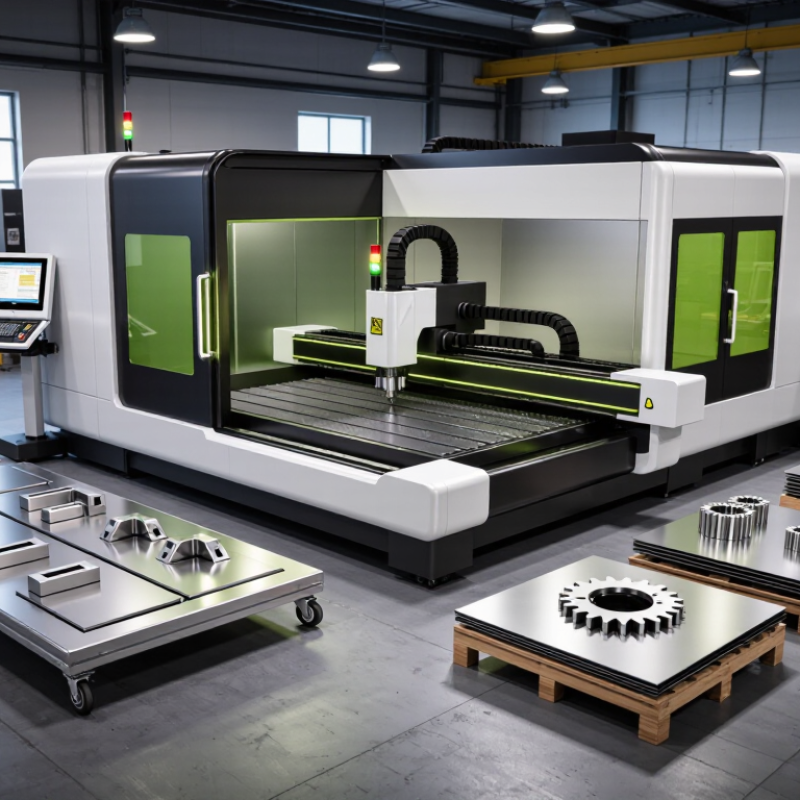
Top 10 Laser Cut Parts Manufacturers for Global Buyers

Laser-Cut Parts Manufacturing: Processes, Materials, and Applications

Laser-cut parts are shaped by a focused beam that melts, burns, or vaporizes material along a programmed path. The process suits sheet metal, acrylic, wood, and some plastics, though each responds differently to heat. Stainless steel may need a clean edge; acrylic often benefits from smooth, polished-looking cuts. Small details matter. Kerf width, sheet thickness, and assist gas can all affect fit. A precise drawing helps, but it cannot replace a test cut.

Tips: Confirm material grade and thickness before quoting. Keep critical slots and tabs away from tight corners, where heat can alter edges. Ask for a first article when dimensions are important. A perfect-looking CAD file can still need adjustment in production; that is easy to overlook.

These parts appear in equipment enclosures, brackets, signage, interior panels, and prototypes. For a ventilation panel, for example, evenly spaced slots can improve airflow while reducing weight. A manufacturer should review tolerances, edge finish, and expected quantities before choosing a process. Laser cutting is fast for many flat profiles, but it is not ideal for every geometry or material. Comparing samples can reveal burrs or heat marks that drawings do not show. Reliable production depends on clear specifications and practical inspection, not just a clean machine path.


How Global Buyers Can Evaluate Laser Cutting Manufacturers

Global buyers should compare process evidence, not machine lists. Request samples cut from your actual material grade and thickness. Check edge dross, kerf width, heat discoloration, and hole roundness under consistent lighting. Ask for documented tolerances and repeatability across several parts, not one perfect sample. ISO 9013:2017 provides useful classifications for thermal-cut quality and dimensional tolerances. It gives buyers a shared technical language, though it cannot replace inspection of the finished part. Ask for proof.

Review the supplier’s inspection records, material traceability, maintenance schedule, and corrective-action process. The International Federation of Robotics reported 541,302 industrial robot installations worldwide in 2023 in its World Robotics 2024 report. That signals broad factory automation, not guaranteed laser-cut quality; confirm how automation affects your specific job. Request a small pilot run, then compare measured dimensions with the drawing. Also discuss packaging, lead-time buffers, and how the shop handles urgent revisions. A polished quotation can hide weak production controls. One awkward but useful question: what happens when the first article fails inspection? A clear, documented answer is more meaningful than a low unit price.

Typical wavelengths are approximately 10.6 μm for CO₂ lasers, 1.064 μm for Nd:YAG lasers, and 1.07 μm for ytterbium fiber lasers. Wavelength is one factor to discuss when evaluating a cutting supplier; material, thickness, cut quality, tolerances, and production capacity also matter. Actual specifications vary by equipment.

The Top 10 Laser Cut Parts Manufacturers for Global Buyers

The Top 10 Laser Cut Parts Manufacturers for Global Buyers should be assessed by measurable capability, not polished claims. Grand View Research valued the global laser cutting machine market at USD 6.83 billion in 2023 and projected a 7.5% compound annual growth rate through 2030. This forecast concerns equipment, not finished parts, but it signals continued investment in cutting capacity. Buyers should ask suppliers for material-specific tolerances, maximum sheet dimensions, and inspection records. A clean edge on a thin steel sample may not predict results on thicker aluminum.

Tips: Send a dimensioned drawing and request a first-article inspection report. Confirm the material grade, thickness, surface finish, and packaging before production. Ask how revisions are controlled and whether batch records can be traced to the order. Small details matter. A polished website is not proof of consistent quality; request sample parts or documented process evidence. Also compare lead times against realistic production and shipping schedules, rather than relying on the shortest quoted date. Some specifications may still need clarification—that is a reason to pause and review, not to assume the supplier has understood them.

Top 10 Laser Cut Parts Manufacturers for Global Buyers

A practical comparison framework for evaluating laser-cut parts suppliers. The entries describe manufacturing capabilities and buyer checks, not named or ranked companies.

No. Capability to Compare Relevant Manufacturing Facts What Global Buyers Should Verify
1 Fiber laser cutting Fiber lasers are widely used for cutting metal sheet and plate, including carbon steel, stainless steel, and aluminum. Actual capacity depends on laser power, material grade, thickness, and machine configuration. Ask for the supported material-and-thickness range for the exact machine and request sample parts in your material.
2 CO₂ laser cutting CO₂ lasers are used for many non-metal materials, such as acrylic, wood, and selected plastics. Their suitability depends on the material; some plastics can release hazardous fumes when processed. Confirm the exact material is safe and compatible, and check the supplier’s extraction and ventilation arrangements.
3 Material range Common laser-cut sheet materials include mild steel, stainless steel, aluminum, and, for suitable laser systems, non-metal sheet materials. Reflectivity, thickness, coatings, and surface condition can affect processing. Specify the alloy or grade, thickness, finish, protective film, and any material certification requirements.
4 Assist-gas options Oxygen, nitrogen, and compressed air are used in different cutting setups. The gas choice affects the cutting process and may influence edge appearance, oxidation, and downstream finishing needs. State edge-finish requirements and ask which gas and process the supplier proposes for each material.
5 Dimensional quality Achievable dimensions depend on factors such as material thickness, part geometry, machine condition, and process settings. ISO 9013 provides a framework for classifying quality and dimensional tolerances in thermal cutting. Set tolerances on the drawing and ask the supplier to identify the inspection method and applicable acceptance criteria.
6 Part size and nesting Maximum part dimensions are constrained by the cutting bed and material-handling setup. Nesting parts on a sheet can improve material utilization, subject to part spacing, grain direction, and quality requirements. Provide the largest part envelope and ask how nesting, sheet remnants, and material yield are handled.
7 Secondary operations Laser-cut parts may require deburring, bending, tapping, welding, coating, or other finishing operations. These processes are separate from cutting and can affect fit, appearance, and lead time. Confirm which operations are performed in-house or subcontracted and define inspection points between stages.
8 Quality management ISO 9001 specifies requirements for a quality management system; certification relates to the organization’s management system, not automatic approval of every part or shipment. Check certificate scope and validity, and agree on first-article approval, traceability, and inspection records.
9 Compliance documentation Depending on the product and destination market, buyers may need material test reports, declarations, or evidence related to applicable chemical-substance and product requirements. Identify destination-market requirements before ordering and confirm which documents the supplier can provide for the specified material and finish.
10 Export readiness International orders require clear packaging, labeling, shipping terms, and customs documentation. Packaging needs vary with part size, weight, surface finish, and transport route. Agree on Incoterms, packaging protection, carton or pallet details, shipment documents, and responsibility for freight and customs clearance.

Buyer note: Compare suppliers using the same drawings, material specifications, tolerances, inspection requirements, and delivery terms.

Comparing Supplier Capabilities, Quality, Lead Times, and Services

A useful comparison of laser-cut parts manufacturers starts with the shop floor, not the brochure. Ask which materials, thicknesses, and tolerances each supplier handles regularly. A thin stainless-steel bracket and a thick aluminum plate place different demands on cutting power, nesting, and edge finishing. Request sample parts, inspection records, and a drawing review before committing. A clean quote is not proof.

Quality depends on repeatable checks. Compare how suppliers verify dimensions, manage revision changes, and document nonconforming parts. ISO 9001 certification can indicate a documented quality system, but it does not guarantee that every cut meets your drawing. The Deloitte 2023 Smart Manufacturing Survey found that 86% of manufacturers saw smart manufacturing as a competitiveness driver over the next five years. For buyers, that makes machine monitoring and production data worth asking about—not assuming. Still, a polished dashboard cannot fix a poorly maintained lens.

Lead times need the same scrutiny. Ask for separate estimates for engineering review, first-article approval, production, and shipping. The 2024 MHI Annual Industry Report found that 55% of respondents planned to increase supply-chain technology investment. That trend may improve visibility, but it does not promise faster parts. Check whether suppliers offer finishing, kitting, packaging, and responsive engineering support. Then test communication with one small order. It may reveal delays a capability list misses.

Key Considerations for International Sourcing and Long-Term Supply

International buyers evaluating laser-cut parts manufacturers should look beyond the quoted unit price. Compare material grades, thickness tolerances, edge condition, and inspection methods. Ask how drawing revisions are controlled and whether sample parts are checked against production criteria. A clean cut is not enough. Confirm packaging, labeling, export paperwork responsibilities, and realistic transit times before placing an order. For parts with critical fit requirements, request a first-article inspection report.

Tips: Send a clearly marked drawing and identify critical dimensions. State acceptable burr levels and surface requirements. Ask for photos of packed parts if damage is a concern. Keep one approved sample for comparison during repeat orders.

Long-term supply depends on more than machine capacity. Discuss how the manufacturer manages material shortages, maintenance, and changes to production schedules. Require approval before material substitutions or process changes. Review quality records and delivery performance over several orders, not just one successful batch. A process can look stable on paper and still drift. If communication feels vague, pause and clarify responsibilities in writing; it may slow the first order, but prevent costly misunderstandings later.

Powder Coat Booths

For those larger-sized parts, or smaller quantity runs, we have 2 independent powder coat booths and ovens. The quality, durability and affordability of today’s powder coating finishes make this the process of choice for world-class companies.

Powder coating advantages over other forms of coating are many. Materials used in the Powder coating process can be metals and non-metals that come in a multitude of thicknesses, textures, colors, etc. Another of Powder coating’s biggest advantages over conventional coatings is its ability to create finishes in many different textures. Powder Coating Booths allow us the ability to apply these advantages to large products.

Wet Paint Line

Tri-State Fabricators runs a full-service conveyor line for painting. Wet painting can provide protection or decoration to many different part styles. From start to finish, every project is easier to undergo random and point-based inspection by our skilled painting team.

Advantages to our Wet Paint Line are these lines start with product prep and ends with a thorough inspection of a high quality finished product. Our ability to complete large and small projects with a superior finish and doing so in a timely and economical fashion. This passes along the savings in production to our customers. When powder coating ins not an option, our Wet Paint Line gets the job done right the first time.

Wet Paint Booths

When the parts get big and heavy we roll-out our custom paint racks and oversize booth. By utilizing our partnerships with all the major paint brands, we can match virtually any color with wet paint.

The advantages of having access to a Wet Paint Booth are many. Large projects of many different shapes can be loaded into the booth. The Wet Paint Booth offers an environment that is much more controlled than a typical parts painting operation.

Not only are they used because of their controlled environment, but they’re are also advantageous when it comes to applying paint to parts that are needed in industries that require specialty coatings such as medical, aerospace, etc.

Military CARC

Our military forces have some very high standards when it comes to the finish of their vehicles and equipment. From the first pre-treatment step to final coat, it takes a great deal of knowledge and experience to protect the men and women of our armed forces. They deserve only the best, and Tri-State Fabricators provides it.

All of our processes are closely monitored by our staff and management teams. Both of which are highly trained in the processes of metal fabrication and finishing. Tri-State Fabricators’ goal is to always fully satisfy each and every customer, including the military. We will always put a 110% into what we do.

Glass-Bead Blasting

Abrasive media blasting is an excellent way to remove old paint, rust, and increase the paint/powder adhesion. Glass beads produce a much smoother and brighter finish than angular abrasives; leaving the part clean yet without any dimensional change. Chemically inert and environmentally friendly, we can recycle our beads approximately 30 times; making them a more preferred method of metal cleaning or surface finishing.

Advantages to Glass Bead Blasting are many. Glass bead blast media is used when a project is needing rough surfaces need to become smooth for applications of coatings such as paint. It is typically used to clean paint and rust from a product surface without deforming the surface it is being used on. Overall, compared to many other blasting media, Glass Bead Blasting is a very economical choice and those savings are always passed on to our customers.

Part Washing

Tri-State Fabricators utilize a zinc phosphate wash to clean and etch the material to ensure the best paint adhesion possible. The unique design of our 3-stage wash system does the work like a 5-stage. From Cleaning and rinsing to conversion coating and post-treatment, Our Part Washing process is a complete service and works throughout the fabrication service and the finishing service.

Along with the previously mentioned benefits, Curing is a vital chemical reaction that leaves the product finish hard and relatively safe from mild abrasion and aggressive corrosion. This process can be done in more than one way; ambient air-dry or in curing ovens at temps that exceed 240°.

Burn-Off Oven

From fixing paint mistakes (someone else’s of course) to simply cleaning our paint line hooks, our burn-off oven is put to good use. After a quick burn-off, a little clean up, and a fresh coat of paint, your parts will look better than new.

Why does our Burn-Off Oven work so well? Because super heating the air around parts turns the materials into ashes. From paint and powder coatings to rubber and machining oils, high temps do the job without degrading the integrity of the part.

Masking

Masking is a vital part of producing high quality products. We have die-cut masking patterns to protect machined surfaces as well as a wide range of plugs and caps to protect threaded holes and bolts. We provide permanent and temporary masking.

Masking allows the selected sections of a product to be protected from a fabrication or finishing service. This can be with both chemicals when etching and tapes, paints when only finishing just a section of the product. Masking is great in aiding the customization process of a project.

Screen Printing

Screen printing is a photographic process that transfers artwork onto a porous nylon screen which allows colored ink to flow through the screen and be deposited on an aluminum or plastic component. We can generally have just about any design created onto a screen for your parts.

Some of the advantages of Screen Printing are, brand recognition for your business displaying on your products, assembly instructions, product warnings/hazards, etc. Tri-State Fabricators produces Screen Printing of the highest quality so you know it’s durable.

Metal Finishing

Metal Finishing is the art of treating the exterior portion of product, often metal but can also be made of other materials, so that the surface is clean and free of any debris. Then the process of applying coats or either paint of powder coat takes place. This coating process improves the quality of the product in both appearance and resistance to wear and corrosion.

Tri-State Fabricators, Inc., understands that a project typically isn’t complete until a high-quality finish has been added to your product. This is why our painting and powder coating teams continuously inspect the products throughout the Metal Finishing process.
