


Laser Cleaning Equipment is moving from a specialist process into mainstream industrial maintenance. Grand View Research reports that the global laser cleaning market reached approximately USD 0.7 billion in 2023. Its forecast also indicates continued growth through 2030, supported by automotive, aerospace, electronics, and heritage conservation applications. MarketsandMarkets presents a different estimate and expects strong expansion toward the end of this decade. The gap matters. Research firms use different product definitions, regional coverage, and revenue models.
Cleaner surfaces. Lower chemical use.
Reinhart Poprawe, former director of Fraunhofer ILT, described laser manufacturing as “a key technology for sustainable production.” That principle explains the growing interest in Laser Cleaning Equipment. A focused beam can remove rust from a steel flange, paint from an aircraft component, or oil residue from a production mold. Operators can adjust pulse duration, scanning speed, and power without touching the substrate. However, results depend heavily on material reflectivity, contamination thickness, extraction systems, and operator training.
This Top 10 Laser Cleaning Equipment Manufacturers Worldwide overview therefore looks beyond advertising claims. It considers cleaning performance, pulse stability, automation options, safety design, service coverage, and documented industrial experience. Fiber laser sources may suit large metal parts, while compact pulsed systems can protect delicate surfaces. No ranking is perfect. A manufacturer strong in shipyards may not lead in electronics. Buyers should verify test data, warranty terms, compliance documentation, and local technical support before purchasing. The numbers suggest momentum, but practical trials reveal the truth.
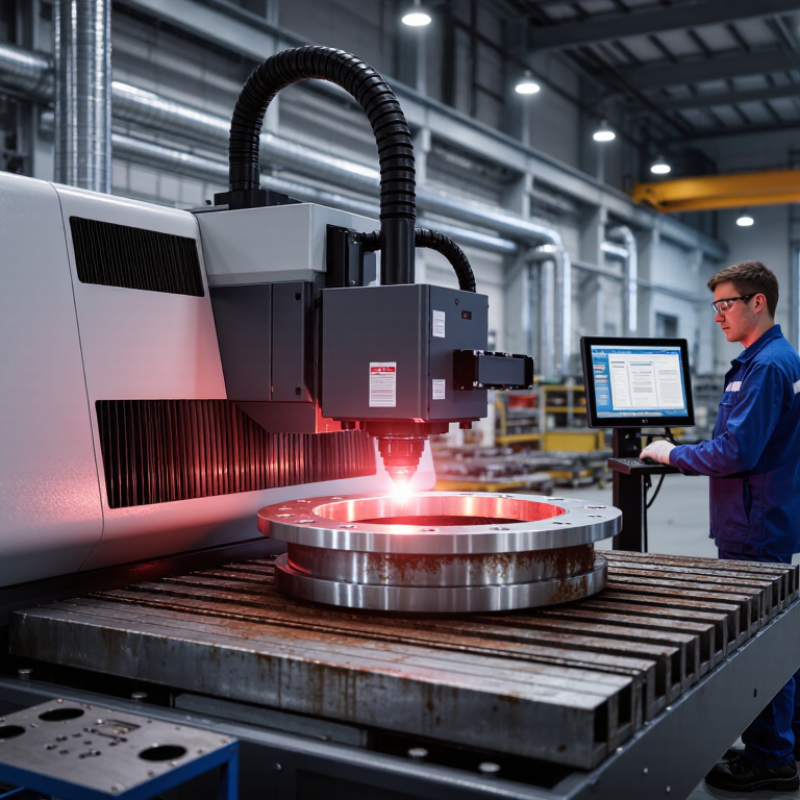
Laser cleaning equipment removes rust, paint, oil, oxides, and residues through controlled laser energy. The beam heats contaminants beyond their ablation threshold. The underlying material should remain largely unaffected when parameters are correctly selected. This process is usually dry, chemical-free, and produces limited secondary waste.
The equipment serves mold maintenance, automotive restoration, aerospace production, shipbuilding, and precision manufacturing. Pulsed lasers suit delicate surfaces because they deliver energy in short bursts. Continuous-wave systems can remove thicker coatings faster, but they require stronger thermal control.
Core components include the laser source, scanning head, focusing optics, control software, extraction unit, and protective enclosure. Wavelength selection matters. So does pulse duration.
Small details often decide the result. A technician may adjust scanning speed after observing a faint color change on steel. That judgment still needs documented testing.
Excessive fluence can scar coatings, pit metal, or create unwanted fumes. Effective systems therefore combine process monitoring, suitable ventilation, and controls aligned with applicable laser-safety standards.

Choosing among the top 10 laser cleaning equipment manufacturers requires more than comparing power ratings. A reliable evaluation begins with the cleaning task. Identify the material, contamination type, surface tolerance, production speed, and working distance. Ask for test results using samples that match your actual parts. A polished demonstration can hide difficult edges, heat-sensitive coatings, or uneven cleaning.
Review the manufacturer’s engineering depth. Check beam control, pulse stability, scanning accuracy, extraction design, and operator safety features. Request measurable data, such as cleaning width, energy consumption, noise levels, and maintenance intervals. Experienced suppliers should explain limitations clearly. Vague promises are warning signs. Field experience matters.
Service quality often separates a useful machine from an expensive interruption. Examine technician training, spare-parts availability, remote diagnostics, warranty terms, and response times across your region. Confirm whether manuals include practical settings, fault procedures, and maintenance schedules. Ask for references from comparable industries, not unrelated installations. Ownership costs matter too. Include installation, ventilation, training, consumables, calibration, and software updates.
Do not ignore compliance. Manufacturers should provide clear technical files, risk assessments, protective requirements, and applicable market documentation. Independent testing can strengthen confidence, but documents still need careful review. I have found that buyers sometimes focus too heavily on initial price. That mistake becomes visible later. A slower machine with stable results may outperform a cheaper model with frequent adjustments. Leave room for uncertainty, and verify every important claim through a controlled trial.
The leading laser cleaning equipment manufacturers serve different markets rather than one universal application. Automotive workshops often need compact systems for paint, rust, and adhesive removal. Aerospace suppliers demand controlled energy delivery, traceable testing, and minimal surface impact.
Heritage conservation requires lower heat input and careful adjustment around stone, wood, and fragile metal. Heavy manufacturing usually favors higher-power equipment, automated scanning, and long duty cycles.
Expertise matters more than headline power. Experienced manufacturers match wavelength, pulse duration, beam size, and extraction systems to each material. They should provide application trials, operator training, maintenance guidance, and clear safety documentation.
Ask for measured results on a similar workpiece, not only polished demonstration videos. A clean surface can still hide microscopic damage. That point is easy to miss.
Tips: Compare total operating cost, not just purchase price. Check spare-part access and local technical support. Record cleaning speed, surface temperature, and finish quality during trials. Leave room for human judgment; automated settings are useful, but imperfect. A thoughtful supplier will explain limitations instead of promising flawless results.
Choosing among the top ten laser cleaning equipment manufacturers requires more than comparing wattage.
Operators should examine pulse width, adjustable fluence, scan speed, cooling design, fiber length, and nozzle ergonomics. These features influence coating removal, surface temperature, and daily handling.
Short pulses can remove oxidation while limiting heat transfer. Continuous-wave systems may suit heavier industrial deposits, but they demand tighter thermal control.
Safety must remain central.
IEC 60825-1 supports laser classification, while ISO 11553-1 addresses safety for laser-processing machinery. In applicable workplaces, ANSI Z136.1 also guides exposure controls.
Enclosures, interlocks, emergency stops, warning lights, correct eyewear, and fume extraction should be verified during acceptance testing.
A certificate alone is not enough. Site conditions can expose gaps.
Industry demand is expanding.
Grand View Research estimated the laser cleaning market at about USD 587 million in 2023, with projections exceeding USD 1 billion by 2030. MarketsandMarkets also identifies automotive, aerospace, and industrial manufacturing as major application areas.
These sectors use laser cleaning for paint removal, weld preparation, mold maintenance, and corrosion treatment.
Reports differ because definitions and regional coverage vary. That matters.
A practical buyer should request sample trials, measured cleaning rates, residual contamination results, and operator training records. Perfect specifications rarely guarantee perfect results.
Top 10 Laser Cleaning Equipment Manufacturers Worldwide
Market Trends Shaping the Future of Laser Cleaning Equipment
Laser cleaning is moving from specialist workshops into maintenance, restoration, and precision manufacturing. Buyers now compare more than laser power. They examine energy use, pulse control, dust capture, operator ergonomics, and service access. In field trials, a stable beam often matters more than impressive maximum output. A five-minute setup can save hours across a production shift. This practical pressure is changing how leading manufacturers design equipment.
Automation is gaining momentum. Vision cameras can map rust, coating thickness, and surface changes before cleaning begins. Robotic arms then repeat measured paths with fewer operator adjustments. Connected systems also record pulse settings, cleaning time, and maintenance events. These records support quality audits and help technicians diagnose inconsistent results. Portable machines remain important for bridges, molds, and large assemblies. Smaller workshops need mobility, not excessive complexity.
Sustainability is another strong market force. Manufacturers are reducing consumables and improving electrical efficiency, while customers seek lower waste volumes. Yet some claims deserve careful testing. A “green” process may still create airborne particles without proper extraction. Training remains uneven, too. I have seen excellent equipment underperform when operators skip surface testing or choose unsuitable settings. Future competition will depend on verified results, responsive technical support, and safer human-machine interaction. The industry still has blind spots. Reliable progress requires measurement.
The chart presents a manufacturer-neutral market growth index for laser cleaning equipment. The index starts at 100 in 2024 and applies an 8.5% annual growth rate, consistent with commonly reported industry forecasts for the 2024–2030 period. Growth is supported by demand for non-abrasive surface preparation, lower chemical consumption, automation, and improved laser safety systems.


For those larger-sized parts, or smaller quantity runs, we have 2 independent powder coat booths and ovens. The quality, durability and affordability of today’s powder coating finishes make this the process of choice for world-class companies.
Powder coating advantages over other forms of coating are many. Materials used in the Powder coating process can be metals and non-metals that come in a multitude of thicknesses, textures, colors, etc. Another of Powder coating’s biggest advantages over conventional coatings is its ability to create finishes in many different textures. Powder Coating Booths allow us the ability to apply these advantages to large products.
Tri-State Fabricators runs a full-service conveyor line for painting. Wet painting can provide protection or decoration to many different part styles. From start to finish, every project is easier to undergo random and point-based inspection by our skilled painting team.
Advantages to our Wet Paint Line are these lines start with product prep and ends with a thorough inspection of a high quality finished product. Our ability to complete large and small projects with a superior finish and doing so in a timely and economical fashion. This passes along the savings in production to our customers. When powder coating ins not an option, our Wet Paint Line gets the job done right the first time.
When the parts get big and heavy we roll-out our custom paint racks and oversize booth. By utilizing our partnerships with all the major paint brands, we can match virtually any color with wet paint.
The advantages of having access to a Wet Paint Booth are many. Large projects of many different shapes can be loaded into the booth. The Wet Paint Booth offers an environment that is much more controlled than a typical parts painting operation.
Not only are they used because of their controlled environment, but they’re are also advantageous when it comes to applying paint to parts that are needed in industries that require specialty coatings such as medical, aerospace, etc.
Our military forces have some very high standards when it comes to the finish of their vehicles and equipment. From the first pre-treatment step to final coat, it takes a great deal of knowledge and experience to protect the men and women of our armed forces. They deserve only the best, and Tri-State Fabricators provides it.
All of our processes are closely monitored by our staff and management teams. Both of which are highly trained in the processes of metal fabrication and finishing. Tri-State Fabricators’ goal is to always fully satisfy each and every customer, including the military. We will always put a 110% into what we do.
Abrasive media blasting is an excellent way to remove old paint, rust, and increase the paint/powder adhesion. Glass beads produce a much smoother and brighter finish than angular abrasives; leaving the part clean yet without any dimensional change. Chemically inert and environmentally friendly, we can recycle our beads approximately 30 times; making them a more preferred method of metal cleaning or surface finishing.
Advantages to Glass Bead Blasting are many. Glass bead blast media is used when a project is needing rough surfaces need to become smooth for applications of coatings such as paint. It is typically used to clean paint and rust from a product surface without deforming the surface it is being used on. Overall, compared to many other blasting media, Glass Bead Blasting is a very economical choice and those savings are always passed on to our customers.
Tri-State Fabricators utilize a zinc phosphate wash to clean and etch the material to ensure the best paint adhesion possible. The unique design of our 3-stage wash system does the work like a 5-stage. From Cleaning and rinsing to conversion coating and post-treatment, Our Part Washing process is a complete service and works throughout the fabrication service and the finishing service.
Along with the previously mentioned benefits, Curing is a vital chemical reaction that leaves the product finish hard and relatively safe from mild abrasion and aggressive corrosion. This process can be done in more than one way; ambient air-dry or in curing ovens at temps that exceed 240°.
From fixing paint mistakes (someone else’s of course) to simply cleaning our paint line hooks, our burn-off oven is put to good use. After a quick burn-off, a little clean up, and a fresh coat of paint, your parts will look better than new.
Why does our Burn-Off Oven work so well? Because super heating the air around parts turns the materials into ashes. From paint and powder coatings to rubber and machining oils, high temps do the job without degrading the integrity of the part.
Masking is a vital part of producing high quality products. We have die-cut masking patterns to protect machined surfaces as well as a wide range of plugs and caps to protect threaded holes and bolts. We provide permanent and temporary masking.
Masking allows the selected sections of a product to be protected from a fabrication or finishing service. This can be with both chemicals when etching and tapes, paints when only finishing just a section of the product. Masking is great in aiding the customization process of a project.
Screen printing is a photographic process that transfers artwork onto a porous nylon screen which allows colored ink to flow through the screen and be deposited on an aluminum or plastic component. We can generally have just about any design created onto a screen for your parts.
Some of the advantages of Screen Printing are, brand recognition for your business displaying on your products, assembly instructions, product warnings/hazards, etc. Tri-State Fabricators produces Screen Printing of the highest quality so you know it’s durable.
Metal Finishing is the art of treating the exterior portion of product, often metal but can also be made of other materials, so that the surface is clean and free of any debris. Then the process of applying coats or either paint of powder coat takes place. This coating process improves the quality of the product in both appearance and resistance to wear and corrosion.
Tri-State Fabricators, Inc., understands that a project typically isn’t complete until a high-quality finish has been added to your product. This is why our painting and powder coating teams continuously inspect the products throughout the Metal Finishing process.

