


China Top Ion Tester Manufacturers and Suppliers

China has become an important sourcing base for electrostatic control equipment, including the Ion Tester. Manufacturers and suppliers serve electronics factories, cleanrooms, laboratories, packaging lines, and maintenance teams. Their products may measure ion balance, decay time, offset voltage, and static-field performance.

In practical evaluations, a reliable Ion Tester should feel easy to hold and simple to operate. A clear display helps technicians read results beside a production machine. Stable probes, rechargeable batteries, and repeatable measurements also matter. Buyers should review calibration records, test methods, measurement ranges, and after-sales support before placing an order. A supplier with ISO-related quality procedures may offer stronger process control, but certification alone cannot prove product performance.

Details matter more than polished brochures. Ask whether testing occurs under defined temperature, humidity, and airflow conditions. Confirm whether the quoted accuracy applies to the complete device or only its sensor. Request sample reports, user manuals, and a demonstration when possible. Small gaps can become expensive later.

No supplier profile is complete.

This guide examines leading China Ion Tester manufacturers and suppliers through product capability, technical experience, customization, quality management, and service responsiveness. It also considers export communication, spare parts, warranty terms, and calibration support. Some companies may appear similar online, yet their engineering depth can differ greatly. A careful comparison should connect specifications with real workplace needs, not just the lowest price. Even experienced buyers may need to reconsider their assumptions after hands-on testing. Reliable sourcing depends on evidence, clear questions, and realistic expectations.
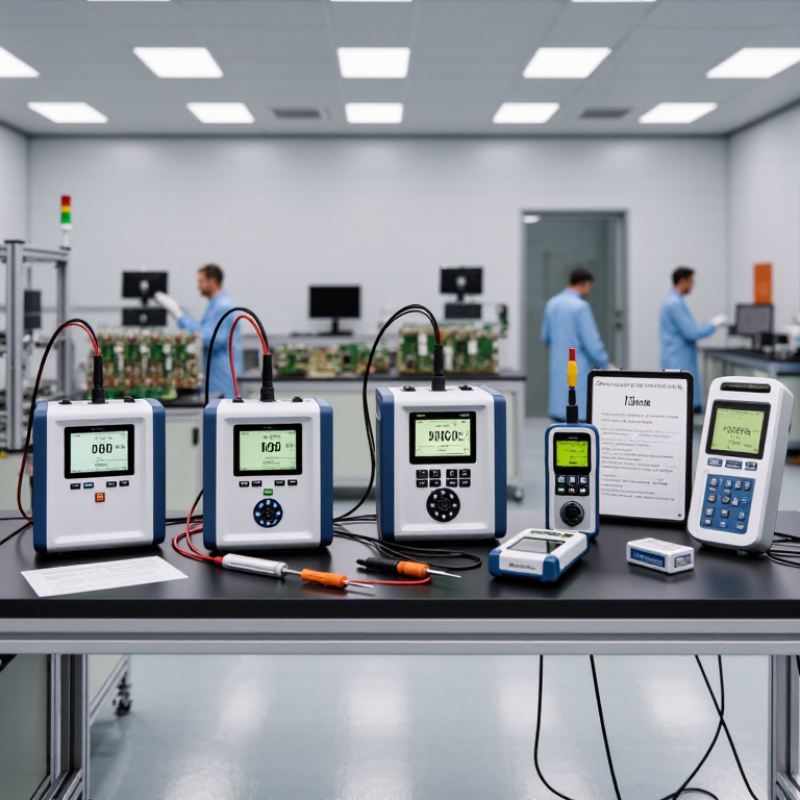
China Top Ion Tester Manufacturers and Suppliers

What Is an Ion Tester and How Does It Work?

An ion tester measures how effectively an ionizer removes static charge from surfaces, tools, and work areas. It usually contains a charged plate, sensing circuit, and display. The plate receives a controlled voltage, then positive and negative ions neutralize it. The instrument records the decay time and residual voltage.

The ESD Association’s ANSI/ESD STM3.1-2015 test method evaluates ionizer performance from ±1,000 volts down to ±100 volts. It also checks ion balance, which indicates whether positive or negative ions dominate. A shorter decay time is useful, but balance matters equally. Excessive imbalance can place a new charge on sensitive components. IEC 61340-5-1:2016 identifies ionization as a control method when grounding alone cannot manage electrostatic charge.

In practical testing, distance, airflow, humidity, and emitter cleanliness affect every reading. A stable bench setup helps. Keep the charged plate at the specified position and repeat both polarities. The first result may be misleading. Dust on an emitter can quietly change performance. Operators should record decay time, offset voltage, test distance, and environmental conditions. A tester that only shows one number is incomplete. Reviewers should also question calibration status and measurement uncertainty. These details often explain why laboratory results differ from factory-floor readings. Sources: ANSI/ESD STM3.1-2015, ESD Association; IEC 61340-5-1:2016, International Electrotechnical Commission.


What Is an Ion Tester and How Does It Work?

An ion tester evaluates an ionizer by measuring how quickly a charged test plate is discharged and how much residual voltage remains after ionization. In common ESD verification procedures, the test plate is charged to 1,000 V and monitored until it reaches 100 V. Ion balance is commonly evaluated against a ±35 V reference limit, although the applicable requirement depends on the selected standard and application.

Key Applications of Ion Testers Across Different Industries

Ion testers support quality control in electronics, water treatment, laboratories, and manufacturing. In electronics plants, technicians measure positive and negative ion balance near sensitive circuit boards. This helps identify electrostatic risks during assembly, packaging, and inspection. A small imbalance can attract dust or damage exposed components. Measurements should be taken at defined distances and under stable humidity conditions.

In water treatment, ion testers help monitor dissolved ions, conductivity, and process changes. Operators can compare readings before and after filtration or chemical adjustment. Pharmaceutical and food laboratories also use ion testing to check raw materials, purified water, and cleaning residues. Environmental teams may test soil or water samples for changing ionic conditions. Still, a quick reading is not always reliable. Sample temperature, contamination, and electrode aging can distort results. Real workplace testing is sometimes messier than the procedure suggests.

Tips: Calibrate the tester before critical measurements. Use clean containers and fresh reference solutions. Record temperature, location, sample type, and test time. Compare unusual results with a second method when possible. Suppliers should provide traceable calibration information, clear operating instructions, and practical technical support. Users should also verify the tester’s range and detection limits before purchase. Mistakes often begin when one instrument is expected to serve every application.

How to Evaluate Ion Tester Manufacturers and Suppliers

When evaluating ion tester manufacturers and suppliers, start with the measurement purpose, not catalog size. An electronics assembly line may need surface ion balance, decay time, and charge voltage readings. A laboratory may require wider ranges and tighter uncertainty control. Ask for datasheets showing accuracy, resolution, operating humidity, and test distance. Vague specifications deserve a second look. Details matter.

Request calibration records traceable to recognized national or international standards. Check whether each certificate identifies the serial number, test conditions, reference equipment, and next calibration date. A reliable supplier should explain the calibration method in plain language. During a live demonstration, compare repeated readings from the same charged surface. Watch the display after grounding the object. Stable readings matter more than attractive screens. Ask about sensor replacement, firmware control, repair time, and operator training.

Evaluate user references, but verify their application and review date. Request sample reports, inspection procedures, and a clear warranty. Suppliers should disclose lead times, spare-part availability, and technical support locations. Beware of promises without performance data. I once overlooked a loose probe cable, which affected field measurements. That mistake was avoidable. A trial unit can reveal problems that a sales call hides. Record every question and response before placing an order.

China Top Ion Tester Manufacturers and Suppliers - How to Evaluate Ion Tester Manufacturers and Suppliers

Evaluation Category Key Data Dimension What to Verify Recommended Reference Benchmark Verification Method Suggested Weight
Measurement Function Ionization voltage measurement Whether the tester measures positive and negative ion balance and indicates polarity clearly. Two-polarity measurement with a stated accuracy specification and defined test conditions. Review the technical datasheet and perform a comparison test using a calibrated charged-plate monitor or reference instrument. 12%
Measurement Function Decay-time measurement Whether the instrument can measure the time required for a charged plate to discharge to the specified limit. A clearly specified decay-time range, resolution, and start/end voltage definition. Request a sample report showing the initial voltage, final voltage, elapsed time, airflow condition, and test distance. 12%
Technical Compliance ESD test-method alignment Compatibility with recognized electrostatic-control measurement practices. Test procedures should reference applicable documents such as ANSI/ESD STM3.1 and IEC 61340-5-1 where relevant. Check the user manual, calibration procedure, test fixture design, and stated test environment. 10%
Measurement Performance Accuracy, resolution, and repeatability Published measurement uncertainty, display resolution, repeatability, and operating limitations. The supplier should publish accuracy and repeatability data rather than only claiming “high precision.” Conduct repeated measurements at positive and negative charge levels and compare the results with a traceable reference. 15%
Calibration Calibration traceability Availability of calibration certificates, calibration intervals, and adjustment records. Calibration should be traceable to national or international measurement standards; ISO/IEC 17025 laboratory support is preferable. Verify the certificate issuer, instrument serial number, calibration date, uncertainty statement, and next-due date. 15%
Test Configuration Distance, airflow, and environmental controls Whether the measurement setup controls test distance, air velocity, temperature, relative humidity, and grounding. The supplier should define the test distance and environmental conditions because ion balance and decay time are application-dependent. Inspect the test fixture and require a documented test procedure with environmental records. 8%
Product Quality Quality-management system Documented production controls, incoming inspection, final testing, and corrective-action procedures. A valid ISO 9001 certificate covering the relevant manufacturing scope is a useful baseline, but it does not replace product testing. Confirm certificate validity and scope through the issuing certification body and review sample inspection records. 8%
Supplier Capability OEM, ODM, and customization support Ability to modify probes, connectors, software, labels, packaging, fixtures, or reporting formats. Written technical specifications, revision control, engineering samples, and an approved-change process should be available. Request a sample development schedule, engineering-change form, and acceptance criteria before placing a bulk order. 6%
Documentation Manuals, software, and test reports Completeness of operating instructions, safety information, maintenance guidance, data export, and report templates. Documentation should identify operating limits, grounding requirements, battery or power specifications, and error conditions. Review the complete manual and software demonstration before purchase; check whether documents are revision-controlled. 5%
After-Sales Service Warranty, repair, and calibration service Warranty duration, response time, spare-parts availability, repair location, and recalibration options. Commercial terms should state warranty exclusions, turnaround time, service contact, and calibration pricing. Evaluate the written service-level agreement and request references for similar industrial applications. 5%
Commercial Reliability Lead time, capacity, and delivery consistency Production lead time, sample availability, minimum order quantity, packaging, and export experience. The supplier should provide a written production schedule and inspection plan for each purchase order. Compare quoted lead times with sample delivery performance and review the pre-shipment inspection process. 4%
Evaluation note: The benchmarks above are procurement and audit reference points, not universal performance claims. Actual ion-tester suitability depends on the measurement range, charged-plate design, test distance, airflow, grounding method, environmental conditions, and the applicable ESD procedure. A supplier should be ranked using documented test evidence and a representative sample rather than price alone.

Leading China-Based Ion Tester Manufacturers and Suppliers

China-based ion tester manufacturers and suppliers serve laboratories, production lines, and environmental testing teams worldwide. Their equipment can measure ion concentration, polarity, balance, and decay time with practical accuracy. The right supplier should understand your application, not simply offer a low price.

Experienced manufacturers usually provide calibration data, operating instructions, and technical support after delivery. Ask about sensor design, measurement range, response time, and performance under changing humidity. These details matter on a factory floor. A reliable supplier should also explain testing methods clearly and provide traceable inspection records. Factory videos and sample reports can help, but they should not replace an independent verification.

Look for suppliers with consistent quality controls and documented production procedures. Request a sample unit when possible. Test it beside your existing reference instrument and record the difference. Small deviations may be acceptable, but unexplained fluctuations deserve attention. No supplier is perfect. Some product pages also make the specifications look simpler than real operation.

Discuss lead times, spare sensors, software updates, and warranty conditions before placing an order. A responsive engineering team can reduce downtime when readings become unstable. Suppliers serving export markets should understand packaging, documentation, and regional electrical requirements. Price remains important, yet the cheapest tester may create higher calibration and maintenance costs later. A careful comparison reveals the practical value behind each quotation.

Ordering, Quality Control, and After-Sales Support in China

Choosing China’s top ion tester manufacturers and suppliers requires more than comparing prices. A clear specification should state ion range, measurement accuracy, response time, probe type, software needs, and intended operating environment. Request a pre-production sample or demonstration. Check calibration records, serial-number tracking, and test reports linked to recognized laboratory procedures. Small details matter. A display may look precise while the sensor needs frequent adjustment.

During ordering, confirm production lead time, packaging protection, spare parts, and acceptance criteria in writing. Ask how each unit is tested before shipment. Quality control should include repeatability checks, zero-point verification, and inspection under realistic temperature and humidity conditions. Photographs of the final inspection can help, but they are not a substitute for your own incoming inspection. One weakness is often overlooked: instructions may be technically correct yet difficult for operators to follow.

Tips: Keep one reference sample for comparison. Record readings at delivery. Train users before routine testing. Ask about firmware updates, replacement probes, repair procedures, and response times. Reliable after-sales support should provide a named contact, troubleshooting guidance, and clear warranty conditions. Remote support is useful, but serious faults may require return shipping and documented repair results. Do not assume every supplier handles this equally well. Ask direct questions, test the answers, and leave room for improvement.

Article Source:

Powder Coat Booths

For those larger-sized parts, or smaller quantity runs, we have 2 independent powder coat booths and ovens. The quality, durability and affordability of today’s powder coating finishes make this the process of choice for world-class companies.

Powder coating advantages over other forms of coating are many. Materials used in the Powder coating process can be metals and non-metals that come in a multitude of thicknesses, textures, colors, etc. Another of Powder coating’s biggest advantages over conventional coatings is its ability to create finishes in many different textures. Powder Coating Booths allow us the ability to apply these advantages to large products.

Wet Paint Line

Tri-State Fabricators runs a full-service conveyor line for painting. Wet painting can provide protection or decoration to many different part styles. From start to finish, every project is easier to undergo random and point-based inspection by our skilled painting team.

Advantages to our Wet Paint Line are these lines start with product prep and ends with a thorough inspection of a high quality finished product. Our ability to complete large and small projects with a superior finish and doing so in a timely and economical fashion. This passes along the savings in production to our customers. When powder coating ins not an option, our Wet Paint Line gets the job done right the first time.

Wet Paint Booths

When the parts get big and heavy we roll-out our custom paint racks and oversize booth. By utilizing our partnerships with all the major paint brands, we can match virtually any color with wet paint.

The advantages of having access to a Wet Paint Booth are many. Large projects of many different shapes can be loaded into the booth. The Wet Paint Booth offers an environment that is much more controlled than a typical parts painting operation.

Not only are they used because of their controlled environment, but they’re are also advantageous when it comes to applying paint to parts that are needed in industries that require specialty coatings such as medical, aerospace, etc.

Military CARC

Our military forces have some very high standards when it comes to the finish of their vehicles and equipment. From the first pre-treatment step to final coat, it takes a great deal of knowledge and experience to protect the men and women of our armed forces. They deserve only the best, and Tri-State Fabricators provides it.

All of our processes are closely monitored by our staff and management teams. Both of which are highly trained in the processes of metal fabrication and finishing. Tri-State Fabricators’ goal is to always fully satisfy each and every customer, including the military. We will always put a 110% into what we do.

Glass-Bead Blasting

Abrasive media blasting is an excellent way to remove old paint, rust, and increase the paint/powder adhesion. Glass beads produce a much smoother and brighter finish than angular abrasives; leaving the part clean yet without any dimensional change. Chemically inert and environmentally friendly, we can recycle our beads approximately 30 times; making them a more preferred method of metal cleaning or surface finishing.

Advantages to Glass Bead Blasting are many. Glass bead blast media is used when a project is needing rough surfaces need to become smooth for applications of coatings such as paint. It is typically used to clean paint and rust from a product surface without deforming the surface it is being used on. Overall, compared to many other blasting media, Glass Bead Blasting is a very economical choice and those savings are always passed on to our customers.

Part Washing

Tri-State Fabricators utilize a zinc phosphate wash to clean and etch the material to ensure the best paint adhesion possible. The unique design of our 3-stage wash system does the work like a 5-stage. From Cleaning and rinsing to conversion coating and post-treatment, Our Part Washing process is a complete service and works throughout the fabrication service and the finishing service.

Along with the previously mentioned benefits, Curing is a vital chemical reaction that leaves the product finish hard and relatively safe from mild abrasion and aggressive corrosion. This process can be done in more than one way; ambient air-dry or in curing ovens at temps that exceed 240°.

Burn-Off Oven

From fixing paint mistakes (someone else’s of course) to simply cleaning our paint line hooks, our burn-off oven is put to good use. After a quick burn-off, a little clean up, and a fresh coat of paint, your parts will look better than new.

Why does our Burn-Off Oven work so well? Because super heating the air around parts turns the materials into ashes. From paint and powder coatings to rubber and machining oils, high temps do the job without degrading the integrity of the part.

Masking

Masking is a vital part of producing high quality products. We have die-cut masking patterns to protect machined surfaces as well as a wide range of plugs and caps to protect threaded holes and bolts. We provide permanent and temporary masking.

Masking allows the selected sections of a product to be protected from a fabrication or finishing service. This can be with both chemicals when etching and tapes, paints when only finishing just a section of the product. Masking is great in aiding the customization process of a project.

Screen Printing

Screen printing is a photographic process that transfers artwork onto a porous nylon screen which allows colored ink to flow through the screen and be deposited on an aluminum or plastic component. We can generally have just about any design created onto a screen for your parts.

Some of the advantages of Screen Printing are, brand recognition for your business displaying on your products, assembly instructions, product warnings/hazards, etc. Tri-State Fabricators produces Screen Printing of the highest quality so you know it’s durable.

Metal Finishing

Metal Finishing is the art of treating the exterior portion of product, often metal but can also be made of other materials, so that the surface is clean and free of any debris. Then the process of applying coats or either paint of powder coat takes place. This coating process improves the quality of the product in both appearance and resistance to wear and corrosion.

Tri-State Fabricators, Inc., understands that a project typically isn’t complete until a high-quality finish has been added to your product. This is why our painting and powder coating teams continuously inspect the products throughout the Metal Finishing process.
