China Best Injection Molding Die Manufacturers?
Choosing among China’s best Injection Molding Die manufacturers requires more than comparing catalog prices. A reliable supplier should demonstrate toolroom capability, material knowledge, inspection discipline, and responsive engineering support. Real evaluation begins with evidence: mold trial records, steel certificates, dimensional reports, and references from comparable projects. Ask how the factory manages cooling channels, parting lines, venting, and surface finishing. Small details often decide production stability.
This guide examines manufacturers through practical criteria rather than marketing language. It considers design experience, CNC and EDM capacity, tooling tolerances, lead-time control, and after-sales service. A serious supplier should explain its DFM process before cutting steel. It should also identify risks, such as uneven wall thickness, shrinkage, weld lines, or difficult ejection. Clear communication matters. So does documentation. Samples may look excellent, yet long-term performance can remain uncertain without cycle testing and maintenance planning.
No single factory is perfect for every application. That point deserves emphasis. A medical component, automotive trim piece, and household enclosure require different validation methods and production priorities. Buyers should compare total value, including tool life, revision support, spare parts, and quality consistency. Factory visits, video audits, and independent inspections can strengthen confidence. Still, recommendations should remain transparent about limitations. The “best” choice is usually the manufacturer that fits the project’s risk, volume, materials, and timeline—not merely the lowest quotation.
What Defines China’s Best Injection Molding Die Manufacturers?
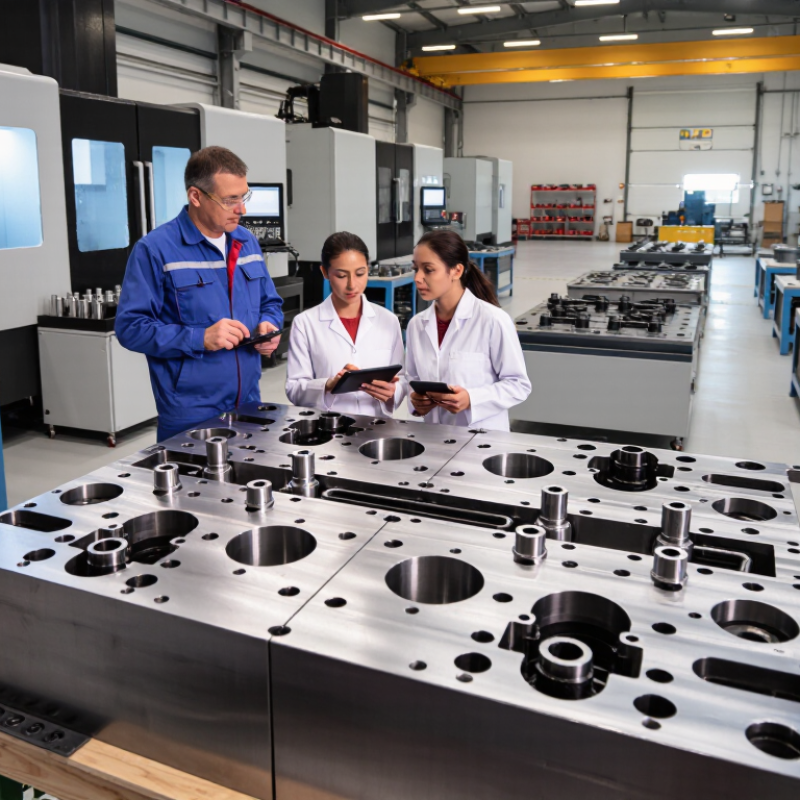
China’s best injection molding die manufacturers are defined by more than low prices or impressive factory photos. They show practical experience with complex parts, tight tolerances, and difficult materials. A capable team reviews wall thickness, draft angles, shrinkage, cooling paths, and ejection risks before cutting steel. Their engineers can explain each decision clearly. That matters when a mold must produce thousands of stable parts, not just one successful trial.
Reliable manufacturers use traceable steel certificates, documented inspections, and calibrated measuring equipment. They may provide mold flow analysis, dimensional reports, and trial-shot records. Look for evidence from the workshop floor. Check machining accuracy, surface finishing, electrode control, and assembly discipline. A clean tool room is useful evidence, though it is not proof by itself. Even experienced teams can miss a small venting issue. Honest communication about such risks builds more trust than perfect claims.
Tips: Ask for a detailed design review before production. Request sample parts from similar materials and geometries. Confirm who controls changes, repairs, spare inserts, and maintenance records. Clarify acceptance standards for flash, sink marks, warpage, and cycle time. Visit the factory remotely if travel is difficult. Watch a live trial when possible. Do not judge quality from a quotation alone. A cheaper mold can become expensive through delays, unstable production, or repeated modifications. Better manufacturers combine engineering judgment, measurable quality systems, responsive service, and the humility to revise a design when testing exposes a weakness.
China’s Injection Mold Market: Capacity, Output, and Export Data
China Best Injection Molding Die Manufacturers?
China’s injection mold market has developed around dense manufacturing clusters, skilled toolmakers, and large processing capacity. Public industry reports commonly place China’s total mold output above RMB 300 billion annually. Injection molds represent a substantial share, although the exact percentage changes by source. Capacity is not measured by factory size alone. It also depends on machining accuracy, engineering staff, testing equipment, and delivery control.
Production remains strong because manufacturers serve automotive, electronics, medical packaging, household goods, and industrial equipment sectors. Many factories operate high-speed CNC machines, wire-cut systems, and automated inspection equipment. Output is difficult to measure precisely. Chinese statistics often combine injection molds with other tooling categories. This creates an imperfect comparison between provinces and countries. The data needs careful reading.
Export performance remains a key market indicator. Customs data for molds and tooling has recorded annual exports worth several billion US dollars. However, these classifications may include die-casting tools, stamping dies, and plastic injection molds together. Injection mold exports therefore cannot be calculated from headline figures alone. Buyers should examine shipment records, cavity counts, steel specifications, trial reports, and after-sales response. A supplier with impressive export volume may still lack experience with complex family molds. That is an uncomfortable but practical point. Quality depends on repeatable process control, not production claims.
Core Technologies: Tolerance, Cycle Time, and Mold-Life Benchmarks
China Best Injection Molding Die Manufacturers? A capable mold manufacturer should report measured benchmarks, not vague claims. ISO 20457:2018 separates general molding tolerances from tighter, negotiated classes. In production, experienced teams often target ±0.02–0.05 mm on critical steel features. That range is not universal. Resin shrinkage, part geometry, and temperature can change the result.
Cycle time deserves the same discipline. For a small, balanced component, 20–45 seconds is a practical reference range. Cooling usually consumes the largest share. A 2023 Plastics Technology injection molding survey identified cooling and process control as persistent productivity concerns. Engineers should review cavity-fill studies, cooling-channel layouts, and actual machine logs. A quoted cycle time without part weight or wall thickness means little.
Mold life is more revealing than a polished sample. Standard production molds may target 300,000–500,000 shots, while hardened tooling can exceed one million under controlled conditions. The Plastics Industry Association’s 2024 industry data emphasizes ongoing pressure to improve productivity and reduce waste, making preventive maintenance commercially important. Ask for steel certificates, wear-test records, and replacement intervals. I have seen “one-million-shot” promises fail when abrasive resin, poor lubrication, or uneven cooling was ignored. A reliable supplier should admit that risk.
Manufacturer Evaluation: ISO 9001, Steel Grades, and Quality Metrics
China Best Injection Molding Die Manufacturers?
Manufacturer Evaluation: ISO 9001, Steel Grades, and Quality Metrics
Choosing an injection molding die manufacturer requires more than comparing quotations. ISO 9001 certification shows that documented quality processes exist. It does not guarantee perfect molds. During supplier evaluations, request the certificate number, audit scope, and renewal date. Check whether the certified process covers tooling design, machining, inspection, and corrective actions. A certificate alone can mislead.
Steel selection directly affects mold life and production stability. Ask for the exact grade, hardness range, and material certificate. Pre-hardened tool steel may suit medium-volume parts, while hardened steel supports demanding cycles. Corrosion-resistant grades can help with moisture-sensitive materials. The choice depends on resin, pressure, cooling design, and expected output. Steel grade matters greatly.
Reliable manufacturers provide measurable results. Review dimensional inspection reports, cavity balance data, surface roughness readings, and first-article approval records. Useful tolerances should match the drawing, not vague promises. Ask how the team controls flash, sink marks, weld lines, and ejection damage. Traceable records build trust. Sample parts reveal more than polished presentations. Still, evaluation methods can be imperfect. A clean trial run may hide maintenance weaknesses, rushed inspections, or poor communication after delivery. Include these risks in supplier discussions.
China Best Injection Molding Die Manufacturers? – Manufacturer Evaluation: ISO 9001, Steel Grades, and Quality Metrics
Reference data for comparing mold-making capabilities without using company or brand data.
The chart shows typical Rockwell C hardness ranges for commonly used injection mold steels. Actual values depend on the steel supplier, heat treatment, and delivery condition. ISO 9001 confirms that a quality management system meets the standard’s requirements; it is not a direct product-quality score. For supplier evaluation, also request material certificates, heat-treatment records, dimensional inspection reports, traceability, and a process capability target such as Cpk ≥ 1.33 for critical dimensions.





