What Are the Top Household Elevator Types in 2026?
Choosing a Household Elevator in 2026 is less about finding one “best” machine and more about matching the lift to the home. A narrow stairwell, two floors, and a wheelchair user create different priorities from a new-build home with space for a shaft. The main options include hydraulic, traction, screw-drive, pneumatic, and shaftless lifts. Each differs in footprint, ride feel, installation needs, and maintenance.
The market context is growing, but it needs careful interpretation. Grand View Research valued the global elevator market at about $88.6 billion in 2023 and projected a 7.1% compound annual growth rate from 2024 to 2030. That figure covers elevators broadly; it is not a forecast for household lifts alone. AARP’s 2024 Home and Community Preferences Survey found that 75% of adults aged 50 and older want to remain in their current homes as long as possible. That points to a real accessibility concern, not proof that every home needs an elevator.
As elevator historian Lee Gray of UNC Charlotte has said, “The elevator is the most important technology in the history of the city.” His observation concerns urban life, but it also reminds homeowners that vertical access shapes how a building works. Small details matter. A door that opens toward a tight hallway can change daily use. This guide compares the leading types, their practical trade-offs, and the questions worth asking before choosing. No type suits every house. And estimates vary.
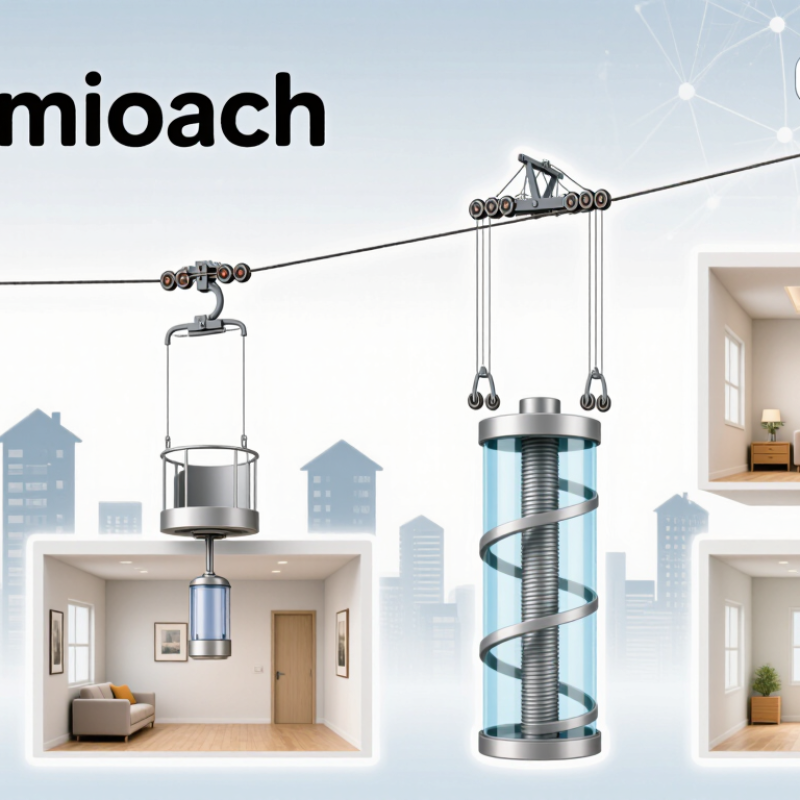
How Household Elevators Work and How Their Types Differ
Household elevators differ by how they lift the cab. A hydraulic system pumps fluid into a cylinder, raising a platform or cab; lowering usually releases pressure in a controlled way. It can provide a steady ride, but the pump and cylinder need space. Traction systems use a motor, ropes, and a counterweight. They can suit taller travel, though machinery and installation details vary.
Screw-drive elevators move a nut along a rotating threaded shaft. Their mechanism is easy to visualize, but ride noise and maintenance deserve attention. Pneumatic models use air-pressure differences inside a cylindrical shaft to move the cab. They have a compact footprint, but their capacity and travel height may be limited. That matters. The U.S. Census Bureau’s 2022 American Community Survey estimates that about 13.9% of the civilian, noninstitutionalized population had a disability. That figure is not an elevator-demand forecast, but it underlines why access needs vary.
Compare more than lift mechanism. Check landing space, door width, power needs, backup lowering, and how the cab feels under load. A quiet ride on an empty test run may not tell the whole story. ASME A17.1/CSA B44 sets safety requirements for elevators, including residential equipment; installers should confirm which provisions apply to a specific project. One overlooked detail: the best fit depends on the home’s structure as much as the elevator type.
Top Household Elevator Types in 2026: How They Work
Each bar highlights the defining drive mechanism of a household elevator type.
Hydraulic elevators use pressurized fluid; traction elevators use ropes or belts and a counterweight; screw-drive elevators move along a threaded screw; and pneumatic elevators use air-pressure differences. A value of 1 marks the defining mechanism, not popularity or market share. Designs and requirements vary by model and local code.
The Main Household Elevator Types Available in 2026
The main household elevator types in 2026 are hydraulic, traction, machine-room-less traction, pneumatic, and short-travel platform lifts. Hydraulic models use a fluid-powered ram and can provide a steady ride, but their layout may require space for equipment below or beside the shaft. Traction elevators move with cables and a counterweight. Machine-room-less designs place much of the drive equipment within the hoistway, which can free up floor area. Pneumatic models use air pressure and a visible cylindrical enclosure; capacity and travel are typically more limited. Platform lifts suit short vertical journeys, not every multi-floor plan.
Fit matters more. AARP’s 2024 Home and Community Preferences survey found that 75% of adults aged 50 and older want to remain in their homes as long as possible. The U.S. Census Bureau estimated 61.2 million Americans were 65 or older in 2023, about 18% of the population. These figures describe aging and housing preferences, not elevator sales, but they help explain why accessibility is part of home planning.
Before choosing, compare the usable cab size, door opening, expected traffic, power needs, backup operation, and local installation requirements. A compact design may look ideal on a floor plan, yet feel restrictive when carrying a walker or laundry basket. The quietest option on paper may also transmit vibration through a timber frame. A site assessment matters. No type is universally best; the right choice depends on the home’s structure, travel height, and the people using it.
Key Advantages and Limitations of Each Elevator Type
Hydraulic elevators offer a smooth, steady ride and can carry substantial loads, which suits homes with frequent use or mobility needs. Their limits include a hydraulic power unit, potential fluid maintenance, and space requirements that vary by design. Some models need a separate machine area. That matters in a tight renovation.
Traction elevators use cables and a counterweight. They can be energy-efficient, especially when the counterweight balances the car, and may fit taller homes. However, their layout can require overhead clearance and careful structural planning. Screw-drive elevators move along a threaded shaft. They often need less overhead space and have a straightforward mechanical layout, but may travel more slowly and sound louder than expected. Small details matter.
Pneumatic elevators use air pressure to move a car through a vertical tube. Their compact footprint can make them appealing where a shaft is difficult to build. Capacity and travel height are often more limited, and the ride may feel different from a conventional lift. Before choosing, compare measured shaft dimensions, floor openings, power needs, service access, and expected daily use. A showroom ride is not the same as living with one. Installation conditions can change the trade-offs, so a qualified home-elevator professional should assess the actual site.
How to Compare Household Elevators by Space, Cost, and Accessibility
What Are the Top Household Elevator Types in 2026?
How to Compare Household Elevators by Space, Cost, and Accessibility
Household elevators differ in how much building work they need. Hydraulic and traction models usually travel inside a dedicated shaft, so they suit planned renovations or new construction better than tight retrofits. Compact shaftless lifts can connect two nearby floors with less structural work, but their capacity and travel may be limited. Pneumatic lifts use a clear tube and need less conventional shaft space; check ceiling height, doorway clearance, and service access before choosing. Costs vary widely with floor count, finishes, structural changes, and local labor. A low equipment quote can hide expensive building work.
Accessibility is more than fitting a wheelchair through the door. Compare cab dimensions, clear opening width, control height, handrails, backup power, and whether a caregiver can ride along. The U.S. Census Bureau’s American Community Survey tracks tens of millions of Americans living with disabilities, while AARP’s 2024 Home and Community Preferences Survey found that 75% of adults aged 50 and older want to remain in their homes as long as possible. That makes future needs worth considering, even if today’s stairs still feel manageable.
Tips: Measure the narrowest hallway and every landing. Ask installers for a site visit, itemized quotes, and usable cab dimensions. Then test the controls from a seated position. Small details matter. It is easy to overfocus on purchase price; maintenance access and downtime deserve equal attention, too.
Choosing the Right Household Elevator for Your Home
Choosing the Right Household Elevator for Your Home
The best household elevator is the one that fits your floor plan, mobility needs, and daily routine—not simply the one with the most features. A hydraulic lift may suit a home with space for its equipment, while a traction or screw-drive model can work better in other layouts. Pneumatic systems often need less shaft space, but their capacity and cabin size may be limited. Compare usable cabin dimensions, doorway clearance, travel distance, power needs, noise, and service access. A beautiful brochure can still hide an awkward landing. Measure carefully.
Planning for long-term use matters. AARP’s 2024 Home and Community Preferences Survey found that 75% of adults aged 50 and older want to remain in their homes as long as possible. The U.S. Census Bureau projected that, by 2030, one in five U.S. residents would be 65 or older. These figures do not mean every home needs an elevator, but they support considering accessibility before stairs become difficult. Ask a qualified residential elevator professional to assess the structure, installation route, and local requirements; estimates based on photos alone can miss costly details.
Tips: Mark the proposed shaft and door swing with tape, then walk the route with a laundry basket or mobility aid. Ask for written details on capacity, emergency lowering, backup power, maintenance intervals, and warranty coverage. Compare total installation and upkeep costs, not just the quoted equipment price.





