


Global buyers comparing a High Pressure Safety Switch need more than a low price or a familiar brand. The device must match the system’s pressure range, operating medium, temperature, and switching demands. A mismatch may remain invisible during routine operation. Details matter.
Safety researcher James Reason wrote, “We cannot change the human condition, but we can change the conditions under which humans work.” His principle is relevant here: a dependable safety component should support a clear, verifiable protection strategy. Buyers should examine the setpoint and reset behavior, pressure rating, connection type, enclosure, and documented test results. They should also confirm the switch’s compatibility with the actual fluid or gas. A pressure switch is not a substitute for a pressure-relief device.
This guide introduces leading options and the questions that help distinguish them. It considers product performance, manufacturer documentation, serviceability, supply continuity, and certifications applicable to the destination market. Those details matter when a switch is installed in a compressor, hydraulic skid, or industrial process line. Not every listing qualifies. A polished specification sheet can still leave important gaps, such as unclear tolerances or limited service information. That deserves a second look. No shortlist can replace an application review by a qualified engineer, especially where pressure surges, frequent cycling, or harsh environments are involved. The aim is practical: help buyers compare evidence, ask better questions, and select a switch suited to the system—not merely the catalogue description.
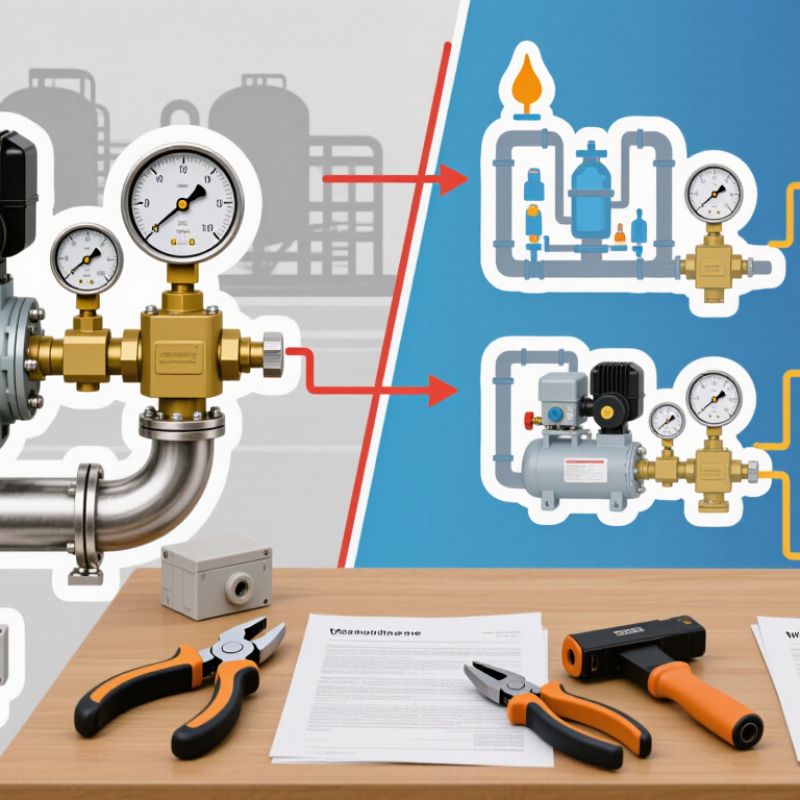
In industrial systems, a high-pressure safety switch monitors pressure and changes an electrical signal when pressure reaches a defined setpoint. That signal can trigger an alarm, stop a pump, or initiate a controlled shutdown. It does not release pressure by itself. A pressure relief device serves a different function, so the two should not be treated as interchangeable.
The need for layered protection is real. The U.S. Bureau of Labor Statistics recorded 5,283 fatal work injuries across U.S. workplaces in 2023, in its Census of Fatal Occupational Injuries. That figure is not specific to pressure incidents, but it underscores why safeguards must be selected and maintained carefully. Check the switch’s pressure range, media compatibility, electrical rating, and reset behavior against the actual operating conditions. A setpoint that looks right on paper may drift from the process need. That deserves a second check.
Tips: Confirm setpoints during commissioning, then test them at planned intervals. Record the result and investigate unexpected cycling. A switch is only as dependable as its installation, wiring, and maintenance.

Top High Pressure Safety Switches for Global Buyers?
How Pressure Sensing and Shutdown Mechanisms Work
A high-pressure safety switch monitors system pressure through a sensing element, often a diaphragm or bellows. Pressure pushes against this element, which moves when the measured force reaches the switch’s setpoint. Inside the housing, electrical contacts change state. That signal can stop a compressor, close a valve, or trigger an alarm. The switch does not remove excess pressure by itself; it tells connected equipment to respond.
Shutdown behavior depends on the design. Some switches reset automatically after pressure falls, while others require manual reset. For equipment near its pressure limit, manual reset can help prevent repeated restarts. A qualified technician should check the setpoint against the equipment’s rated operating range, then test the switch with a calibrated pressure source. Small details matter. A loose connection or poorly chosen reset mode can undermine an otherwise sound setup. I have seen selection discussions focus on the pressure rating and overlook what happens after shutdown.
Tips: Confirm the pressure range, contact rating, connection size, and reset type before purchase. Ask how the switch performs under vibration, temperature changes, and repeated cycles. Keep a record of test results; memory is not a maintenance plan.
High-pressure safety switches are available in several forms. Fixed-setpoint models suit stable systems, while adjustable switches allow technicians to match cut-out pressure to operating conditions. Automatic-reset units restart after pressure returns to range; manual-reset versions require inspection and intervention. That difference matters. A reset is not a diagnosis.
Mechanical diaphragm or bellows designs are common in refrigeration and compressor circuits. Electronic pressure switches can offer tighter setpoint control and digital outputs. Buyers should compare operating range, differential, maximum working pressure, proof pressure, and electrical contact rating—not just the trip point. A switch rated for a pressure threshold may still be unsuitable if its contacts cannot handle the motor’s inrush current.
IEC 60730-2-6 covers automatic electrical pressure-sensing controls, but product specifications and system requirements still need careful review.
Applications include refrigeration racks, heat pumps, air compressors, and hydraulic equipment. Selection depends on the refrigerant or fluid, vibration, temperature, connection size, and reset policy.
The International Energy Agency’s 2018 report, The Future of Cooling, projected global cooling energy demand would rise from about 2,020 TWh in 2016 to 6,200 TWh by 2050. That growth makes dependable pressure protection increasingly relevant, though a switch alone cannot ensure system safety.
Confirm the setpoint against equipment limits, and check the real operating cycle; field conditions are often less tidy than the specification sheet.
Global buyers should compare high-pressure safety switches by operating range, setpoint accuracy, repeatability, and proof pressure. A switch rated just above normal pressure may leave too little margin for short spikes. Check the specified deadband, contact rating, and wetted materials against the actual fluid and temperature. Small details matter. IEC 61508-1:2010 defines low-demand safety integrity levels using average probability of dangerous failure: SIL 1 spans 10⁻² to below 10⁻¹, while SIL 2 spans 10⁻³ to below 10⁻². These figures apply to a complete safety function, not a switch alone. A component’s label cannot establish system-level risk reduction.
Request test evidence, calibration records, and documented performance across the stated temperature range. Compare enclosure protection using IEC 60529 ratings, especially when switches face washdown, dust, or outdoor exposure. For example, a panel-mounted unit in a warm compressor room faces different conditions from a field unit exposed to vibration and rain. Ask how setpoint drift and contact wear were assessed, not only whether a unit passed a factory test. Specifications are useful, but they rarely capture every installation. That gap deserves attention. A buyer’s comparison sheet can look precise while overlooking wiring practices, maintenance intervals, or pressure surges; verify those assumptions with the system designer before ordering.
| Switch Type | Sensing Principle | Typical Strengths | Key Selection Checks | Common Considerations | Best Fit |
|---|---|---|---|---|---|
| Mechanical piston pressure switch | Pressure moves a piston against a spring; the mechanism changes the electrical contact state at a set point. | Available in designs intended for high-pressure service; can provide a direct switching output without a separate pressure transmitter. | Rated working pressure, proof and burst pressure, set-point range, pressure connection, contact rating, and reset behavior. | Seal compatibility, friction, and pressure cycling can affect service life and repeatability. Confirm suitability for the fluid and operating conditions. | Systems needing a robust, direct pressure-triggered electrical contact. |
| Mechanical diaphragm pressure switch | Pressure deflects a diaphragm that operates a switch mechanism. | Provides a pressure-responsive mechanical switching action; wetted materials can be selected to suit compatible media. | Model-specific pressure limits, diaphragm material, media compatibility, temperature limits, and switching differential. | Not every diaphragm design is suitable for high pressure. Verify the manufacturer's pressure ratings and avoid exposure beyond them. | Applications where diaphragm construction or media separation is a selection priority. |
| Mechanical Bourdon-tube pressure switch | Pressure causes a curved Bourdon tube to move; that movement actuates the switching mechanism. | Mechanical operation can provide a direct switch output, and designs are available for a range of pressure duties. | Specified pressure range, overpressure limits, media compatibility, vibration conditions, and contact configuration. | Performance and durability depend on the particular construction and operating environment. Check suitability for pulsating pressure and vibration. | Installations where a mechanical sensing element and electrical switching output are required. |
| Electronic pressure switch | An electronic pressure sensor and internal circuitry provide one or more switching outputs. | May offer adjustable switching points, status indication, and multiple outputs, depending on the model. | Pressure range and overload rating, output type, supply voltage, electrical connection, ingress protection, and configuration method. | Requires electrical power. Confirm output compatibility with the control system and check whether the unit is suitable for the intended safety function. | Systems requiring configurable switching or integration with electronic controls. |
| Pressure transmitter with a separate safety controller | A transmitter sends a pressure signal to a controller, which evaluates the signal and initiates a protective action. | Supports configurable monitoring and can provide diagnostic or integration features when designed as part of a suitable system. | Transmitter range and accuracy, controller capabilities, signal compatibility, response time, and required safety integrity. | This is a system arrangement rather than a standalone pressure switch. The complete measurement and control loop must be assessed for the required safety function. | Applications requiring monitored pressure signals and a separately engineered protective control system. |
Buyer note: There is no single pressure range or approval status that applies to every switch of a given type. Compare the exact model’s documented operating, proof, and burst pressure ratings; wetted-material compatibility; electrical ratings; and certifications required for the destination market and application. A pressure switch should not be treated as a certified safety device unless its documentation and intended use support that function.
Which Standards and Sourcing Factors Guide Product Selection
A high-pressure safety switch must match the system’s maximum working pressure, trip point, and reset behavior. Check whether its sensing element suits the actual medium, including refrigerant, oil, or water. Small details matter. Confirm contact ratings against the control circuit, not just the equipment’s headline voltage. IEC 60730-2-6 covers automatic electrical pressure-sensing controls; UL 353 addresses limit controls. Applicability depends on the product and destination market, so request the relevant test documentation rather than relying on a logo.
Ask suppliers for pressure-cycle results, calibration tolerances, temperature limits, and evidence of lot traceability. Review material compatibility and enclosure protection for the installation environment. A switch near a vibrating compressor may need different mounting and durability checks than one inside a protected cabinet. Not always obvious. Verify that samples and production units use the same specifications, and clarify change-notification procedures before placing repeat orders.
The International Energy Agency’s Electricity 2024 report projects global electricity demand growth averaging 3.4% annually from 2024 to 2026. That outlook makes dependable protection relevant across expanding electrical and industrial systems, though it does not determine a switch’s required rating. Buyers should also confirm applicable pressure-equipment requirements in each destination market. Certificates help, but they do not replace application testing. I would still question unusually low quotations: savings can disappear when calibration records or service support are missing.


For those larger-sized parts, or smaller quantity runs, we have 2 independent powder coat booths and ovens. The quality, durability and affordability of today’s powder coating finishes make this the process of choice for world-class companies.
Powder coating advantages over other forms of coating are many. Materials used in the Powder coating process can be metals and non-metals that come in a multitude of thicknesses, textures, colors, etc. Another of Powder coating’s biggest advantages over conventional coatings is its ability to create finishes in many different textures. Powder Coating Booths allow us the ability to apply these advantages to large products.
Tri-State Fabricators runs a full-service conveyor line for painting. Wet painting can provide protection or decoration to many different part styles. From start to finish, every project is easier to undergo random and point-based inspection by our skilled painting team.
Advantages to our Wet Paint Line are these lines start with product prep and ends with a thorough inspection of a high quality finished product. Our ability to complete large and small projects with a superior finish and doing so in a timely and economical fashion. This passes along the savings in production to our customers. When powder coating ins not an option, our Wet Paint Line gets the job done right the first time.
When the parts get big and heavy we roll-out our custom paint racks and oversize booth. By utilizing our partnerships with all the major paint brands, we can match virtually any color with wet paint.
The advantages of having access to a Wet Paint Booth are many. Large projects of many different shapes can be loaded into the booth. The Wet Paint Booth offers an environment that is much more controlled than a typical parts painting operation.
Not only are they used because of their controlled environment, but they’re are also advantageous when it comes to applying paint to parts that are needed in industries that require specialty coatings such as medical, aerospace, etc.
Our military forces have some very high standards when it comes to the finish of their vehicles and equipment. From the first pre-treatment step to final coat, it takes a great deal of knowledge and experience to protect the men and women of our armed forces. They deserve only the best, and Tri-State Fabricators provides it.
All of our processes are closely monitored by our staff and management teams. Both of which are highly trained in the processes of metal fabrication and finishing. Tri-State Fabricators’ goal is to always fully satisfy each and every customer, including the military. We will always put a 110% into what we do.
Abrasive media blasting is an excellent way to remove old paint, rust, and increase the paint/powder adhesion. Glass beads produce a much smoother and brighter finish than angular abrasives; leaving the part clean yet without any dimensional change. Chemically inert and environmentally friendly, we can recycle our beads approximately 30 times; making them a more preferred method of metal cleaning or surface finishing.
Advantages to Glass Bead Blasting are many. Glass bead blast media is used when a project is needing rough surfaces need to become smooth for applications of coatings such as paint. It is typically used to clean paint and rust from a product surface without deforming the surface it is being used on. Overall, compared to many other blasting media, Glass Bead Blasting is a very economical choice and those savings are always passed on to our customers.
Tri-State Fabricators utilize a zinc phosphate wash to clean and etch the material to ensure the best paint adhesion possible. The unique design of our 3-stage wash system does the work like a 5-stage. From Cleaning and rinsing to conversion coating and post-treatment, Our Part Washing process is a complete service and works throughout the fabrication service and the finishing service.
Along with the previously mentioned benefits, Curing is a vital chemical reaction that leaves the product finish hard and relatively safe from mild abrasion and aggressive corrosion. This process can be done in more than one way; ambient air-dry or in curing ovens at temps that exceed 240°.
From fixing paint mistakes (someone else’s of course) to simply cleaning our paint line hooks, our burn-off oven is put to good use. After a quick burn-off, a little clean up, and a fresh coat of paint, your parts will look better than new.
Why does our Burn-Off Oven work so well? Because super heating the air around parts turns the materials into ashes. From paint and powder coatings to rubber and machining oils, high temps do the job without degrading the integrity of the part.
Masking is a vital part of producing high quality products. We have die-cut masking patterns to protect machined surfaces as well as a wide range of plugs and caps to protect threaded holes and bolts. We provide permanent and temporary masking.
Masking allows the selected sections of a product to be protected from a fabrication or finishing service. This can be with both chemicals when etching and tapes, paints when only finishing just a section of the product. Masking is great in aiding the customization process of a project.
Screen printing is a photographic process that transfers artwork onto a porous nylon screen which allows colored ink to flow through the screen and be deposited on an aluminum or plastic component. We can generally have just about any design created onto a screen for your parts.
Some of the advantages of Screen Printing are, brand recognition for your business displaying on your products, assembly instructions, product warnings/hazards, etc. Tri-State Fabricators produces Screen Printing of the highest quality so you know it’s durable.
Metal Finishing is the art of treating the exterior portion of product, often metal but can also be made of other materials, so that the surface is clean and free of any debris. Then the process of applying coats or either paint of powder coat takes place. This coating process improves the quality of the product in both appearance and resistance to wear and corrosion.
Tri-State Fabricators, Inc., understands that a project typically isn’t complete until a high-quality finish has been added to your product. This is why our painting and powder coating teams continuously inspect the products throughout the Metal Finishing process.

