China Top Heavy Duty Cable Reel Manufacturers?
Choosing a China-based supplier for a Heavy Duty Cable Reel starts with the working conditions, not a catalog photo. A reel serving a mining conveyor may face dust, vibration, and long travel distances. A port crane needs steady winding under changing cable tension. Small differences matter. Before comparing quotes, define the cable type, length, outside diameter, operating voltage, travel speed, duty cycle, and available installation space. Ask about drum dimensions, minimum bend radius, drive arrangement, braking method, and protection rating where relevant. These details help establish whether a standard design fits or a custom reel is justified.
China has a broad supplier base, but capabilities and quality controls can vary. Look for clear technical drawings, material specifications, inspection records, and practical examples of similar applications. A polished brochure is not proof. Where possible, confirm how the reel is tested and how components are traced through production. Also discuss spare parts, installation guidance, and response times before placing an order. These are easy details to miss. A factory visit or independent inspection may help, but neither replaces a precise specification. No checklist can remove every uncertainty. Compare suppliers against the same requirements, and ask them to explain any limits or assumptions in their proposals. This guide explores manufacturers and selection factors with that practical focus. The best choice is not automatically the cheapest or most elaborate model; it is the reel whose documented design matches the real operating conditions. One point deserves reflection: buyers sometimes specify capacity but overlook maintenance access. That small omission can matter after installation.
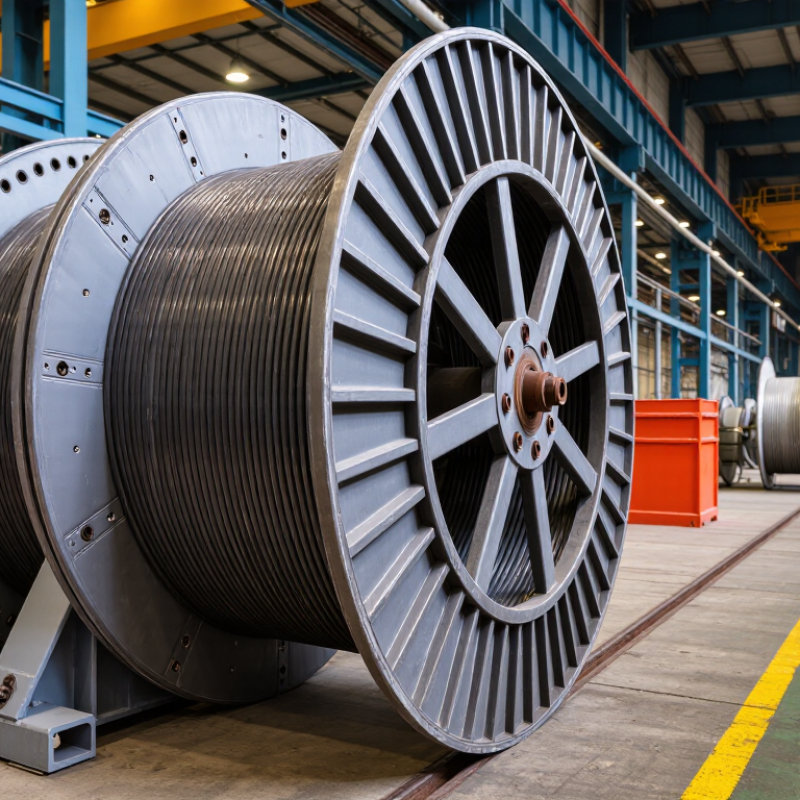
Understanding Heavy-Duty Cable Reels and Their Industrial Uses
China Top Heavy Duty Cable Reel Manufacturers?
Understanding Heavy-Duty Cable Reels and Their Industrial Uses
Heavy-duty cable reels store, protect, and deploy power or control cables in demanding work areas. They are common in factories, ports, workshops, and construction sites. A reel keeps cable off wet floors and away from moving equipment. That matters. A damaged outer jacket can cause downtime and create a safety risk.
Choosing a reel starts with the cable itself. Check its length, diameter, weight, and minimum bending radius. A reel that is too small may pinch the cable; one that is poorly matched can make winding difficult. Consider how the cable moves, too. Spring-driven reels suit frequent extension and retraction, while motorized models can support longer cables or heavier loads. Manual reels remain useful where movement is occasional and simple access matters. There is no universal best choice.
The work environment changes the specification. Dust, moisture, heat, and repeated impacts may call for sealed housings, corrosion-resistant materials, or stronger frames. In practice, even a well-built reel needs suitable installation and regular inspection. Look for worn guides, loose fasteners, and uneven winding. A tidy setup helps, but it does not prove the cable is in good condition. Specifications can also miss awkward site details, such as a tight mounting corner. Check those before purchasing.
Heavy-Duty Cable Reels: Standard Cable Voltage Classes
IEC cable voltage ratings help identify the electrical service a cable is designed for. The chart compares the U₀ (conductor-to-earth) and U (conductor-to-conductor) ratings of two voltage classes used in industrial power systems.
Ratings shown are cable ratings, not reel ratings. Actual reel suitability depends on the cable, load, environment, and the reel manufacturer’s specifications. IEC 60502-1 includes 0.6/1 kV cables; IEC 60502-2 includes cables rated up to 18/30 (36) kV.
Key Design Features of Heavy-Duty Cable Reels
A heavy-duty cable reel starts with a rigid frame. Thick steel side plates help resist twisting when a loaded drum moves across a workshop floor. The drum should leave enough clearance for the cable to wind evenly, without rubbing against its edges. Small details matter. A smooth, rounded flange can reduce abrasion on the outer cable layers. Axle size and bearing support also affect how steadily the reel turns under load.
Good design balances strength with controlled movement. A brake or locking mechanism can prevent the drum from unwinding unexpectedly, while a handle or drive system should remain usable with gloves. Cable diameter, length, and weight must match the reel’s capacity; an oversized cable can crowd the drum and strain its supports. That matters. Protection against dust, moisture, and impact should suit the actual worksite, not just a product description. Inspectable bearings, replaceable wear parts, and accessible fasteners make maintenance more practical. I would not assume that a heavier reel is always better: excess weight can complicate handling, and a design still needs testing with its intended cable and operating conditions.
China’s Heavy-Duty Cable Reel Manufacturing Landscape
China’s heavy-duty cable reel manufacturing landscape combines steel fabrication, mechanical design, and electrical integration. Manufacturers may build reels for mining, ports, construction sites, and industrial power systems, where cable weight and frequent movement place real demands on the frame and drive. A thick drum shell matters, but so do weld consistency, shaft alignment, bearing selection, and braking control.
Specifications should reflect the actual job. Cable length, outer diameter, total mass, minimum bend radius, and operating cycle all affect reel size and torque requirements. Outdoor use adds exposure to dust, moisture, and temperature changes. Small details count. Ask how load ratings are tested, what inspection records are available, and whether the reel is checked under operating conditions. A polished finish cannot confirm sound internal alignment. That distinction is easy to miss.
China’s manufacturing base offers options across custom designs and production volumes, but quotations can leave important assumptions unstated. Confirm mounting dimensions, control interfaces, service access, spare-parts availability, and packaging for transport before comparing prices. If possible, review drawings and test documentation with an engineer familiar with the installation. Even careful specifications may need revision after site measurements. That is not unusual; cable routing can be less tidy than the drawing suggests.
How to Evaluate Leading Chinese Cable Reel Manufacturers
China Top Heavy Duty Cable Reel Manufacturers?
How to Evaluate Leading Chinese Cable Reel Manufacturers
The right manufacturer proves its reel can handle your cable, load, and working environment—not just a polished catalogue. The International Energy Agency’s Electricity 2025 report projects global electricity demand will grow by about 3.3% annually through 2027. That expansion puts more pressure on reliable power infrastructure, including equipment used to manage heavy cables. Still, market growth alone says nothing about an individual supplier’s quality.
Ask for drawings showing rated voltage, current, cable capacity, minimum bend radius, and operating speed. Check whether the brake, drum, bearings, and slip ring are specified for your duty cycle. For dusty or wet sites, verify the stated enclosure rating against IEC 60529, then ask how it was tested. Request material traceability, inspection records, and a load-test report tied to the reel model. A factory audit can reveal practical details: cable winding under load, weld consistency, and whether test instruments have current calibration. Paperwork helps, but it can miss a weak point.
Tips: Send a real cable specification and operating scenario before comparing quotations. Ask for a sample test with your cable if the application is critical. Be cautious of unusually low pricing; it may reflect thinner steel or a shorter test routine, though price alone is not proof. I would still check the small details twice.
Industries and Applications Served by Chinese Manufacturers
Chinese heavy-duty cable reel manufacturers serve industries where power must reach moving equipment reliably. In steel mills, reels feed overhead cranes and transfer cars across long, hot production bays. Mining operations use them on mobile machinery, where dust, vibration, and tight turning spaces test cable protection. Ports and shipyards need reels for cranes, gantries, and service equipment exposed to salt air. Dust gets everywhere. Enclosures, braking systems, and cable capacity matter as much as nominal voltage.
Renewable energy is another growing application. The Global Wind Energy Council’s Global Wind Report 2024 records 117 GW of new wind capacity installed worldwide in 2023. Reels support cable handling on construction equipment, maintenance platforms, and mobile service units; they are not the turbine’s main power cable system. Ports also matter: UNCTAD’s Review of Maritime Transport 2024 reports that over 80% of world trade by volume moves by sea, sustaining demand for port handling equipment. Buyers should check duty cycle, travel speed, cable diameter, and environmental protection against actual site conditions. Fit matters. Report figures show sector scale, not reel sales, and a specification that looks right on paper may still need field testing.





