


Choosing among the Top 10 Hairpin Tube Benders for Global Buyers takes more than comparing brochure speeds. A machine may form neat U-bends on a showroom sample, yet struggle with thin-wall copper, changing tube diameters, or a full production shift. Look closely at bend consistency, tooling changes, automation, operator access, and the support available after installation. Small details matter. A stubborn clamp can slow an entire line.
Manufacturing quality expert W. Edwards Deming is widely associated with the principle, “Quality comes not from inspection, but from improvement of the production process.” That idea fits this purchase: buyers should assess how each Hairpin Tube Bender performs in a repeatable process, not just how polished its specifications look. Ask for sample bends using your tube material and dimensions. Check the bend radius, ovality, end alignment, and cycle time. Then ask how quickly wear parts can be supplied. A test on real production material is worth more than a confident sales promise.
This guide compares machines for different budgets, output targets, and factory setups. Some buyers need flexible changeovers; others need dependable, high-volume forming. There is no perfect machine. Even a strong option may bring trade-offs in footprint, training, or maintenance. The ranking is a starting point, not a substitute for checking your own requirements. One overlooked detail can become a daily headache.
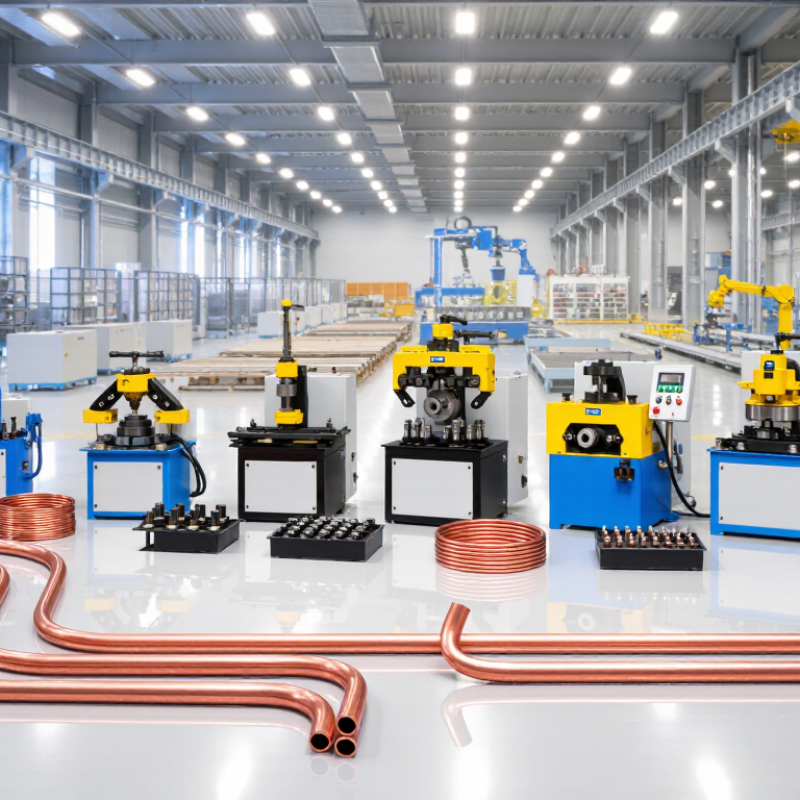
Hairpin tube benders form straight copper or aluminum tubing into U-shaped circuits for heat-exchanger coils. A feeder sets the tube length, clamps secure it, and forming tools guide each bend. The aim is more than a smooth curve. Consistent bend radius and leg spacing help tubes fit later coil-assembly steps. Small errors matter. A kink can restrict flow, while uneven legs may slow assembly. Operators should check tube diameter, wall thickness, material temper, and tool condition before running a new batch.
This is not a forecast of bender sales, but it highlights the scale of demand for cooling equipment. On high-volume lines, hairpin benders can reduce manual handling and produce repeatable parts. Still, automation is not magic. Thin-wall tubing can flatten, and a setup that works for one alloy may mark another. Measure sample bends for ovality, leg pitch, and end position before full production. Changeovers can take longer than the bending itself.

Hairpin tube benders transform straight copper or aluminum tubing into the U-shaped circuits used in heat exchangers. A clamp holds the tube while a rotating die forms each bend around a set radius. For tight bends, a mandrel can support the tube wall and reduce wrinkling or collapse. The machine must also account for springback: metal partly returns toward its original shape after bending. Small errors matter. A few degrees of mismatch can make parallel legs difficult to fit into a coil assembly.
Accuracy depends on more than the bending head. Operators check tube diameter, wall thickness, bend radius, leg length, and spacing between legs. A sample bend can reveal whether tooling or settings need adjustment before a production run. That step takes time, but skipping it may create scrap. The International Energy Agency’s 2018 report, The Future of Cooling, projects global space-cooling electricity demand will rise from 2,020 TWh in 2016 to about 6,200 TWh by 2050. The U.S. Energy Information Administration’s 2020 Residential Energy Consumption Survey found air conditioning in 88% of U.S. households. These figures indicate the scale of cooling equipment; they do not guarantee uniform tube designs. Each application still needs its own bend tolerances and inspection plan.
Hairpin tube benders differ by forming method and production volume. Manual and semi-automatic machines suit short runs, prototypes, and frequent size changes. CNC rotary-draw models control bend angle and feed length for repeatable coil patterns. Multi-stack machines can handle several radii with fewer tool changes. For tight bends, mandrel support helps limit flattening; simpler mandrel-free designs may be adequate for larger radii and less demanding tolerances. Small batches need flexibility. High-volume lines need stable cycle times.
Machine choice also depends on tube diameter, wall thickness, material, bend radius, and return-bend geometry. The IEA’s 2018 report, The Future of Cooling, projected global air-conditioner stock to rise from 1.6 billion units to 5.6 billion by 2050. That forecast points to long-term cooling demand, but it does not mean every factory needs the fastest machine. Buyers should test sample tubes and inspect ovality, springback, end length, and tool-change time. One selection habit deserves scrutiny: comparing cycle speed while overlooking setup losses. A slower machine may perform better across mixed orders. And specifications can mislead. Ask for a trial using the actual tube and drawing.
| Machine Type | Bending and Control Method | Best-Fit Production Need | Typical Features | Key Buyer Checks |
|---|---|---|---|---|
| Manual Bench Hairpin Bender | Hand-operated lever and dedicated bending tooling | Prototypes, repair work, and low-volume production | Simple operation, compact footprint, and low setup complexity | Confirm tube-size compatibility, bend repeatability, and operator effort for the planned volume. |
| Hydraulic Semi-Automatic Bender | Hydraulic bending force with operator-led loading and cycle control | Small to medium batches with frequent part changes | Powered bending, straightforward controls, and less manual force than a bench tool | Check hydraulic maintenance needs, guarding, tooling availability, and changeover time. |
| NC Single-Head Bender | Numerical control for programmed bend settings; typically one bending head | Repeat production of a limited range of hairpin designs | Stored settings can help improve consistency between production runs | Ask how programs are stored, how setup is verified, and which adjustments remain manual. |
| CNC Servo Single-Head Bender | Servo-controlled axes coordinate feed, rotation, and bending actions | Flexible production with multiple sizes or frequent recipe changes | Programmable motion, repeatable settings, and support for recipe-based production | Verify axis configuration, programming workflow, training, and service support in the destination market. |
| CNC Simultaneous Double-Head Bender | Two heads form the ends of a tube in a coordinated cycle | Higher output of standard, symmetric hairpin parts | Can reduce cycle time when both bends can be formed together | Confirm the machine supports the required bend geometry and that loading and unloading do not limit throughput. |
| CNC Independent Double-Head Bender | Two heads can be configured or controlled independently, depending on the machine design | Part families needing different end positions or bend settings | Greater setup flexibility than a fixed, synchronized arrangement | Clarify which axes are independent and test the actual part drawings before purchase. |
| Multi-Stack Tooling Bender | Uses multiple tooling sets or bend radii on one machine | Production requiring more than one bend radius or tooling setup | Can reduce tooling changeovers when the machine is configured for the required radii | Check available tooling stations, tooling change method, and compatibility with tube diameter and wall thickness. |
| Rotary-Draw Hairpin Bender | Forms the bend by drawing the tube around a shaped bending die | Controlled U-bends where bend shape and repeatability are important | Uses application-specific dies; support tooling may be selected to suit the tube and bend | Review bend radius, tube material, wall thickness, and sample-part quality with the proposed tooling. |
| Automatic Feed-and-Bend Line | Combines tube feeding and positioning with automated bending; cutting may be integrated or separate | Longer runs of repeatable parts with a suitable upstream tube supply | Can reduce manual handling and support a more continuous production flow | Establish whether the line handles straight lengths or coil stock, and confirm cut-length and feeding requirements. |
| Integrated Hairpin Production Cell | Coordinates bending with selected operations such as feeding, cutting, or part handling | Factories seeking a connected production process for established part designs | May combine multiple process steps and reduce transfers between separate machines | Check cell layout, safety interfaces, changeover procedures, maintenance access, and compatibility with existing equipment. |
The configurations above are common machine types, not a ranking of manufacturers. Actual capacity and achievable bend quality depend on the tube material, outside diameter, wall thickness, bend radius, tooling, and machine configuration; validate requirements using sample parts and drawings.
A practical top-ten shortlist of hairpin tube benders should cover different production needs, not just machine size. Manual lever benders suit repairs and low volumes. Bench-mounted models offer steadier support in small workshops. Hydraulic units reduce operator effort on thicker tubing. Electric benders provide repeatable motion for regular batches. CNC models help manage complex programs and frequent changeovers.
Multi-radius machines handle several bend geometries with fewer tool changes. Dual-head designs can improve output on matched parts. Vertical benders save floor space in crowded production areas. Portable units help with on-site work, though setup can be less consistent. Automated cells suit high-volume lines, but demand careful integration. Fit matters.
For global buyers, compare tube diameter, wall thickness, bend radius, and material before requesting a quotation. Ask suppliers to bend sample tubes and share measurements, cycle-time assumptions, and tooling details. Check the die. Also confirm electrical supply, control-language options, spare-part availability, packing protection, and remote service arrangements. A low purchase price may not reflect tool costs or downtime. I would still question any claimed capacity without a test piece; figures on a specification sheet can hide important limits. Choose the machine that matches real parts and operators, not an impressive brochure.
Tube-size reference for comparing hairpin bender capacity
The chart converts ten fractional-inch tube outside diameters to millimeters using 1 inch = 25.4 mm. Use it as a sizing reference when checking machine compatibility; it is not a ranking or a specification for any particular bender.
A global shortlist of hairpin tube benders should start with supplier evidence, not polished photographs. Ask for recent production references, operator training materials, and a live demonstration using tubing similar to yours. Small details matter. Watch how the machine supports each leg of a U-bend and whether operators can repeat the setup without guesswork. A neat catalog is not proof of consistent output.
Compare specifications against your actual parts. Confirm tube outside diameter, wall thickness, bend radius, material range, and required cycle time. Check whether tooling changes are manual or automatic, and ask how long a typical changeover takes. Request sample bends and inspect leg spacing, springback, surface marks, and dimensional variation. A stated tolerance may look impressive, yet still fail to describe performance across a full shift. Ask for evidence.
After-sales support can decide whether a capable machine remains productive. Clarify response hours, remote troubleshooting options, spare-parts availability, and technician travel arrangements. Ask which components are considered routine wear items and how they are stocked. Get service scope and warranty exclusions in writing. If support depends on one distant technician, plan for delays. I would also ask the supplier to walk through a realistic breakdown scenario; the answer may be less polished, but more useful. Compare training, documentation, and maintenance guidance alongside the purchase price.


For those larger-sized parts, or smaller quantity runs, we have 2 independent powder coat booths and ovens. The quality, durability and affordability of today’s powder coating finishes make this the process of choice for world-class companies.
Powder coating advantages over other forms of coating are many. Materials used in the Powder coating process can be metals and non-metals that come in a multitude of thicknesses, textures, colors, etc. Another of Powder coating’s biggest advantages over conventional coatings is its ability to create finishes in many different textures. Powder Coating Booths allow us the ability to apply these advantages to large products.
Tri-State Fabricators runs a full-service conveyor line for painting. Wet painting can provide protection or decoration to many different part styles. From start to finish, every project is easier to undergo random and point-based inspection by our skilled painting team.
Advantages to our Wet Paint Line are these lines start with product prep and ends with a thorough inspection of a high quality finished product. Our ability to complete large and small projects with a superior finish and doing so in a timely and economical fashion. This passes along the savings in production to our customers. When powder coating ins not an option, our Wet Paint Line gets the job done right the first time.
When the parts get big and heavy we roll-out our custom paint racks and oversize booth. By utilizing our partnerships with all the major paint brands, we can match virtually any color with wet paint.
The advantages of having access to a Wet Paint Booth are many. Large projects of many different shapes can be loaded into the booth. The Wet Paint Booth offers an environment that is much more controlled than a typical parts painting operation.
Not only are they used because of their controlled environment, but they’re are also advantageous when it comes to applying paint to parts that are needed in industries that require specialty coatings such as medical, aerospace, etc.
Our military forces have some very high standards when it comes to the finish of their vehicles and equipment. From the first pre-treatment step to final coat, it takes a great deal of knowledge and experience to protect the men and women of our armed forces. They deserve only the best, and Tri-State Fabricators provides it.
All of our processes are closely monitored by our staff and management teams. Both of which are highly trained in the processes of metal fabrication and finishing. Tri-State Fabricators’ goal is to always fully satisfy each and every customer, including the military. We will always put a 110% into what we do.
Abrasive media blasting is an excellent way to remove old paint, rust, and increase the paint/powder adhesion. Glass beads produce a much smoother and brighter finish than angular abrasives; leaving the part clean yet without any dimensional change. Chemically inert and environmentally friendly, we can recycle our beads approximately 30 times; making them a more preferred method of metal cleaning or surface finishing.
Advantages to Glass Bead Blasting are many. Glass bead blast media is used when a project is needing rough surfaces need to become smooth for applications of coatings such as paint. It is typically used to clean paint and rust from a product surface without deforming the surface it is being used on. Overall, compared to many other blasting media, Glass Bead Blasting is a very economical choice and those savings are always passed on to our customers.
Tri-State Fabricators utilize a zinc phosphate wash to clean and etch the material to ensure the best paint adhesion possible. The unique design of our 3-stage wash system does the work like a 5-stage. From Cleaning and rinsing to conversion coating and post-treatment, Our Part Washing process is a complete service and works throughout the fabrication service and the finishing service.
Along with the previously mentioned benefits, Curing is a vital chemical reaction that leaves the product finish hard and relatively safe from mild abrasion and aggressive corrosion. This process can be done in more than one way; ambient air-dry or in curing ovens at temps that exceed 240°.
From fixing paint mistakes (someone else’s of course) to simply cleaning our paint line hooks, our burn-off oven is put to good use. After a quick burn-off, a little clean up, and a fresh coat of paint, your parts will look better than new.
Why does our Burn-Off Oven work so well? Because super heating the air around parts turns the materials into ashes. From paint and powder coatings to rubber and machining oils, high temps do the job without degrading the integrity of the part.
Masking is a vital part of producing high quality products. We have die-cut masking patterns to protect machined surfaces as well as a wide range of plugs and caps to protect threaded holes and bolts. We provide permanent and temporary masking.
Masking allows the selected sections of a product to be protected from a fabrication or finishing service. This can be with both chemicals when etching and tapes, paints when only finishing just a section of the product. Masking is great in aiding the customization process of a project.
Screen printing is a photographic process that transfers artwork onto a porous nylon screen which allows colored ink to flow through the screen and be deposited on an aluminum or plastic component. We can generally have just about any design created onto a screen for your parts.
Some of the advantages of Screen Printing are, brand recognition for your business displaying on your products, assembly instructions, product warnings/hazards, etc. Tri-State Fabricators produces Screen Printing of the highest quality so you know it’s durable.
Metal Finishing is the art of treating the exterior portion of product, often metal but can also be made of other materials, so that the surface is clean and free of any debris. Then the process of applying coats or either paint of powder coat takes place. This coating process improves the quality of the product in both appearance and resistance to wear and corrosion.
Tri-State Fabricators, Inc., understands that a project typically isn’t complete until a high-quality finish has been added to your product. This is why our painting and powder coating teams continuously inspect the products throughout the Metal Finishing process.

