Top 10 GRP Gel Coat Tiles Machinery Suppliers?
Choosing machinery for GRP gel coat tiles involves more than comparing prices or reading polished product brochures. A reliable line may include resin and gel coat handling, metered dispensing, tile molds, curing equipment, and trimming stations. Each stage affects surface finish, dimensional consistency, production speed, and material waste. Small details matter. A poorly matched spray system, for example, can leave uneven coverage across a textured tile.
This guide to the Top 10 GRP Gel Coat Tiles Machinery Suppliers introduces manufacturers and equipment providers for buyers researching a new or upgraded production line. It considers practical factors such as machine configuration, customization options, technical support, spare-parts availability, and experience with comparable applications. The keyword Grp Gel Coat Tiles Machinery covers a broad equipment category, so supplier capabilities should be checked against the buyer’s tile design and output requirements. A supplier page can look convincing; a factory visit or customer reference may tell a different story. That takes time. Rankings and product claims also deserve careful verification, since published specifications may not reflect performance under a particular factory’s conditions. Use the list as a starting point, then request detailed quotations, operating references, and clear information about installation and after-sales service. No supplier is automatically the right choice. The best fit depends on the production target, available floor space, workforce skills, and the finish customers expect.
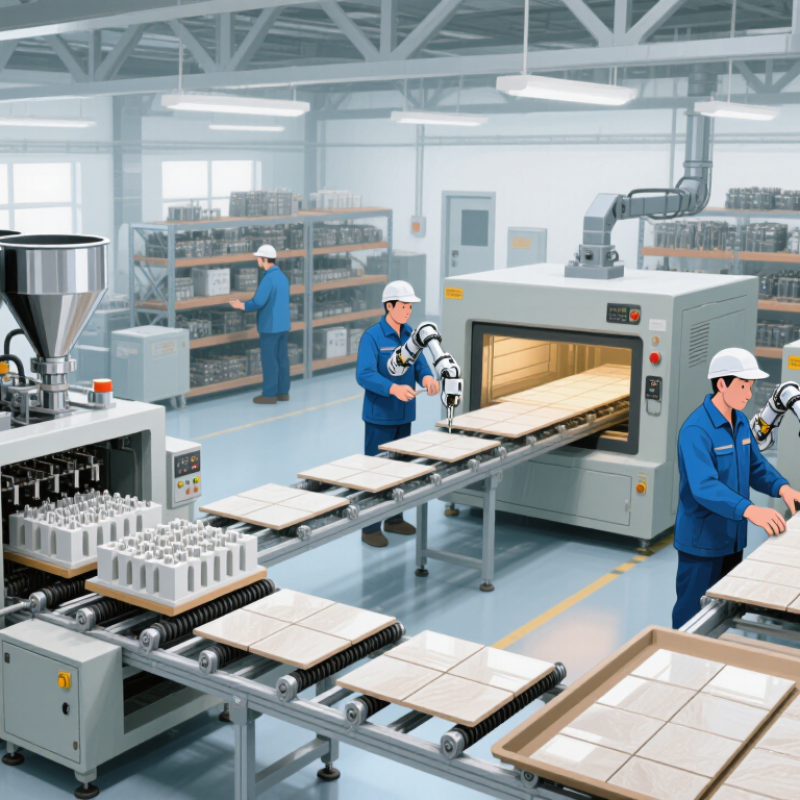
Understanding GRP Gel Coat Tiles and Their Manufacturing Process
GRP gel coat tiles combine a glass-fibre-reinforced body with a smooth, pigmented surface layer. The gel coat sits against the mould, so its finish depends heavily on mould cleanliness and application consistency. Dust, trapped air, or uneven coating can leave visible blemishes. Small defects matter.
Production usually begins with cleaning and preparing a mould, then applying gel coat at a controlled thickness. After it reaches the right curing stage, workers place glass-fibre reinforcement and wet it with resin. Rollers help remove trapped air and press the layers together. The laminate then cures before demoulding, trimming, and inspection. Timing can vary with resin chemistry, temperature, and tile design, so fixed settings may not suit every line.
Useful machinery may include gel coat spray equipment, resin metering systems, cutting tools, mould-handling devices, and ventilation. However, automation alone cannot guarantee consistent tiles. Operators still need to check coating coverage, tile dimensions, surface appearance, and cure condition. A practical quality check includes examining edges and corners, where thin spots or fibre exposure can hide. There is no perfect shortcut. Even a well-equipped workshop may need to adjust its process after a mould change or a shift in room temperature.
Machinery Used in GRP Gel Coat Tile Production
Machinery Used in GRP Gel Coat Tile Production
A GRP gel coat tile line starts with clean, accurately shaped molds. Operators apply gel coat using a controlled spray system or a metered dispensing unit. Consistent film thickness helps reduce patchy color and surface defects. Small details matter. A ventilated spray area, temperature monitoring, and careful mold cleaning support repeatable results.
After the gel coat reaches the required cure stage, workers place fiberglass reinforcement and resin into the mold. Cutting tables prepare the glass mat, while resin metering and mixing equipment helps maintain a steady ratio. Rollers or consolidation tools press out trapped air and wet the reinforcement evenly. This step still depends on skilled operators; automation cannot correct poor lay-up.
Curing may use a temperature-controlled room or an oven, depending on the resin system and production targets. Demolding tools, trimming saws, and edge-finishing equipment then shape each tile. Dust extraction is important during cutting, and inspection gauges can check thickness, flatness, and visible finish. Not always. The fastest machine is not necessarily the best choice: maintenance access, mold changeover time, and operator training affect real output. A practical supplier should explain these limits and help match equipment capacity to the tile design.
Factors for Evaluating GRP Tile Machinery Suppliers
Top 10 GRP Gel Coat Tiles Machinery Suppliers?
Choosing a GRP tile machinery supplier takes more than comparing quoted prices. Check whether the line can maintain consistent tile thickness, resin distribution, and surface finish through a full production shift. Ask for sample tiles made with similar glass reinforcement and resin. Inspect the edges, underside, and corner fit, not just the glossy face. A neat showroom sample proves little. Review temperature controls, curing methods, mold changes, and cleaning access. These details affect repeatability and downtime. Request a written list of tooling, commissioning tasks, operator training, and spare parts. Vague answers deserve follow-up.
Tips: Bring your own tile dimensions and target output to a supplier discussion. Ask for a production trial using your material specifications. Record cycle time, rejected pieces, and visible surface defects. One trial cannot predict every operating condition, but it offers better evidence than a brochure.
Evaluate service access as carefully as machine features. Ask who handles installation, how quickly technical support usually responds, and whether maintenance instructions are supplied. Check references from plants with comparable products and production volumes. A supplier may offer impressive capacity figures, yet actual output depends on material handling and operator routines. Treat guaranteed rates cautiously unless the test conditions are clearly documented. Leave room for doubt; no single scorecard captures every factory’s needs.
Profiles of 10 GRP Gel Coat Tile Machinery Suppliers
GRP gel-coat tile machinery suppliers differ in line design, mould handling, curing control, and after-sales support. Grand View Research’s 2023 Composites Market Size Report estimated the global composites market at USD 93.7 billion in 2022, with projected annual growth of 7.5% through 2030. This broad-market figure is not a forecast for tile machinery, but it signals continued demand for composite production capacity.
Profile 1: Continuous-line integrators coordinate coating, forming, curing, and cutting equipment. Profile 2: Gel-coat spray specialists focus on even coverage and reduced overspray. Profile 3: Hydraulic-press suppliers serve plants using matched moulds and controlled pressure. Profile 4: Resin-metering specialists help maintain repeatable mix ratios. Profile 5: Curing-oven builders offer temperature zoning for consistent tile surfaces. Profile 6: Mould manufacturers supply textured patterns and replaceable inserts. Profile 7: Cutting-system suppliers handle clean edges and repeatable dimensions. Profile 8: Automation integrators connect sensors, conveyors, and production controls. Profile 9: Turnkey-line providers manage layout, installation, and commissioning. Profile 10: Retrofit specialists upgrade existing equipment with newer controls or dosing systems. Capabilities vary; a polished brochure alone proves little.
Tips: Ask for sample tiles made with comparable resin and gel coat. Check cure uniformity, edge quality, and cycle-time records. Request a trial run. Confirm spare-part lead times and operator training before comparing quotations.
Top 10 GRP Gel Coat Tile Machinery Suppliers: Evaluation Framework
Suggested weighting for comparing supplier capabilities—not a ranking or verified supplier-performance data.
Use these criteria as a starting point when reviewing machinery specifications, production requirements, service coverage, and references. Adjust the weights to fit your project.
Comparing Supplier Capabilities, Support, and Equipment Options
Choosing among GRP gel coat tile machinery suppliers requires more than comparing quoted prices. A capable supplier should explain how its gelcoat dosing, spray control, mould handling, and curing stages work together. Ask for production data using a tile size and finish close to your own. Watch for uneven gloss, trapped bubbles, and resin buildup around mould edges. Small defects matter.
MarketsandMarkets’ 2023 Composites Market report estimated the global market at USD 94.3 billion, with a forecast of USD 146.3 billion by 2028. This broad market figure signals growing composite activity; it does not predict demand for GRP tiles specifically. Compare equipment options against practical needs: adjustable spray rates, repeatable thickness, mould-change time, and accessible cleaning points. Support deserves equal scrutiny. Request installation scope, operator training hours, spare-parts lead times, and a written response process for production faults. Ask suppliers to demonstrate these details, not just describe them. A factory visit can reveal awkward maintenance access or noisy, poorly enclosed spray areas. One uncomfortable question remains: will the quoted output rate hold after routine cleaning and colour changes?





