


Top Gravity Conveyor Manufacturers for Global Buyers

Selecting a gravity conveyor supplier is not simply a matter of comparing prices. Global buyers must consider load capacity, roller or wheel spacing, conveyor width, frame material, and how each unit will connect with existing equipment. A line moving cartons across a short packing area has different needs from one handling heavier totes in a busy distribution center. Details matter.

This guide introduces Gravity Conveyor Manufacturers and the factors buyers can use to assess them. It looks at product range, customization options, published technical specifications, quality controls, delivery support, and access to replacement parts. Buyers should also ask for drawings, load limits, warranty terms, and references for applications similar to their own. A polished catalog is useful, but it cannot answer every installation question.

Fit comes first. A low-cost conveyor may require extra support or adjustments after delivery, while a more specialized model may be unnecessary for a simple transfer point. Compare offers using the same load, dimensions, operating conditions, and service expectations. Where possible, request a sample section or conduct a site trial before committing to a larger system. Not every manufacturer reports performance in the same way, so verify key claims directly and document assumptions. This overview can help build a practical shortlist, not replace engineering review. Some choices will still involve trade-offs. That is worth acknowledging.
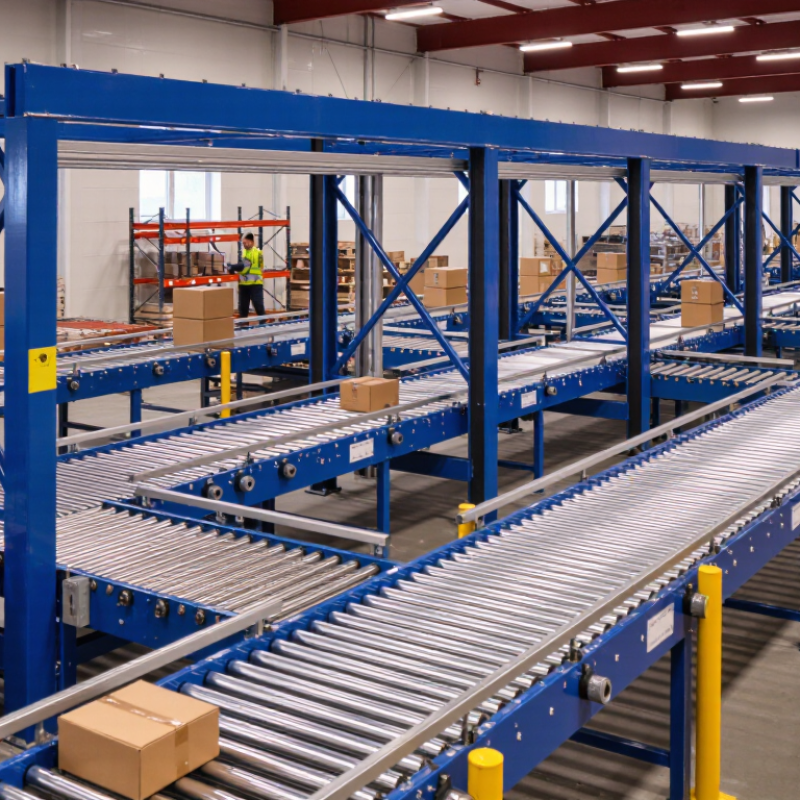
Top Gravity Conveyor Manufacturers for Global Buyers

What Gravity Conveyors Are and Where They Are Used

Gravity conveyors move goods through gravity or a gentle manual push, without powered motors. A slight incline carries cartons, totes, and other suitable loads over rollers or skate wheels. Simple in principle. Each roller turns as a package passes, so the conveyor surface must suit its base and weight. Soft bags or open-bottom containers may snag between rollers.

These systems are common in warehouses, packing areas, and order-fulfillment zones. Workers may use them to move cartons between packing benches, loading points, or storage lanes. A short roller section can also connect workstations where powered equipment would be unnecessary. They are often useful for steady flows of firm, flat-bottomed packages.

The slope needs careful adjustment. Too little incline can leave cartons stalled; too much can make them travel faster than workers can handle comfortably. Installations may use brakes, stops, or side guides to help control movement, depending on the layout and load. Dust, moisture, and uneven package bottoms can affect performance. Measure typical package dimensions and weights before selecting roller spacing. Small details matter. A trial with real loads can reveal problems that a drawing misses.


Gravity Conveyors: Theoretical Downslope Force

Gravity conveyors move loads downhill using gravity, commonly in applications such as carton transfer, picking, packing, and short-distance accumulation. This chart shows the theoretical force component acting down an incline for a 100 kg load, calculated as F = mg sin(θ), with g = 9.81 m/s². It excludes friction and rolling resistance, so it is not a conveyor design recommendation.

How Gravity Conveyor Systems Move and Handle Loads

Gravity conveyors move cartons, totes, and trays using rollers or wheels set on a gentle decline. Gravity supplies the motion; the load’s weight and the conveyor slope affect its speed. A slight incline may keep parcels moving steadily. Too much slope can cause loads to bunch or strike end stops. That matters.

Roller spacing should support the load’s base, not just its edges. Side guides help keep cartons aligned, while mechanical stops control release points. For accumulation, operators can divide a line into zones so one load does not push continuously against another. MHI’s 2024 Annual Industry Report found that 55% of surveyed organizations planned to increase supply-chain technology investment in the coming year. That figure reflects broad technology priorities, not gravity-conveyor performance, so it should not replace site testing.

Before choosing a system, test representative loads across the lightest and heaviest expected weights. Include real cartons, uneven bases, and the actual incline. A slightly warped box can stall where a neat sample glides through. Check stopping distance and worker reach, too. Simple systems still need careful adjustment.

Key Criteria for Evaluating Gravity Conveyor Manufacturers

Choosing a gravity conveyor manufacturer starts with the actual load, not a catalogue photo. Share carton dimensions, weight range, bottom condition, and daily volume. These details affect roller spacing, frame strength, and safe slope. Ask how the manufacturer checks product flow on bends and transfers. Small details matter.

Request clear specifications for roller diameter, bearing type, frame material, and allowable load per section. A sample conveyor run can reveal issues that drawings miss, such as cartons drifting sideways or stopping at a joint. Ask for test methods and written capacity limits, not just broad performance claims. Check whether the design allows straightforward adjustment and replacement of worn rollers. I would still question any specification that seems too neat; real cartons vary, and floors are rarely perfect.

Installation support matters, too. Confirm who provides layout guidance, assembly instructions, and access to spare parts. Ask for references from facilities handling similar loads and operating conditions. Review the warranty carefully, including what counts as normal wear. A checklist will not catch everything; real layouts are messier than drawings. If possible, share photos and measurements of the intended space before ordering. That extra review may prevent awkward gaps, blocked walkways, or a conveyor that needs constant manual nudging.

Leading Gravity Conveyor Manufacturers Serving Global Buyers

Leading gravity conveyor manufacturers serving global buyers understand that simple equipment still requires careful engineering. A roller conveyor may look straightforward, but roller spacing, frame strength, and product weight determine whether cartons move smoothly. Experienced suppliers ask about load dimensions, throughput, floor conditions, and connection points before recommending a layout. Small details matter.

For international projects, clear technical documents are essential. Buyers should request drawings, material specifications, load ratings, installation guidance, and spare-parts information. A reliable manufacturer explains what its system can handle and where limits apply. It also confirms packaging dimensions and delivery arrangements early, helping teams plan receiving and installation. Keep it practical.

Customization can improve fit, but it should solve a defined operating need. For example, a distribution center handling small cartons may need closer roller spacing than a line moving large, rigid containers. Ask how the design will be tested, what maintenance access is available, and which components may need routine replacement. A drawing can look perfect and still miss a real floor obstruction. That happens. Reviewing site measurements together can prevent avoidable changes, though no plan removes every installation surprise.

How to Compare Suppliers and Select the Right Manufacturer

When comparing gravity conveyor suppliers, match the design to the actual load, not just the catalog rating. Record carton weight, width, bottom condition, and peak hourly flow. Check roller diameter, spacing, frame finish, and any incline. A sample carton rolling over a short test section can reveal snagging that a specification sheet misses.

MHI and Deloitte’s 2024 Annual Industry Report found that 55% of surveyed supply chain leaders planned to increase technology investment over the following two years. That wider investment trend makes supplier support worth checking alongside price. Ask for drawings, load-test details, installation guidance, spare-parts lead times, and references for similar applications. Small details matter. A low quote may omit guards, supports, or commissioning; confirm what is included in writing. I would also compare warranty terms carefully, since they can be less useful than expected when exclusions are unclear.

Tips: Send each supplier the same layout, load data, and operating conditions. Request a written proposal showing capacity assumptions and maintenance needs. If possible, test representative cartons on the proposed roller spacing before ordering. A brief site review may catch uneven floors or tight turns that were missed on the drawing.

Top Gravity Conveyor Manufacturers for Global Buyers — How to Compare Suppliers and Select the Right Manufacturer
Supplier Profile Typical Products Best-Fit Applications Specifications to Compare Potential Advantages Questions to Ask Before Ordering
Standard gravity roller conveyor specialist Straight roller sections, supports, side frames, and basic accessories. Cartons, totes, and other stable-bottom loads moving over short or moderate distances. Roller diameter and spacing; frame width; section length; load per roller and per section; frame material and finish. Suitable for straightforward layouts and repeatable conveyor sections. What load limits apply to the complete section? Are curves, transitions, and supports included in the quotation?
Skate-wheel conveyor supplier Fixed and flexible skate-wheel sections, often used for lightweight handling. Light cartons and packages on relatively smooth, firm bottoms; temporary or frequently reconfigured layouts. Wheel material and spacing; conveyor width; extended and compressed lengths for flexible sections; rated load and support spacing. Flexible sections can be repositioned and adjusted to suit changing work areas. Is the load suitable for wheel contact rather than continuous roller support? What is the rated capacity at the intended extension?
Expandable conveyor manufacturer Flexible gravity roller or skate-wheel conveyors with movable frames and adjustable lengths. Loading docks, packing areas, and operations where conveyor length or route changes regularly. Minimum and maximum length; conveyor width; wheel or roller type; leg and caster configuration; capacity at different extensions. Can provide a reconfigurable conveying path without a permanently installed line. What are the safe operating limits when fully extended? Are brakes, guards, and adjustable supports available?
Custom conveyor fabricator Made-to-order straight sections, curves, transitions, stands, and material-handling components. Facilities with unusual dimensions, specific interfaces, or layouts that do not suit standard sections. Approved drawings; dimensional tolerances; materials and finish; interface details; design load assumptions; inspection documentation. Can tailor dimensions and connections to a site layout or existing equipment. Who approves drawings before production? How are changes, inspection, spare parts, and replacement sections handled?
Systems-oriented conveyor manufacturer Gravity sections supplied with layout support, supports, guides, stops, and connection planning. Multi-section lines or projects requiring coordinated conveyor interfaces and installation planning. Section-to-section transitions; floor and support requirements; product flow; installation scope; layout drawings and documentation. May help coordinate a complete conveyor route rather than supply isolated sections only. Does the supplier provide layout review and installation guidance? Which items are included and which are supplied separately?
Export-focused conveyor supplier Standard or configurable gravity conveyor sections prepared for shipment to international markets. Buyers coordinating overseas procurement, freight, import, and local installation. Packaging dimensions and weight; shipping terms; export documents; destination-market requirements; spare-parts availability. May be experienced with export packing and cross-border order coordination. Can the supplier provide a complete packing list, drawings, and shipment details? Who is responsible for duties, unloading, and local compliance?
Comparison criteria for every supplier Use the same written specification and operating conditions when requesting quotations. Shortlisting suppliers on a comparable basis rather than choosing on price alone. Product dimensions and weight; bottom condition; required throughput; slope; operating environment; duty cycle; safety and documentation needs. Helps reveal differences in scope, assumptions, capacity ratings, and delivery terms. Request a quotation with stated load assumptions, drawings, warranty terms, lead time, and a clear list of included components.
Important: These are supplier profiles and comparison criteria, not a ranking of named manufacturers. Gravity conveyor dimensions and load capacities vary by design, material, roller or wheel spacing, support arrangement, and operating conditions. Confirm ratings and applicable safety or regulatory requirements with the supplier for the specific model and destination market.

Powder Coat Booths

For those larger-sized parts, or smaller quantity runs, we have 2 independent powder coat booths and ovens. The quality, durability and affordability of today’s powder coating finishes make this the process of choice for world-class companies.

Powder coating advantages over other forms of coating are many. Materials used in the Powder coating process can be metals and non-metals that come in a multitude of thicknesses, textures, colors, etc. Another of Powder coating’s biggest advantages over conventional coatings is its ability to create finishes in many different textures. Powder Coating Booths allow us the ability to apply these advantages to large products.

Wet Paint Line

Tri-State Fabricators runs a full-service conveyor line for painting. Wet painting can provide protection or decoration to many different part styles. From start to finish, every project is easier to undergo random and point-based inspection by our skilled painting team.

Advantages to our Wet Paint Line are these lines start with product prep and ends with a thorough inspection of a high quality finished product. Our ability to complete large and small projects with a superior finish and doing so in a timely and economical fashion. This passes along the savings in production to our customers. When powder coating ins not an option, our Wet Paint Line gets the job done right the first time.

Wet Paint Booths

When the parts get big and heavy we roll-out our custom paint racks and oversize booth. By utilizing our partnerships with all the major paint brands, we can match virtually any color with wet paint.

The advantages of having access to a Wet Paint Booth are many. Large projects of many different shapes can be loaded into the booth. The Wet Paint Booth offers an environment that is much more controlled than a typical parts painting operation.

Not only are they used because of their controlled environment, but they’re are also advantageous when it comes to applying paint to parts that are needed in industries that require specialty coatings such as medical, aerospace, etc.

Military CARC

Our military forces have some very high standards when it comes to the finish of their vehicles and equipment. From the first pre-treatment step to final coat, it takes a great deal of knowledge and experience to protect the men and women of our armed forces. They deserve only the best, and Tri-State Fabricators provides it.

All of our processes are closely monitored by our staff and management teams. Both of which are highly trained in the processes of metal fabrication and finishing. Tri-State Fabricators’ goal is to always fully satisfy each and every customer, including the military. We will always put a 110% into what we do.

Glass-Bead Blasting

Abrasive media blasting is an excellent way to remove old paint, rust, and increase the paint/powder adhesion. Glass beads produce a much smoother and brighter finish than angular abrasives; leaving the part clean yet without any dimensional change. Chemically inert and environmentally friendly, we can recycle our beads approximately 30 times; making them a more preferred method of metal cleaning or surface finishing.

Advantages to Glass Bead Blasting are many. Glass bead blast media is used when a project is needing rough surfaces need to become smooth for applications of coatings such as paint. It is typically used to clean paint and rust from a product surface without deforming the surface it is being used on. Overall, compared to many other blasting media, Glass Bead Blasting is a very economical choice and those savings are always passed on to our customers.

Part Washing

Tri-State Fabricators utilize a zinc phosphate wash to clean and etch the material to ensure the best paint adhesion possible. The unique design of our 3-stage wash system does the work like a 5-stage. From Cleaning and rinsing to conversion coating and post-treatment, Our Part Washing process is a complete service and works throughout the fabrication service and the finishing service.

Along with the previously mentioned benefits, Curing is a vital chemical reaction that leaves the product finish hard and relatively safe from mild abrasion and aggressive corrosion. This process can be done in more than one way; ambient air-dry or in curing ovens at temps that exceed 240°.

Burn-Off Oven

From fixing paint mistakes (someone else’s of course) to simply cleaning our paint line hooks, our burn-off oven is put to good use. After a quick burn-off, a little clean up, and a fresh coat of paint, your parts will look better than new.

Why does our Burn-Off Oven work so well? Because super heating the air around parts turns the materials into ashes. From paint and powder coatings to rubber and machining oils, high temps do the job without degrading the integrity of the part.

Masking

Masking is a vital part of producing high quality products. We have die-cut masking patterns to protect machined surfaces as well as a wide range of plugs and caps to protect threaded holes and bolts. We provide permanent and temporary masking.

Masking allows the selected sections of a product to be protected from a fabrication or finishing service. This can be with both chemicals when etching and tapes, paints when only finishing just a section of the product. Masking is great in aiding the customization process of a project.

Screen Printing

Screen printing is a photographic process that transfers artwork onto a porous nylon screen which allows colored ink to flow through the screen and be deposited on an aluminum or plastic component. We can generally have just about any design created onto a screen for your parts.

Some of the advantages of Screen Printing are, brand recognition for your business displaying on your products, assembly instructions, product warnings/hazards, etc. Tri-State Fabricators produces Screen Printing of the highest quality so you know it’s durable.

Metal Finishing

Metal Finishing is the art of treating the exterior portion of product, often metal but can also be made of other materials, so that the surface is clean and free of any debris. Then the process of applying coats or either paint of powder coat takes place. This coating process improves the quality of the product in both appearance and resistance to wear and corrosion.

Tri-State Fabricators, Inc., understands that a project typically isn’t complete until a high-quality finish has been added to your product. This is why our painting and powder coating teams continuously inspect the products throughout the Metal Finishing process.
