Top Drilling Chemicals Suppliers for Global Buyers

Drilling Chemicals help control fluid properties, manage pressure, reduce friction, and protect equipment across demanding well conditions. At a remote rig, a delayed shipment of bentonite or a poorly matched lubricant can disrupt carefully planned work. Product choice matters. So does dependable technical support.

This guide introduces leading suppliers serving global buyers and explains how to assess their offerings. It considers product range, manufacturing consistency, regional availability, documentation, and the quality of field assistance. Buyers can compare materials such as viscosifiers, fluid-loss additives, lubricants, and corrosion inhibitors against specific drilling requirements. No single supplier suits every basin or project. A neat ranking can hide real differences in service coverage, lead times, and local experience.

Reliable decisions require more than a polished product catalogue. Review technical data sheets, request current quality documentation, and confirm that products meet applicable project and destination requirements. Discuss storage conditions, delivery schedules, and troubleshooting support before placing an order. These checks may seem routine, but they can prevent costly surprises. Supplier claims also deserve careful questions; marketing language alone is not evidence of performance. This overview offers a practical starting point, not a substitute for engineering review or site testing. Some comparisons will remain imperfect, because operating conditions and buyer priorities vary. That uncertainty is worth acknowledging.
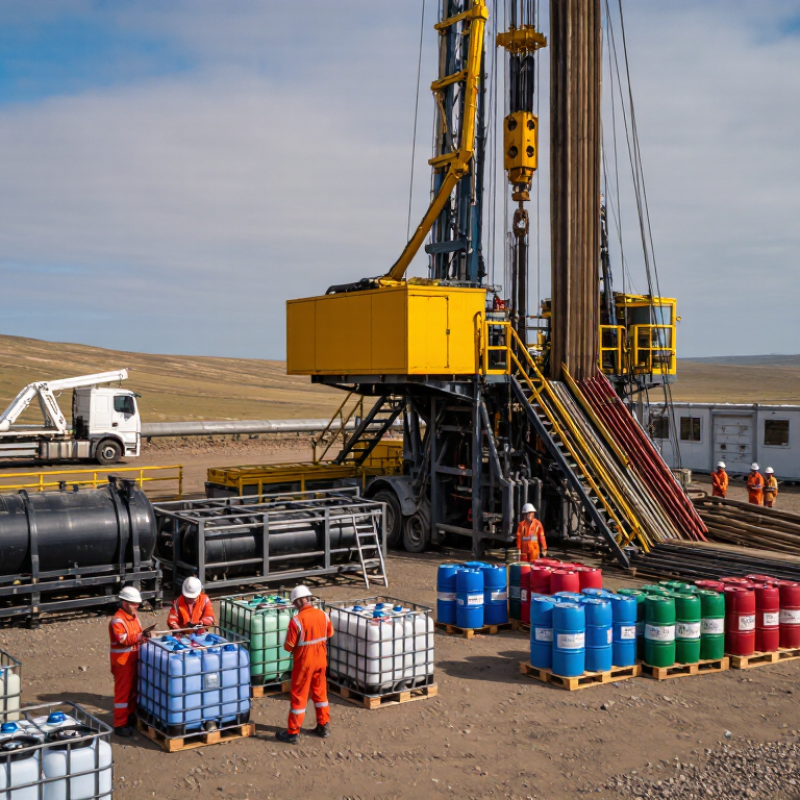
Top Drilling Chemicals Suppliers for Global Buyers

What Drilling Chemicals Are and Why They Matter

Drilling chemicals are additives used to control the behavior of drilling fluids as they circulate through a well. They can help carry rock cuttings to the surface, limit fluid loss into porous formations, and support wellbore stability. Some products adjust viscosity; others help manage density, foaming, corrosion, or changing water chemistry. Their role is practical, not cosmetic.

A fluid that is too thin may leave cuttings behind. Too thick, and pumps work harder while solids become harder to separate at the surface. That balance matters. For example, a crew may check flow properties after adding a viscosifier, then adjust the mixture as temperature or formation conditions change. A thin filter cake can help reduce fluid invasion, but the wrong formulation may cause problems with formation damage or cleanup. It is a trade-off.

Good selection starts with the well’s geology, fluid type, temperature, and salinity—not a standard recipe alone. Laboratory compatibility tests and field monitoring can reveal how additives behave together. Even then, results may differ from expectations. That deserves attention. Reliable suppliers should provide clear technical data, handling guidance, and support for interpreting test results, while operators verify performance under actual site conditions.

Major Types of Chemicals Used in Drilling Operations

Drilling chemicals are selected to control the behavior of drilling fluid as conditions change underground. Viscosifiers, such as clay-based or polymer products, help carry cuttings toward the surface. Weighting agents increase fluid density and support well control. Their concentration must match the formation and operating plan; excess solids can slow drilling and increase wear.

Fluid-loss additives limit how much liquid enters permeable rock, helping form a thin filter cake on the borehole wall. Shale inhibitors reduce clay swelling and dispersion, while lubricants can lower friction around the drill string. Lost-circulation materials help bridge fractures or porous zones. pH regulators, defoamers, and corrosion inhibitors address fluid chemistry and equipment conditions.

These products do not work in isolation. Salinity, temperature, and other additives can change their performance, and field results may differ from laboratory expectations.

Tips: Check fluid properties regularly, not just when a problem appears. Small tests matter. Track density, viscosity, and filtration alongside mixing records. A practical detail: inspect samples for settling or unexpected foam after circulation. Adjust treatment in measured steps, then retest. I would not assume a familiar recipe will behave identically in a new formation.

How Drilling Chemical Suppliers Serve Global Markets

Drilling chemical suppliers serve global markets by combining reliable logistics with field-specific technical support. A fluid package that performs well in one basin may react differently to local brine, temperature, or formation solids. Suppliers therefore adjust formulations, provide compatibility testing, and help crews interpret field results. UNCTAD’s Review of Maritime Transport 2024 reports that over 80% of world trade by volume is carried by sea. That makes port access, safe packaging, and buffer stock important for moving bulk inputs to remote drilling regions. Timing matters.

Service continues after delivery. Technical teams may review water samples, check mixing order, and troubleshoot issues such as foaming or excessive fluid loss. Clear batch records and current safety and product documents help buyers compare shipments and manage site handling. Regional warehouses can shorten replenishment times, but they cannot remove every risk. A neat global supply plan can still fail when a border delay or unexpected water chemistry is overlooked. That is worth admitting.

Tips: Ask suppliers for basin-specific test data, batch traceability, and realistic delivery lead times. Confirm that sample results match the water and temperature expected at the wellsite. Also ask who provides on-site support, and how quickly they can respond.

Profiles of Leading Drilling Chemicals Suppliers

Leading drilling chemicals suppliers often specialize in different parts of fluid performance. Some focus on viscosifiers, filtration-control products, and shale inhibitors. Others offer a broader range, including lubricants and cementing additives. A useful supplier profile explains what its products are designed to do, rather than promising results in every well. Conditions vary. Mud salinity, temperature, and formation type can all affect performance.

Technical support is another key distinction. Strong suppliers can provide current safety and product data, explain recommended handling, and help interpret laboratory test results. Ask how they verify batch consistency and whether sample testing is available before a large order.

Look closely at delivery capacity, packaging, and storage guidance, too. A product that arrives late or absorbs moisture in a damaged bag creates avoidable problems at the rig.

Regional manufacturers may offer shorter delivery routes, while international suppliers may provide wider product portfolios and established quality systems. Neither profile is automatically better. Compare documented specifications with the drilling program, and request evidence for claims about compatibility or performance. A polished brochure can still leave gaps. I would treat unclear data as a reason to ask more questions, not as proof of poor quality.

How Global Buyers Can Evaluate and Select Suppliers

Global buyers should evaluate drilling chemical suppliers by evidence, not polished claims. Request current technical data sheets, safety data sheets, and certificates of analysis for the exact products under review. Check that specifications match the intended drilling conditions, including temperature, salinity, and expected circulation time. Ask how batches are tested and how out-of-specification results are handled. Clear answers matter.

A small sample can reveal useful details. Compare its appearance, packaging integrity, and labeling with the supplier’s documentation, then arrange appropriate laboratory or field testing before a larger order. Results from one site may not transfer directly to another. That limitation is easy to overlook. Discuss technical support, response times, and whether staff can help troubleshoot changes in fluid performance. Keep records of sample results and supplier responses; they make later comparisons less subjective.

Delivery capability deserves equal attention. Confirm realistic lead times, storage requirements, packaging options, and the documents shipped with each order. Ask how the supplier communicates delays and manages supply interruptions. A low quotation may not reflect freight, handling, or the cost of inconsistent batches. Compare total delivered cost alongside quality controls and support. No checklist removes uncertainty, and buyers may need to revise their criteria after field trials reveal what matters most.


Powder Coat Booths

For those larger-sized parts, or smaller quantity runs, we have 2 independent powder coat booths and ovens. The quality, durability and affordability of today’s powder coating finishes make this the process of choice for world-class companies.

Powder coating advantages over other forms of coating are many. Materials used in the Powder coating process can be metals and non-metals that come in a multitude of thicknesses, textures, colors, etc. Another of Powder coating’s biggest advantages over conventional coatings is its ability to create finishes in many different textures. Powder Coating Booths allow us the ability to apply these advantages to large products.

Wet Paint Line

Tri-State Fabricators runs a full-service conveyor line for painting. Wet painting can provide protection or decoration to many different part styles. From start to finish, every project is easier to undergo random and point-based inspection by our skilled painting team.

Advantages to our Wet Paint Line are these lines start with product prep and ends with a thorough inspection of a high quality finished product. Our ability to complete large and small projects with a superior finish and doing so in a timely and economical fashion. This passes along the savings in production to our customers. When powder coating ins not an option, our Wet Paint Line gets the job done right the first time.

Wet Paint Booths

When the parts get big and heavy we roll-out our custom paint racks and oversize booth. By utilizing our partnerships with all the major paint brands, we can match virtually any color with wet paint.

The advantages of having access to a Wet Paint Booth are many. Large projects of many different shapes can be loaded into the booth. The Wet Paint Booth offers an environment that is much more controlled than a typical parts painting operation.

Not only are they used because of their controlled environment, but they’re are also advantageous when it comes to applying paint to parts that are needed in industries that require specialty coatings such as medical, aerospace, etc.

Military CARC

Our military forces have some very high standards when it comes to the finish of their vehicles and equipment. From the first pre-treatment step to final coat, it takes a great deal of knowledge and experience to protect the men and women of our armed forces. They deserve only the best, and Tri-State Fabricators provides it.

All of our processes are closely monitored by our staff and management teams. Both of which are highly trained in the processes of metal fabrication and finishing. Tri-State Fabricators’ goal is to always fully satisfy each and every customer, including the military. We will always put a 110% into what we do.

Glass-Bead Blasting

Abrasive media blasting is an excellent way to remove old paint, rust, and increase the paint/powder adhesion. Glass beads produce a much smoother and brighter finish than angular abrasives; leaving the part clean yet without any dimensional change. Chemically inert and environmentally friendly, we can recycle our beads approximately 30 times; making them a more preferred method of metal cleaning or surface finishing.

Advantages to Glass Bead Blasting are many. Glass bead blast media is used when a project is needing rough surfaces need to become smooth for applications of coatings such as paint. It is typically used to clean paint and rust from a product surface without deforming the surface it is being used on. Overall, compared to many other blasting media, Glass Bead Blasting is a very economical choice and those savings are always passed on to our customers.

Part Washing

Tri-State Fabricators utilize a zinc phosphate wash to clean and etch the material to ensure the best paint adhesion possible. The unique design of our 3-stage wash system does the work like a 5-stage. From Cleaning and rinsing to conversion coating and post-treatment, Our Part Washing process is a complete service and works throughout the fabrication service and the finishing service.

Along with the previously mentioned benefits, Curing is a vital chemical reaction that leaves the product finish hard and relatively safe from mild abrasion and aggressive corrosion. This process can be done in more than one way; ambient air-dry or in curing ovens at temps that exceed 240°.

Burn-Off Oven

From fixing paint mistakes (someone else’s of course) to simply cleaning our paint line hooks, our burn-off oven is put to good use. After a quick burn-off, a little clean up, and a fresh coat of paint, your parts will look better than new.

Why does our Burn-Off Oven work so well? Because super heating the air around parts turns the materials into ashes. From paint and powder coatings to rubber and machining oils, high temps do the job without degrading the integrity of the part.

Masking

Masking is a vital part of producing high quality products. We have die-cut masking patterns to protect machined surfaces as well as a wide range of plugs and caps to protect threaded holes and bolts. We provide permanent and temporary masking.

Masking allows the selected sections of a product to be protected from a fabrication or finishing service. This can be with both chemicals when etching and tapes, paints when only finishing just a section of the product. Masking is great in aiding the customization process of a project.

Screen Printing

Screen printing is a photographic process that transfers artwork onto a porous nylon screen which allows colored ink to flow through the screen and be deposited on an aluminum or plastic component. We can generally have just about any design created onto a screen for your parts.

Some of the advantages of Screen Printing are, brand recognition for your business displaying on your products, assembly instructions, product warnings/hazards, etc. Tri-State Fabricators produces Screen Printing of the highest quality so you know it’s durable.

Metal Finishing

Metal Finishing is the art of treating the exterior portion of product, often metal but can also be made of other materials, so that the surface is clean and free of any debris. Then the process of applying coats or either paint of powder coat takes place. This coating process improves the quality of the product in both appearance and resistance to wear and corrosion.

Tri-State Fabricators, Inc., understands that a project typically isn’t complete until a high-quality finish has been added to your product. This is why our painting and powder coating teams continuously inspect the products throughout the Metal Finishing process.



