


Top Control Circuit Board Manufacturers for Global Buyers

Choosing a Control Circuit Board manufacturer is not just a price comparison. The right partner must understand the board’s operating conditions, production volume, and quality requirements. A design used in a compact control cabinet may need different materials and testing from one exposed to vibration or heat. Small details matter.

Global buyers should look for clear engineering communication, documented inspection processes, and practical support from prototype through production. Ask how the supplier handles design-for-manufacturing reviews, component sourcing, traceability, and functional testing. Request evidence, not broad promises. A factory tour or sample report can reveal how defects are recorded and corrected. No supplier is perfect.

This guide examines manufacturers through criteria buyers can verify, including technical capability, production consistency, lead-time management, and communication across regions. It also considers the questions that are easy to overlook: who approves design changes, how are shortages reported, and what happens when a test fails? The lowest quote may look attractive, but unclear specifications or weak follow-up can cost more later. There is no universal best choice. A capable manufacturer for one project may be a poor fit for another. Buyers should compare evidence against their own requirements, then confirm details before committing. Shortlists need scrutiny. That extra work is not glamorous, but it can prevent avoidable delays and mismatched expectations.
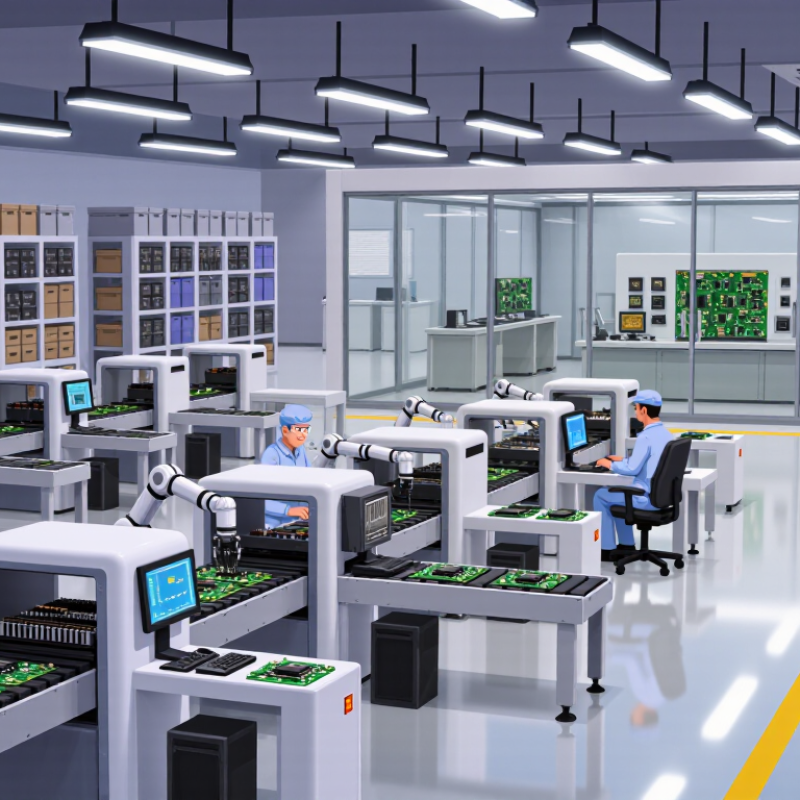
Top Control Circuit Board Manufacturers for Global Buyers

What Control Circuit Boards Are and How They Function

A control circuit board is the electronic hub that reads inputs and directs a machine’s actions. It may receive signals from temperature sensors, switches, or pressure probes. Copper traces carry those signals between components, while connectors link the board to motors, displays, and power sources. A microcontroller or other logic device evaluates incoming data against programmed instructions. It then sends commands through output circuits, such as a relay or motor driver.

Noise matters.

For example, a board in a small pump might detect low water pressure and reduce motor speed. Its power section supplies suitable voltage, while protective components help manage electrical surges and heat. The exact layout depends on the device, its operating environment, and the signals it must handle. Engineers typically check schematics, inspect solder joints, and test board behavior under expected loads.

A clean bench result is useful, but not always enough. Warm enclosures, long cables, or vibration can change how a board performs.

That gap deserves attention.

Careful design and repeatable testing help manufacturers build boards that behave consistently, though no single test can reveal every weakness.


Key Applications Across Industries

Top Control Circuit Board Manufacturers for Global Buyers
Key Applications Across Industries

Control circuit boards convert sensor readings and user commands into precise equipment actions. In factories, they regulate conveyor speed, motor starts, and temperature alarms. A technician may trace a fault from a loose connector to a stopped production line. In buildings, boards manage ventilation fans, lighting schedules, and access equipment. Small design choices matter: a poorly placed connector can make field repairs slower.

Medical monitoring equipment uses control boards to process signals and operate displays or alarms. Vehicle systems rely on them for cabin climate, lighting, and power functions. Kitchen appliances use boards to coordinate heating cycles, switches, and safety cutoffs. Needs differ across industries. Dust, vibration, heat, and cleaning routines all affect component selection and enclosure design. A neat schematic alone is not enough. Teams sometimes underestimate service access; that can become an expensive lesson after installation.

Tips: Match board specifications to real operating conditions, not ideal lab readings. Ask about testing, traceability, and repair documentation. Request samples when practical. Small details reveal a lot.

Top Control Circuit Board Manufacturers for Global Buyers - Key Applications Across Industries

Industry Typical Control Applications Common PCB Configurations Key Manufacturing Considerations
Industrial automation Programmable logic controllers, motor drives, sensor interfaces, and machine-control units Multilayer rigid boards; mixed-signal layouts; boards with connectors for field wiring Noise management, isolation between circuits where required, reliable connectors, and suitability for vibration and temperature conditions
Automotive and transportation Body electronics, lighting control, battery-management subsystems, and vehicle sensor modules Rigid multilayer boards; high-temperature laminate options for demanding locations; rigid-flex designs where packaging requires them Thermal performance, vibration resistance, traceability, and alignment with the buyer’s automotive quality and validation requirements
Energy and power systems Inverters, battery chargers, power-conversion equipment, and monitoring or protection systems Boards with wider copper features for higher-current paths; multilayer rigid boards; metal-core boards in some thermal applications Current capacity, electrical spacing, heat dissipation, insulation requirements, and board-level testing suited to the design
Building automation HVAC controllers, access-control panels, lighting systems, and building sensor hubs Rigid boards with analog and digital circuitry; multilayer designs for compact controllers; boards supporting wired or wireless interfaces Stable operation over the specified temperature range, protection against electrical disturbances, and compatibility with enclosure and connector layouts
Medical equipment Control electronics for diagnostic, monitoring, laboratory, and therapeutic equipment Rigid multilayer boards; compact boards with fine-pitch components; flexible or rigid-flex boards in space-constrained assemblies Documented process controls, cleanliness appropriate to the product, material traceability, and testing defined by the device manufacturer
Telecommunications and networking Network equipment control, power management, interface modules, and equipment monitoring Multilayer rigid boards; controlled-impedance designs for signal paths; high-density interconnect structures when required Impedance control, layer registration, signal integrity, and verification against the design’s electrical and mechanical specifications
Consumer appliances Appliance control units, user-interface boards, temperature regulation, and motor control Single- or multilayer rigid boards; mixed-signal boards; flexible circuits for selected display or control connections Cost-effective volume production, consistent component assembly, suitable environmental protection, and reliable production testing
Aerospace and defense Control, monitoring, navigation-support, and communications equipment Multilayer rigid boards; high-reliability material and construction options; rigid-flex boards for specialized assemblies Customer-defined qualification, detailed documentation, material and lot traceability, and inspection and test plans appropriate to the program

PCB configuration and qualification needs vary by product, operating environment, applicable regulations, and customer specification. Buyers should confirm material, testing, documentation, and quality requirements with each manufacturer.

Criteria for Evaluating Control Circuit Board Manufacturers

Evaluating a control circuit board manufacturer starts with the design requirements. Check whether its engineers can interpret schematics, component lists, tolerances, and operating conditions. Ask how design changes are reviewed and recorded. Clear answers matter. Request sample inspection records, test plans, and defect reports, with sensitive customer details removed. These documents show whether quality controls are part of daily production or only polished paperwork.

Review the factory’s process capabilities against your board’s actual needs, including layer count, copper weight, board thickness, and expected volume. Ask how it handles solderability checks, electrical testing, and inspection of fine-pitch components. Small details matter. Confirm that measurement equipment is calibrated and that material lots can be traced through production. Current certificates can be useful, but check their scope and validity rather than treating them as a guarantee. Communication deserves equal attention: note how quickly technical questions receive specific answers and whether delivery risks are disclosed early. A neat sample does not prove consistent output. Pilot builds and clear acceptance criteria can reveal gaps, though they add time and cost. That trade-off is easy to underestimate.

Leading Manufacturers Serving Global Buyers

Global buyers need control circuit board manufacturers that can deliver consistent quality across prototypes and repeat orders. The Grand View Research PCB market report valued the global market at USD 73.56 billion in 2023, reflecting broad demand across electronics sectors. That scale makes supplier comparison more important, not less. Look for documented process controls, traceable materials, and clear test reports. Ask how the factory handles fine-pitch components, thermal cycling, and revision changes. A clean sample is useful. Repeatability matters more.

A capable supplier should explain its inspection steps, from solder-paste checks to functional testing, in plain language. Request sample records, defect data, and realistic lead times before approving production. Check whether engineering support can review Gerber files and flag manufacturability risks early. Small details matter: a connector shifted by a fraction of a millimeter can complicate assembly. Yet a polished capability sheet cannot prove consistent output. Buyers should verify claims through audits or controlled pilot orders.

Tips: Compare suppliers using the same board specifications and acceptance criteria. Ask for recent test results and clarify who pays for rework when defects appear. Keep one question open: does the quoted schedule include inspection and shipping, or only fabrication?

Top Control Circuit Board Manufacturers for Global Buyers — Leading Manufacturers Serving Global Buyers

Typical copper foil thickness options used when specifying printed circuit boards.

Values show approximate nominal foil thickness before plating. The conversion used is 1 oz/ft² ≈ 34.8 μm; finished copper thickness can differ based on the board’s manufacturing process.

Certifications and Supply Chain Considerations for International Buyers

For international buyers, a certificate is a starting filter, not proof of dependable circuit boards. The ISO Survey 2023 counted about 1.27 million valid ISO 9001 certificates worldwide. That figure covers many industries; it cannot confirm a factory’s specific process controls. Ask for certificates showing the manufacturing site, scope, and expiry date. Then check whether the supplier can provide inspection records, defect trends, and corrective-action reports for comparable boards.

Match certifications to the end use. ISO 9001 supports quality-management systems; IATF 16949 is relevant to automotive supply, while ISO 13485 applies to medical-device quality systems. For each order, clarify how the factory controls laminate, copper foil, solder mask, and plating thickness. Request lot traceability and written notice before material or process changes. Paperwork helps, but a sample build reveals more.

Supply-chain visibility matters just as much. UNCTAD’s Review of Maritime Transport 2024 reports that shipping carries over 80% of world trade by volume, so port or route disruption can affect delivery dates. Ask suppliers to disclose realistic lead times, key material sources, and contingency plans. Check whether critical materials have qualified alternatives, not just theoretical substitutes. One awkward question worth asking: who owns the risk when a component or laminate is unavailable? Get the answer in writing.

Powder Coat Booths

For those larger-sized parts, or smaller quantity runs, we have 2 independent powder coat booths and ovens. The quality, durability and affordability of today’s powder coating finishes make this the process of choice for world-class companies.

Powder coating advantages over other forms of coating are many. Materials used in the Powder coating process can be metals and non-metals that come in a multitude of thicknesses, textures, colors, etc. Another of Powder coating’s biggest advantages over conventional coatings is its ability to create finishes in many different textures. Powder Coating Booths allow us the ability to apply these advantages to large products.

Wet Paint Line

Tri-State Fabricators runs a full-service conveyor line for painting. Wet painting can provide protection or decoration to many different part styles. From start to finish, every project is easier to undergo random and point-based inspection by our skilled painting team.

Advantages to our Wet Paint Line are these lines start with product prep and ends with a thorough inspection of a high quality finished product. Our ability to complete large and small projects with a superior finish and doing so in a timely and economical fashion. This passes along the savings in production to our customers. When powder coating ins not an option, our Wet Paint Line gets the job done right the first time.

Wet Paint Booths

When the parts get big and heavy we roll-out our custom paint racks and oversize booth. By utilizing our partnerships with all the major paint brands, we can match virtually any color with wet paint.

The advantages of having access to a Wet Paint Booth are many. Large projects of many different shapes can be loaded into the booth. The Wet Paint Booth offers an environment that is much more controlled than a typical parts painting operation.

Not only are they used because of their controlled environment, but they’re are also advantageous when it comes to applying paint to parts that are needed in industries that require specialty coatings such as medical, aerospace, etc.

Military CARC

Our military forces have some very high standards when it comes to the finish of their vehicles and equipment. From the first pre-treatment step to final coat, it takes a great deal of knowledge and experience to protect the men and women of our armed forces. They deserve only the best, and Tri-State Fabricators provides it.

All of our processes are closely monitored by our staff and management teams. Both of which are highly trained in the processes of metal fabrication and finishing. Tri-State Fabricators’ goal is to always fully satisfy each and every customer, including the military. We will always put a 110% into what we do.

Glass-Bead Blasting

Abrasive media blasting is an excellent way to remove old paint, rust, and increase the paint/powder adhesion. Glass beads produce a much smoother and brighter finish than angular abrasives; leaving the part clean yet without any dimensional change. Chemically inert and environmentally friendly, we can recycle our beads approximately 30 times; making them a more preferred method of metal cleaning or surface finishing.

Advantages to Glass Bead Blasting are many. Glass bead blast media is used when a project is needing rough surfaces need to become smooth for applications of coatings such as paint. It is typically used to clean paint and rust from a product surface without deforming the surface it is being used on. Overall, compared to many other blasting media, Glass Bead Blasting is a very economical choice and those savings are always passed on to our customers.

Part Washing

Tri-State Fabricators utilize a zinc phosphate wash to clean and etch the material to ensure the best paint adhesion possible. The unique design of our 3-stage wash system does the work like a 5-stage. From Cleaning and rinsing to conversion coating and post-treatment, Our Part Washing process is a complete service and works throughout the fabrication service and the finishing service.

Along with the previously mentioned benefits, Curing is a vital chemical reaction that leaves the product finish hard and relatively safe from mild abrasion and aggressive corrosion. This process can be done in more than one way; ambient air-dry or in curing ovens at temps that exceed 240°.

Burn-Off Oven

From fixing paint mistakes (someone else’s of course) to simply cleaning our paint line hooks, our burn-off oven is put to good use. After a quick burn-off, a little clean up, and a fresh coat of paint, your parts will look better than new.

Why does our Burn-Off Oven work so well? Because super heating the air around parts turns the materials into ashes. From paint and powder coatings to rubber and machining oils, high temps do the job without degrading the integrity of the part.

Masking

Masking is a vital part of producing high quality products. We have die-cut masking patterns to protect machined surfaces as well as a wide range of plugs and caps to protect threaded holes and bolts. We provide permanent and temporary masking.

Masking allows the selected sections of a product to be protected from a fabrication or finishing service. This can be with both chemicals when etching and tapes, paints when only finishing just a section of the product. Masking is great in aiding the customization process of a project.

Screen Printing

Screen printing is a photographic process that transfers artwork onto a porous nylon screen which allows colored ink to flow through the screen and be deposited on an aluminum or plastic component. We can generally have just about any design created onto a screen for your parts.

Some of the advantages of Screen Printing are, brand recognition for your business displaying on your products, assembly instructions, product warnings/hazards, etc. Tri-State Fabricators produces Screen Printing of the highest quality so you know it’s durable.

Metal Finishing

Metal Finishing is the art of treating the exterior portion of product, often metal but can also be made of other materials, so that the surface is clean and free of any debris. Then the process of applying coats or either paint of powder coat takes place. This coating process improves the quality of the product in both appearance and resistance to wear and corrosion.

Tri-State Fabricators, Inc., understands that a project typically isn’t complete until a high-quality finish has been added to your product. This is why our painting and powder coating teams continuously inspect the products throughout the Metal Finishing process.
