

What Are the Top Types of Fuel Pump Motor Commutators

A Fuel Pump Motor Commutator transfers electrical current from stationary brushes to the rotating armature. Its design affects contact stability, electrical losses, wear, and motor life. Inside a compact fuel pump, the commutator must work amid vibration, heat, and frequent operating cycles. Small details matter: segment alignment, insulation quality, and the brush-contact surface can influence reliable performance.

This guide introduces common commutator types by their construction and materials, including segmented copper designs, molded assemblies, and variations in insulation and segment finish. Each offers different manufacturing and operating trade-offs. Copper supports effective current transfer, while the insulating structure keeps neighboring segments electrically separated as the armature turns. Brush compatibility matters, too. A suitable design depends on motor dimensions, load, speed, temperature, and the pump maker’s specifications—not on a single feature alone.

There is no universal best choice. A commutator that performs well in one pump may wear faster in another, especially when brush pressure or operating conditions differ. That distinction is easy to overlook. The sections ahead explain what sets the main types apart, where each may be used, and which practical details deserve closer inspection. Exact construction can vary by manufacturer, so product drawings and verified technical data remain important when comparing parts. A useful comparison starts with the actual motor, not just the name on a catalog page.
What Are the Top Types of Fuel Pump Motor Commutators

Fuel Pump Motor Commutators: Structure and Operating Role

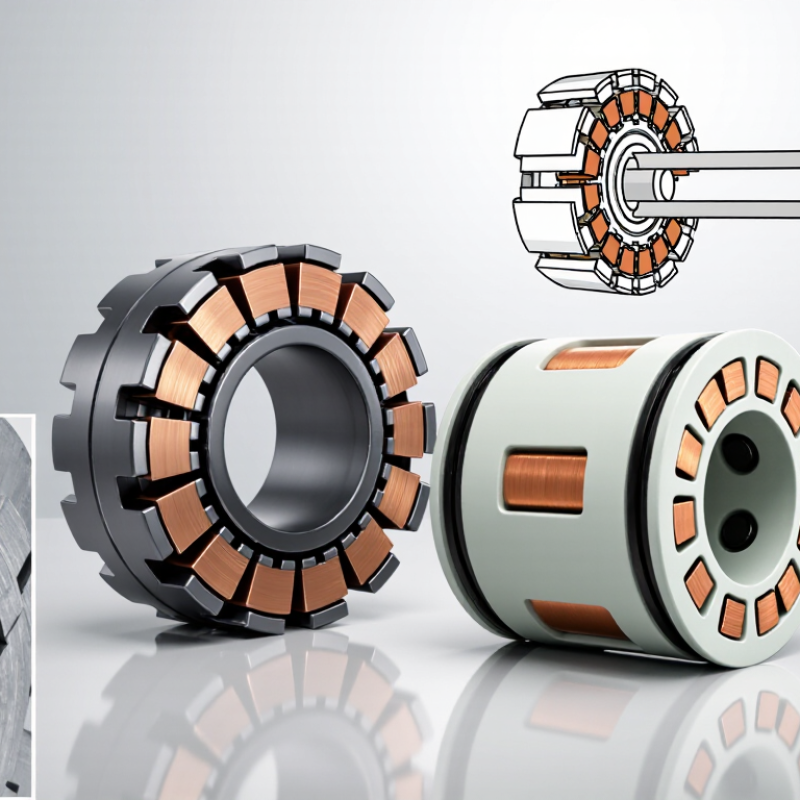
A fuel pump motor commutator is a small rotating contact assembly, usually built from copper segments separated by thin insulating gaps. These segments connect to the armature windings inside the motor. Carbon brushes press against the commutator as it turns, carrying current into the windings. Simple, but sensitive.

In many brushed fuel pump motors, the commutator has a cylindrical shape. Its segment count and dimensions depend on the motor design, so “top types” are not always a useful ranking. The key is how the commutator matches the winding layout and brush arrangement. As the rotor spins, contact shifts between segments, helping reverse current in the windings and maintain rotation. This switching happens rapidly, inside a compact housing exposed to heat, vibration, and fuel vapour.

Wear leaves clues. A darkened surface, uneven grooves, or copper dust may point to brush contact problems, contamination, or excessive heat, though appearance alone cannot confirm the cause. A commutator can look serviceable and still perform poorly under load. That detail is easy to miss. Inspection should consider brush condition, surface finish, and electrical continuity together; even then, measurements and manufacturer specifications matter. There is no single surface pattern that guarantees a reliable motor.

How a Commutator Controls Current in a Fuel Pump Motor

In a brushed fuel pump motor, the commutator is a rotating assembly of copper segments connected to the rotor windings. Carbon brushes ride against its surface and carry electrical current from the stationary circuit into the spinning rotor. Most small motors use segmented copper designs, though segment shape and winding connections can differ. The commutator’s job is not to regulate fuel flow directly. It switches current between winding sections as the rotor turns, helping maintain torque and rotation. That switching matters.

Picture the rotor turning inside a compact metal housing. As each copper segment passes beneath a brush, the electrical connection changes; current is redirected through the appropriate winding. This repeated contact keeps the motor turning rather than pulling the rotor into one fixed position. Brush pressure, clean contact surfaces, and sound insulation all affect how reliably current transfers. A thin film of dust or wear can increase resistance, while a damaged segment may cause uneven operation. Small details matter.

A darkened segment alone does not prove the commutator has failed. Heat, brush wear, or poor electrical contact can leave similar marks, so inspection should consider the whole assembly. In practice, the commutator is one part of a system, and its condition can be easy to misread without checking the brushes and windings too.

Common Designs: Bar-Type, Hook-Type, and Riser-Type Commutators

Fuel-pump motor commutators connect the rotor windings to the brushes, so their joint geometry affects assembly and durability. In a bar-type design, copper segments run around the commutator body, and winding ends connect to individual segments. The layout gives manufacturers a clear contact surface, but the small joints still need consistent bonding and insulation. Hook-type commutators use formed hooks to hold winding ends before joining. This can suit compact, automated motor assembly, though poor wire placement may create weak joints or uneven clearances.

Small details matter.

Riser-type designs use raised tabs for winding connections, separating the joint from the main brush-contact surface. That extra height may help with wire routing, but it takes axial space. The right choice depends on rotor dimensions, winding wire, assembly method, and heat and vibration testing; one geometry is not automatically best. OICA reported 93.5 million vehicles produced worldwide in 2023, while the IEA reported nearly 14 million electric-car sales that year. These figures describe a changing vehicle market, not commutator performance. Neither report compares bar, hook, and riser designs, so motor-specific test data should guide selection. One caveat: design names and details can vary among suppliers.

Commutator Materials and Contact-Surface Features

Fuel-pump motor commutators commonly use copper segments because copper conducts current efficiently and can handle repeated brush contact. The segments are separated by thin mica insulation, which helps prevent electrical bridging. Some designs use copper alloys to balance conductivity with strength, but the best choice depends on motor load, heat, and service life. There is no single material that suits every pump.

The contact surface matters just as much. A smooth, accurately turned commutator supports steady brush contact and helps limit sparking and uneven wear. Too rough, and the brushes may wear quickly; too polished can also be undesirable if it prevents proper brush bedding. Small details matter. Segment edges should be clean, and the mica should sit below the copper surface when the design calls for undercut insulation.

During inspection, look for grooves, dark patches, lifted segments, or copper dust near the brushes. These can point to wear, poor alignment, or electrical stress, though appearance alone cannot confirm the cause. Measure runout and check surface condition against the motor maker’s service limits. In practice, the neatest-looking surface is not always the most reliable one; brush material and operating temperature also affect contact. A little uncertainty remains without testing the assembled motor under load.

How to Compare Commutator Types for Fuel Pump Use

What Are the Top Types of Fuel Pump Motor Commutators

How to Compare Commutator Types for Fuel Pump Use

For fuel-pump motors, compare commutators by construction, contact stability, and resistance to heat and vibration. Copper-segment designs are common in brushed motors. Their segment shape, insulation, and brush-contact surface affect current transfer and wear. Molded commutators can hold segments firmly in compact assemblies, but resin temperature limits and fuel compatibility need checking. Small details matter. Inspect segment runout, bar-to-bar consistency, and the joint between each segment and its riser; a rough edge can accelerate brush wear.

Test the actual duty cycle, not just a new part on a bench. Measure starting current, voltage drop, temperature rise, and wear after repeated starts and vibration exposure. Check performance in the intended fuel and at the pump’s operating load.

The IEA’s Global EV Outlook 2024 reports nearly 14 million electric-car sales in 2023, about 18% of global car sales.

That market shift does not remove the need to assess commutators in existing combustion and hybrid vehicles. Not always. A lower initial resistance reading alone cannot predict service life; brush grade, spring force, surface finish, and test conditions all matter. Record these conditions when comparing samples. It is easy to miss one.

The awkward part is that two visually similar commutators may behave differently after heat soak, so durability results deserve more weight than appearance.

Powder Coat Booths

For those larger-sized parts, or smaller quantity runs, we have 2 independent powder coat booths and ovens. The quality, durability and affordability of today’s powder coating finishes make this the process of choice for world-class companies.

Powder coating advantages over other forms of coating are many. Materials used in the Powder coating process can be metals and non-metals that come in a multitude of thicknesses, textures, colors, etc. Another of Powder coating’s biggest advantages over conventional coatings is its ability to create finishes in many different textures. Powder Coating Booths allow us the ability to apply these advantages to large products.

Wet Paint Line

Tri-State Fabricators runs a full-service conveyor line for painting. Wet painting can provide protection or decoration to many different part styles. From start to finish, every project is easier to undergo random and point-based inspection by our skilled painting team.

Advantages to our Wet Paint Line are these lines start with product prep and ends with a thorough inspection of a high quality finished product. Our ability to complete large and small projects with a superior finish and doing so in a timely and economical fashion. This passes along the savings in production to our customers. When powder coating ins not an option, our Wet Paint Line gets the job done right the first time.

Wet Paint Booths

When the parts get big and heavy we roll-out our custom paint racks and oversize booth. By utilizing our partnerships with all the major paint brands, we can match virtually any color with wet paint.

The advantages of having access to a Wet Paint Booth are many. Large projects of many different shapes can be loaded into the booth. The Wet Paint Booth offers an environment that is much more controlled than a typical parts painting operation.

Not only are they used because of their controlled environment, but they’re are also advantageous when it comes to applying paint to parts that are needed in industries that require specialty coatings such as medical, aerospace, etc.

Military CARC

Our military forces have some very high standards when it comes to the finish of their vehicles and equipment. From the first pre-treatment step to final coat, it takes a great deal of knowledge and experience to protect the men and women of our armed forces. They deserve only the best, and Tri-State Fabricators provides it.

All of our processes are closely monitored by our staff and management teams. Both of which are highly trained in the processes of metal fabrication and finishing. Tri-State Fabricators’ goal is to always fully satisfy each and every customer, including the military. We will always put a 110% into what we do.

Glass-Bead Blasting

Abrasive media blasting is an excellent way to remove old paint, rust, and increase the paint/powder adhesion. Glass beads produce a much smoother and brighter finish than angular abrasives; leaving the part clean yet without any dimensional change. Chemically inert and environmentally friendly, we can recycle our beads approximately 30 times; making them a more preferred method of metal cleaning or surface finishing.

Advantages to Glass Bead Blasting are many. Glass bead blast media is used when a project is needing rough surfaces need to become smooth for applications of coatings such as paint. It is typically used to clean paint and rust from a product surface without deforming the surface it is being used on. Overall, compared to many other blasting media, Glass Bead Blasting is a very economical choice and those savings are always passed on to our customers.

Part Washing

Tri-State Fabricators utilize a zinc phosphate wash to clean and etch the material to ensure the best paint adhesion possible. The unique design of our 3-stage wash system does the work like a 5-stage. From Cleaning and rinsing to conversion coating and post-treatment, Our Part Washing process is a complete service and works throughout the fabrication service and the finishing service.

Along with the previously mentioned benefits, Curing is a vital chemical reaction that leaves the product finish hard and relatively safe from mild abrasion and aggressive corrosion. This process can be done in more than one way; ambient air-dry or in curing ovens at temps that exceed 240°.

Burn-Off Oven

From fixing paint mistakes (someone else’s of course) to simply cleaning our paint line hooks, our burn-off oven is put to good use. After a quick burn-off, a little clean up, and a fresh coat of paint, your parts will look better than new.

Why does our Burn-Off Oven work so well? Because super heating the air around parts turns the materials into ashes. From paint and powder coatings to rubber and machining oils, high temps do the job without degrading the integrity of the part.

Masking

Masking is a vital part of producing high quality products. We have die-cut masking patterns to protect machined surfaces as well as a wide range of plugs and caps to protect threaded holes and bolts. We provide permanent and temporary masking.

Masking allows the selected sections of a product to be protected from a fabrication or finishing service. This can be with both chemicals when etching and tapes, paints when only finishing just a section of the product. Masking is great in aiding the customization process of a project.

Screen Printing

Screen printing is a photographic process that transfers artwork onto a porous nylon screen which allows colored ink to flow through the screen and be deposited on an aluminum or plastic component. We can generally have just about any design created onto a screen for your parts.

Some of the advantages of Screen Printing are, brand recognition for your business displaying on your products, assembly instructions, product warnings/hazards, etc. Tri-State Fabricators produces Screen Printing of the highest quality so you know it’s durable.

Metal Finishing

Metal Finishing is the art of treating the exterior portion of product, often metal but can also be made of other materials, so that the surface is clean and free of any debris. Then the process of applying coats or either paint of powder coat takes place. This coating process improves the quality of the product in both appearance and resistance to wear and corrosion.

Tri-State Fabricators, Inc., understands that a project typically isn’t complete until a high-quality finish has been added to your product. This is why our painting and powder coating teams continuously inspect the products throughout the Metal Finishing process.