What Are the Top Flat Screen TVs to Buy in 2026?
Choosing the top flat-screen TVs in 2026 means looking beyond screen size and flashy product claims. Omdia’s 2024 global TV shipment analysis estimated that manufacturers shipped roughly 208 million sets worldwide. That scale gives shoppers plenty of choice, but it does not tell them which picture will suit a bright living room or a dim bedroom. A market report measures the industry, not your sofa.
This guide compares leading LED, Mini-LED, and OLED options using practical criteria: picture quality, brightness, reflections, gaming features, sound, and price. In a sunlit room, a bright screen and effective anti-reflection treatment can matter more than perfect black levels. For evening films, contrast and shadow detail may take priority. Small details count. A screen that looks impressive in a showroom can feel harsh at home.
Independent testing and manufacturer specifications help separate measurable performance from marketing language. Still, results depend on test methods, screen settings, and room conditions. That deserves a little skepticism. The best Flat Screen Tv is not automatically the most expensive or the newest model; it is the one that fits your space, viewing habits, and budget. The recommendations ahead explain the trade-offs, so you can compare options with clearer expectations.
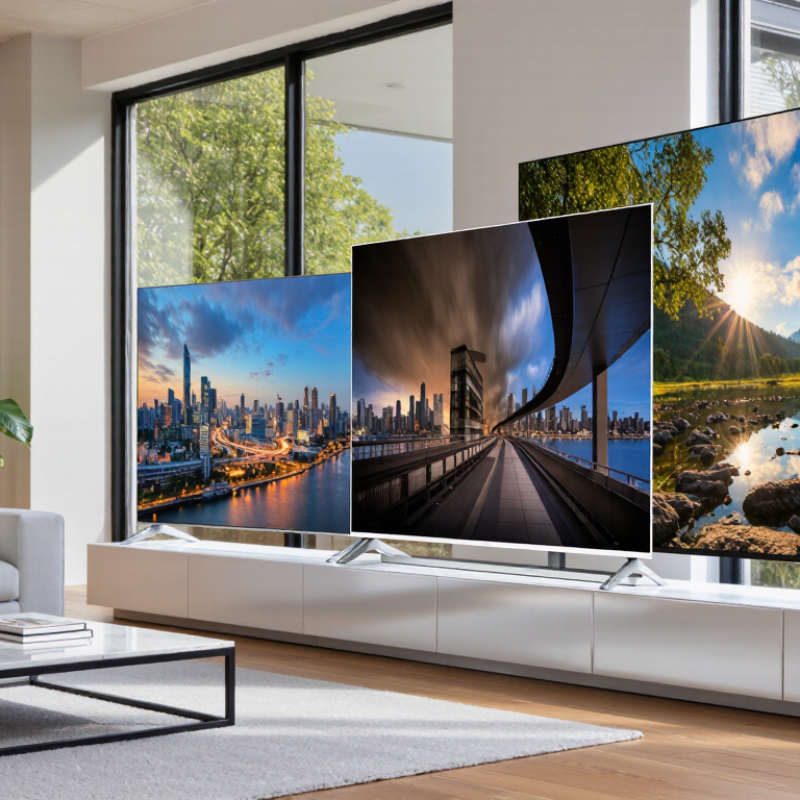
What Defines a Flat-Screen TV in 2026?
In 2026, “flat-screen” describes a television’s slim, flat panel—not one specific picture technology. Most sets use LCD panels with LED backlights, while OLED pixels produce their own light. Mini-LED is a more precise backlighting method, not a separate panel category. The distinction affects dark-scene detail and brightness, but room lighting and viewing angle matter too. Specs never tell the whole story.
Resolution is one useful measure. The Consumer Technology Association’s 4K Ultra HD specification uses 3,840 by 2,160 pixels, or about 8.3 million. Omdia’s 2024 global TV market tracking put annual shipments near 200 million sets, showing how broad the category is. Yet a high pixel count alone does not guarantee a sharp image from every sofa. Screen size, distance, and source quality all change what viewers notice. HDR can add brighter highlights and richer contrast, but results depend on the panel and the content. Look beyond the thin frame. Check the stand’s footprint, available HDMI connections, and whether the screen stays readable beside a bright window. One honest caveat: motion and color can look different in a shop than at home. That part is easy to overlook.
Which Display Technologies and Features Matter Most?
For a 2026 flat-screen TV, choose display technology around your room, not the showroom. OLED pixels switch off individually, creating deep blacks that suit evening films. Mini-LED LCD models can deliver strong brightness, useful beside sunny windows. Omdia’s 2024 TV Display & OEM Intelligence Service forecast 6.7 million OLED TV shipments that year. That signals premium demand, not universal superiority.
Check measured brightness, reflection handling, and local dimming alongside resolution. A 4K label alone says little about contrast or motion. HDMI Forum’s HDMI 2.1 specification supports 4K at 120 Hz and variable refresh rate, useful for compatible games and consoles. Implementations vary: check how many ports support those features. HDR performance also depends on peak brightness and tone mapping, not merely the format names printed on a box. One imperfect shortcut is comparing specifications without considering seating distance; the brightest screen may still feel harsh in a dark room.
Tips: View dark scenes and bright sports in person, if possible. Check subtitles against black backgrounds for distracting halos. Measure your stand and viewing distance before buying. Small details matter. A clear return policy helps when reflections, motion, or screen uniformity disappoint at home.
How Should Buyers Compare Screen Size, Price, and Performance?
Buy by viewing distance, not by the biggest screen that fits the budget. SMPTE’s 30-degree viewing-angle guidance offers a useful starting point: a 65-inch, 16:9 screen suits a seat roughly nine feet away. Measure from your eyes to the screen, then check the stand width and cabinet depth; a large panel can overwhelm a small room. For bright windows, prioritize strong reflection handling and peak brightness. For evening films, contrast and local dimming may matter more. There is no perfect size.
Compare total cost, not just the shelf price. Include delivery, mounting, and expected electricity use. The U.S. Environmental Protection Agency says ENERGY STAR certified TVs use about 25% less energy than conventional models, so the efficiency label can help compare running costs. Check independent lab measurements for brightness, contrast, viewing angles, and motion handling; specifications alone may not predict what you see from a sofa. A high refresh rate is not automatically better if your usual content is streamed drama or news. Small detail, big difference.
Set a firm budget, then choose the best-performing screen within it. Spending more can improve HDR highlights or dark-scene detail, but those gains are less visible in a sunlit room. I would leave some room for calibration or a sturdy mount. I still find it easy to overvalue headline features. Try to view familiar scenes at your normal seating distance, and compare picture modes before deciding.
Top Flat-Screen TV Sizes to Consider in 2026
Compare representative U.S. street-price estimates with typical native refresh rates across popular screen sizes.
Larger screens generally cost more, while a native 120 Hz panel can provide smoother motion for sports and gaming than a 60 Hz panel. Prices are illustrative estimates for generic models and vary with display technology, features, sales, and retailer; refresh rate alone does not determine picture quality.
Which Flat-Screen TVs Suit Different Budgets and Viewing Needs?
A tight budget usually points toward a basic 4K LCD television. It can suit bedrooms and smaller living rooms, especially when daytime viewing matters more than perfect black levels. Spend a little more for local dimming if films often fill the evening. The improvement is real, but uneven: dimming zones can create halos around bright subtitles.
Midrange Mini LED sets often balance brightness, contrast, and price for sunlit rooms. For movie lovers who watch after dark, OLED’s deep blacks can be worth the premium. Gaming households should check for variable refresh rate and enough HDMI 2.1 ports, not just a high refresh-rate claim. Small details matter. Nielsen’s July 2024 The Gauge report found streaming accounted for 41.4% of U.S. television use, supporting the case for a responsive interface and dependable app access. That figure is a snapshot, not a forecast. Match screen size to seating distance before buying. RTINGS’ viewing-distance guidance can help estimate a comfortable fit, but personal preference and room layout still matter. A 65-inch screen may feel immersive from a sofa, yet overwhelming in a narrow room.
Check glare in daylight, too; glossy screens can reflect a bright window like a mirror. Picture modes also vary, so compare sets in a realistic room when possible. Industry measurements help, but they cannot fully predict what your eyes will prefer.
What Should Buyers Know About Setup, Care, and Long-Term Use?
A flat-screen television performs best when it has room to breathe. Leave several centimeters around the vents, keep it out of direct sunlight, and use a wall mount rated for its weight. Before connecting devices, label the cables; this small step saves time when troubleshooting later. Check the picture mode in a dim room, too: vivid showroom settings can look harsh at home. Lawrence Berkeley National Laboratory estimates standby power may account for roughly 5–10% of household electricity use across devices, not televisions alone. Turning off quick-start features can reduce unnecessary standby draw. Small changes help.
For long-term care, dust the screen with a clean microfiber cloth, using light pressure. Avoid spraying cleaner directly onto the panel, and follow the manual’s instructions. Update the television’s software when updates are available, but review privacy and tracking settings rather than accepting every prompt automatically. RTINGS’ accelerated OLED burn-in test used schedules of up to 20 hours of daily operation; that is far more intense than many homes, yet it shows why leaving bright static images onscreen for hours is unwise. Use screen-off timers, vary content, and lower brightness in dark rooms. One imperfect habit worth correcting: many viewers leave a paused menu glowing all evening.





