


Top Fiber Laser Diode Suppliers for Global Buyers

Choosing the right Fiber Laser Diode supplier affects system performance, production stability, and long-term service costs. Global buyers need more than a competitive quotation. They need verified technical data, consistent manufacturing, and responsive communication across time zones.

This guide introduces leading suppliers for industrial, medical, research, and telecommunications applications. It examines wavelength options, output power, beam quality, coupling methods, package designs, and thermal management. It also considers quality systems, product traceability, testing procedures, and international delivery experience. A reliable supplier should provide clear datasheets, realistic tolerances, and practical integration guidance. Samples and evaluation units matter.

Details matter.

In real purchasing projects, specifications can appear similar while performance differs significantly. A diode rated for high power may still require careful cooling and optical alignment. Warranty terms may also exclude conditions that buyers assume are covered. That point is easy to miss. Therefore, this overview balances supplier reputation with measurable evidence, including certifications, customer support, production capacity, and documented reliability results. Information should be checked against current supplier records, because product lines and factory capabilities change. No ranking is perfect. Some smaller manufacturers may offer stronger engineering support than better-known brands. Buyers should compare evidence, request samples, and confirm compliance requirements before committing. This approach helps purchasing teams reduce avoidable risks and select a Fiber Laser Diode partner suited to their operating environment.
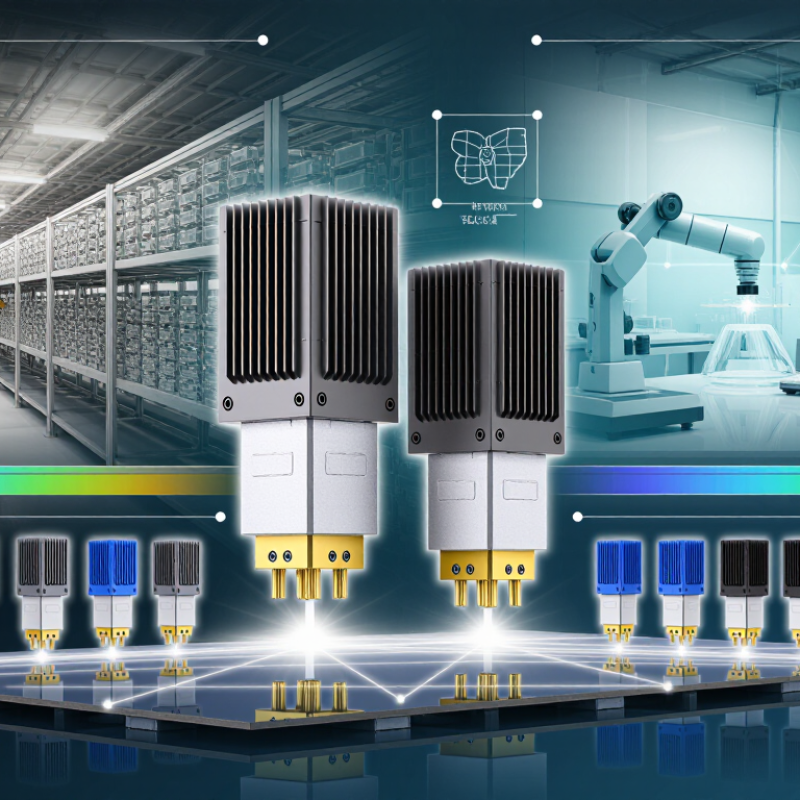
Top Fiber Laser Diode Suppliers for Global Buyers

Fiber Laser Diode Fundamentals: 915–976 nm Pump Wavelengths and Applications

Fiber laser diodes are the pump engines behind many high-power fiber lasers. They commonly operate from 915 to 976 nm, with each wavelength creating different design choices. Around 915 nm, ytterbium-doped fiber usually offers broader absorption and easier tolerance to wavelength drift. Near 976 nm, absorption can be stronger, supporting compact and efficient pumping. However, 976 nm systems often demand tighter temperature control. Small thermal changes can shift the diode wavelength.

These differences matter in cutting, welding, marking, and industrial cleaning equipment. A 915 nm pump may suit systems requiring stable operation across changing ambient conditions. A 976 nm pump can reduce fiber length and improve conversion efficiency when carefully managed. In practical purchasing, global buyers should check optical power, spectral width, coupling method, cooling design, and expected lifetime. Reliable suppliers should provide test data, traceability, and clear burn-in procedures. A polished datasheet is useful, but it is not proof of field performance. I have seen specifications look excellent while thermal integration remained the weak point.

Tips: Match the pump wavelength to the fiber’s absorption profile. Request wavelength stability data at operating temperature. Inspect connector quality and cooling interfaces. Test samples before placing volume orders. Do not judge suppliers by price alone. Inconsistent binning can create uneven output between production batches. That detail is easy to miss.


Core Performance Metrics: 30–50% Efficiency, Power, and Beam Quality

For global buyers, fiber laser diode efficiency is a practical starting point, not a final verdict. Many dependable devices operate near 30–50% electrical-to-optical efficiency, depending on wavelength, drive current, and temperature. A diode producing 10 watts of optical output may consume substantially more power at the driver. The difference becomes visible in a crowded rack, where every extra watt adds cooling pressure.

Check power stability under continuous operation, not only the peak value. Ask for operating current, thermal resistance, wavelength tolerance, and lifetime test conditions. A useful supplier should provide measured curves, inspection records, and clear acceptance limits. In bench evaluations, output power can drift after warm-up. It happens.

Beam quality deserves equal attention. For fiber coupling, buyers should review numerical aperture, coupling efficiency, near-field patterns, and far-field divergence. A high-power diode with uneven emission may create hot spots inside the fiber or reduce system stability. The quoted beam metric may also change with temperature, connector alignment, and drive conditions. Small details matter.

I prefer suppliers that explain how they measure these values. Independent sampling, calibrated instruments, and traceable production records strengthen technical confidence. However, even detailed reports need verification. A clean datasheet is not proof. Request a sample, run it through the intended duty cycle, and compare power, efficiency, and beam shape before placing volume orders. The result may expose assumptions in your original specification.

Top Fiber Laser Diode Suppliers for Global Buyers

Core performance metrics across common commercial fiber laser diode configurations. Values represent typical published specification ranges and engineering reference points, not company-specific data.

Higher electro-optical efficiency and optical output power generally improve system productivity. A lower beam-quality M² value indicates a more focused and better-quality beam. Actual specifications vary by wavelength, cooling method, package design, and operating conditions.

Reliability Standards: ≥100,000-Hour Lifetimes and IEC 60825 Compliance

Global buyers need more than attractive specifications when selecting fiber laser diode suppliers. A claimed lifetime of 100,000 hours should reflect tested reliability, not a marketing estimate. Ask for burn-in records, temperature-cycle results, and failure-rate data. Suppliers should explain testing conditions clearly, including drive current, case temperature, optical power, and cooling method.

IEC 60825 compliance is equally important. It addresses laser safety classification, emission limits, labeling, and user documentation. A responsible supplier provides current test reports and confirms which product configuration was evaluated. Small changes in packaging, connectors, or operating power can affect compliance. Real installations are less tidy than laboratory setups. Dust, vibration, and unstable cooling may shorten service life, even when laboratory results look excellent. I would not treat “100,000 hours” as an absolute guarantee.

Tips: Request traceability for every production lot. Check whether the lifetime figure uses field data or accelerated testing. Review wavelength stability after thermal cycling. Confirm that safety labels match the delivered module, not an older version. It is also wise to ask about warranty terms, replacement procedures, and technical support across regions. Some documentation may appear complete but still omit humidity limits or recommended current margins. That gap deserves a direct question before purchase.

Global Supplier Evaluation: 5–50 W Modules, Regions, and Manufacturing Strength

Top Fiber Laser Diode Suppliers for Global Buyers

Global Supplier Evaluation: 5–50 W Modules, Regions, and Manufacturing Strength

For global buyers, evaluating 5–50 W fiber laser diode modules requires more than checking listed power. Ask for measured output, wavelength tolerance, coupling efficiency, and operating temperature data. Experienced suppliers should provide test reports for each production batch. They should also explain how modules perform after extended use, not only during factory testing. Connector quality, cooling design, and protective packaging can strongly affect field reliability. Small details matter.

Regional manufacturing strength offers useful clues, but location alone proves little. Assess cleanroom controls, automated alignment equipment, component traceability, and technician training. Suppliers with stable production lines usually manage repeat orders more consistently. However, even a capable factory may struggle with sudden volume changes. This is where many evaluations become too optimistic. Request samples, inspection records, and realistic lead times before approving a large order. Independent verification is wise.

Tips: Compare at least three suppliers using the same technical specification. Check whether the quoted 5–50 W range covers continuous-wave operation or only short pulses. Confirm warranty terms, replacement procedures, and export documentation early. A practical test should include thermal cycling, power stability, and connector inspection. Keep written records of every result. They prevent confusion later. Also, ask who controls final testing when production is outsourced. The answer may reveal more than a polished catalog.

Top Fiber Laser Diode Suppliers for Global Buyers - Global Supplier Evaluation: 5–50 W Modules, Regions, and Manufacturing Strength

Supplier-selection benchmark for high-power fiber-coupled laser diode modules. The comparison uses regional manufacturing characteristics and commonly specified technical requirements rather than company or brand information.

Manufacturing Region Typical Module Output Common Wavelengths Typical Package and Fiber Interface Manufacturing Strengths Quality and Reliability Indicators Indicative Production Lead Time Process Score Export Readiness
Mainland China 5–20 W 20–50 W 915 nm
940 nm
976 nm
Multimode fiber-coupled modules; common fiber core sizes include 105 µm, 200 µm and 400 µm. Water-cooled and conduction-cooled options are widely available. Broad component ecosystem, high-volume assembly, flexible customization, competitive pricing and strong availability of standard pump-module formats. Buyers should verify ISO 9001 certification, burn-in records, wavelength-temperature data, power stability and lot traceability. IEC 60825-1 safety classification should be documented where applicable. 4–10 weeks for standard configurations; longer for custom optics or new tooling. 4.3 / 5 4.2 / 5
Germany and Western Europe 5–15 W 15–40 W 915 nm
940 nm
976 nm
Hermetically sealed or industrial-grade fiber-coupled packages; emphasis on controlled thermal interfaces, stable fiber alignment and documented optical performance. Strong process engineering, precision assembly, advanced qualification procedures and consistent documentation for industrial and scientific applications. Common evaluation evidence includes ISO 9001, ISO 14001, statistical process control, accelerated aging, thermal cycling and formal change-control procedures. 6–14 weeks for standard products; engineering projects may require additional qualification time. 4.8 / 5 4.8 / 5
United States 5–25 W 25–50 W 915 nm
940 nm
976 nm
980 nm
Fiber-coupled pump modules, packaged diode bars and custom assemblies with options for high-reliability connectors, integrated thermistors and specialized cooling. Strong R&D capability, custom engineering, aerospace and defense qualification experience, and advanced photonic packaging. Qualification packages may include Telcordia-style reliability testing, thermal shock, vibration, humidity exposure, optical power monitoring and serial-level traceability. 6–16 weeks for standard builds; 12–24 weeks is possible for specialized qualification or low-volume programs. 4.7 / 5 4.6 / 5
Japan 5–15 W 15–30 W 915 nm
940 nm
976 nm
Precision fiber-coupled modules with compact form factors, stable coupling efficiency and carefully controlled thermal expansion characteristics. High manufacturing consistency, strong materials control, precision alignment and long-term reliability programs for demanding equipment. Buyers commonly request optical acceptance criteria, lifetime projections, temperature-cycle results, solder-joint inspection and detailed incoming-material controls. 8–16 weeks for standard products; customization and qualification can extend the schedule. 4.8 / 5 4.7 / 5
South Korea 5–20 W 20–40 W 915 nm
940 nm
976 nm
Compact fiber-coupled modules, diode-bar assemblies and thermally managed packages for industrial, medical and materials-processing systems. Advanced semiconductor manufacturing infrastructure, automated inspection and strong electronics supply-chain integration. Recommended evidence includes ISO 9001, optical-power uniformity data, environmental testing, automated visual inspection and batch-level traceability. 5–12 weeks for standard configurations; custom designs typically require additional engineering review. 4.5 / 5 4.4 / 5
Taiwan 5–20 W 20–40 W 915 nm
940 nm
976 nm
Standardized fiber-coupled modules, compact industrial packages and assemblies designed for integration with commercial laser systems. Strong electronics and optoelectronics contract manufacturing, efficient prototyping and good access to precision machining and packaging suppliers. Request ISO 9001 certification, connector inspection, coupling-efficiency measurements, thermal resistance data and documented final optical testing. 5–12 weeks for standard products; 8–16 weeks for custom mechanical or fiber interfaces. 4.4 / 5 4.6 / 5
Southeast Asia 5–15 W 15–30 W 915 nm
940 nm
976 nm
Standard fiber-coupled modules and contract-assembled optoelectronic subassemblies; configuration range depends strongly on the local production site. Growing electronics and photonics assembly capacity, competitive labor costs and increasing integration with regional semiconductor supply chains. Verify whether wafer, chip, package and final test operations are performed locally or outsourced. Check ISO 9001, traceability, calibration control and reliability-test ownership. 6–14 weeks for standard products; supply-chain coordination may affect custom orders. 3.8 / 5 4.1 / 5
Israel 5–20 W 20–40 W 915 nm
940 nm
976 nm
Engineering-focused fiber-coupled modules and custom optical assemblies, often designed around application-specific thermal and mechanical requirements. Strong photonics R&D, specialized system integration and application engineering for defense, medical and industrial technology. Request documented design verification, environmental qualification, export-control classification, optical lifetime data and controlled configuration management. 8–18 weeks for engineered products; standard availability varies by configuration. 4.4 / 5 4.0 / 5
Evaluation note: Output ranges, lead times and scores are indicative market benchmarks for buyer screening, not quotations or guarantees from individual suppliers. Final selection should be based on a current datasheet, sample testing, production-capacity confirmation, optical acceptance criteria, reliability reports, export documentation and applicable safety requirements such as IEC 60825-1.

Buyer Comparison Framework: Cost per Watt, Lead Times, and Customization Options

Top Fiber Laser Diode Suppliers for Global Buyers

Selecting a fiber laser diode supplier requires more than comparing catalog prices. Cost per watt offers a useful starting point, but it rarely shows the full purchasing cost. Check electrical efficiency, cooling needs, expected lifetime, and testing fees. A lower price can hide expensive integration work. Ask suppliers for measured output data, not only typical specifications. Independent validation is even better.

Lead times matter when production schedules are tight. Request written estimates for samples, pilot batches, and recurring orders. Also verify stock policies and shipping responsibilities. Customization may include wavelength, package design, beam shape, connector type, or thermal interface. Confirm engineering charges before technical discussions become expensive. From my project reviews, unclear acceptance criteria often create more delays than manufacturing itself. That is an uncomfortable lesson, but it deserves attention. No comparison is perfect.

Tips: Build a simple supplier scorecard with cost per watt, delivery reliability, test documentation, warranty terms, and customization support. Give each factor a practical weight. For example, a medical or industrial system may value stability more than the lowest initial price. Ask for a small evaluation batch before placing a large order. Record actual delivery dates and performance results. Supplier claims are useful, but repeatable evidence is stronger. Recheck the scorecard after each project, because market prices and production capacity can change quickly.

Powder Coat Booths

For those larger-sized parts, or smaller quantity runs, we have 2 independent powder coat booths and ovens. The quality, durability and affordability of today’s powder coating finishes make this the process of choice for world-class companies.

Powder coating advantages over other forms of coating are many. Materials used in the Powder coating process can be metals and non-metals that come in a multitude of thicknesses, textures, colors, etc. Another of Powder coating’s biggest advantages over conventional coatings is its ability to create finishes in many different textures. Powder Coating Booths allow us the ability to apply these advantages to large products.

Wet Paint Line

Tri-State Fabricators runs a full-service conveyor line for painting. Wet painting can provide protection or decoration to many different part styles. From start to finish, every project is easier to undergo random and point-based inspection by our skilled painting team.

Advantages to our Wet Paint Line are these lines start with product prep and ends with a thorough inspection of a high quality finished product. Our ability to complete large and small projects with a superior finish and doing so in a timely and economical fashion. This passes along the savings in production to our customers. When powder coating ins not an option, our Wet Paint Line gets the job done right the first time.

Wet Paint Booths

When the parts get big and heavy we roll-out our custom paint racks and oversize booth. By utilizing our partnerships with all the major paint brands, we can match virtually any color with wet paint.

The advantages of having access to a Wet Paint Booth are many. Large projects of many different shapes can be loaded into the booth. The Wet Paint Booth offers an environment that is much more controlled than a typical parts painting operation.

Not only are they used because of their controlled environment, but they’re are also advantageous when it comes to applying paint to parts that are needed in industries that require specialty coatings such as medical, aerospace, etc.

Military CARC

Our military forces have some very high standards when it comes to the finish of their vehicles and equipment. From the first pre-treatment step to final coat, it takes a great deal of knowledge and experience to protect the men and women of our armed forces. They deserve only the best, and Tri-State Fabricators provides it.

All of our processes are closely monitored by our staff and management teams. Both of which are highly trained in the processes of metal fabrication and finishing. Tri-State Fabricators’ goal is to always fully satisfy each and every customer, including the military. We will always put a 110% into what we do.

Glass-Bead Blasting

Abrasive media blasting is an excellent way to remove old paint, rust, and increase the paint/powder adhesion. Glass beads produce a much smoother and brighter finish than angular abrasives; leaving the part clean yet without any dimensional change. Chemically inert and environmentally friendly, we can recycle our beads approximately 30 times; making them a more preferred method of metal cleaning or surface finishing.

Advantages to Glass Bead Blasting are many. Glass bead blast media is used when a project is needing rough surfaces need to become smooth for applications of coatings such as paint. It is typically used to clean paint and rust from a product surface without deforming the surface it is being used on. Overall, compared to many other blasting media, Glass Bead Blasting is a very economical choice and those savings are always passed on to our customers.

Part Washing

Tri-State Fabricators utilize a zinc phosphate wash to clean and etch the material to ensure the best paint adhesion possible. The unique design of our 3-stage wash system does the work like a 5-stage. From Cleaning and rinsing to conversion coating and post-treatment, Our Part Washing process is a complete service and works throughout the fabrication service and the finishing service.

Along with the previously mentioned benefits, Curing is a vital chemical reaction that leaves the product finish hard and relatively safe from mild abrasion and aggressive corrosion. This process can be done in more than one way; ambient air-dry or in curing ovens at temps that exceed 240°.

Burn-Off Oven

From fixing paint mistakes (someone else’s of course) to simply cleaning our paint line hooks, our burn-off oven is put to good use. After a quick burn-off, a little clean up, and a fresh coat of paint, your parts will look better than new.

Why does our Burn-Off Oven work so well? Because super heating the air around parts turns the materials into ashes. From paint and powder coatings to rubber and machining oils, high temps do the job without degrading the integrity of the part.

Masking

Masking is a vital part of producing high quality products. We have die-cut masking patterns to protect machined surfaces as well as a wide range of plugs and caps to protect threaded holes and bolts. We provide permanent and temporary masking.

Masking allows the selected sections of a product to be protected from a fabrication or finishing service. This can be with both chemicals when etching and tapes, paints when only finishing just a section of the product. Masking is great in aiding the customization process of a project.

Screen Printing

Screen printing is a photographic process that transfers artwork onto a porous nylon screen which allows colored ink to flow through the screen and be deposited on an aluminum or plastic component. We can generally have just about any design created onto a screen for your parts.

Some of the advantages of Screen Printing are, brand recognition for your business displaying on your products, assembly instructions, product warnings/hazards, etc. Tri-State Fabricators produces Screen Printing of the highest quality so you know it’s durable.

Metal Finishing

Metal Finishing is the art of treating the exterior portion of product, often metal but can also be made of other materials, so that the surface is clean and free of any debris. Then the process of applying coats or either paint of powder coat takes place. This coating process improves the quality of the product in both appearance and resistance to wear and corrosion.

Tri-State Fabricators, Inc., understands that a project typically isn’t complete until a high-quality finish has been added to your product. This is why our painting and powder coating teams continuously inspect the products throughout the Metal Finishing process.
