Top 10 Fanless PCs for Industrial Applications?

Industrial computers rarely work in a quiet, clean office. They may sit inside a dusty control cabinet, beside a conveyor, or near vibrating machinery. In these settings, a cooling fan can become a maintenance point. A Fanless Pc removes that moving part, but it does not remove every design challenge. Heat still needs a path out. Workloads still need suitable processing power, memory, and storage. Dust matters. Heat does too.

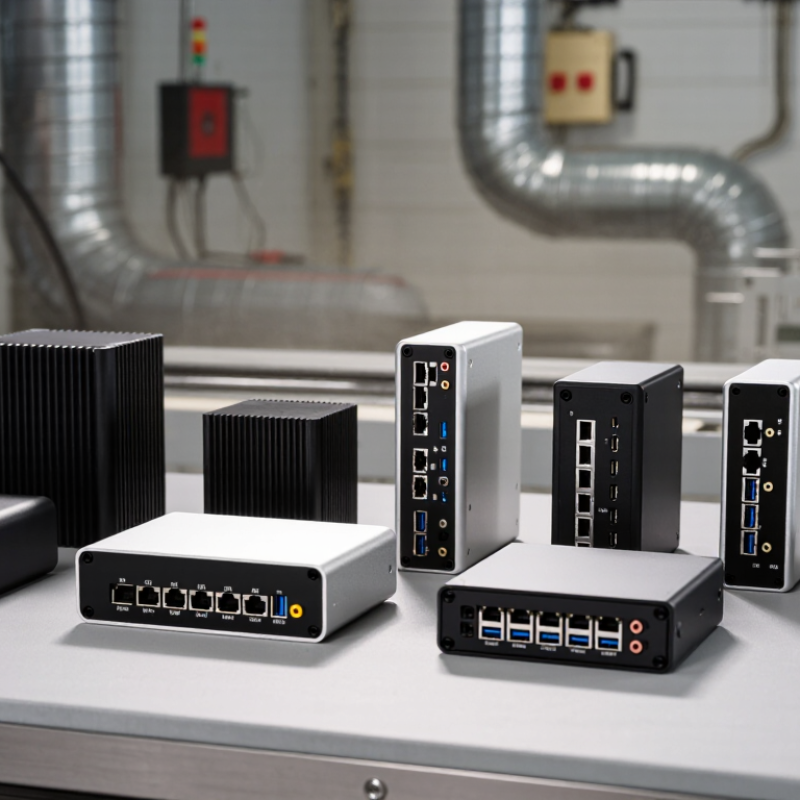
This guide compares ten fanless PCs designed for industrial applications, with attention to practical details rather than headline specifications alone. It considers processor options, available ports, mounting methods, operating temperature ranges, storage, and enclosure design. These factors help determine whether a system can connect to sensors, cameras, displays, and other equipment on a production floor. A compact box may fit neatly on a DIN rail, yet still lack the ports or thermal capacity a specific installation requires. Small details can matter.

No single model suits every site. A unit built for light monitoring may struggle with continuous vision processing, while a more powerful system can bring higher costs and greater heat output. Product specifications also vary by configuration, so buyers should confirm the exact model and intended operating conditions with the manufacturer. This comparison offers a practical starting point, not a substitute for checking site requirements. The best choice is the one that fits the real workload, environment, and maintenance plan. That sounds obvious, but it is easy to overlook.
Top 10 Fanless PCs for Industrial Applications?

What Defines a Fanless PC for Industrial Applications

A fanless PC for industrial applications is defined by how it moves heat and withstands its surroundings, not simply by the absence of a fan. It usually transfers heat through a metal chassis or passive heatsink, reducing moving parts that can fail or draw dust inside. But a sealed case can trap heat. Heat has nowhere to hide. Engineers must match processor load, ambient temperature, and enclosure design.

The need for local computing is growing. IDC’s Worldwide Edge Spending Guide estimated global edge spending would reach $232 billion in 2024, up 15.4% year over year. Deloitte’s 2024 Smart Manufacturing Survey found that 92% of surveyed manufacturing executives saw smart manufacturing as a driver of competitiveness. These figures do not prove every site needs a fanless PC; they do show why reliable processing near machines matters. Check operating-temperature ratings, vibration resistance, ingress protection, and ports for sensors or field equipment. An IP rating alone does not guarantee resistance to every factory hazard.

Tips: Test the computer in its intended cabinet, under realistic workloads. A unit that stays cool on a desk may throttle beside a hot motor drive. Leave room for airflow around its fins, and verify how storage and memory respond to vibration. Fanless does not mean maintenance-free.

Key Features and Environmental Requirements

Industrial Fanless Pcs need more than a fan-free design. Their cases must move heat from processors and storage into surrounding air, even inside a crowded control cabinet. IDC’s 2024 Worldwide Edge Spending Guide forecast global edge-computing spending at $232 billion in 2024, up 15.4% from 2023. More edge installations mean more equipment operating near machines, dust, and heat. But spending forecasts do not tell engineers which enclosure will survive a specific site. Fanless is not maintenance-free.

Environmental limits should match measured conditions, not a catalogue’s best-case claim. ASHRAE’s 2021 Thermal Guidelines recommend 18–27°C inlet air for covered data-center equipment; this is a useful benchmark, not an industrial-PC guarantee. Record cabinet temperatures during peak production, and check the computer’s rated operating range. Heat still matters. Review IEC 60529 IP ratings against the actual risks of dust or water, and check shock and vibration specifications for nearby motors. Confirm thermal performance in the intended mounting position, with cables connected and airflow partly obstructed. Dust finds gaps. One overlooked detail: a sealed enclosure can trap its own heat, so a higher IP rating alone may make cooling harder.

Top 10 Fanless PCs for Industrial Applications

A practical top-ten shortlist should cover different industrial jobs, not just processor speeds.

Consider a DIN-rail controller for a cabinet, a compact edge computer for sensor data, and a rugged embedded PC for vibration-prone equipment. A fanless panel PC suits operator stations, while a wide-temperature model helps in unconditioned enclosures. Other useful choices include a dual-LAN gateway, an isolated-I/O controller, a vehicle-rated computer, a machine-vision system, and an expansion-ready unit. Each design solves a different problem.

Heat still matters.

Passive cooling removes moving parts, but it does not remove thermal limits. Check the operating-temperature range, processor load, enclosure clearance, and mounting orientation.

A unit placed beside a drive or power supply may run hotter than its specification suggests. Dust gets everywhere. Look for suitable ingress protection, sealed connectors, and serviceable storage if the installation is difficult to reach.

Also verify interface needs: serial ports, digital I/O, display outputs, and network connections can matter more than peak performance. A ranking can mislead. The best choice depends on the actual machine, ambient conditions, and maintenance plan; even a small fanless PC may throttle under sustained workloads.

How the Top Models Compare Across Use Cases

Top 10 Fanless PCs for Industrial Applications?

How the Top Models Compare Across Use Cases

A useful top-ten comparison focuses on operating needs, not headline processor speed. IoT Analytics’ State of IoT 2024 estimates 18.8 billion connected IoT devices worldwide in 2024, increasing demand for local data processing. For machine vision, compare sustained processing performance and high-speed camera ports. For PLC gateways, prioritize serial interfaces, isolated inputs, and stable operation. A dusty packaging line needs sealed, fanless cooling; a control cabinet may need a compact DIN-rail enclosure. Small details matter.

Temperature ratings, ingress protection, vibration tolerance, and service access distinguish suitable models. NIST SP 800-82 Rev. 3 identifies reliability, availability, and safety as key operational technology concerns. Apply that lens: a computer beside a robotic cell may need wider temperature tolerance than a kiosk controller. A remote pump station may value dual Ethernet and watchdog recovery more than graphics speed. “Fanless” does not mean maintenance-free; blocked vents and poor cabinet airflow still create heat. The comparison gets messy here.

Tips:

Match the rated ambient temperature to the enclosure’s measured peak, not the room’s average. Check port counts, storage endurance, and mounting options before purchase. Test under real workload. Even a modest thermal mismatch can cause intermittent faults.

How to Choose a Fanless PC for Your Industrial Setup

Top 10 Fanless PCs for Industrial Applications?

How to Choose a Fanless PC for Your Industrial Setup

Start with the environment, not the processor. A control cabinet beside a furnace needs different thermal capacity from a clean packaging station. Check the expected ambient temperature, available airflow, dust, moisture, and vibration. Heat matters. A fanless chassis sheds heat through its surface, so a powerful processor can throttle when enclosed tightly. Leave room around the case and verify its operating limits against real cabinet conditions.

Next, map the computer’s connections to the equipment it must control. Count Ethernet ports, serial interfaces, USB connections, display outputs, and digital inputs or outputs. Confirm voltage range and mounting options, too. A DIN-rail installation can save space, but nearby drives may introduce electrical noise. Look for suitable isolation and grounding guidance. Dust gets everywhere. An ingress-protection rating helps, but connectors and cable glands also need attention.

Match memory and storage to the application, then test the complete setup under sustained load. A brief bench test may miss thermal throttling after hours inside a warm enclosure. Monitor temperatures, processor speed, and storage health. Consider service access, replacement availability, and operating-system support over the equipment’s expected life. I would avoid choosing solely by headline specifications; a modest system with stable temperatures may outperform a faster unit that overheats. This trade-off is easy to underestimate.


Powder Coat Booths

For those larger-sized parts, or smaller quantity runs, we have 2 independent powder coat booths and ovens. The quality, durability and affordability of today’s powder coating finishes make this the process of choice for world-class companies.

Powder coating advantages over other forms of coating are many. Materials used in the Powder coating process can be metals and non-metals that come in a multitude of thicknesses, textures, colors, etc. Another of Powder coating’s biggest advantages over conventional coatings is its ability to create finishes in many different textures. Powder Coating Booths allow us the ability to apply these advantages to large products.

Wet Paint Line

Tri-State Fabricators runs a full-service conveyor line for painting. Wet painting can provide protection or decoration to many different part styles. From start to finish, every project is easier to undergo random and point-based inspection by our skilled painting team.

Advantages to our Wet Paint Line are these lines start with product prep and ends with a thorough inspection of a high quality finished product. Our ability to complete large and small projects with a superior finish and doing so in a timely and economical fashion. This passes along the savings in production to our customers. When powder coating ins not an option, our Wet Paint Line gets the job done right the first time.

Wet Paint Booths

When the parts get big and heavy we roll-out our custom paint racks and oversize booth. By utilizing our partnerships with all the major paint brands, we can match virtually any color with wet paint.

The advantages of having access to a Wet Paint Booth are many. Large projects of many different shapes can be loaded into the booth. The Wet Paint Booth offers an environment that is much more controlled than a typical parts painting operation.

Not only are they used because of their controlled environment, but they’re are also advantageous when it comes to applying paint to parts that are needed in industries that require specialty coatings such as medical, aerospace, etc.

Military CARC

Our military forces have some very high standards when it comes to the finish of their vehicles and equipment. From the first pre-treatment step to final coat, it takes a great deal of knowledge and experience to protect the men and women of our armed forces. They deserve only the best, and Tri-State Fabricators provides it.

All of our processes are closely monitored by our staff and management teams. Both of which are highly trained in the processes of metal fabrication and finishing. Tri-State Fabricators’ goal is to always fully satisfy each and every customer, including the military. We will always put a 110% into what we do.

Glass-Bead Blasting

Abrasive media blasting is an excellent way to remove old paint, rust, and increase the paint/powder adhesion. Glass beads produce a much smoother and brighter finish than angular abrasives; leaving the part clean yet without any dimensional change. Chemically inert and environmentally friendly, we can recycle our beads approximately 30 times; making them a more preferred method of metal cleaning or surface finishing.

Advantages to Glass Bead Blasting are many. Glass bead blast media is used when a project is needing rough surfaces need to become smooth for applications of coatings such as paint. It is typically used to clean paint and rust from a product surface without deforming the surface it is being used on. Overall, compared to many other blasting media, Glass Bead Blasting is a very economical choice and those savings are always passed on to our customers.

Part Washing

Tri-State Fabricators utilize a zinc phosphate wash to clean and etch the material to ensure the best paint adhesion possible. The unique design of our 3-stage wash system does the work like a 5-stage. From Cleaning and rinsing to conversion coating and post-treatment, Our Part Washing process is a complete service and works throughout the fabrication service and the finishing service.

Along with the previously mentioned benefits, Curing is a vital chemical reaction that leaves the product finish hard and relatively safe from mild abrasion and aggressive corrosion. This process can be done in more than one way; ambient air-dry or in curing ovens at temps that exceed 240°.

Burn-Off Oven

From fixing paint mistakes (someone else’s of course) to simply cleaning our paint line hooks, our burn-off oven is put to good use. After a quick burn-off, a little clean up, and a fresh coat of paint, your parts will look better than new.

Why does our Burn-Off Oven work so well? Because super heating the air around parts turns the materials into ashes. From paint and powder coatings to rubber and machining oils, high temps do the job without degrading the integrity of the part.

Masking

Masking is a vital part of producing high quality products. We have die-cut masking patterns to protect machined surfaces as well as a wide range of plugs and caps to protect threaded holes and bolts. We provide permanent and temporary masking.

Masking allows the selected sections of a product to be protected from a fabrication or finishing service. This can be with both chemicals when etching and tapes, paints when only finishing just a section of the product. Masking is great in aiding the customization process of a project.

Screen Printing

Screen printing is a photographic process that transfers artwork onto a porous nylon screen which allows colored ink to flow through the screen and be deposited on an aluminum or plastic component. We can generally have just about any design created onto a screen for your parts.

Some of the advantages of Screen Printing are, brand recognition for your business displaying on your products, assembly instructions, product warnings/hazards, etc. Tri-State Fabricators produces Screen Printing of the highest quality so you know it’s durable.

Metal Finishing

Metal Finishing is the art of treating the exterior portion of product, often metal but can also be made of other materials, so that the surface is clean and free of any debris. Then the process of applying coats or either paint of powder coat takes place. This coating process improves the quality of the product in both appearance and resistance to wear and corrosion.

Tri-State Fabricators, Inc., understands that a project typically isn’t complete until a high-quality finish has been added to your product. This is why our painting and powder coating teams continuously inspect the products throughout the Metal Finishing process.



