


China Top External Meter Box Manufacturers for Global Buyers

“Science is about knowing; engineering is about doing,” wrote engineering author Henry Petroski. His observation offers a useful lens for evaluating an External Meter Box: specifications matter, but performance depends on how the enclosure works in real conditions.

A meter box sits where utility connections meet weather, people, and routine maintenance. Picture a sun-warmed cabinet on an exterior wall, exposed to rain, dust, and repeated opening. Its material, sealing, mounting arrangement, and internal space can affect durability and service access. Small details matter. A stiff door or crowded wiring area can complicate inspection. Poorly matched dimensions may create avoidable installation challenges.

Global buyers also face a varied supplier landscape. Manufacturers differ in product ranges, customization options, documented test data, production capacity, and export support. Claims should be checked against current datasheets, samples, and the requirements of the intended project. This overview examines China-based External Meter Box manufacturers through practical comparison points, including enclosure design, material choices, quality documentation, and communication with overseas customers. It does not treat a broad catalog or low quoted price as proof of suitability. Buyers should confirm specifications with the manufacturer and relevant project professionals before placing an order. Details can change. That part deserves careful attention. The guide is intended to help readers ask sharper questions and build a shortlist, not to promise that one supplier fits every application.
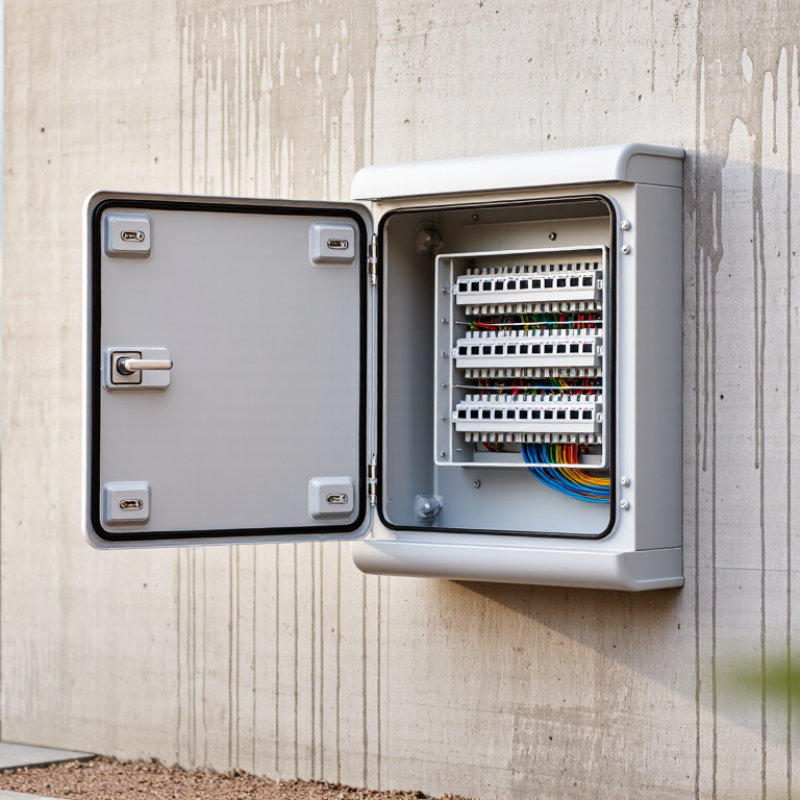
China Top External Meter Box Manufacturers for Global Buyers

External Meter Boxes: Purpose, Installation Types, and Common Enclosure Materials

China Top External Meter Box Manufacturers for Global Buyers

An external meter box shields the meter, terminals, and service connections from rain, dust, impact, and accidental contact. It also keeps readings accessible for inspection. The IEA’s Electricity 2024 report estimated global electricity demand would grow by about 4% in 2024, increasing the need for dependable metering infrastructure. A box is a small component, but poor drainage or a cramped interior can complicate maintenance.

Installation depends on the site. Wall-mounted enclosures suit building facades, while pole-mounted types serve outdoor service points. Recessed boxes sit flush with a wall; pedestal models work where no suitable wall exists. Common materials include UV-stabilized polycarbonate, glass-reinforced polyester, and coated or stainless steel. Plastic resists corrosion and weighs less; metal can offer greater impact resistance, but coatings and seals need attention. No material is automatically best. Exposure, heat, vandalism risk, meter dimensions, and required ingress protection all matter.

Tips: Check the enclosure’s IP rating against the actual weather exposure, not just the product description. Leave room for cable bends and safe meter access. A detail that is easy to overlook: even a sturdy box can collect condensation if ventilation and sealing are poorly balanced.


IEC 60529 IP Ratings: IP54 Splash Protection and IP65 Water-Jet Protection

An external meter box must handle more than rain on a calm day. Wind can drive water toward seams, while dust collects around cable entries and door edges. Under IEC 60529, IP54 indicates dust protection against harmful deposits and protection from water splashes from any direction. It is not a water-jet rating. For exposed sites, IP65 offers dust-tight protection and resistance to water jets. Neither rating means the enclosure can be immersed. Not the same thing.

Tips: Check the rating of the complete, assembled box, not just its empty shell. Confirm that cable glands, seals, and covers are fitted as specified. A missing plug can weaken protection.

In field installations, small details matter. A door that does not close evenly or a poorly seated gasket can undermine the expected protection. IP54 may suit sheltered locations with occasional splashes; IP65 is generally more appropriate where cleaning jets or stronger water exposure are expected. Conditions vary, though, and choosing a higher rating alone cannot fix incorrect installation. Verify the product’s test documentation and inspect seals during maintenance. A rating helps set expectations, but it is not a substitute for careful fitting.

IEC 62262 Impact Ratings: IK08 Withstands 5 J; IK10 Withstands 20 J

For external meter boxes, impact resistance is more than a catalog number. Under IEC 62262, IK08 represents resistance to a 5-joule impact, while IK10 represents 20 joules. That is four times the test energy. It can matter where boxes face tool knocks, moving equipment, or accidental blows near a service entrance. Real sites are less tidy than test labs.

The rating should guide selection, not promise an indestructible enclosure. Impact results depend on the tested assembly, including its door, hinges, latch, viewing window, and mounting method. A strong body paired with a weak latch may still be a poor choice. Ask suppliers for test evidence matching the offered configuration, not just a rating printed in a brochure. That distinction is easy to miss.

For global buyers, compare the IK rating with installation conditions and maintenance needs. A sheltered location may not need the same impact level as a busy loading area. IK10 provides a higher impact threshold, but it does not measure water ingress, UV ageing, or corrosion. Check those separately. One detail deserves a second look: buyers may compare ratings and overlook how the enclosure is fixed to the wall.

China Top External Meter Box Manufacturers for Global Buyers - IEC 62262 Impact Ratings: IK08 Withstands 5 J; IK10 Withstands 20 J

Evaluation Dimension Relevant Data or Standard Fact What Global Buyers Should Verify
IK08 impact rating Under IEC 62262, IK08 corresponds to an impact energy of 5 J. Request test evidence for the exact enclosure configuration being offered, including its door, viewing window, hinges, and fastening method.
IK10 impact rating Under IEC 62262, IK10 corresponds to an impact energy of 20 J. Confirm that the rating applies to the complete assembled product, rather than only to a material sample or a separate enclosure component.
Meaning of the IK code IEC 62262 classifies the degree of protection provided by an enclosure against external mechanical impacts. The IK code is not an IP water- or dust-ingress rating. Check impact protection and ingress protection as separate requirements in the product specification.
Ingress protection IEC 60529 defines IP ratings for protection against access to hazardous parts and ingress of solid objects and water. Specify the required IP code for the installation environment and ask for evidence applicable to the assembled meter box.
Polycarbonate enclosure Polycarbonate is a thermoplastic commonly used for electrical enclosures; impact performance depends on the resin grade, design, thickness, and test configuration. Request the material specification and product-level impact-test documentation; do not infer an IK rating from the material name alone.
Glass-fibre-reinforced polyester enclosure Glass-fibre-reinforced polyester is a commonly used thermoset material for electrical enclosures. Performance varies with formulation and construction. Check the declared material, enclosure design, environmental suitability, and test results for the complete product.
Metal enclosure Sheet steel and stainless steel are commonly used enclosure materials. Corrosion resistance and mechanical performance depend on the grade, coating, thickness, and design. Confirm the specified metal grade and finish, and verify the complete enclosure’s impact rating and suitability for the installation location.
Outdoor installation Outdoor suitability is not established by an IK rating alone; ingress protection, material, seals, and installation conditions also matter. State the exposure conditions, mounting orientation, cable-entry arrangement, and required ingress protection when requesting quotations.
Configuration and accessories Windows, doors, locks, hinges, gaskets, and cable entries can affect the performance of an assembled enclosure. Match the tested configuration to the quoted model and list any options or accessories that differ from the tested unit.
Documentation for international purchasing A declared rating should be supported by documentation identifying the applicable standard, product model, and tested configuration. Request a datasheet, drawing, material details, and relevant test report; confirm that the documents correspond to the product being supplied.

How to Evaluate Chinese Manufacturers: Materials, Testing, and Traceability

For global buyers, a meter box’s material specification matters more than a polished sample. Ask whether the enclosure uses UV-stabilized engineering plastic or coated metal, and request the exact grade, thickness, and supplier batch record. A sunlit sample can look sound while hiding weak hinges or brittle edges. Check documented resistance to impact, heat, moisture, and corrosion under conditions relevant to the installation site. IEC 62208 and IEC 60529 can help define enclosure and ingress-protection test requirements; ask for reports identifying the tested model, laboratory, method, and result. A certificate alone is not enough.

Testing should connect to production. Request inspection records for dimensions, door fit, sealing, and any specified ingress-protection tests, then compare them with a production unit—not only a golden sample. Traceability should link each box to material lots, assembly dates, inspection results, and corrective actions. ISO’s 2022 Survey reported over 1.2 million valid ISO 9001 certificates worldwide, but certification does not prove a particular meter box passed a particular test. That distinction is easy to miss. Review a sample batch record, confirm report numbers with the issuing laboratory where possible, and ask how failed units are contained. Some records may be incomplete; that is worth discussing before an order, not after shipment.

Global Sourcing Checks: Local Codes, Climate Suitability, and Factory Audits

Global buyers of external meter boxes should check local utility specifications before comparing factory quotations. Confirm dimensions, cable entries, sealing requirements, material rules, and access arrangements. IEC 60529 defines IP ratings for enclosure protection, but the required rating depends on the installation site. Treat it as a project requirement, not a catalog shortcut.

Climate suitability needs evidence. The WMO’s State of the Global Climate 2023 estimated global mean near-surface temperature at 1.45 ± 0.12°C above the 1850–1900 average. That global figure cannot replace local exposure data. Ask for test records covering UV aging, corrosion, temperature cycling, and impact resistance. During factory audits, inspect incoming-material checks, molding or welding controls, dimensional inspection, calibration records, and corrective-action logs. Showroom photos prove little. A high IP rating alone does not guarantee long-term outdoor performance; that assumption deserves another look.

Tips Request samples from the production line, not specially prepared units. Compare serial labels, gasket fit, hinge movement, and cable-entry seals against the approved drawings. Record gaps for follow-up.

Powder Coat Booths

For those larger-sized parts, or smaller quantity runs, we have 2 independent powder coat booths and ovens. The quality, durability and affordability of today’s powder coating finishes make this the process of choice for world-class companies.

Powder coating advantages over other forms of coating are many. Materials used in the Powder coating process can be metals and non-metals that come in a multitude of thicknesses, textures, colors, etc. Another of Powder coating’s biggest advantages over conventional coatings is its ability to create finishes in many different textures. Powder Coating Booths allow us the ability to apply these advantages to large products.

Wet Paint Line

Tri-State Fabricators runs a full-service conveyor line for painting. Wet painting can provide protection or decoration to many different part styles. From start to finish, every project is easier to undergo random and point-based inspection by our skilled painting team.

Advantages to our Wet Paint Line are these lines start with product prep and ends with a thorough inspection of a high quality finished product. Our ability to complete large and small projects with a superior finish and doing so in a timely and economical fashion. This passes along the savings in production to our customers. When powder coating ins not an option, our Wet Paint Line gets the job done right the first time.

Wet Paint Booths

When the parts get big and heavy we roll-out our custom paint racks and oversize booth. By utilizing our partnerships with all the major paint brands, we can match virtually any color with wet paint.

The advantages of having access to a Wet Paint Booth are many. Large projects of many different shapes can be loaded into the booth. The Wet Paint Booth offers an environment that is much more controlled than a typical parts painting operation.

Not only are they used because of their controlled environment, but they’re are also advantageous when it comes to applying paint to parts that are needed in industries that require specialty coatings such as medical, aerospace, etc.

Military CARC

Our military forces have some very high standards when it comes to the finish of their vehicles and equipment. From the first pre-treatment step to final coat, it takes a great deal of knowledge and experience to protect the men and women of our armed forces. They deserve only the best, and Tri-State Fabricators provides it.

All of our processes are closely monitored by our staff and management teams. Both of which are highly trained in the processes of metal fabrication and finishing. Tri-State Fabricators’ goal is to always fully satisfy each and every customer, including the military. We will always put a 110% into what we do.

Glass-Bead Blasting

Abrasive media blasting is an excellent way to remove old paint, rust, and increase the paint/powder adhesion. Glass beads produce a much smoother and brighter finish than angular abrasives; leaving the part clean yet without any dimensional change. Chemically inert and environmentally friendly, we can recycle our beads approximately 30 times; making them a more preferred method of metal cleaning or surface finishing.

Advantages to Glass Bead Blasting are many. Glass bead blast media is used when a project is needing rough surfaces need to become smooth for applications of coatings such as paint. It is typically used to clean paint and rust from a product surface without deforming the surface it is being used on. Overall, compared to many other blasting media, Glass Bead Blasting is a very economical choice and those savings are always passed on to our customers.

Part Washing

Tri-State Fabricators utilize a zinc phosphate wash to clean and etch the material to ensure the best paint adhesion possible. The unique design of our 3-stage wash system does the work like a 5-stage. From Cleaning and rinsing to conversion coating and post-treatment, Our Part Washing process is a complete service and works throughout the fabrication service and the finishing service.

Along with the previously mentioned benefits, Curing is a vital chemical reaction that leaves the product finish hard and relatively safe from mild abrasion and aggressive corrosion. This process can be done in more than one way; ambient air-dry or in curing ovens at temps that exceed 240°.

Burn-Off Oven

From fixing paint mistakes (someone else’s of course) to simply cleaning our paint line hooks, our burn-off oven is put to good use. After a quick burn-off, a little clean up, and a fresh coat of paint, your parts will look better than new.

Why does our Burn-Off Oven work so well? Because super heating the air around parts turns the materials into ashes. From paint and powder coatings to rubber and machining oils, high temps do the job without degrading the integrity of the part.

Masking

Masking is a vital part of producing high quality products. We have die-cut masking patterns to protect machined surfaces as well as a wide range of plugs and caps to protect threaded holes and bolts. We provide permanent and temporary masking.

Masking allows the selected sections of a product to be protected from a fabrication or finishing service. This can be with both chemicals when etching and tapes, paints when only finishing just a section of the product. Masking is great in aiding the customization process of a project.

Screen Printing

Screen printing is a photographic process that transfers artwork onto a porous nylon screen which allows colored ink to flow through the screen and be deposited on an aluminum or plastic component. We can generally have just about any design created onto a screen for your parts.

Some of the advantages of Screen Printing are, brand recognition for your business displaying on your products, assembly instructions, product warnings/hazards, etc. Tri-State Fabricators produces Screen Printing of the highest quality so you know it’s durable.

Metal Finishing

Metal Finishing is the art of treating the exterior portion of product, often metal but can also be made of other materials, so that the surface is clean and free of any debris. Then the process of applying coats or either paint of powder coat takes place. This coating process improves the quality of the product in both appearance and resistance to wear and corrosion.

Tri-State Fabricators, Inc., understands that a project typically isn’t complete until a high-quality finish has been added to your product. This is why our painting and powder coating teams continuously inspect the products throughout the Metal Finishing process.
