Top 10 End Mill Types for Global Buyers in 2026?
The global demand for End Mills is projected to reach $3 billion by 2026, according to a recent report by Market Research Future. As one of the most vital tools in precision machining, end mills are essential for various applications, from aerospace to automotive industries. Experts highlight the necessity of understanding different end mill types to meet specific production needs.
Dr. Emily Chen, a leading authority in manufacturing tools, states, "Choosing the right end mill can significantly impact the efficiency of machining operations." This statement reflects the growing complexity in selecting the appropriate end mill type. Each type serves distinct purposes, affecting the quality and cost-effectiveness of processes.
However, not all manufacturers fully grasp the nuances of these tools. Missteps in selection can lead to increased production costs. In an industry moving towards automation and precision, insights into the latest end mill technologies become vital for staying competitive. Understanding these intricacies can bridge technology gaps and help buyers make informed decisions as industries continue to evolve.
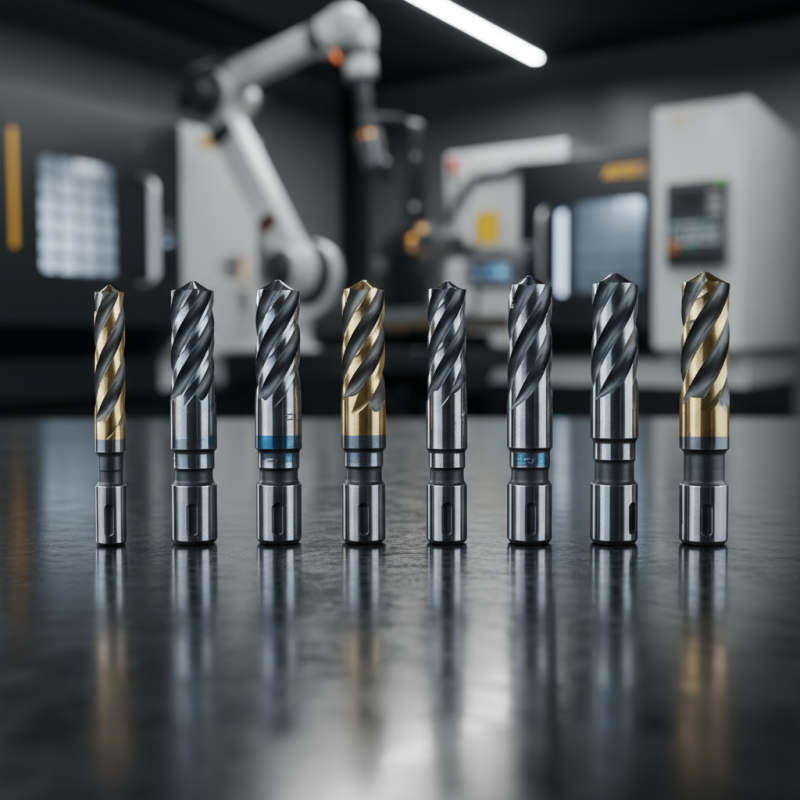
Overview of End Mills: Definition and Importance in Manufacturing
End mills are pivotal tools in the manufacturing industry. They are used in milling operations to shape and profile materials. Commonly found in machining centers, end mills can be single or multiple fluted. Their design allows for efficient removal of material, making them essential for precision engineering.
According to a recent industry report by Research and Markets, the global end mill market is projected to grow significantly. The demand for end mills is driven by advancements in manufacturing technologies. In 2026, this market is expected to expand at a compounded annual growth rate (CAGR) of over 7%. This growth highlights the continued importance of choosing the right tool for specific machining tasks.
When selecting an end mill, consider the material you are working with. For harder metals, high-speed steel end mills work well. Conversely, carbide end mills are better suited for tougher materials but are more brittle.
Tip: Regularly inspect your end mills for wear. A worn end mill can affect precision and quality.
The choice of the right end mill can significantly influence production efficiency. While modern tools offer many advantages, they also require skilled operators to maximize their potential. Balancing technology and human expertise remains essential in achieving optimal outcomes.
Tip: Invest in training for your team. Knowledge of tools can lead to more effective milling practices.
Top 10 End Mill Types for Global Buyers in 2026
| End Mill Type | Material | Diameter Range (mm) | Typical Applications | Market Demand Index (2026) |
| Flat End Mill | HSS | 1-25 | Slotting, Contour Milling | High |
| Ball End Mill | Carbide | 1-40 | 3D Contour, Surface Finishing | Medium |
| Corner Radius End Mill | HSS | 3-20 | Finishing Edges, Contouring | High |
| Tapered End Mill | Carbide | 1-30 | Mold Making, Die Manufacturing | Medium |
| Roughing End Mill | Carbide | 5-50 | Bulk Material Removal | High |
| High Helix End Mill | Carbide | 3-25 | Aluminum, Soft Metals | Medium |
| Shell End Mill | HSS | 10-200 | Slotting Deep Cuts | Low |
| ZrN Coated End Mill | Carbide | 3-25 | Extended Tool Life, Tool Coating | High |
| Insert End Mill | Carbide | 10-50 | High-Speed Machining | Medium |
| Chip Breaker End Mill | Carbide | 3-20 | Improving Chip Removal | Medium |
Types of End Mills: A Comprehensive Classification for Buyers
Choosing the right type of end mill is crucial for manufacturing processes. In 2026, buyers should understand the diverse classifications available. There are several types: flat end mills, ball end mills, and tapered end mills, each serving different functions. According to a recent industry report by Grand View Research, the global end mill market is projected to grow at a CAGR of 6.3% from 2022 to 2026. This reflects an increasing demand for precise cutting tools.
Flat end mills are commonly used for machining flat surfaces. They excel in creating clean edges. Ball end mills, on the other hand, are suitable for curved surfaces. Their design allows for intricate machining. They are essential in industries requiring high precision. However, the choice often depends on specific project needs. Some buyers may overlook the importance of tool material. Carbide, high-speed steel, and cobalt are all options, each with pros and cons.
Moreover, understanding the geometry of these tools is vital. The cutting angle, helix angle, and flute count can all impact performance. A study from Technavio highlights that around 30% of users have not fully optimized their end mill choices. This often leads to inefficiencies in production. Buyers must reflect on their current equipment and consider upgrading to meet future demands.
Top 10 End Mill Types for Global Buyers in 2026
Top 10 End Mill Types Explained: Key Features and Applications
End mills are crucial tools in machining, offering versatility and precision. They come in various types, each designed for specific applications. The most common type is the square end mill, ideal for creating flat surfaces. It provides excellent rigidity, making it suitable for general machining tasks.
Another popular option is the ball nose end mill, which excels in contouring and 3D modeling. Its rounded tip allows for smooth curves and intricate designs. This type is widely used in industries like aerospace and automotive, where detail is paramount.
Tapered end mills are noteworthy too, designed for machining intricate shapes and angles. Their unique design makes them effective for creating slots and grooves. However, they can be challenging to use accurately, demanding skilled operators. Understanding these end mill types and their applications is essential for optimizing machining processes and achieving high-quality results.
Factors Influencing the Choice of End Mills for Global Buyers
When choosing end mills, global buyers must consider various factors. Material compatibility is crucial. Different end mills are designed for specific materials like steel, aluminum, and plastic. Choosing the right type ensures efficient cutting and prolongs tool life. Buyers should evaluate their projects' material needs carefully, as this can impact both performance and costs.
The geometry of end mills also plays a significant role. Features like flute shape, diameter, and coating affect cutting speed and surface finish. Buyers often face confusion here. A non-optimized choice can lead to poor outcomes and increased production times. Understanding these design aspects is essential for achieving high-quality results.
Lastly, cost-effectiveness is not always straightforward. While cheaper options seem appealing, they may not perform well. Investing in high-quality end mills can save money in the long run. Buyers should weigh short-term savings against potential long-term issues. Reflections on past purchases may reveal patterns that guide better choices in the future.
Future Trends in End Mill Manufacturing and Usage by 2026
The end mill market is set for transformative trends by 2026. One major trend is the shift toward more sustainable manufacturing practices. Companies are increasingly using eco-friendly materials and processes. This not only enhances production efficiency but also minimizes environmental impact. Buyers should expect to see more biodegradable tooling options.
Tips: Look for suppliers dedicated to sustainable practices. They often have the latest innovations that combine performance with eco-friendliness.
Another notable direction is the integration of smart technology in end mills. Sensors and IoT capabilities will become standard. These features allow for real-time monitoring and data collection. This information enhances machining precision and reduces downtime. However, adapting to this technology may pose challenges. Not all manufacturers will easily transition to a smart production setup.
Tips: Stay informed on technological advancements. Engage with industry forums to share experiences and insights as this technology evolves. This knowledge will be crucial to navigate the changing landscape effectively.





