


China Top Electronic Pouring Sealants Manufacturers?

Choosing a supplier from China’s electronic materials market takes more than comparing prices. Electronic Pouring Sealants protect circuit boards, sensors, power modules, and LED assemblies from moisture, vibration, dust, and heat. A clean sample can look convincing. The cured material tells a fuller story.

This guide examines manufacturers through practical details: silicone, polyurethane, and epoxy options; viscosity and dispensing behavior; cure time; adhesion; dielectric performance; and thermal conductivity. It also considers production consistency, technical support, and whether a supplier can provide clear test data. Reliability engineer Dr. Michael Pecht offers a useful perspective. The following is an editorial paraphrase, not a verified direct quotation: “Trust product performance only when testing supports the claims.” That distinction matters. A datasheet is a starting point, not proof that a sealant suits every assembly.

Readers will find a focused way to compare China-based manufacturers and prepare sharper questions before requesting samples. Ask how the material behaves in your actual process. Check the cured bead, not just the fresh liquid. Review test conditions, too. Small details count. Supplier descriptions can be incomplete, and this overview cannot replace application-specific trials. A modest limitation, but an important one.
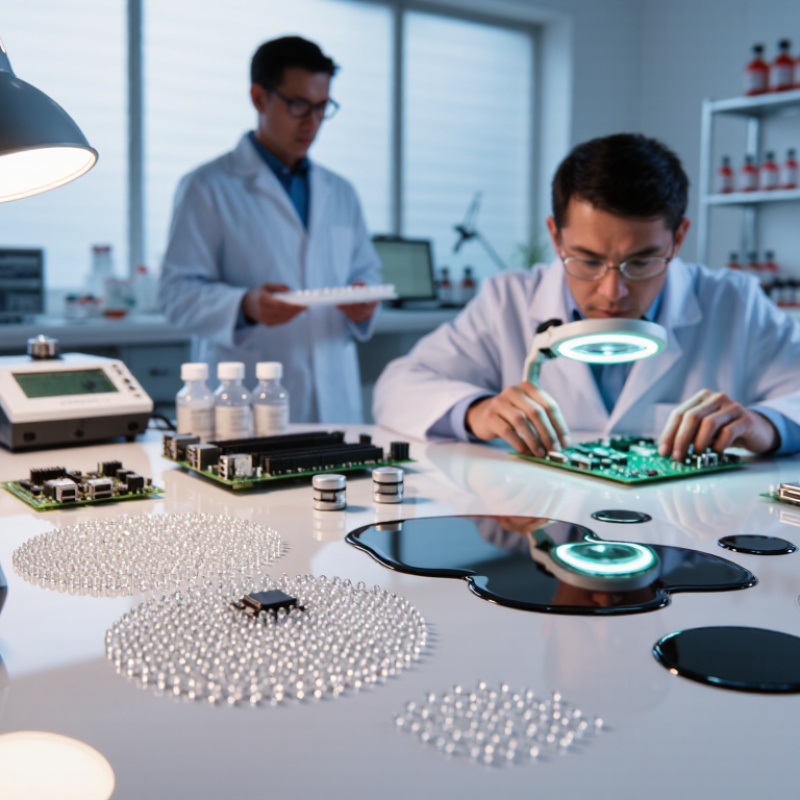
China Top Electronic Pouring Sealants Manufacturers?

What Are Electronic Pouring Sealants and How Are They Used in Electronics?

Electronic pouring sealants, often called potting compounds, are liquid materials poured around components and cured inside an enclosure. They help block moisture and dust, reduce vibration, and electrically isolate circuit boards. Common chemistries include epoxy, silicone, and polyurethane. Each behaves differently: epoxy is rigid, while silicone stays more flexible. Choose based on operating temperature, chemical exposure, and whether later repair matters. It is easy to overlook repairability.

The process is tangible: a technician meters the compound, fills the housing, and checks for trapped air near connectors. Viscosity, cure time, and heat from curing can affect coverage and component reliability. Grand View Research’s Potting Compound Market report estimated the global market at about US$3.2 billion in 2023, reflecting broad use across electrical and electronic applications. That figure describes the market, not the performance of any one sealant. For fire-sensitive assemblies, verify test evidence rather than assuming a material is flame resistant. Under UL 94, a V-0 rating requires each specimen’s flame to stop within 10 seconds after each flame application; the rating applies only to tested material and thickness. Specify cure conditions and inspection criteria before production. Small voids matter.


How Do Epoxy, Silicone, and Polyurethane Potting Compounds Differ?

Epoxy, silicone, and polyurethane potting compounds protect electronic parts, but they behave differently after curing. Epoxy usually forms a hard, rigid shell with strong adhesion to many substrates. It can suit fixed assemblies, such as a power module secured inside a metal housing. Its stiffness may stress delicate components when temperatures change or vibration continues. Hard does not mean safer.

Silicone remains flexible across a broad temperature range and can cushion components that move or heat repeatedly. It is often useful around sensors, connectors, and assemblies needing thermal stability. However, its softer surface may offer less resistance to abrasion, and adhesion depends on surface preparation. A dusty circuit board can undermine an otherwise suitable material. Small details matter.

Polyurethane sits between these options in many formulations. It can provide useful flexibility and moisture protection without the very soft feel of some silicones. Yet moisture during curing, mixing accuracy, and formulation differences can affect results. There is no perfect shortcut. A datasheet helps, but it cannot fully predict performance inside a crowded enclosure. Test the compound with the actual materials, cure schedule, and operating temperatures before choosing a production process.

China Top Electronic Pouring Sealants Manufacturers? - How Do Epoxy, Silicone, and Polyurethane Potting Compounds Differ?
Comparison Dimension Epoxy Potting Compound Silicone Potting Compound Polyurethane Potting Compound
Typical Chemistry Usually a two-part resin and hardener system; cures through a chemical reaction. Available as one-part moisture-curing or two-part addition- or condensation-curing systems. Usually a two-part polyol and isocyanate system; cures through a chemical reaction.
Typical Cured Hardness Often rigid, commonly around Shore D 70–90, depending on formulation. Usually flexible, commonly around Shore A 10–80, depending on formulation. Ranges from soft and flexible to semi-rigid; hardness may be specified on Shore A or Shore D scales.
Flexibility and Stress Relief Generally low flexibility; rigid grades can place greater mechanical stress on components during temperature changes. Typically high flexibility and good vibration and thermal-cycle stress relief. Typically offers moderate to high flexibility and can cushion components against vibration.
Typical Thermal Conductivity Unfilled grades are often approximately 0.2–0.4 W/(m·K); thermally conductive fillers can increase this substantially. Unfilled grades are often approximately 0.15–0.3 W/(m·K); filled grades are available. Unfilled grades are often approximately 0.15–0.3 W/(m·K); filled grades are available.
Temperature Performance Can provide good heat resistance, but the usable range depends on the formulation, glass-transition temperature, and service conditions. Often selected for a wide service-temperature range; the exact limits depend on the silicone chemistry and formulation. Performance depends strongly on chemistry; prolonged high-temperature exposure may be more limiting than for some silicone grades.
Moisture and Chemical Resistance Often provides good moisture and chemical resistance once fully cured; resistance varies by resin and exposure. Generally offers strong weathering and moisture resistance; chemical resistance should be checked for the specific fluid or environment. Can provide good moisture resistance, but some formulations may be sensitive to moisture during processing or cure.
Electrical Insulation Commonly used for electrical insulation and protection; verify dielectric properties for the selected grade and design. Commonly used where flexible electrical insulation and protection are needed; verify properties for the selected grade. Commonly used for electrical insulation and cushioning; verify dielectric properties and long-term environmental compatibility.
Cure and Processing Considerations Mixing ratio, pot life, cure schedule, and exotherm need to be managed, particularly in larger pours. One-part moisture-cure products may cure slowly in deep sections; two-part systems can offer more controlled bulk curing. Mixing ratio, pot life, humidity, and component moisture can affect processing and cured properties.
Common Application Fit Rigid encapsulation for components requiring strong mechanical protection and dimensional stability. Flexible encapsulation for assemblies exposed to vibration, thermal cycling, or movement. Protective encapsulation where a balance of flexibility, cushioning, and electrical insulation is desired.
Key Selection Checks Check adhesion, cure shrinkage, exotherm, thermal cycling, repair requirements, and compatibility with component materials. Check primer or adhesion needs, cure depth, outgassing or extractables where relevant, and compatibility with contacts and coatings. Check moisture sensitivity, hydrolysis resistance, adhesion, mixing accuracy, and compatibility with component materials.
Values and performance descriptions are general selection guidance, not specifications. Actual properties vary by formulation, test method, cure conditions, and service environment. Confirm the current technical data sheet and validate the material in the intended assembly before production use.

How Do Dielectric Strength (kV/mm) and Thermal Conductivity Guide Selection?

For electronic pouring sealants, dielectric strength indicates how much electric field a cured material can withstand before breakdown. Compare values only when test methods, temperature, and specimen thickness are consistent. A datasheet figure alone can flatter performance. Small voids matter. In a compact power module, trapped air around a sharp lead may create a weak point, even when the bulk resin looks sound. Ask manufacturers for test conditions and guidance on suitable safety margins, rather than choosing the highest kV/mm figure.

Thermal conductivity describes how quickly heat moves through the sealant. Higher values can help carry heat away from hot components, but filler loading may affect flow, settling, and the ability to fill narrow gaps. That matters. A resin that conducts heat well on a test plaque may perform less effectively if it leaves bubbles beneath a component. Check cured conductivity alongside viscosity, cure schedule, and the actual gap size. Request samples or application-specific test data, and compare results after realistic curing and thermal exposure. Selection is rarely perfectly tidy; a small trial can reveal limitations that a polished specification sheet misses.

What Does UL 94 V-0 Require: ≤10 Seconds of Afterflame per Application?

For electronic potting and sealing materials, UL 94 V-0 is a specific vertical-flame classification, not a guarantee that a finished device will resist every fire scenario. Under UL 94, each specimen must stop flaming within 10 seconds after each of two flame applications. Across five specimens and ten applications, total afterflame time must not exceed 50 seconds. After the second application, afterflame plus afterglow is limited to 30 seconds. Flaming drips must not ignite the cotton indicator. The source is UL 94, the industry test method for plastic-material flammability.

That limit matters near circuit boards, where a small bead of cured sealant may sit beside hot components and exposed wiring. But the rating belongs to the tested material formulation and specimen thickness. A thin, uneven dispense can behave differently from a lab-prepared bar. I have seen teams focus on the V-0 label and overlook cure conditions, substrate, or the final gap geometry. That is an easy mistake.

Tips: Ask for the exact UL 94 classification, tested thickness, and supporting report. Check that the production cure matches the tested cure. A rating is useful. It is not the whole design.

How to Compare China’s Leading Manufacturers by Testing and Certification?

When comparing China’s electronic pouring sealant manufacturers, examine test data for the exact material grade you plan to buy. A certificate for one formulation may not cover another. Ask for recent reports showing viscosity, working time, cure conditions, and adhesion on relevant substrates, such as aluminum or circuit-board surfaces. Numbers matter. Check whether dielectric-strength tests state specimen thickness and conditioning, since these details affect interpretation. For equipment exposed to heat or vibration, request thermal-cycling results and ask how failures were recorded.

Certification should be verified, not just displayed. Confirm the issuing body, standard, validity period, and product scope directly against the document. Ask whether testing was conducted by an independent laboratory and whether the report identifies the same formulation and production site offered to you. Request a small production sample, then compare its cure behavior and appearance with the report’s stated conditions. A neat certificate folder can still hide a mismatch. Batch records and change-control procedures matter, too. I would avoid choosing on test results alone; factory controls can vary, and a promising sample may not represent later shipments. Some documents are hard to interpret. Have a qualified engineer review unclear methods before approval.

Comparing Electronic Potting Sealant Manufacturers: Testing and Certification

Use product-specific test reports and certificates to compare suppliers. This chart counts example standardized test references by evaluation area; it does not score or rank manufacturers.

Example references: environmental—IEC 60068-2-11, IEC 60068-2-14, IEC 60068-2-78; electrical—ASTM D149 and ASTM D257; mechanical—ASTM D1002; processing—ASTM D2196; flammability—UL 94. Confirm each method’s applicability, test conditions, product formulation, and report scope. Standards are test methods or classifications, not proof that a particular product has passed.

Powder Coat Booths

For those larger-sized parts, or smaller quantity runs, we have 2 independent powder coat booths and ovens. The quality, durability and affordability of today’s powder coating finishes make this the process of choice for world-class companies.

Powder coating advantages over other forms of coating are many. Materials used in the Powder coating process can be metals and non-metals that come in a multitude of thicknesses, textures, colors, etc. Another of Powder coating’s biggest advantages over conventional coatings is its ability to create finishes in many different textures. Powder Coating Booths allow us the ability to apply these advantages to large products.

Wet Paint Line

Tri-State Fabricators runs a full-service conveyor line for painting. Wet painting can provide protection or decoration to many different part styles. From start to finish, every project is easier to undergo random and point-based inspection by our skilled painting team.

Advantages to our Wet Paint Line are these lines start with product prep and ends with a thorough inspection of a high quality finished product. Our ability to complete large and small projects with a superior finish and doing so in a timely and economical fashion. This passes along the savings in production to our customers. When powder coating ins not an option, our Wet Paint Line gets the job done right the first time.

Wet Paint Booths

When the parts get big and heavy we roll-out our custom paint racks and oversize booth. By utilizing our partnerships with all the major paint brands, we can match virtually any color with wet paint.

The advantages of having access to a Wet Paint Booth are many. Large projects of many different shapes can be loaded into the booth. The Wet Paint Booth offers an environment that is much more controlled than a typical parts painting operation.

Not only are they used because of their controlled environment, but they’re are also advantageous when it comes to applying paint to parts that are needed in industries that require specialty coatings such as medical, aerospace, etc.

Military CARC

Our military forces have some very high standards when it comes to the finish of their vehicles and equipment. From the first pre-treatment step to final coat, it takes a great deal of knowledge and experience to protect the men and women of our armed forces. They deserve only the best, and Tri-State Fabricators provides it.

All of our processes are closely monitored by our staff and management teams. Both of which are highly trained in the processes of metal fabrication and finishing. Tri-State Fabricators’ goal is to always fully satisfy each and every customer, including the military. We will always put a 110% into what we do.

Glass-Bead Blasting

Abrasive media blasting is an excellent way to remove old paint, rust, and increase the paint/powder adhesion. Glass beads produce a much smoother and brighter finish than angular abrasives; leaving the part clean yet without any dimensional change. Chemically inert and environmentally friendly, we can recycle our beads approximately 30 times; making them a more preferred method of metal cleaning or surface finishing.

Advantages to Glass Bead Blasting are many. Glass bead blast media is used when a project is needing rough surfaces need to become smooth for applications of coatings such as paint. It is typically used to clean paint and rust from a product surface without deforming the surface it is being used on. Overall, compared to many other blasting media, Glass Bead Blasting is a very economical choice and those savings are always passed on to our customers.

Part Washing

Tri-State Fabricators utilize a zinc phosphate wash to clean and etch the material to ensure the best paint adhesion possible. The unique design of our 3-stage wash system does the work like a 5-stage. From Cleaning and rinsing to conversion coating and post-treatment, Our Part Washing process is a complete service and works throughout the fabrication service and the finishing service.

Along with the previously mentioned benefits, Curing is a vital chemical reaction that leaves the product finish hard and relatively safe from mild abrasion and aggressive corrosion. This process can be done in more than one way; ambient air-dry or in curing ovens at temps that exceed 240°.

Burn-Off Oven

From fixing paint mistakes (someone else’s of course) to simply cleaning our paint line hooks, our burn-off oven is put to good use. After a quick burn-off, a little clean up, and a fresh coat of paint, your parts will look better than new.

Why does our Burn-Off Oven work so well? Because super heating the air around parts turns the materials into ashes. From paint and powder coatings to rubber and machining oils, high temps do the job without degrading the integrity of the part.

Masking

Masking is a vital part of producing high quality products. We have die-cut masking patterns to protect machined surfaces as well as a wide range of plugs and caps to protect threaded holes and bolts. We provide permanent and temporary masking.

Masking allows the selected sections of a product to be protected from a fabrication or finishing service. This can be with both chemicals when etching and tapes, paints when only finishing just a section of the product. Masking is great in aiding the customization process of a project.

Screen Printing

Screen printing is a photographic process that transfers artwork onto a porous nylon screen which allows colored ink to flow through the screen and be deposited on an aluminum or plastic component. We can generally have just about any design created onto a screen for your parts.

Some of the advantages of Screen Printing are, brand recognition for your business displaying on your products, assembly instructions, product warnings/hazards, etc. Tri-State Fabricators produces Screen Printing of the highest quality so you know it’s durable.

Metal Finishing

Metal Finishing is the art of treating the exterior portion of product, often metal but can also be made of other materials, so that the surface is clean and free of any debris. Then the process of applying coats or either paint of powder coat takes place. This coating process improves the quality of the product in both appearance and resistance to wear and corrosion.

Tri-State Fabricators, Inc., understands that a project typically isn’t complete until a high-quality finish has been added to your product. This is why our painting and powder coating teams continuously inspect the products throughout the Metal Finishing process.
