


Who Is the Top Electronic Component Assembler in China?

Choosing the top Electronic Component Assembler in China is not a simple matter of comparing factory size or quoted prices. A polished website tells only part of the story. Buyers need evidence of consistent workmanship, clear communication, dependable lead times, and production capacity that matches their actual requirements. One missed detail can matter: a component’s orientation, a solder joint under magnification, or a label that does not match the purchase order.

IPC president and CEO John Mitchell has emphasized the importance of skilled workers and resilient electronics supply chains. That perspective offers a useful lens for this comparison: an assembler’s value depends on the people, processes, and controls behind each shipment. A top provider should explain how it manages inspection, traceability, material sourcing, and changes to customer specifications—not simply promise “high quality.” Ask for relevant certifications, sample inspection records, and references for comparable projects. Verify claims directly.

There is no universal winner. The right partner for a small prototype may not suit a high-volume production run. Price matters, but so do response time, engineering support, and how clearly a supplier handles problems. And sometimes, the first conversation feels reassuring before the hard questions begin. That is worth noticing. This guide compares practical signals to help buyers assess Chinese assemblers with care, rather than treating a bold ranking as proof.
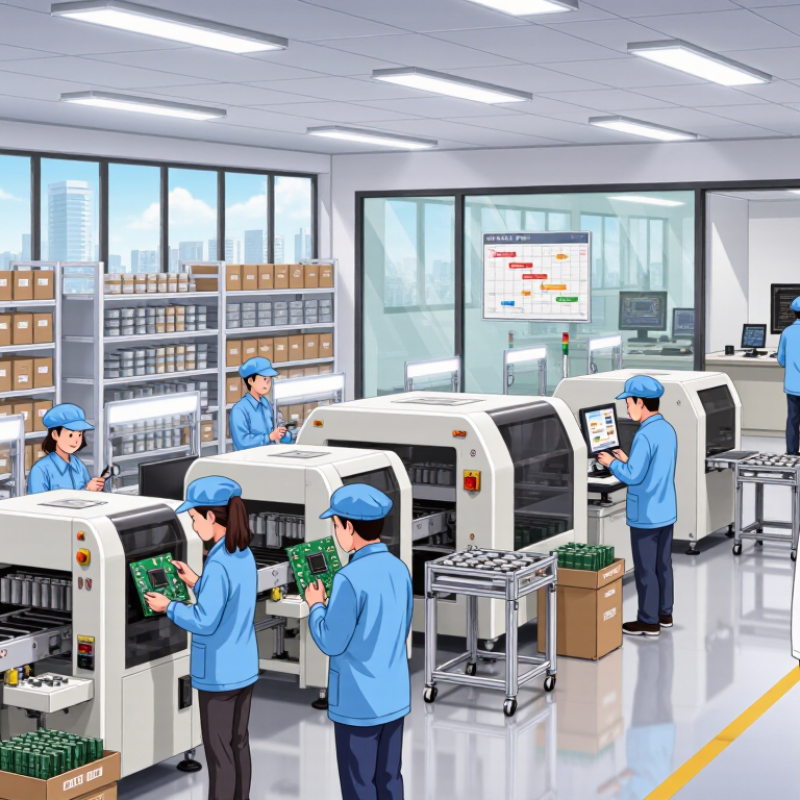
Who Is the Top Electronic Component Assembler in China?

Definition and Role of an Electronic Component Assembler

An electronic component assembler is a manufacturing partner that installs and connects electronic parts on circuit boards or within finished modules. The work may include placing resistors, chips, connectors, and capacitors, then soldering them to specified locations. It is more than putting parts in the right spots. Assemblers interpret bills of materials, assembly drawings, and process instructions, while keeping components traceable through production.

In China, an assembler may support prototype builds, small batches, or high-volume production. Typical checks include verifying component values, inspecting solder joints under magnification, and testing electrical connections. A misplaced connector can stop a device from fitting its enclosure. A weak solder joint may pass a quick visual check but fail after vibration or repeated use. Small details matter. Clear communication about tolerances and inspection criteria helps prevent avoidable rework.

A reliable assembler documents how work is performed and responds when defects appear, rather than treating inspection as a final formality. Buyers can review sample builds, process records, and test methods before choosing a supplier. Still, a polished sample does not prove that every production run will be consistent. That is worth remembering. Even a capable process can miss a defect, so ongoing checks and honest reporting remain essential.

Who Is the Top Electronic Component Assembler in China? – Definition and Role of an Electronic Component Assembler

Dimension What an Electronic Component Assembler Does How to Evaluate Capability Relevant Evidence or Metrics
Definition Combines electronic components and materials into subassemblies or finished electronic products according to engineering specifications. Confirm whether the supplier’s services match the product’s assembly complexity and production stage. Documented process scope, product types, and approved manufacturing procedures.
PCB assembly Mounts components onto printed circuit boards using processes such as surface-mount technology (SMT) and through-hole assembly. Review process controls for component placement, soldering, inspection, and rework. Inspection records, process instructions, and applicable workmanship requirements, such as IPC standards when specified by the customer.
Mechanical and cable assembly May integrate circuit boards with enclosures, connectors, wiring harnesses, and other mechanical parts. Assess assembly instructions, tooling, connector handling, and control of configuration changes. Assembly travelers, wiring or connection checks, and configuration records.
Quality control Uses inspection and testing to identify defects and verify that assemblies meet defined requirements. Check whether inspection methods are appropriate to the product and whether nonconformities are tracked to closure. Incoming, in-process, and final inspection records; test results; corrective-action documentation.
Traceability Maintains records that can link materials, production batches, and inspection results to an assembled product. Verify the level of traceability required for the product and the customer’s supply-chain obligations. Lot or serial records, material documentation, and production history where required.
Supply-chain coordination Coordinates component sourcing, material availability, production planning, and handling of substitutions. Review how shortages, obsolete parts, and proposed component changes are communicated and approved. Approved supplier controls, change notifications, and documented customer approvals for substitutions.
Testing and validation Can perform or coordinate electrical, functional, or other specified tests on assemblies. Match test coverage to the product’s requirements and confirm that test equipment is maintained and calibrated as applicable. Test plans, acceptance criteria, equipment records, and retained test results.
Standards and compliance Works to applicable customer, product, and regulatory requirements; obligations vary by product and destination market. Ask which standards and certifications apply to the specific facility, product, and requested scope. Current certificates and audit records that can be independently verified; compliance documentation for the product where applicable.
Production capacity Plans labor, equipment, materials, and production schedules to support agreed order volumes. Compare demonstrated capacity and lead times with the required ramp-up plan and forecast. Capacity plans, delivery performance records, and documented production schedules.
Supplier selection A capable assembler is one that can consistently meet the buyer’s technical, quality, delivery, and compliance requirements. Use a documented assessment rather than relying on a general “top” ranking; validate claims through audits, samples, and references. Technical review, sample evaluation, quality-system audit, delivery history, and total-cost assessment.

Criteria for Evaluating Chinese Component Assemblers

Choosing a top electronic component assembler in China starts with fit, not a polished brochure. A capable partner should explain how it controls incoming parts, solder paste, placement accuracy, and reflow profiles. Ask for recent yield data, defect categories, and corrective-action records from comparable production runs. Numbers matter. So does the explanation behind them. During a factory review, inspect line changeovers, component storage labels, and how operators isolate questionable lots. These details show whether procedures work on an ordinary Tuesday, not only during an audit. An impressive certificate helps, but it cannot replace consistent process evidence.

Assess engineering support before volume begins. Can engineers review a bill of materials, flag obsolete parts, and suggest test points without overpromising? Check traceability from supplier lot to finished assembly, plus retention of inspection and test records. For boards with fine-pitch packages, request examples of inspection coverage and rework limits. Compare lead-time promises with actual capacity, subcontracting controls, and plans for sudden shortages. Clear communication matters. A concise response that names risks is often more useful than instant reassurance. I would also request a pilot build and review its defects together. No assembler is flawless; vague answers, however, deserve a second look.

Leading Assemblers in China and Their Market Positions

China’s assembler market is better understood by capability tiers than by one league table. The Ministry of Industry and Information Technology reported 15.1 trillion yuan in operating revenue for the country’s electronic information manufacturing sector in 2023. That figure covers the wider sector, not contract assembly alone. It shows the depth of the supplier ecosystem, but cannot identify a single top assembler.

At the global level, Manufacturing Market Insider’s 2024 Top 50 EMS report put the listed providers’ combined 2023 revenue at about US$416 billion. Chinese operations compete across high-volume consumer devices, automotive electronics, and industrial control, with positions shaped by yield, delivery speed, and engineering support. Scale matters. A large plant can place components quickly across multiple production lines; smaller specialist facilities may handle complex, lower-volume builds with tighter process control. Buyers should compare defect rates, audit results, traceability, and capacity utilization—not revenue alone. Rankings can mislead. Public reports rarely separate mainland assembly revenue cleanly from global group sales, so market-share claims deserve scrutiny. A factory tour can reveal practical details, such as whether inspection stations catch solder defects before boards move to final testing.

Manufacturing Capabilities, Quality Systems, and Industry Expertise

Who is the top electronic component assembler in China? The answer depends on how capability is measured. The World Bank’s World Development Indicators place China’s manufacturing value added at roughly 29% of the global total in 2023. That scale supports a deep supplier base, but it does not prove that any single assembler is best. Buyers should examine production records, engineering support, and performance on comparable products.

Manufacturing capability shows up on the factory floor. Ask how the team handles component traceability, solder-paste inspection, automated optical inspection, and functional testing. Can it manage a design revision without mixing old and new parts? Can it explain yield losses with actual process data? Small details matter. A clean production line is reassuring, but consistent records matter more.

Quality systems need the same scrutiny. The ISO Survey 2023 reports more than 1.2 million ISO 9001 certificates worldwide. Certification signals a documented management system; it does not guarantee low defect rates. That distinction is easy to overlook. I would also review corrective-action reports, audit findings, and delivery history before judging an assembler’s industry expertise. A supplier may be excellent at high-volume consumer products yet less practiced with tight-tolerance industrial assemblies. The best choice is the one whose verified process experience matches the product—not the one with the boldest claim.

Who Is the Top Electronic Component Assembler in China?

Manufacturing Capabilities, Quality Systems, and Industry Expertise

Nominal body footprint areas are calculated from commonly used imperial package dimensions: 0201 (0.6 × 0.3 mm), 01005 (0.4 × 0.2 mm), and 008004 (0.2 × 0.1 mm). Handling smaller components is one indicator of assembly capability, not a standalone supplier ranking. Compare documented placement limits, inspection and process controls, quality certifications, traceability, and engineering support when evaluating assemblers.

How to Identify the Right Assembler for a Project

Choosing an electronic component assembler in China starts with process fit, not the lowest quote. Ask for recent examples involving similar components, board density, and production volumes. Then review its inspection plan: incoming-material checks, solder-paste control, optical inspection, and documented rework. Can the team trace a component lot from receipt to finished unit? Small gaps here can become costly later.

Capacity claims need evidence. Request a sample build, process records, and a clear explanation of how defects are handled.

Deloitte and the Manufacturers Alliance for Productivity and Innovation reported in their 2019 Smart Factory study that

86% of surveyed manufacturing executives expected smart-factory initiatives to drive competitiveness within five years.

That is a broad industry survey, not proof that any one assembler performs well. Ask how digital records support real decisions, such as stopping a line after repeated solder defects. Visit the production floor if possible. Listen to how engineers discuss a failed prototype; polished slides reveal less.

I would still leave room for doubt: a strong pilot does not guarantee stable volume output. Compare communication, change control, and yield across several builds before committing.

Powder Coat Booths

For those larger-sized parts, or smaller quantity runs, we have 2 independent powder coat booths and ovens. The quality, durability and affordability of today’s powder coating finishes make this the process of choice for world-class companies.

Powder coating advantages over other forms of coating are many. Materials used in the Powder coating process can be metals and non-metals that come in a multitude of thicknesses, textures, colors, etc. Another of Powder coating’s biggest advantages over conventional coatings is its ability to create finishes in many different textures. Powder Coating Booths allow us the ability to apply these advantages to large products.

Wet Paint Line

Tri-State Fabricators runs a full-service conveyor line for painting. Wet painting can provide protection or decoration to many different part styles. From start to finish, every project is easier to undergo random and point-based inspection by our skilled painting team.

Advantages to our Wet Paint Line are these lines start with product prep and ends with a thorough inspection of a high quality finished product. Our ability to complete large and small projects with a superior finish and doing so in a timely and economical fashion. This passes along the savings in production to our customers. When powder coating ins not an option, our Wet Paint Line gets the job done right the first time.

Wet Paint Booths

When the parts get big and heavy we roll-out our custom paint racks and oversize booth. By utilizing our partnerships with all the major paint brands, we can match virtually any color with wet paint.

The advantages of having access to a Wet Paint Booth are many. Large projects of many different shapes can be loaded into the booth. The Wet Paint Booth offers an environment that is much more controlled than a typical parts painting operation.

Not only are they used because of their controlled environment, but they’re are also advantageous when it comes to applying paint to parts that are needed in industries that require specialty coatings such as medical, aerospace, etc.

Military CARC

Our military forces have some very high standards when it comes to the finish of their vehicles and equipment. From the first pre-treatment step to final coat, it takes a great deal of knowledge and experience to protect the men and women of our armed forces. They deserve only the best, and Tri-State Fabricators provides it.

All of our processes are closely monitored by our staff and management teams. Both of which are highly trained in the processes of metal fabrication and finishing. Tri-State Fabricators’ goal is to always fully satisfy each and every customer, including the military. We will always put a 110% into what we do.

Glass-Bead Blasting

Abrasive media blasting is an excellent way to remove old paint, rust, and increase the paint/powder adhesion. Glass beads produce a much smoother and brighter finish than angular abrasives; leaving the part clean yet without any dimensional change. Chemically inert and environmentally friendly, we can recycle our beads approximately 30 times; making them a more preferred method of metal cleaning or surface finishing.

Advantages to Glass Bead Blasting are many. Glass bead blast media is used when a project is needing rough surfaces need to become smooth for applications of coatings such as paint. It is typically used to clean paint and rust from a product surface without deforming the surface it is being used on. Overall, compared to many other blasting media, Glass Bead Blasting is a very economical choice and those savings are always passed on to our customers.

Part Washing

Tri-State Fabricators utilize a zinc phosphate wash to clean and etch the material to ensure the best paint adhesion possible. The unique design of our 3-stage wash system does the work like a 5-stage. From Cleaning and rinsing to conversion coating and post-treatment, Our Part Washing process is a complete service and works throughout the fabrication service and the finishing service.

Along with the previously mentioned benefits, Curing is a vital chemical reaction that leaves the product finish hard and relatively safe from mild abrasion and aggressive corrosion. This process can be done in more than one way; ambient air-dry or in curing ovens at temps that exceed 240°.

Burn-Off Oven

From fixing paint mistakes (someone else’s of course) to simply cleaning our paint line hooks, our burn-off oven is put to good use. After a quick burn-off, a little clean up, and a fresh coat of paint, your parts will look better than new.

Why does our Burn-Off Oven work so well? Because super heating the air around parts turns the materials into ashes. From paint and powder coatings to rubber and machining oils, high temps do the job without degrading the integrity of the part.

Masking

Masking is a vital part of producing high quality products. We have die-cut masking patterns to protect machined surfaces as well as a wide range of plugs and caps to protect threaded holes and bolts. We provide permanent and temporary masking.

Masking allows the selected sections of a product to be protected from a fabrication or finishing service. This can be with both chemicals when etching and tapes, paints when only finishing just a section of the product. Masking is great in aiding the customization process of a project.

Screen Printing

Screen printing is a photographic process that transfers artwork onto a porous nylon screen which allows colored ink to flow through the screen and be deposited on an aluminum or plastic component. We can generally have just about any design created onto a screen for your parts.

Some of the advantages of Screen Printing are, brand recognition for your business displaying on your products, assembly instructions, product warnings/hazards, etc. Tri-State Fabricators produces Screen Printing of the highest quality so you know it’s durable.

Metal Finishing

Metal Finishing is the art of treating the exterior portion of product, often metal but can also be made of other materials, so that the surface is clean and free of any debris. Then the process of applying coats or either paint of powder coat takes place. This coating process improves the quality of the product in both appearance and resistance to wear and corrosion.

Tri-State Fabricators, Inc., understands that a project typically isn’t complete until a high-quality finish has been added to your product. This is why our painting and powder coating teams continuously inspect the products throughout the Metal Finishing process.


