


Top Electromagnetic Wire Manufacturers Worldwide?

Choosing a leading Electromagnetic Wire manufacturer is not just a price comparison. Wire sits inside motors, transformers, generators, and other equipment, where small differences can affect heat management and long-term performance. A specification sheet may look reassuring. The real test is how consistently the wire performs in production.

Michael Faraday, the pioneering scientist whose work shaped the study of electromagnetism, wrote, “Nothing is too wonderful to be true, if it be consistent with the laws of nature.” His words offer a useful lens for this industry: innovation matters, but measurable performance matters more. Buyers should examine conductor material, insulation type, thermal rating, dimensional tolerance, test records, and the manufacturer’s ability to maintain consistent quality. Ask how samples are inspected. Ask how changes are documented. Details count.

This guide looks at notable manufacturers worldwide and the capabilities that distinguish them, from product range to technical support and supply reliability. No single supplier is best for every application. A company suited to high-volume motor production may not fit a specialist transformer project. That distinction is easy to miss. Rankings also have limits; public information cannot reveal every factory-level practice. Treat comparisons as a starting point, verify claims directly, and match each supplier to the actual operating conditions—not just the brochure.
Top Electromagnetic Wire Manufacturers Worldwide?

Types and Applications of Electromagnetic Wire

Types and Applications of Electromagnetic Wire

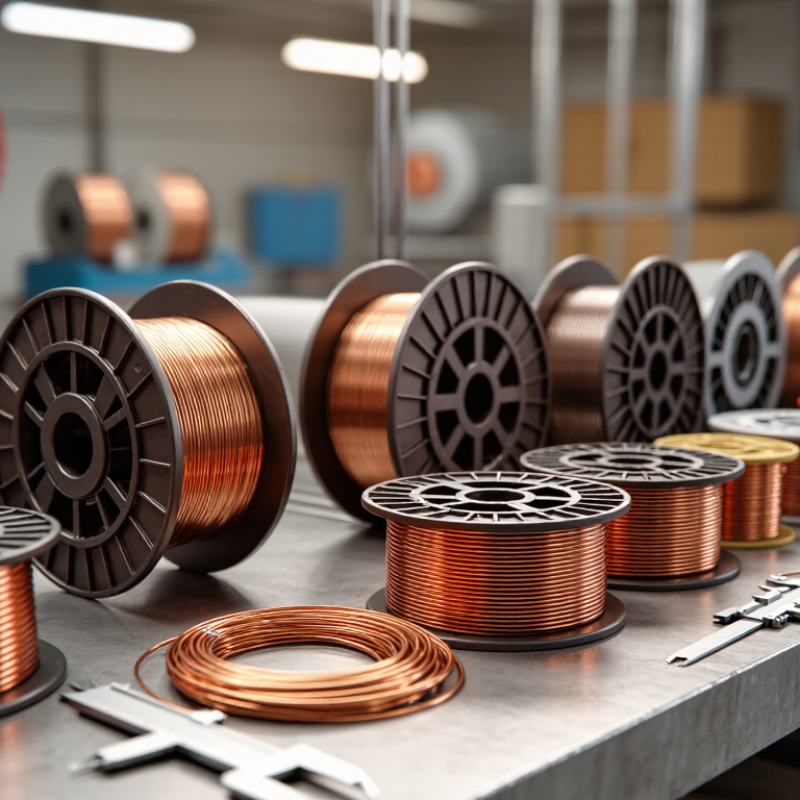
Electromagnetic wire carries current through coils to create or respond to magnetic fields. Most commonly, it is insulated copper or aluminum wire, often called magnet wire. A thin enamel coating helps prevent neighboring turns from shorting while keeping the coil compact. Copper offers strong conductivity and is widely used in motors, transformers, and inductors. Aluminum is lighter, though its electrical resistance differs, so designs may need adjustment.

The wire may be round or rectangular. Round wire is flexible and suits many compact coils. Rectangular wire can fill winding space more efficiently, which matters in some larger motors and transformers. Insulation materials vary too. Polyester, polyamide-imide, and polyimide coatings serve different temperature and processing needs. Details matter. A coating that works well in one winding process may not suit another.

Applications range from small relays and speakers to industrial generators and vehicle motors. Engineers typically match wire size, insulation class, and operating temperature to the equipment’s load and cooling conditions. A workshop detail can be revealing: tight bends may scrape enamel and create a hidden failure point. Specifications help, but they do not replace careful handling and testing. Selection is rarely as simple as choosing the thinnest wire.

Top Electromagnetic Wire Manufacturers Worldwide? - Types and Applications of Electromagnetic Wire

Wire Type Typical Conductor Common Insulation or Construction Typical Thermal Class Common Applications Key Selection Consideration
Round copper magnet wire Annealed copper Enamel insulation, such as polyurethane, polyester, or polyesterimide systems Varies by insulation system; common ratings include 130°C, 155°C, and 180°C Motors, transformers, relays, solenoids, generators, and ignition coils Compare conductor size, insulation build, voltage requirements, winding space, and thermal rating.
Rectangular copper magnet wire Annealed copper with a rectangular or square cross-section Enamel insulation, often with an additional insulating wrap in some designs Depends on the complete insulation system; ratings commonly range from 155°C to 220°C Traction motors, industrial motors, large transformers, and high-density windings Offers efficient slot or coil-pack use; bend radius and insulation protection are important during winding.
Aluminum magnet wire Annealed electrical-grade aluminum Enamel insulation selected for the application and operating environment Set by the insulation system; may include commonly used classes such as 155°C or 180°C Distribution transformers, some motors, and equipment where reduced conductor mass is useful Aluminum has lower electrical conductivity than copper, so conductor dimensions and connection methods need appropriate design.
High-temperature magnet wire Usually copper; aluminum is available for selected designs Higher-temperature systems may use polyesterimide with a polyamide-imide overcoat or polyimide film System-dependent; common insulation classes include 200°C, 220°C, and 240°C High-temperature motors, aerospace and transport equipment, and specialized electrical machinery Confirm the rating of the complete insulation system and its compatibility with heat, chemicals, and processing conditions.
Self-bonding magnet wire Usually round copper; other conductor formats may be available Base enamel with an outer bonding layer activated by heat or an approved solvent process Depends on the base insulation and bonding layer; specified by the particular wire grade Compact coils, miniature motors, sensors, and components where a self-supporting winding is useful Bonding activation conditions and finished-coil strength must suit the winding process and end-use environment.
Litz wire Many individually insulated, fine copper strands, usually twisted or bundled Individual strand enamel; an outer serving or jacket may also be used Depends on the strand insulation and any outer covering High-frequency transformers, inductors, wireless power systems, and radio-frequency components Strand count, strand diameter, construction, and operating frequency affect AC losses and flexibility.
Heavy-build enamelled wire Usually copper Enamel insulation applied in a thicker build than a comparable standard-build wire Depends on the selected enamel system and wire specification Windings requiring enhanced abrasion resistance or additional insulation build, including some motor and coil designs Increased insulation thickness can affect winding space and finished-coil dimensions.

Note: Thermal class refers to the temperature rating of a qualified insulation system; it is not, by itself, a guaranteed continuous operating temperature for the finished equipment. Actual suitability depends on the wire specification, winding design, manufacturing process, and applicable standards.


How Manufacturers Are Evaluated

Evaluating leading electromagnetic wire manufacturers requires more than comparing catalogues. A credible review checks whether stated conductor sizes, insulation types, and thermal ratings match documented specifications. Buyers can examine sample certificates, test methods, and batch records. Look for clear results on dimensions, insulation integrity, and electrical performance. Useful evidence is specific. A report should identify the tested lot, measurement conditions, and acceptance limits. Reviewers should also ask how production changes are controlled. A supplier may have modern equipment, yet weak records can make quality difficult to verify. Small gaps matter.

Manufacturing capability is only part of the assessment. Ask how operators monitor coating thickness, curing conditions, and defects during production. Consistent checks reduce the chance of thin spots or uneven insulation appearing in finished wire. Request details about traceability, complaint handling, and corrective actions. Delivery history and technical support matter too, especially when a winding design needs a precise wire gauge or coating profile. Independent audits can add confidence, but their scope and date should be checked. Price alone offers little insight. One weakness: published test data may not reflect every production run. Comparisons should therefore weigh evidence, repeatability, and fit for the buyer’s application, not just polished claims.

Leading Electromagnetic Wire Manufacturers Worldwide

Leading electromagnetic wire manufacturers worldwide serve industries that depend on reliable coils, motors, transformers, and sensors. Their work involves more than drawing copper or aluminum to a precise diameter. They apply insulation, control winding consistency, and test each production batch. Small defects matter. A thin enamel spot can cause failure after repeated heating and cooling.

Strong manufacturers provide clear specifications for conductor size, insulation type, thermal class, and allowable tolerances. They can explain how wire performs under vibration, moisture, or elevated temperatures. Useful quality records may include dimensional checks, electrical tests, and traceability by batch. Ask how production changes are controlled. A polished data sheet is not the whole story.

Global leaders often combine broad capacity with specialized lines for fine wire, rectangular conductors, or demanding insulation systems. Yet no supplier is best at everything. A factory built for large-volume motor wire may not suit a low-volume sensor project. That distinction is easy to overlook. Buyers should compare sample performance, delivery consistency, technical support, and testing methods against the actual application. One detail still deserves reflection: tighter tolerances can improve winding, but they may raise cost without helping every design.

Products, Technologies, and Production Capabilities

Electromagnetic wire manufacturers produce round and rectangular conductors for motors, transformers, generators, and other electrical equipment. Common products use copper or aluminum, with insulation selected for heat, voltage, abrasion, and chemical exposure. Enamel-coated wire suits compact windings, while paper, glass-fiber, or other wrapped insulation may serve larger equipment. Small details matter. A slight change in conductor dimensions can affect winding fit and electrical performance.

Production typically combines wire drawing, annealing, insulation coating or wrapping, and controlled curing. Manufacturers monitor dimensions, coating consistency, adhesion, and dielectric strength during production. Testing may include spark detection and breakdown-voltage checks, with results recorded for traceability. These controls are useful, but no single test captures every condition a wire will face in service. Application-specific trials still matter.

Production capability is more than annual tonnage. Buyers should check the available conductor sizes, insulation systems, spool formats, order quantities, and ability to maintain consistent output across batches. A capable supplier can explain how its process handles a requested thermal class or tight dimensional tolerance, and provide relevant test documentation. Lead times and sample availability also deserve attention. A datasheet can look convincing; actual winding and thermal performance may differ, so qualification should reflect the equipment’s real operating conditions.

Factors to Consider When Comparing Suppliers

Application & Specifications When comparing electromagnetic wire suppliers, begin with the application, not the sales brochure. Check conductor material, diameter tolerance, insulation type, and thermal rating against your design requirements. A small variation in wire diameter can affect winding fit and electrical performance. Ask for technical data sheets and test records, including dielectric-strength and resistance results. Ask for evidence.

Quality systems matter, but documents alone do not prove consistent production. Request a sample from a normal production lot and inspect its coating, spool condition, and labeling. Confirm that the supplier can trace batches and explain how it handles out-of-spec material. Details matter. Also compare production capacity, minimum order quantities, delivery windows, and how changes are communicated. A low quotation may exclude packaging, testing, or longer lead times, so compare the full supply terms.

Support & Validation Technical support is easy to overlook until a winding process changes. Ask who will answer questions about insulation damage, solderability, or storage conditions, and how quickly they respond. If possible, test the wire on your own equipment before placing a large order. One sample cannot reveal every production issue. Still, it gives useful evidence. Supplier selection is rarely tidy; a strong scorecard may miss a practical concern, such as inconsistent spool tension. Keep the criteria specific, and record what remains uncertain.

Powder Coat Booths

For those larger-sized parts, or smaller quantity runs, we have 2 independent powder coat booths and ovens. The quality, durability and affordability of today’s powder coating finishes make this the process of choice for world-class companies.

Powder coating advantages over other forms of coating are many. Materials used in the Powder coating process can be metals and non-metals that come in a multitude of thicknesses, textures, colors, etc. Another of Powder coating’s biggest advantages over conventional coatings is its ability to create finishes in many different textures. Powder Coating Booths allow us the ability to apply these advantages to large products.

Wet Paint Line

Tri-State Fabricators runs a full-service conveyor line for painting. Wet painting can provide protection or decoration to many different part styles. From start to finish, every project is easier to undergo random and point-based inspection by our skilled painting team.

Advantages to our Wet Paint Line are these lines start with product prep and ends with a thorough inspection of a high quality finished product. Our ability to complete large and small projects with a superior finish and doing so in a timely and economical fashion. This passes along the savings in production to our customers. When powder coating ins not an option, our Wet Paint Line gets the job done right the first time.

Wet Paint Booths

When the parts get big and heavy we roll-out our custom paint racks and oversize booth. By utilizing our partnerships with all the major paint brands, we can match virtually any color with wet paint.

The advantages of having access to a Wet Paint Booth are many. Large projects of many different shapes can be loaded into the booth. The Wet Paint Booth offers an environment that is much more controlled than a typical parts painting operation.

Not only are they used because of their controlled environment, but they’re are also advantageous when it comes to applying paint to parts that are needed in industries that require specialty coatings such as medical, aerospace, etc.

Military CARC

Our military forces have some very high standards when it comes to the finish of their vehicles and equipment. From the first pre-treatment step to final coat, it takes a great deal of knowledge and experience to protect the men and women of our armed forces. They deserve only the best, and Tri-State Fabricators provides it.

All of our processes are closely monitored by our staff and management teams. Both of which are highly trained in the processes of metal fabrication and finishing. Tri-State Fabricators’ goal is to always fully satisfy each and every customer, including the military. We will always put a 110% into what we do.

Glass-Bead Blasting

Abrasive media blasting is an excellent way to remove old paint, rust, and increase the paint/powder adhesion. Glass beads produce a much smoother and brighter finish than angular abrasives; leaving the part clean yet without any dimensional change. Chemically inert and environmentally friendly, we can recycle our beads approximately 30 times; making them a more preferred method of metal cleaning or surface finishing.

Advantages to Glass Bead Blasting are many. Glass bead blast media is used when a project is needing rough surfaces need to become smooth for applications of coatings such as paint. It is typically used to clean paint and rust from a product surface without deforming the surface it is being used on. Overall, compared to many other blasting media, Glass Bead Blasting is a very economical choice and those savings are always passed on to our customers.

Part Washing

Tri-State Fabricators utilize a zinc phosphate wash to clean and etch the material to ensure the best paint adhesion possible. The unique design of our 3-stage wash system does the work like a 5-stage. From Cleaning and rinsing to conversion coating and post-treatment, Our Part Washing process is a complete service and works throughout the fabrication service and the finishing service.

Along with the previously mentioned benefits, Curing is a vital chemical reaction that leaves the product finish hard and relatively safe from mild abrasion and aggressive corrosion. This process can be done in more than one way; ambient air-dry or in curing ovens at temps that exceed 240°.

Burn-Off Oven

From fixing paint mistakes (someone else’s of course) to simply cleaning our paint line hooks, our burn-off oven is put to good use. After a quick burn-off, a little clean up, and a fresh coat of paint, your parts will look better than new.

Why does our Burn-Off Oven work so well? Because super heating the air around parts turns the materials into ashes. From paint and powder coatings to rubber and machining oils, high temps do the job without degrading the integrity of the part.

Masking

Masking is a vital part of producing high quality products. We have die-cut masking patterns to protect machined surfaces as well as a wide range of plugs and caps to protect threaded holes and bolts. We provide permanent and temporary masking.

Masking allows the selected sections of a product to be protected from a fabrication or finishing service. This can be with both chemicals when etching and tapes, paints when only finishing just a section of the product. Masking is great in aiding the customization process of a project.

Screen Printing

Screen printing is a photographic process that transfers artwork onto a porous nylon screen which allows colored ink to flow through the screen and be deposited on an aluminum or plastic component. We can generally have just about any design created onto a screen for your parts.

Some of the advantages of Screen Printing are, brand recognition for your business displaying on your products, assembly instructions, product warnings/hazards, etc. Tri-State Fabricators produces Screen Printing of the highest quality so you know it’s durable.

Metal Finishing

Metal Finishing is the art of treating the exterior portion of product, often metal but can also be made of other materials, so that the surface is clean and free of any debris. Then the process of applying coats or either paint of powder coat takes place. This coating process improves the quality of the product in both appearance and resistance to wear and corrosion.

Tri-State Fabricators, Inc., understands that a project typically isn’t complete until a high-quality finish has been added to your product. This is why our painting and powder coating teams continuously inspect the products throughout the Metal Finishing process.
