


Choosing the right electric nursing bed can affect patient comfort, caregiver safety, and daily operating costs. Global buyers often compare prices first, but price alone rarely shows the full value. A dependable bed should provide stable height adjustment, smooth back and leg movement, strong side rails, and easy-to-clean surfaces. It should also suit the room, mattress size, patient weight, and available power supply.
This guide reviews ten electric nursing beds through practical buying criteria. These include frame durability, motor performance, control design, emergency functions, caster quality, warranty terms, and supplier support. A quiet actuator may matter in a shared ward. A lockable caster can prevent unwanted movement during transfers. A clear handset can also reduce mistakes for older users and busy caregivers.
Details matter.
The evaluation draws on product specifications, manufacturer documentation, user-focused features, and common healthcare procurement concerns. Buyers should verify certifications, voltage compatibility, spare-part availability, and after-sales service before placing an international order. Requirements can differ between hospitals, home-care settings, and long-term care facilities. No model fits every environment perfectly. Even highly rated beds may have limits, such as slow delivery, complex assembly, or costly replacement parts.
This list is therefore a practical starting point, not a final purchasing decision. Buyers should request samples, inspect key components, and confirm performance claims directly with qualified suppliers. A careful comparison can reduce avoidable risks and help each facility select an electric nursing bed that is safe, maintainable, and appropriate for real-world care.
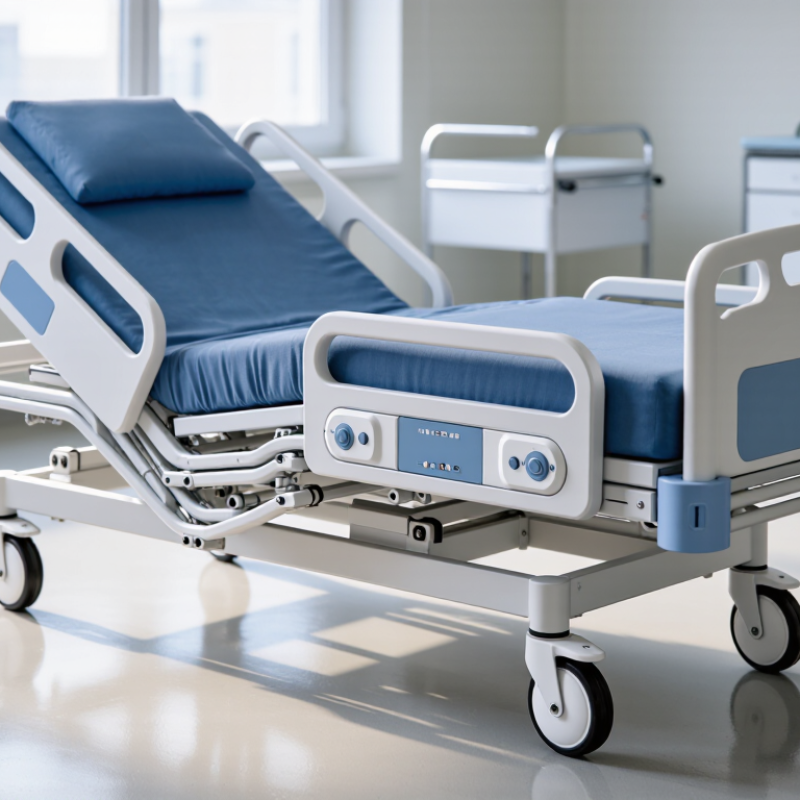
Electric nursing beds are powered care beds that adjust the backrest, leg section, or overall height. A handheld control usually operates these movements. Some models also include side rails, lockable casters, and battery backup.
They are designed for people who spend many hours in bed. This may include older adults, patients recovering from surgery, and individuals with limited mobility. Caregivers can raise the bed before repositioning, changing clothing, or assisting with transfers. A lower height may reduce fall risks during entry and exit. An elevated backrest can make eating or breathing more comfortable, but it cannot replace medical advice.
In home-care assessments, practical details often matter more than extra functions. Measure the bedroom doorway, check floor space, and confirm that the mattress fits securely. The control should have large, readable buttons. A quiet motor is helpful at night. Side rails need careful assessment because they may create entrapment risks for some users. Ask a qualified clinician or occupational therapist to review the person’s strength, cognition, and transfer ability. Power failures also deserve attention. A backup battery or manual release may prevent unnecessary distress.
These beds are not automatically suitable for every household. They can be expensive, heavy, and difficult to clean around. Families sometimes focus on remote controls and overlook caregiver posture. That choice may need reconsideration. A safer bed is useful only when the user, room, mattress, and care routine work together.

Top 10 Electric Nursing Beds for Global Buyers?
Key Features to Compare Before Buying
Global demand is becoming more care-focused. The WHO estimates that 2.5 billion people need assistive products, rising beyond 3.5 billion by 2050. The UN World Social Report 2023 also projects that people aged 65 and older will reach 16% of the global population by 2050. These figures make nursing-bed selection a practical safety decision, not only a purchasing exercise.
Compare the electric bed’s height range, backrest angle, knee elevation, and emergency lowering speed. A low position can reduce fall impact, while a higher position helps caregivers avoid back strain. Check the safe working load, mattress-platform size, castor locks, and side-rail gaps. Electrical safety should align with IEC 60601-2-52, while risk controls should follow ISO 14971 principles. Battery backup matters during outages. Test it.
Cleaning details are often underestimated. Look for sealed controls, smooth surfaces, removable components, and materials that tolerate repeated disinfecting. Ask for noise measurements, cycle testing, and service intervals, not just attractive specifications. A five-year warranty sounds useful, but local technicians and spare-part access matter more. I have seen buyers focus on motors and overlook mattress compatibility. That mistake can affect pressure care, comfort, and daily transfers. Recheck every measurement.
Top 10 Electric Nursing Beds for Global Buyers
Global demand for home-care equipment is becoming more practical and urgent. The WHO and UNICEF Global Report on Assistive Technology estimates that more than 2.5 billion people need assistive products today. This figure may exceed 3.5 billion by 2050. Electric nursing beds can support safer repositioning, reduced caregiver strain, and better sleep comfort. However, convenience alone should not decide a purchase.
A reliable Top 10 comparison should examine adjustable height, backrest elevation, knee movement, side-rail design, mattress compatibility, emergency lowering, and battery backup. Check the working load, not only the product weight. A bed rated for 180 kilograms may become less suitable with accessories and movement. IEC 60601-2-52 provides internationally recognized safety requirements for medical beds, while ISO 14971 supports risk-management practices for medical devices. Buyers should request test reports and local service details.
Small details matter. A quiet motor helps at night. A strong caster lock prevents unwanted movement. Washable surfaces simplify daily cleaning. According to the WHO report, access and affordability remain major barriers, especially in low-resource settings. Therefore, the most expensive bed is not automatically the best choice. I would not pretend that every global ranking is completely objective. Regional voltage, room size, caregiver skill, and spare-parts access can change the result. A careful buyer should measure the doorway first. That step is often missed.
| Rank | Generic Bed Type | Recommended Care Setting | Platform Size | Height Range | Backrest Adjustment | Knee/Leg Adjustment | Safe Working Load | Side Rails | Casters & Brakes | Control & Safety Features | Common Electrical Rating | Typical Compliance Marking |
|---|---|---|---|---|---|---|---|---|---|---|---|---|
| 1 | Four-Section Fully Electric Bed | Home care, hospitals, long-term care | 900 × 2,000 mm | 400–800 mm | 0–70° | 0–35° | 180 kg | Split folding safety rails | 125 mm, central locking | Handset, CPR release, locking handset | 100–240 V AC, 50/60 Hz | CE where applicable |
| 2 | Low-Height Electric Nursing Bed | Fall-risk reduction, home care | 900 × 2,000 mm | 250–650 mm | 0–65° | 0–30° | 160 kg | Full-length or split rails | 125 mm, individual brakes | Low-position function, handset lock | 100–240 V AC, 50/60 Hz | CE where applicable |
| 3 | Heavy-Duty Bariatric Electric Bed | Bariatric care, hospitals, rehabilitation | 1,200 × 2,000 mm | 450–800 mm | 0–65° | 0–35° | 300 kg | Reinforced split rails | 150 mm, central locking | Overload-protected actuators, CPR release | 100–240 V AC, 50/60 Hz | CE where applicable |
| 4 | Electric ICU-Style Four-Section Bed | Critical care, acute hospitals | 1,000 × 2,000 mm | 450–800 mm | 0–70° | 0–40° | 220 kg | Four-section protective rails | 150 mm, central locking | CPR quick release, Trendelenburg, angle indicators | 100–240 V AC, 50/60 Hz | CE where applicable |
| 5 | Electric Homecare Bed with Mattress Platform | Private homes, community care | 900 × 2,000 mm | 400–750 mm | 0–65° | 0–30° | 165 kg | Detachable half-length rails | 100 mm, individual brakes | Wired handset, battery backup option | 100–240 V AC, 50/60 Hz | CE where applicable |
| 6 | Electric Five-Function Care Bed | Hospitals, nursing homes, rehabilitation | 900 × 2,000 mm | 400–800 mm | 0–70° | 0–35° | 180 kg | Split rails with protective panels | 125 mm, central locking | Height, back, knee, tilt and Trendelenburg controls | 100–240 V AC, 50/60 Hz | CE where applicable |
| 7 | Electric Pediatric Nursing Bed | Pediatric wards, children's rehabilitation | 800 × 1,800 mm | 450–750 mm | 0–65° | 0–30° | 100 kg | High transparent protective rails | 100 mm, individual brakes | Pinch-point protection, lockable handset | 100–240 V AC, 50/60 Hz | CE where applicable |
| 8 | Electric Rehabilitation Bed | Rehabilitation centers, assisted living | 900 × 2,000 mm | 400–780 mm | 0–70° | 0–35° | 180 kg | Drop-down split rails | 125 mm, central locking | Height adjustment, chair position, CPR release | 100–240 V AC, 50/60 Hz | CE where applicable |
| 9 | Electric Five-Column Nursing Bed | Premium hospitals, intensive nursing | 1,000 × 2,000 mm | 450–800 mm | 0–70° | 0–40° | 220 kg | Split safety rails with dampers | 150 mm, central locking | Independent tilt, CPR release, angle indicators | 100–240 V AC, 50/60 Hz | CE where applicable |
| 10 | Electric Compact Nursing Bed | Small rooms, home care, assisted living | 850 × 1,900 mm | 350–700 mm | 0–60° | 0–30° | 150 kg | Foldable half-length rails | 100 mm, individual brakes | Compact handset, transport-friendly frame | 100–240 V AC, 50/60 Hz | CE where applicable |
When comparing the top ten electric nursing beds, safety should guide every decision. Choose a stable frame, locking casters, rounded edges, and an emergency lowering function. Guardrails must reduce falls without creating entrapment points. Check the hand control for clear symbols and a long, protected cable. A qualified clinician or trained caregiver should assess the user’s mobility, weight, and transfer needs. One bed cannot suit every patient.
Comfort is more than a soft mattress. Look for adjustable back, leg, and height positions that support breathing, eating, and safer transfers. A pressure-redistributing mattress may help users who remain in bed for long periods. Breathable, washable covers are practical in warm or humid regions. Noise also matters. A quiet motor can protect sleep, although “silent” claims deserve careful testing.
Tips: Ask for load-test documents, wiring diagrams, cleaning instructions, and spare-part availability. Confirm voltage compatibility before ordering internationally. Inspect welds, actuator movement, and brake performance during delivery. Keep the motor dry. Do not ignore unusual sounds. A maintenance log helps, but it is easy to forget during busy shifts. Review it anyway. Local service access may matter more than a lower purchase price, especially when replacement parts cross borders. Check applicable medical-device and electrical requirements in the destination market.
For global buyers, an electric nursing bed is more than a powered frame. It is a regulated product whose requirements change by destination. Confirm whether the bed is classified as medical equipment in each market. Check applicable electrical safety, electromagnetic compatibility, and bed-specific standards. IEC 60601-2-52 may be relevant, but local adoption and testing rules still matter. Request current certificates, test reports, risk files, and declarations before comparing prices. Paperwork matters.
A reliable supplier should explain design limits in plain language. Ask for safe working load, lifting range, backrest angle, side-rail clearance, and duty-cycle data. Review tests for motors, casters, brakes, handset controls, and emergency lowering. A sample inspection should include noise, pinch points, mattress fit, and battery behavior during power loss. Visit the factory when possible. Check calibration records, incoming inspection, traceability, complaint handling, and corrective actions. A clean showroom proves little.
International purchasing also depends on service details. Confirm spare-part availability, multilingual manuals, packaging dimensions, HS classification support, warranty terms, and response times. Ask how control units are updated, if applicable. Verify serial-number tracking from production to shipment. I have seen attractive quotations omit cables, adapters, or replacement actuators. That omission changes the real cost. Supplier evaluation is never perfect; audit evidence can be incomplete, and translated documents may hide technical gaps. Require a pilot order, independent pre-shipment inspection, and written acceptance criteria. Then record every unresolved question.


For those larger-sized parts, or smaller quantity runs, we have 2 independent powder coat booths and ovens. The quality, durability and affordability of today’s powder coating finishes make this the process of choice for world-class companies.
Powder coating advantages over other forms of coating are many. Materials used in the Powder coating process can be metals and non-metals that come in a multitude of thicknesses, textures, colors, etc. Another of Powder coating’s biggest advantages over conventional coatings is its ability to create finishes in many different textures. Powder Coating Booths allow us the ability to apply these advantages to large products.
Tri-State Fabricators runs a full-service conveyor line for painting. Wet painting can provide protection or decoration to many different part styles. From start to finish, every project is easier to undergo random and point-based inspection by our skilled painting team.
Advantages to our Wet Paint Line are these lines start with product prep and ends with a thorough inspection of a high quality finished product. Our ability to complete large and small projects with a superior finish and doing so in a timely and economical fashion. This passes along the savings in production to our customers. When powder coating ins not an option, our Wet Paint Line gets the job done right the first time.
When the parts get big and heavy we roll-out our custom paint racks and oversize booth. By utilizing our partnerships with all the major paint brands, we can match virtually any color with wet paint.
The advantages of having access to a Wet Paint Booth are many. Large projects of many different shapes can be loaded into the booth. The Wet Paint Booth offers an environment that is much more controlled than a typical parts painting operation.
Not only are they used because of their controlled environment, but they’re are also advantageous when it comes to applying paint to parts that are needed in industries that require specialty coatings such as medical, aerospace, etc.
Our military forces have some very high standards when it comes to the finish of their vehicles and equipment. From the first pre-treatment step to final coat, it takes a great deal of knowledge and experience to protect the men and women of our armed forces. They deserve only the best, and Tri-State Fabricators provides it.
All of our processes are closely monitored by our staff and management teams. Both of which are highly trained in the processes of metal fabrication and finishing. Tri-State Fabricators’ goal is to always fully satisfy each and every customer, including the military. We will always put a 110% into what we do.
Abrasive media blasting is an excellent way to remove old paint, rust, and increase the paint/powder adhesion. Glass beads produce a much smoother and brighter finish than angular abrasives; leaving the part clean yet without any dimensional change. Chemically inert and environmentally friendly, we can recycle our beads approximately 30 times; making them a more preferred method of metal cleaning or surface finishing.
Advantages to Glass Bead Blasting are many. Glass bead blast media is used when a project is needing rough surfaces need to become smooth for applications of coatings such as paint. It is typically used to clean paint and rust from a product surface without deforming the surface it is being used on. Overall, compared to many other blasting media, Glass Bead Blasting is a very economical choice and those savings are always passed on to our customers.
Tri-State Fabricators utilize a zinc phosphate wash to clean and etch the material to ensure the best paint adhesion possible. The unique design of our 3-stage wash system does the work like a 5-stage. From Cleaning and rinsing to conversion coating and post-treatment, Our Part Washing process is a complete service and works throughout the fabrication service and the finishing service.
Along with the previously mentioned benefits, Curing is a vital chemical reaction that leaves the product finish hard and relatively safe from mild abrasion and aggressive corrosion. This process can be done in more than one way; ambient air-dry or in curing ovens at temps that exceed 240°.
From fixing paint mistakes (someone else’s of course) to simply cleaning our paint line hooks, our burn-off oven is put to good use. After a quick burn-off, a little clean up, and a fresh coat of paint, your parts will look better than new.
Why does our Burn-Off Oven work so well? Because super heating the air around parts turns the materials into ashes. From paint and powder coatings to rubber and machining oils, high temps do the job without degrading the integrity of the part.
Masking is a vital part of producing high quality products. We have die-cut masking patterns to protect machined surfaces as well as a wide range of plugs and caps to protect threaded holes and bolts. We provide permanent and temporary masking.
Masking allows the selected sections of a product to be protected from a fabrication or finishing service. This can be with both chemicals when etching and tapes, paints when only finishing just a section of the product. Masking is great in aiding the customization process of a project.
Screen printing is a photographic process that transfers artwork onto a porous nylon screen which allows colored ink to flow through the screen and be deposited on an aluminum or plastic component. We can generally have just about any design created onto a screen for your parts.
Some of the advantages of Screen Printing are, brand recognition for your business displaying on your products, assembly instructions, product warnings/hazards, etc. Tri-State Fabricators produces Screen Printing of the highest quality so you know it’s durable.
Metal Finishing is the art of treating the exterior portion of product, often metal but can also be made of other materials, so that the surface is clean and free of any debris. Then the process of applying coats or either paint of powder coat takes place. This coating process improves the quality of the product in both appearance and resistance to wear and corrosion.
Tri-State Fabricators, Inc., understands that a project typically isn’t complete until a high-quality finish has been added to your product. This is why our painting and powder coating teams continuously inspect the products throughout the Metal Finishing process.

