


Top 10 Electric Motorcycle Wheels for Global Buyers

Electric Motorcycle Wheels are often treated as simple replacement parts, but the right choice affects handling, braking, durability, and serviceability. Global buyers face a varied market, from compact urban commuters to heavier motorcycles built for longer journeys. The International Energy Agency’s Global EV Outlook 2024 reports nearly 10 million electric two- and three-wheelers sold worldwide in 2023, representing roughly one-fifth of new sales. That growth makes careful component selection more important.

This guide compares ten wheel options through practical buying considerations: rim size, load rating, brake compatibility, hub-motor fit, materials, and access to replacement tires and spokes. A polished product photo tells only part of the story. Buyers should verify measurements against their motorcycle’s specifications and ask suppliers for clear fitment and warranty details. Fit matters. Even similar-looking wheels can differ in axle spacing, mounting points, or brake-disc alignment.

The IEA report provides market context, not a ranking of wheel quality; no single source can establish that every listed wheel suits every rider. Product availability and specifications may also change by region. That limitation deserves attention. A wheel that performs well on smooth city roads may not be the best choice for rough surfaces or frequent heavy loads. The selections below are intended as a starting point for comparing options, not a substitute for model-specific verification or advice from a qualified technician. Compare the details before buying.
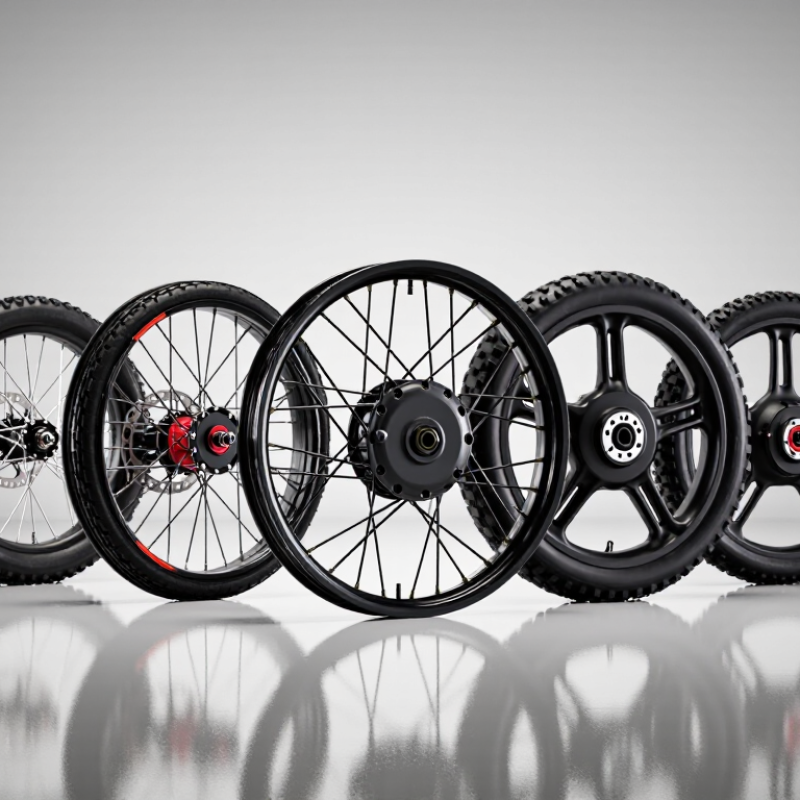
Top 10 Electric Motorcycle Wheels for Global Buyers

What Electric Motorcycle Wheels Are and How They Affect Performance

An electric motorcycle wheel is more than a round frame for a tire. Its assembly typically includes a rim, hub, spokes or a solid structure, and the tire itself. Some models place the motor in the hub; others drive the wheel through a separate motor and transmission. Small details matter. Wheel diameter, width, and total mass influence how the motorcycle responds to bumps, steering inputs, and acceleration.

A lighter wheel can reduce unsprung mass, helping the suspension follow uneven pavement. It may also feel more responsive when changing direction. But lighter is not automatically better. A wheel still needs enough strength for the motorcycle’s weight, braking forces, and intended road use. Tire choice matters just as much: tread, compound, and pressure affect grip, comfort, and rolling resistance. Lower resistance may support range, but no wheel choice can guarantee a specific distance.

For buyers comparing electric motorcycles, check the wheel and tire specifications alongside load ratings and brake compatibility. A wider tire may look reassuring, yet it can change steering feel and may not suit every chassis. Small differences can be hard to judge from a product listing. It is worth asking how replacement tires are sourced and whether the wheel is designed for the motorcycle’s actual motor and braking setup. The trade-off is rarely obvious at a glance.


Key Wheel Specifications Global Buyers Should Compare

Wheel fit is not a styling detail; it affects clearance, handling, and serviceability. The IEA’s Global EV Outlook 2024 estimates nearly 10 million electric two- and three-wheeler sales in 2023, around 15% of global segment sales. More buyers mean more varied designs. Compare rim diameter and width against the tire maker’s approved fitment range. A 17-inch rim alone tells you very little. Check axle diameter, hub width, bearing size, and brake-disc offset; a few millimetres can prevent clean installation. No single number tells enough.

Next, verify tire load and speed markings, using UNECE Regulation No. 75 as a reference for motorcycle tire requirements. Match rated load to the bike’s permitted weight, rider, passenger, and luggage—not just its battery mass. For hub-motor designs, confirm connector routing, axle flats, and torque-arm clearance. For spoke wheels, ask about spoke replacement and rim sealing; for cast wheels, inspect impact-repair guidance. Wheel mass matters, too, but published figures may exclude the tire, disc, or bearings. Ask for the complete assembly weight. I still see specification sheets that omit it. That gap makes comparison harder.

Wheel Materials, Sizes, and Compatibility Across Markets

Electric motorcycle wheels vary across markets, and a familiar size does not guarantee a direct fit. Check rim diameter and width, axle diameter, hub spacing, and brake mounting points before ordering. A few millimeters can affect clearance around the fork, swingarm, or brake caliper.

Material matters, too. Aluminum alloy wheels are relatively light and widely used, while steel can offer practical durability but adds weight. Neither choice is automatically better; load rating, construction quality, and intended road conditions matter. For rough pavement, inspect the wheel’s stated load capacity and ask for test documentation. Small details count.

Sizing labels can be confusing. A tire’s marked diameter is not the same as the wheel’s rim diameter, so compare the manufacturer’s fitment data rather than guessing from appearance. Spoke and cast wheels may also use different hubs, bearings, or brake interfaces. When replacing a wheel, confirm compatibility with the motorcycle’s model year and existing components. I have seen buyers focus on the rim and overlook the axle or sensor location; that mistake can turn a promising purchase into a costly return. Regional measurements and product descriptions are not always consistent, so request a dimensional drawing when specifications seem incomplete.

Top 10 Electric Motorcycle Wheels for Different Riding Needs

Electric motorcycle wheels should match terrain, load, and motor layout—not just appearance. For tight city streets, a compact, lighter wheel can feel easier to turn. A standard commuter setup favors durable rims and readily available tire sizes. For wet roads, prioritize dependable tire grip and inspect tread grooves regularly.

Small details matter.

Long-distance riders may prefer stronger rims and tires with stable profiles. Highway use calls for checking the motorcycle’s specified load and speed ratings. Gravel roads benefit from reinforced wheels and tires with more open tread. Trail riding demands impact resistance, though extra weight can dull steering.

Cargo riders need capacity verified for the complete wheel assembly. For nimble handling, a lighter front wheel may help, provided braking and suspension remain compatible. All-weather riders should consider corrosion-resistant hardware and sealed bearings.

These ten setups serve different priorities, not every rider equally. Check axle dimensions, brake-disc fit, sensor clearance, and hub-motor compatibility before buying. A wheel may fit the frame yet sit out of alignment. Easy to miss. Verify the manufacturer’s specifications, then have a qualified technician inspect the installation. A rugged wheel can feel heavy on a daily commute, while a lightweight option may need gentler use.

Safety, Maintenance, and International Purchasing Considerations

Choosing among the top ten electric motorcycle wheels starts with fit and safety, not appearance. Check rim diameter, width, axle size, bearing dimensions, brake-rotor offset, and any ABS sensor ring. For hub-motor wheels, confirm connector and controller compatibility too. A wheel that looks identical may still shift the brake disc by a few millimeters. That is enough to cause rubbing. The WHO’s Global Status Report on Road Safety 2023 attributes about 21% of road traffic deaths to powered two- and three-wheeler users, a sobering reason to verify load ratings and inspect wheel alignment.

Tips: Before ordering, photograph your existing wheel and measure the axle and rotor position. Ask the seller for the wheel’s rated load, compatible tire sizes, and installation guidance. After fitting, check spoke tension, fasteners, tire pressure, and brake clearance. Recheck them after the first few rides.

For international purchases, request clear specifications, packing details, and written warranty terms before payment. Customs fees, delivery times, and service access can vary by destination; confirm these with the seller and local carrier. The IEA’s Global EV Outlook 2024 reports roughly 10 million electric two- and three-wheelers sold worldwide in 2023, reflecting a fast-growing market with varied vehicle designs. A part listed as “universal” may not be universal in practice. I would treat that label cautiously, especially when wheel dimensions or replacement support are unclear. Keep the invoice and product measurements in case a return is needed.

Top 10 Electric Motorcycle Wheels for Global Buyers — Safety, Maintenance, and International Purchasing Considerations

A reference chart of ten common motorcycle tire-size designations. Rim diameter is taken from the size marking; this is not a popularity ranking or a guarantee of vehicle fitment.

The first number in each tire-size designation indicates nominal section width in millimetres, and the number after the hyphen indicates nominal rim diameter in inches. Before buying internationally, verify the vehicle maker’s approved size, load and speed ratings, rim compatibility, and local requirements. Maintain tires at the specified pressure and inspect them regularly for wear or damage.

Powder Coat Booths

For those larger-sized parts, or smaller quantity runs, we have 2 independent powder coat booths and ovens. The quality, durability and affordability of today’s powder coating finishes make this the process of choice for world-class companies.

Powder coating advantages over other forms of coating are many. Materials used in the Powder coating process can be metals and non-metals that come in a multitude of thicknesses, textures, colors, etc. Another of Powder coating’s biggest advantages over conventional coatings is its ability to create finishes in many different textures. Powder Coating Booths allow us the ability to apply these advantages to large products.

Wet Paint Line

Tri-State Fabricators runs a full-service conveyor line for painting. Wet painting can provide protection or decoration to many different part styles. From start to finish, every project is easier to undergo random and point-based inspection by our skilled painting team.

Advantages to our Wet Paint Line are these lines start with product prep and ends with a thorough inspection of a high quality finished product. Our ability to complete large and small projects with a superior finish and doing so in a timely and economical fashion. This passes along the savings in production to our customers. When powder coating ins not an option, our Wet Paint Line gets the job done right the first time.

Wet Paint Booths

When the parts get big and heavy we roll-out our custom paint racks and oversize booth. By utilizing our partnerships with all the major paint brands, we can match virtually any color with wet paint.

The advantages of having access to a Wet Paint Booth are many. Large projects of many different shapes can be loaded into the booth. The Wet Paint Booth offers an environment that is much more controlled than a typical parts painting operation.

Not only are they used because of their controlled environment, but they’re are also advantageous when it comes to applying paint to parts that are needed in industries that require specialty coatings such as medical, aerospace, etc.

Military CARC

Our military forces have some very high standards when it comes to the finish of their vehicles and equipment. From the first pre-treatment step to final coat, it takes a great deal of knowledge and experience to protect the men and women of our armed forces. They deserve only the best, and Tri-State Fabricators provides it.

All of our processes are closely monitored by our staff and management teams. Both of which are highly trained in the processes of metal fabrication and finishing. Tri-State Fabricators’ goal is to always fully satisfy each and every customer, including the military. We will always put a 110% into what we do.

Glass-Bead Blasting

Abrasive media blasting is an excellent way to remove old paint, rust, and increase the paint/powder adhesion. Glass beads produce a much smoother and brighter finish than angular abrasives; leaving the part clean yet without any dimensional change. Chemically inert and environmentally friendly, we can recycle our beads approximately 30 times; making them a more preferred method of metal cleaning or surface finishing.

Advantages to Glass Bead Blasting are many. Glass bead blast media is used when a project is needing rough surfaces need to become smooth for applications of coatings such as paint. It is typically used to clean paint and rust from a product surface without deforming the surface it is being used on. Overall, compared to many other blasting media, Glass Bead Blasting is a very economical choice and those savings are always passed on to our customers.

Part Washing

Tri-State Fabricators utilize a zinc phosphate wash to clean and etch the material to ensure the best paint adhesion possible. The unique design of our 3-stage wash system does the work like a 5-stage. From Cleaning and rinsing to conversion coating and post-treatment, Our Part Washing process is a complete service and works throughout the fabrication service and the finishing service.

Along with the previously mentioned benefits, Curing is a vital chemical reaction that leaves the product finish hard and relatively safe from mild abrasion and aggressive corrosion. This process can be done in more than one way; ambient air-dry or in curing ovens at temps that exceed 240°.

Burn-Off Oven

From fixing paint mistakes (someone else’s of course) to simply cleaning our paint line hooks, our burn-off oven is put to good use. After a quick burn-off, a little clean up, and a fresh coat of paint, your parts will look better than new.

Why does our Burn-Off Oven work so well? Because super heating the air around parts turns the materials into ashes. From paint and powder coatings to rubber and machining oils, high temps do the job without degrading the integrity of the part.

Masking

Masking is a vital part of producing high quality products. We have die-cut masking patterns to protect machined surfaces as well as a wide range of plugs and caps to protect threaded holes and bolts. We provide permanent and temporary masking.

Masking allows the selected sections of a product to be protected from a fabrication or finishing service. This can be with both chemicals when etching and tapes, paints when only finishing just a section of the product. Masking is great in aiding the customization process of a project.

Screen Printing

Screen printing is a photographic process that transfers artwork onto a porous nylon screen which allows colored ink to flow through the screen and be deposited on an aluminum or plastic component. We can generally have just about any design created onto a screen for your parts.

Some of the advantages of Screen Printing are, brand recognition for your business displaying on your products, assembly instructions, product warnings/hazards, etc. Tri-State Fabricators produces Screen Printing of the highest quality so you know it’s durable.

Metal Finishing

Metal Finishing is the art of treating the exterior portion of product, often metal but can also be made of other materials, so that the surface is clean and free of any debris. Then the process of applying coats or either paint of powder coat takes place. This coating process improves the quality of the product in both appearance and resistance to wear and corrosion.

Tri-State Fabricators, Inc., understands that a project typically isn’t complete until a high-quality finish has been added to your product. This is why our painting and powder coating teams continuously inspect the products throughout the Metal Finishing process.
