What Are the Top Drill Accessories for 2026?

Choosing the right Drill Accessories can change a slow, frustrating job into a controlled and efficient one. In 2026, buyers face more options than ever, including precision bits, hole saws, sanding attachments, impact-rated sockets, and smart storage systems. The best choice depends on the material, drill type, working speed, and expected load. Fit matters.

This guide examines leading accessories through practical use, manufacturer specifications, and everyday workshop demands. A masonry bit should handle dense brick without excessive vibration. A wood spade bit should create clean holes without tearing the surrounding grain. For metal, cobalt or carbide options may provide better heat resistance, but only when used with suitable pressure and lubrication. Small details count. Shank design, coating quality, bit geometry, and case organization can affect both accuracy and service life.

I have learned that expensive accessories do not automatically deliver better results. A premium bit can still fail when the drill setting, speed, or material is wrong. That is an important limitation. Some recommendations may also change as new products reach the market. Therefore, this overview compares performance, durability, safety features, and value rather than repeating promotional claims. It also considers feedback from experienced tradespeople and clear product documentation. Whether you are assembling a home toolkit or upgrading a professional workshop, the goal is practical guidance. You should finish with a clearer idea of which accessories deserve space in your case, and which ones may remain unused.
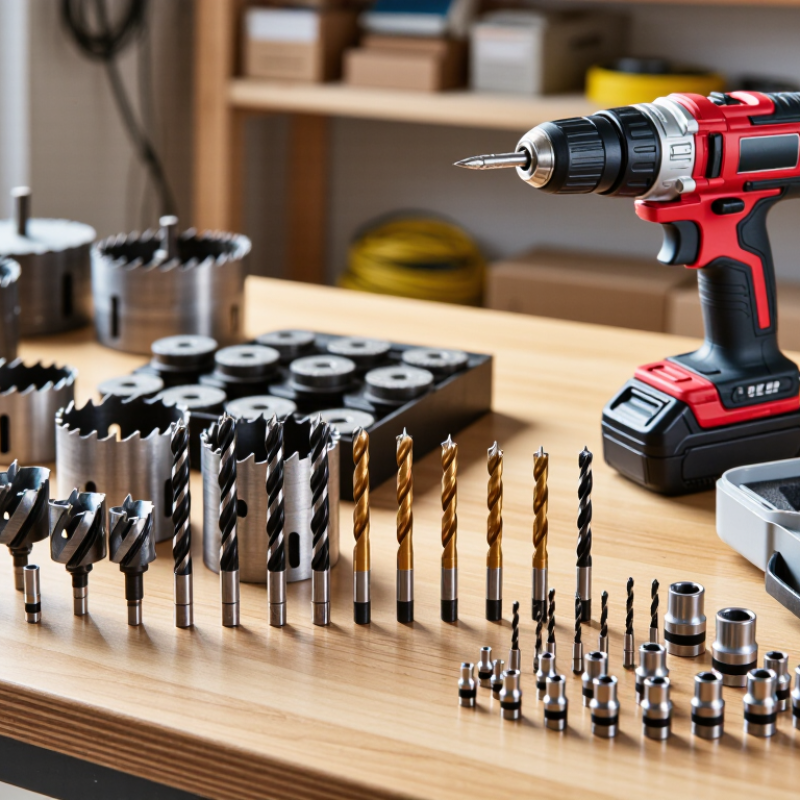
What Are the Top Drill Accessories for 2026?

Drill Accessories: Purpose, Types, and Selection Criteria

In 2026, the best drill accessories are not necessarily the most expensive. Their value depends on purpose, fit, and control. A masonry bit needs a different cutting edge than a wood brad-point bit. Metal drilling demands heat resistance and steady pressure. Driver bits transfer torque to screws, while hole saws create clean openings for pipes and cables. Each accessory solves a specific problem. That distinction matters.

A practical kit may include twist bits, masonry bits, driver bits, countersinks, hole saws, extension shafts, and sanding attachments. Choose accessories by material, hole diameter, depth, and drill speed. Check the shank shape and size before buying. A poorly matched shank can wobble, slip, or damage the chuck. I also inspect cutting edges under bright light. Small chips often predict rough holes and extra heat. Do not rely on packaging claims alone. Test one accessory on scrap material first. It saves time, though I sometimes skip this step when rushing.

Selection should include durability, safety, and replacement cost. Carbide-tipped options suit hard masonry, while high-speed steel handles many general metal tasks. Coatings may improve wear, but they cannot fix poor technique. Use the correct speed, secure the workpiece, and clear dust regularly. For long drilling, an extension or depth stop improves alignment. A compact right-angle adapter helps in tight spaces, but it can reduce control under heavy torque. I have found that comfort matters more than expected. Still, accessory design is only part of the result; operator judgment remains decisive.

Essential Drill Bits for Wood, Metal, Masonry, and Multi-Material Use

What Are the Top Drill Accessories for 2026?

Essential drill bits for wood, metal, masonry, and multi-material use

Choosing drill accessories in 2026 means matching the bit to the material, speed, and required finish. Grand View Research valued the global power tools market at approximately $38 billion in 2023, with continued growth expected through 2030. That expansion reflects wider cordless use and more specialized accessories. However, a larger market does not guarantee better results.

Wood demands sharp brad-point bits for clean entry holes and reduced wandering. For wide openings, hole saws or Forstner bits create flatter bottoms and cleaner edges. I still test on scrap wood first. Grain direction can surprise even experienced users. For metal, high-speed steel bits suit general drilling, while cobalt alloys handle harder steel and repeated heat. Cutting fluid helps, but excessive pressure can dull the edge quickly. The U.S. Bureau of Labor Statistics reports that hand and power tool injuries remain a workplace concern, so stable clamping and eye protection are practical necessities.

Masonry needs carbide-tipped bits, especially for brick, block, and concrete. Rotary hammer bits work better in dense concrete than standard hammer-drill accessories. Multi-material bits are useful for tile, plastic, thin metal, and wood, but they are compromises. They may drill many surfaces, yet rarely finish each one perfectly. A 2024 report from MarketsandMarkets identifies construction growth and renovation activity as major drivers for drilling equipment demand. That trend supports versatile kits, though users should inspect tip wear often. No bit lasts forever. Replace it before heat, vibration, or slipping turns a simple hole into a damaged surface.

Top Drill Accessories for 2026

Representative starting speeds for a 6 mm drill accessory across common materials

Wood brad-point bits typically run fastest, while HSS twist bits for mild steel require lower speeds to control heat and wear. Carbide masonry bits are generally used at moderate rotary speeds, and multi-material carbide-tipped bits provide a balanced setting for wood, plastic, tile, and light masonry. Actual speed should be adjusted for bit diameter, material hardness, drilling pressure, and the use of impact mode.

Power, Control, and Safety Accessories for Modern Drills

What Are the Top Drill Accessories for 2026?

Modern drills need more than raw power. A quality battery pack, right-angle attachment, and torque-limiting adapter can improve performance in tight spaces. Torque control protects screws, fittings, and softer materials from damage. It also reduces sudden wrist movement during demanding tasks. I have found that a magnetic bit holder saves time on ladders and crowded workbenches. Small improvements matter.

Control starts with choosing the correct bit for each surface. Carbide bits suit masonry, while sharp twist bits handle metal and wood differently. Depth stops help create consistent holes for shelves, cabinets, and electrical supports. A compact work light improves accuracy in dim corners. It sounds basic. It is often overlooked.

Tips:

Test the drill on scrap material first. Check the bit for chips or blunt edges. Use a side handle when resistance increases. Wear eye protection, secure loose clothing, and keep both hands clear of rotating parts. A dust-extraction attachment can reduce airborne particles during masonry work. However, it may not capture everything, especially in rough outdoor conditions. I sometimes expect accessories to solve poor technique, but they cannot. Inspect the chuck, battery contacts, and attachment before each session. Stop when vibration, heat, or unusual noise appears. Reliable results come from matching power, control, and safety habits to the material.

Specialized Attachments for Cutting, Sanding, Mixing, and Fastening

A well-chosen drill attachment can turn one familiar tool into a compact workshop system. In my experience, cutting attachments are most useful when matched to the material. Hole saws create clean openings in wood and thin metal, while rotary cutters handle smaller shaping tasks. Use steady pressure and moderate speed. Excess force can overheat the bit or damage the surface.

Sanding attachments bring more control to curved edges and narrow spaces. A sanding drum smooths wooden contours, while a small abrasive disc removes rough paint or sharp edges. Keep the drill moving. Staying in one spot can leave deep grooves. I once used an aggressive abrasive on soft pine and removed too much material. That mistake still influences my grit selection.

Mixing paddles are valuable for paint, grout, and other approved compounds. Choose a paddle size that matches the container, and start at low speed to reduce splashing. For fastening, magnetic bit holders, socket adapters, and right-angle attachments improve access in tight corners. A clutch setting helps prevent stripped screws. It is not foolproof. Check the fastener head, material hardness, and available torque before working. Inspect attachments for bent shafts, worn edges, or loose connections, then secure the workpiece before drilling.


Key Features to Compare When Choosing Drill Accessories in 2026

What Are the Top Drill Accessories for 2026?

Key Features to Compare When Choosing Drill Accessories in 2026

Choosing drill accessories in 2026 requires more than counting pieces in a kit. Compatibility comes first. Check the shank type, diameter range, and chuck requirements before buying. A poorly matched bit can wobble, overheat, or damage the work surface. I have learned this after using a masonry bit that was technically compatible but too long for a cramped installation.

Material quality also deserves close inspection. High-speed steel suits many metal and wood tasks, while carbide-tipped options handle harder masonry. Look for clear information about heat treatment, tip attachment, and wear resistance. Coatings may reduce friction, but they do not make every bit suitable for every material. That distinction is often overlooked.

Precision matters in daily work. Compare tip geometry, flute design, and cutting stability. Accessories with clear size markings save time on busy job sites. For hole saws and sanding attachments, check the arbor system and replacement-part availability. Dust-control features can improve visibility and reduce cleanup, especially when drilling concrete indoors. Ergonomic extensions and magnetic holders are useful, but excessive length can reduce control. Keep it short.

Durability should be tested through repeated use, not attractive packaging. Examine storage cases, rust protection, and warranty terms. I sometimes choose a cheaper accessory for occasional work, then regret it after premature wear. A practical comparison should include task frequency, surface type, safety instructions, and total replacement cost. No single accessory set performs perfectly everywhere.

Powder Coat Booths

For those larger-sized parts, or smaller quantity runs, we have 2 independent powder coat booths and ovens. The quality, durability and affordability of today’s powder coating finishes make this the process of choice for world-class companies.

Powder coating advantages over other forms of coating are many. Materials used in the Powder coating process can be metals and non-metals that come in a multitude of thicknesses, textures, colors, etc. Another of Powder coating’s biggest advantages over conventional coatings is its ability to create finishes in many different textures. Powder Coating Booths allow us the ability to apply these advantages to large products.

Wet Paint Line

Tri-State Fabricators runs a full-service conveyor line for painting. Wet painting can provide protection or decoration to many different part styles. From start to finish, every project is easier to undergo random and point-based inspection by our skilled painting team.

Advantages to our Wet Paint Line are these lines start with product prep and ends with a thorough inspection of a high quality finished product. Our ability to complete large and small projects with a superior finish and doing so in a timely and economical fashion. This passes along the savings in production to our customers. When powder coating ins not an option, our Wet Paint Line gets the job done right the first time.

Wet Paint Booths

When the parts get big and heavy we roll-out our custom paint racks and oversize booth. By utilizing our partnerships with all the major paint brands, we can match virtually any color with wet paint.

The advantages of having access to a Wet Paint Booth are many. Large projects of many different shapes can be loaded into the booth. The Wet Paint Booth offers an environment that is much more controlled than a typical parts painting operation.

Not only are they used because of their controlled environment, but they’re are also advantageous when it comes to applying paint to parts that are needed in industries that require specialty coatings such as medical, aerospace, etc.

Military CARC

Our military forces have some very high standards when it comes to the finish of their vehicles and equipment. From the first pre-treatment step to final coat, it takes a great deal of knowledge and experience to protect the men and women of our armed forces. They deserve only the best, and Tri-State Fabricators provides it.

All of our processes are closely monitored by our staff and management teams. Both of which are highly trained in the processes of metal fabrication and finishing. Tri-State Fabricators’ goal is to always fully satisfy each and every customer, including the military. We will always put a 110% into what we do.

Glass-Bead Blasting

Abrasive media blasting is an excellent way to remove old paint, rust, and increase the paint/powder adhesion. Glass beads produce a much smoother and brighter finish than angular abrasives; leaving the part clean yet without any dimensional change. Chemically inert and environmentally friendly, we can recycle our beads approximately 30 times; making them a more preferred method of metal cleaning or surface finishing.

Advantages to Glass Bead Blasting are many. Glass bead blast media is used when a project is needing rough surfaces need to become smooth for applications of coatings such as paint. It is typically used to clean paint and rust from a product surface without deforming the surface it is being used on. Overall, compared to many other blasting media, Glass Bead Blasting is a very economical choice and those savings are always passed on to our customers.

Part Washing

Tri-State Fabricators utilize a zinc phosphate wash to clean and etch the material to ensure the best paint adhesion possible. The unique design of our 3-stage wash system does the work like a 5-stage. From Cleaning and rinsing to conversion coating and post-treatment, Our Part Washing process is a complete service and works throughout the fabrication service and the finishing service.

Along with the previously mentioned benefits, Curing is a vital chemical reaction that leaves the product finish hard and relatively safe from mild abrasion and aggressive corrosion. This process can be done in more than one way; ambient air-dry or in curing ovens at temps that exceed 240°.

Burn-Off Oven

From fixing paint mistakes (someone else’s of course) to simply cleaning our paint line hooks, our burn-off oven is put to good use. After a quick burn-off, a little clean up, and a fresh coat of paint, your parts will look better than new.

Why does our Burn-Off Oven work so well? Because super heating the air around parts turns the materials into ashes. From paint and powder coatings to rubber and machining oils, high temps do the job without degrading the integrity of the part.

Masking

Masking is a vital part of producing high quality products. We have die-cut masking patterns to protect machined surfaces as well as a wide range of plugs and caps to protect threaded holes and bolts. We provide permanent and temporary masking.

Masking allows the selected sections of a product to be protected from a fabrication or finishing service. This can be with both chemicals when etching and tapes, paints when only finishing just a section of the product. Masking is great in aiding the customization process of a project.

Screen Printing

Screen printing is a photographic process that transfers artwork onto a porous nylon screen which allows colored ink to flow through the screen and be deposited on an aluminum or plastic component. We can generally have just about any design created onto a screen for your parts.

Some of the advantages of Screen Printing are, brand recognition for your business displaying on your products, assembly instructions, product warnings/hazards, etc. Tri-State Fabricators produces Screen Printing of the highest quality so you know it’s durable.

Metal Finishing

Metal Finishing is the art of treating the exterior portion of product, often metal but can also be made of other materials, so that the surface is clean and free of any debris. Then the process of applying coats or either paint of powder coat takes place. This coating process improves the quality of the product in both appearance and resistance to wear and corrosion.

Tri-State Fabricators, Inc., understands that a project typically isn’t complete until a high-quality finish has been added to your product. This is why our painting and powder coating teams continuously inspect the products throughout the Metal Finishing process.



