


Choosing a reliable Double Micro Switch supplier in China requires more than comparing online prices. The real question is consistency.
A suitable supplier should provide stable contact resistance, accurate operating force, controlled travel, and dependable electrical ratings. Small differences matter. A poorly assembled switch may fail after repeated pressing, vibration, or dust exposure. In a control panel, one failed component can stop an entire machine.
Dr. David A. Bell, an electrical engineer and author of practical electronics guides, offers a useful perspective: “A component is reliable only when its performance remains predictable in real use.” This principle fits Double Micro Switch sourcing closely. Buyers should examine production experience, tooling capability, material selection, inspection procedures, and batch traceability. Certificates help, but certificates alone do not prove manufacturing discipline.
The leading Chinese suppliers usually support custom terminals, actuator shapes, mounting dimensions, and packaging options. Some also provide life-cycle testing, temperature testing, and sample verification before mass production. These details reveal more than polished factory photographs.
However, supplier rankings should remain cautious. A company may perform well for automotive orders but struggle with low-volume customization. Another may offer excellent samples yet show weaker consistency later. That possibility deserves attention.
This guide reviews China’s top Double Micro Switch suppliers through product quality, engineering support, production capacity, certifications, communication, and after-sales reliability. It also considers practical sourcing risks, including unclear specifications and delayed technical feedback. The best supplier is not always the largest one. It is the one that repeatedly meets your exact requirements, under real operating conditions.
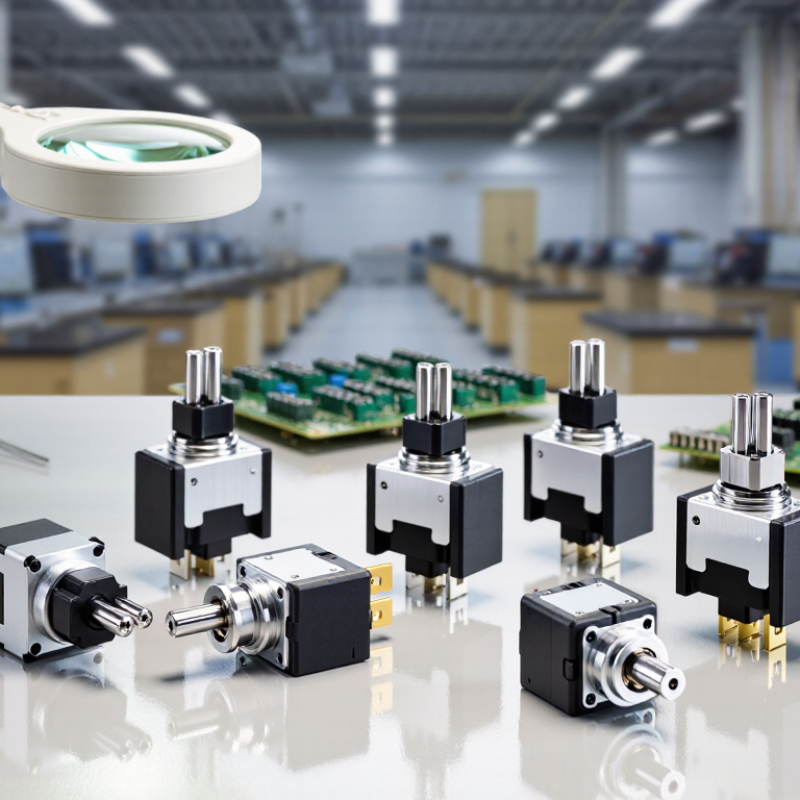
China’s double micro switch supplier market covers manufacturers of compact snap-action switches with two independent contact paths or double-pole configurations. These components serve control panels, appliances, automotive modules, industrial sensors, and safety equipment. The definition should include switch bodies, terminals, actuators, sealing options, and customized electrical ratings. It should not include ordinary push buttons or large power relays.
Grand View Research estimated the global micro switch market at approximately US$1.1 billion in 2023, with continued growth through 2030. Its analysis points to automation, vehicle electronics, and smart appliances as important demand drivers. China remains a significant manufacturing base because suppliers can combine stamping, injection molding, plating, and final testing within nearby production networks. That advantage is practical, not automatic. Quality variation still exists.
For buyers, “top” suppliers should mean more than high output. A reliable evaluation checks contact resistance, operating force, mechanical life, dielectric strength, and batch traceability. IEC 61058 and IEC 61020 references can support technical comparison, depending on the application.
Intertek and UL testing may also strengthen documentation, but certification scope must be verified for each model. A 2024 MarketsandMarkets report identified miniaturization and higher reliability as continuing switch-industry priorities.
Supplier audits should therefore review endurance-test records, mold control, incoming-material inspection, and failure analysis.
Some market listings use “double micro switch” loosely. That wording needs careful confirmation.

The key benchmark is a rating up to 5A at 250VAC, paired with a mechanical life of 1 million cycles. IEC 61058-1 provides the relevant switching safety framework for appliance controls. Suppliers deserve higher scores when independent laboratories confirm these ratings under controlled temperature, load, and switching speed.
A practical ranking should examine contact resistance, insulation resistance, terminal strength, and enclosure consistency. ISO 9001 certification supports process control, but it does not prove one million successful operations. That distinction matters. Buyers should request endurance-test curves, not only marketing tables. A 5A rating can change with the load type, power factor, and inrush current. Small details decide field reliability.
The strongest suppliers provide batch traceability, failure-analysis reports, and samples from regular production. Their switches should survive repeated actuator movement without sticking, arcing, or audible contact bounce. Independent testing aligned with IEC 61058-1 or equivalent national standards adds credibility. Supplier response time also deserves a score. Fast answers are useful, but documented evidence is better. Some rankings may still be imperfect because published cycle data often use ideal laboratory conditions, unlike dusty machines or uneven assembly pressure.
What Are China Top Double Micro Switch Suppliers?
Leading Chinese double micro switch suppliers are usually judged by product range, certifications, and production capacity. A capable supplier may offer double-pole configurations, roller levers, long plungers, hinged actuators, and compact snap-action designs. These options support appliances, control panels, automotive components, and industrial equipment.
Product detail matters. Buyers should check rated current, operating force, travel distance, contact material, and electrical life. Suppliers with engineering teams can adjust terminals, actuator shapes, and mounting holes for specific assemblies. Waterproof versions may carry IP ratings, but the rating should match the tested structure, not only the catalog description.
Certifications help establish reliability. Look for ISO 9001 quality systems and relevant CE, RoHS, UL, or IEC documentation. Confirm certificate scope and testing dates. A certificate alone proves little if inspection records are missing. I have seen specifications change between samples and mass production. That is an uncomfortable risk.
Manufacturing capacity includes tooling control, automated assembly, contact riveting, and final electrical testing. Ask for sample lead time, monthly output, defect targets, and traceability procedures. A supplier producing millions of units may still struggle with custom orders. Smaller factories can respond faster, but their backup capacity may be limited. Factory audits, pilot runs, and repeated testing reveal more than polished presentations.
This industry-reference chart summarizes the main option groups and internationally recognized compliance checkpoints commonly used when evaluating Chinese double micro switch manufacturers. It does not disclose company or brand data.
The figures represent the number of commonly specified product or compliance categories: four contact arrangements, four actuator styles, four terminal formats, and five major export-compliance checkpoints.
What Are China Top Double Micro Switch Suppliers?
Double micro switches are compact control components for 12–24V systems. They use two switching circuits in one housing. This design supports interlocking, position sensing, and dual-signal feedback.
In automated doors, conveyor equipment, and small actuators, one contact can control movement. The second contact can report status to a controller. This separation helps reduce wiring and improves fault detection. For example, a 24V actuator may stop at a limit while sending a confirmation signal. In 12V panels, the same switch can monitor covers, levers, or safety guards. The application decides the correct contact arrangement.
Experienced buyers should check rated current, insulation resistance, terminal style, and mechanical endurance. Water, dust, and vibration also matter. Suppliers in China may offer sealed housings, different lever lengths, and customized cable assemblies. Ask for test data, dimensional drawings, and sample verification before bulk orders. Do not judge quality by appearance alone.
Small details matter.
A switch may fit perfectly but fail after repeated side loading. I have seen designs pass bench tests and struggle inside vibrating equipment. That gap deserves attention. Confirm the actuator force, travel, rebound behavior, and mounting tolerance under real operating conditions. A reliable supplier should explain production controls, inspection methods, and traceability without vague promises. Cost matters, but unstable contact resistance can create greater service expense.
What Are China’s Top Double Micro Switch Suppliers? How to Compare OEM Pricing, IP Ratings, Tolerances, and Lead Times
China’s double micro switch market serves appliances, vehicles, controls, and industrial equipment. Grand View Research reported that the global micro switch market was valued at about USD 1.2 billion in 2023, with steady growth expected through 2030. That demand makes supplier comparison more important than a low unit price. Request pricing at the same quantity, voltage, actuator type, packaging level, and inspection standard. Include tooling, samples, freight, and certification costs. A quotation may look cheap until these items appear.
IP ratings require careful reading. IEC 60529 defines IP protection levels, but an IP67 claim does not prove every operating condition. Ask for test reports, sealing materials, test duration, and temperature limits. For tolerance checks, compare operating force, travel, contact resistance, and mounting dimensions. A practical RFQ might require ±0.1 mm on critical dimensions and contact resistance below 50 mΩ. Those figures must match the application, not a supplier’s template.
Lead time also needs evidence. Request sample timing, production timing, monthly capacity, and recovery plans for delayed materials. Many OEM quotes state 15 to 25 working days, but that estimate may exclude tooling approval. Use a first-article inspection and a small pilot order. It exposes inconsistent force or noisy contacts early. I would not trust a perfect spreadsheet alone. Supplier data can be incomplete, and my own comparison may still miss seasonal capacity changes.
Anonymous supplier-profile comparison based on typical China OEM quotation ranges for double-contact or double-throw micro switch assemblies
| Comparison Dimension | Supplier Profile 1 Cost-Focused Standard OEM | Supplier Profile 2 Balanced OEM Manufacturer | Supplier Profile 3 Sealed Industrial Specialist | Supplier Profile 4 High-Volume Automation Supplier | Supplier Profile 5 Custom Low-Volume Integrator |
|---|---|---|---|---|---|
| Typical product configuration | SPDT or DPDT miniature switch; lever or plunger options | SPDT or DPDT snap-action switch with configurable terminals | Sealed SPDT or DPDT switch for dust and moisture exposure | High-cycle snap-action switch for appliances and control equipment | Customized housing, actuator, terminal, and cable configuration |
| Indicative OEM unit price For standard samples or medium-volume orders | US$0.08–0.18 | US$0.12–0.28 | US$0.28–0.75 | US$0.10–0.24 | US$0.35–1.20 |
| Typical MOQ | 500–1,000 pieces | 1,000–3,000 pieces | 500–2,000 pieces | 3,000–10,000 pieces | 100–500 pieces for pilot orders |
| Common electrical rating | 3 A at 250 VAC; 5 A at 125 VAC | 5 A at 250 VAC; low-current signal options | 5 A at 250 VAC; gold-plated or low-level contact options | 10 A at 125 VAC; 5 A at 250 VAC on selected designs | Rating defined according to the approved electrical load test |
| Typical mechanical life | 100,000–300,000 operations | 300,000–1,000,000 operations | 500,000–1,000,000 operations | 300,000–1,000,000 operations | 100,000–500,000 operations, depending on customization |
| Typical IP protection level | IP40; IP54 available with added sealing | IP40–IP55, depending on housing and actuator | IP65–IP67 on qualified sealed versions | IP40–IP54 for standard industrial models | IP54–IP67 subject to tooling and validation |
| Actuation force tolerance | ±20% of nominal value | ±15% of nominal value | ±15% of nominal value | ±10% to ±15% of nominal value | Defined by drawing; commonly ±10% to ±20% |
| Operating position tolerance | ±0.30 mm | ±0.20 mm | ±0.15 mm | ±0.15–0.20 mm | According to approved engineering drawing |
| Overtravel tolerance | ±0.20 mm | ±0.15 mm | ±0.10–0.15 mm | ±0.10–0.15 mm | Defined during prototype approval |
| Contact resistance | ≤100 mΩ initial | ≤50 mΩ initial | ≤50 mΩ initial; stability tested after cycling | ≤50 mΩ initial | Usually ≤100 mΩ unless low-level switching is required |
| Insulation resistance | Typically ≥100 MΩ at 500 VDC | Typically ≥100 MΩ at 500 VDC | Typically ≥100 MΩ at 500 VDC | Typically ≥100 MΩ at 500 VDC | Specified according to the customer test plan |
| Sample lead time | 7–15 calendar days | 10–20 calendar days | 15–30 calendar days | 10–20 calendar days | 20–45 calendar days |
| Mass-production lead time | 20–35 calendar days | 25–40 calendar days | 30–50 calendar days | 25–45 calendar days | 35–60 calendar days |
| Tooling requirement | Usually no new tooling for standard models | Low to moderate tooling for housing or actuator changes | Moderate tooling for sealing structures and gaskets | Tooling cost may be amortized at high volume | Usually required for custom housings or mounting features |
| Quality documentation normally available | Datasheet, inspection report, and basic material declaration | Datasheet, process inspection records, and sample approval report | IP test report, life-cycle data, material declaration, and traceability records | Incoming inspection, process control plan, and batch test records | Engineering drawing, first-article report, and customer-specific inspection plan |
| Best fit for | Price-sensitive consumer products and simple control panels | General industrial controls and appliances | Outdoor equipment, industrial machinery, and damp environments | Large-volume appliance and automation programs | Prototype programs, replacement parts, and special assemblies |
| Evaluation Item | How to Compare Suppliers | Recommended Acceptance Check |
|---|---|---|
| Price | Compare the complete delivered cost, including tooling, packaging, testing, freight, and certification documents. | Request pricing at the same quantities, electrical rating, actuator style, terminal type, and packaging specification. |
| IP rating | Do not compare an unsealed IP40 construction with an IP65 or IP67 sealed construction as equivalent products. | Request an IP test report based on IEC 60529 and confirm the rating applies to the complete assembled switch. |
| Tolerances | Review operating force, release force, pre-travel, overtravel, operating position, and contact resistance together. | Approve a dimensioned drawing and require first-article inspection data before mass production. |
| Lead time | Separate sample lead time, tooling lead time, production lead time, and export logistics time. | Obtain a written production schedule with raw-material availability and the agreed inspection milestone. |
| Reliability | Compare mechanical life and electrical life under the same load, voltage, current, and switching frequency. | Require a life-cycle test condition that matches the actual application rather than relying only on a nominal operation count. |


For those larger-sized parts, or smaller quantity runs, we have 2 independent powder coat booths and ovens. The quality, durability and affordability of today’s powder coating finishes make this the process of choice for world-class companies.
Powder coating advantages over other forms of coating are many. Materials used in the Powder coating process can be metals and non-metals that come in a multitude of thicknesses, textures, colors, etc. Another of Powder coating’s biggest advantages over conventional coatings is its ability to create finishes in many different textures. Powder Coating Booths allow us the ability to apply these advantages to large products.
Tri-State Fabricators runs a full-service conveyor line for painting. Wet painting can provide protection or decoration to many different part styles. From start to finish, every project is easier to undergo random and point-based inspection by our skilled painting team.
Advantages to our Wet Paint Line are these lines start with product prep and ends with a thorough inspection of a high quality finished product. Our ability to complete large and small projects with a superior finish and doing so in a timely and economical fashion. This passes along the savings in production to our customers. When powder coating ins not an option, our Wet Paint Line gets the job done right the first time.
When the parts get big and heavy we roll-out our custom paint racks and oversize booth. By utilizing our partnerships with all the major paint brands, we can match virtually any color with wet paint.
The advantages of having access to a Wet Paint Booth are many. Large projects of many different shapes can be loaded into the booth. The Wet Paint Booth offers an environment that is much more controlled than a typical parts painting operation.
Not only are they used because of their controlled environment, but they’re are also advantageous when it comes to applying paint to parts that are needed in industries that require specialty coatings such as medical, aerospace, etc.
Our military forces have some very high standards when it comes to the finish of their vehicles and equipment. From the first pre-treatment step to final coat, it takes a great deal of knowledge and experience to protect the men and women of our armed forces. They deserve only the best, and Tri-State Fabricators provides it.
All of our processes are closely monitored by our staff and management teams. Both of which are highly trained in the processes of metal fabrication and finishing. Tri-State Fabricators’ goal is to always fully satisfy each and every customer, including the military. We will always put a 110% into what we do.
Abrasive media blasting is an excellent way to remove old paint, rust, and increase the paint/powder adhesion. Glass beads produce a much smoother and brighter finish than angular abrasives; leaving the part clean yet without any dimensional change. Chemically inert and environmentally friendly, we can recycle our beads approximately 30 times; making them a more preferred method of metal cleaning or surface finishing.
Advantages to Glass Bead Blasting are many. Glass bead blast media is used when a project is needing rough surfaces need to become smooth for applications of coatings such as paint. It is typically used to clean paint and rust from a product surface without deforming the surface it is being used on. Overall, compared to many other blasting media, Glass Bead Blasting is a very economical choice and those savings are always passed on to our customers.
Tri-State Fabricators utilize a zinc phosphate wash to clean and etch the material to ensure the best paint adhesion possible. The unique design of our 3-stage wash system does the work like a 5-stage. From Cleaning and rinsing to conversion coating and post-treatment, Our Part Washing process is a complete service and works throughout the fabrication service and the finishing service.
Along with the previously mentioned benefits, Curing is a vital chemical reaction that leaves the product finish hard and relatively safe from mild abrasion and aggressive corrosion. This process can be done in more than one way; ambient air-dry or in curing ovens at temps that exceed 240°.
From fixing paint mistakes (someone else’s of course) to simply cleaning our paint line hooks, our burn-off oven is put to good use. After a quick burn-off, a little clean up, and a fresh coat of paint, your parts will look better than new.
Why does our Burn-Off Oven work so well? Because super heating the air around parts turns the materials into ashes. From paint and powder coatings to rubber and machining oils, high temps do the job without degrading the integrity of the part.
Masking is a vital part of producing high quality products. We have die-cut masking patterns to protect machined surfaces as well as a wide range of plugs and caps to protect threaded holes and bolts. We provide permanent and temporary masking.
Masking allows the selected sections of a product to be protected from a fabrication or finishing service. This can be with both chemicals when etching and tapes, paints when only finishing just a section of the product. Masking is great in aiding the customization process of a project.
Screen printing is a photographic process that transfers artwork onto a porous nylon screen which allows colored ink to flow through the screen and be deposited on an aluminum or plastic component. We can generally have just about any design created onto a screen for your parts.
Some of the advantages of Screen Printing are, brand recognition for your business displaying on your products, assembly instructions, product warnings/hazards, etc. Tri-State Fabricators produces Screen Printing of the highest quality so you know it’s durable.
Metal Finishing is the art of treating the exterior portion of product, often metal but can also be made of other materials, so that the surface is clean and free of any debris. Then the process of applying coats or either paint of powder coat takes place. This coating process improves the quality of the product in both appearance and resistance to wear and corrosion.
Tri-State Fabricators, Inc., understands that a project typically isn’t complete until a high-quality finish has been added to your product. This is why our painting and powder coating teams continuously inspect the products throughout the Metal Finishing process.

