


Top 10 Digital Signal Isolators for Global Buyers

A Digital Signal Isolator may be a compact component, but its barrier carries a serious design responsibility. It separates circuits while allowing digital information to pass, helping protect sensitive electronics from voltage differences and electrical noise. For global buyers, the challenge is not simply finding the fastest device. Working voltage, transient immunity, channel count, package size, and certification details all matter. So does the circuit board around it.

“Choose the isolation barrier for the real operating conditions, not the headline data rate.” This is an editorial paraphrase of a practical principle associated with Analog Devices isolation specialist Scott Wayne, not a verified verbatim quotation. It points to a useful habit: compare datasheets against the actual system, including switching noise, temperature range, and required creepage and clearance. A rating that looks strong on paper may not settle every layout question.

Small details count. Think of a motor drive beside a noisy inverter, or a sensor cable running across a factory floor. In each case, the isolator’s common-mode transient immunity and timing behavior can shape system reliability. Yet no shortlist can replace checking the latest manufacturer datasheet and product approvals. Specifications change. Board conditions vary.

This guide reviews ten options for international sourcing, from established component makers to devices suited to specific channel and package needs. It focuses on measurable criteria, practical trade-offs, and questions buyers should ask suppliers. Some comparisons will remain imperfect; products do not fit neatly into one ranking. That is worth remembering. The right Digital Signal Isolator is the one that fits the application, not merely the list.
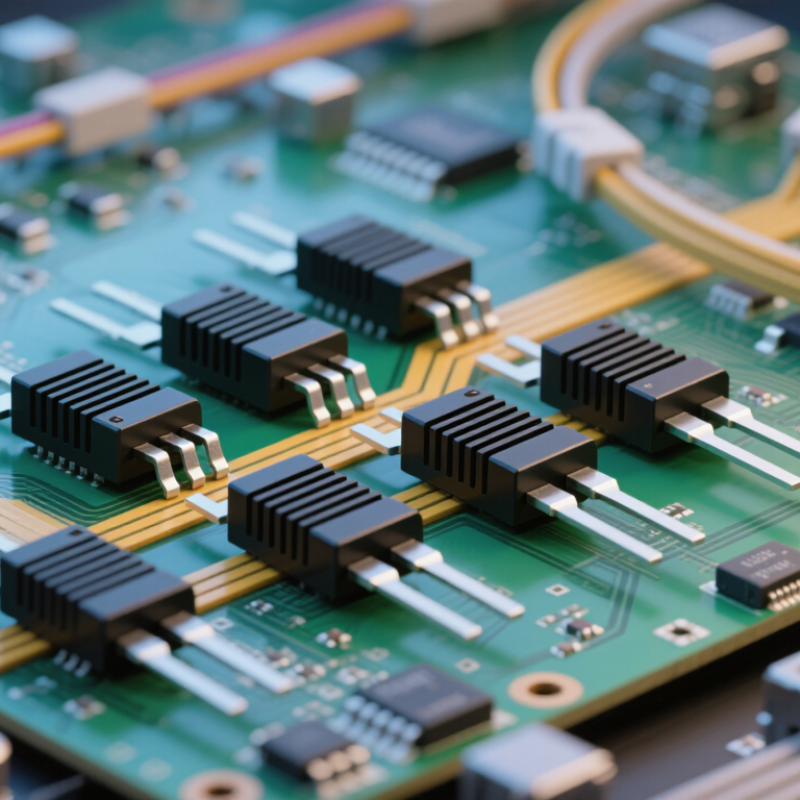
Top 10 Digital Signal Isolators for Global Buyers

What Digital Signal Isolators Are and Why They Matter

Digital signal isolators transfer logic states across an electrical barrier without a direct conductive connection. Capacitive and magnetic couplers encode a signal on one side, then reconstruct it on the other. The barrier helps limit fault-current paths and interrupts ground loops, while the data channel keeps operating. In a motor drive, for example, an isolator can separate a low-voltage controller from switching circuitry where fast voltage changes create electrical noise. Small component, serious job.

Isolation is not a single voltage number. Working voltage, transient withstand, creepage distance, and common-mode transient immunity all affect suitability. IEC 60747-17:2020 specifies requirements for semiconductor magnetic and capacitive couplers; IEC 60664-1:2020 addresses insulation coordination for equipment rated up to 1,000 V AC or 1,500 V DC. These standards offer useful reference points, but board layout, pollution, and temperature still matter. A datasheet rating alone cannot describe the whole system.

For global buyers, compare channel count, propagation delay, power use, package width, and isolation lifetime alongside certification evidence. Check whether the specified transient immunity matches real switching edges, not just a neat laboratory figure. Also review the test conditions. They are easy to overlook. One uncomfortable truth: an isolator can meet its component rating and still fail in a poorly spaced, noisy design. Verify the complete application, including PCB clearances and fault scenarios, before selecting a part.

Top 10 Digital Signal Isolators for Global Buyers — What Digital Signal Isolators Are and Why They Matter
No. Isolator Profile Typical Channel Arrangement Common Signals or Interfaces Why It Matters Key Buyer Checks
1 General-purpose multichannel isolator Multiple digital channels with fixed or configurable input-to-output directions GPIO, control lines, status signals A flexible option for transferring logic signals between circuits that must remain galvanically isolated. Channel count and direction, logic-level compatibility, propagation delay, isolation ratings, and package footprint.
2 SPI signal isolation Typically three controller-to-peripheral signals and one peripheral-to-controller signal for a standard four-wire SPI connection SCLK, MOSI, chip select, and MISO Separates SPI-connected controllers and peripherals while preserving the interface’s clocked data paths. Data rate, channel direction, timing skew, clock polarity and phase requirements, and the number of chip-select lines.
3 UART signal isolation Usually one transmit and one receive channel for a full-duplex link UART TX and RX Can isolate serial communications used in embedded control, instrumentation, and service ports. Baud-rate needs, channel direction, idle-state behavior, logic levels, and whether flow-control signals also need isolation.
4 I²C-compatible isolation Two bidirectional open-drain signal lines, typically using circuitry designed for bidirectional operation SDA and SCL Allows an I²C bus to cross an isolation barrier; ordinary fixed-direction channels are not automatically suitable for this function. Bidirectional operation, pull-up voltage and current limits, bus capacitance, clock stretching, and supported bus speed.
5 Isolated RS-485 interface design Digital isolator channels paired with an RS-485 transceiver, or an integrated isolated transceiver UART-side transmit, receive, and driver-enable signals; differential bus on the transceiver side Isolation can help separate the controller from a long-distance or electrically noisy field bus. A digital isolator alone does not drive an RS-485 cable. Confirm whether the transceiver is included; check bus speed, node loading, termination, fail-safe behavior, isolation ratings, and applicable approvals.
6 PWM and power-control signal isolation One or more unidirectional control channels PWM, enable, fault, and gate-control signals Transfers control signals across a barrier in switching-power and motor-control systems. Propagation delay, pulse-width distortion, common-mode transient immunity (CMTI), output drive needs, and fault-state behavior.
7 Encoder and position-feedback isolation Several channels for phase and index signals, with direction selected to match the system Quadrature A/B signals and index pulses Helps isolate digital feedback signals between a sensor or drive and a controller. Maximum signal frequency, channel-to-channel timing, input thresholds, cable noise, and any required filtering.
8 ADC and data-acquisition link isolation Channels arranged to match the converter’s serial data, clock, and control paths SPI or other digital converter signals Can isolate digital communication between a converter and its host while keeping the signal paths separate from the analog measurement domain. Interface timing, channel direction, converter throughput, noise and layout requirements, and the isolation needs of the complete measurement system.
9 Isolated sensor-bus connection Channels selected for the sensor interface; bidirectional buses require compatible isolation circuitry I²C, SPI, or digital sensor outputs Useful when sensors and processing electronics operate in different electrical domains. Sensor protocol, supply and logic levels, bidirectional requirements, bus speed, and whether isolated power is also needed.
10 Low-power, space-constrained GPIO isolation One or a few digital channels in a compact package Wake, interrupt, enable, and low-speed status signals Provides isolation for a small number of signals where board area or power consumption is a priority. Quiescent and switching power, package size, channel count, default output state, and required safety documentation.

Note: A digital signal isolator transfers digital information across a galvanic isolation barrier without a direct conductive connection between the two sides. It can help limit ground-loop currents and improve protection against electrical differences between circuits. Isolation voltage, working voltage, data rate, timing, CMTI, and safety approvals vary by device and standard; verify the exact requirements in the selected device’s datasheet and system-level safety design.


How Digital Signal Isolation Works

Digital signal isolation transfers logic states across an electrical barrier without a direct conductive connection. An input circuit senses a high or low level, then converts it into a changing signal. Capacitive or magnetic coupling carries that information across a microscopic gap. A receiver reconstructs the output state on the other side. No metal path crosses the barrier. This separation can limit fault current and reduce ground-loop noise between circuits, such as a controller and motor drive. The signal still needs suitable timing, power, and compatible logic levels.

When choosing an isolator, engineers check working voltage, transient withstand, common-mode transient immunity, and propagation delay. These specifications describe different conditions, so they should not be treated as interchangeable.

Keep the barrier clean. PCB spacing, contamination, and layout can weaken protection even when a component meets its ratings. A fast switching edge may also couple noise through the barrier’s small parasitic capacitance. That detail is easy to overlook.

Test it under load. For a sensor near a switching inverter, evaluate the assembled design during realistic switching and fault conditions, not only on a quiet bench. Datasheets guide selection, but measurements show how the complete signal path behaves.

Key Specifications Global Buyers Should Compare

When comparing digital signal isolators, start with channel count and direction. A four-channel part may save board space, but only if its input and output arrangement matches the design. Check the maximum data rate alongside propagation delay and pulse-width distortion. A headline speed is not enough. Confirm performance at the intended supply voltage and load, especially for fast clock or control signals. Numbers need context. Common-mode transient immunity also matters near switching power stages, where rapid voltage changes can disrupt communication.

Next, compare isolation rating, working voltage, and the test conditions behind each figure. These values describe different limits and should not be treated as interchangeable. Check operating temperature, quiescent current, package size, and creepage and clearance requirements against the actual board layout. For global purchasing, review current conformity documents and confirm that the stated ratings match the destination market and end-use conditions. Test the board. A common mistake is ranking parts by one impressive specification; that shortcut can overlook heat, noise, or layout constraints. I would also leave margin above the expected data rate and voltage, though the right margin depends on the application. Verify timing and isolation performance in the assembled system, not only on a component table.

Top 10 Digital Signal Isolators for Global Buyers

Digital signal isolators protect data paths from ground differences and electrical noise. For global buyers, a “top 10” shortlist should reflect the application, not popularity alone. Compare channel count, data rate, package size, and power consumption against the actual design. Check the specified isolation rating and working voltage in the datasheet; these values describe different conditions. A 2.5-kilovolt test rating, for example, does not automatically indicate the same continuous operating capability. Look for clear timing diagrams and recommended PCB spacing, too. Small layout details matter.

Tips: Match the isolator’s data rate to the signal, with practical headroom. Confirm temperature range, input thresholds, and output logic compatibility. Ask for current datasheets and traceable test information before comparing suppliers.

For cross-border procurement, review packaging, lead-time estimates, change-notification practices, and availability of technical support. Confirm that the exact part number and package are quoted; similar-looking versions may have different specifications. If the design serves a noisy inverter or motor-control board, test it near switching edges and across temperature extremes. Bench results can expose surprises. A ranked list is only a starting point: one device may fit a compact sensor board, while another suits a faster interface. There is no perfect universal pick, and datasheets alone may not reveal every board-level issue.

Top 10 Digital Signal Isolators for Global Buyers

Representative maximum data-rate points found across digital isolator product families, shown for comparison—not a ranking of specific products. Actual rates depend on the device, channel configuration, and operating conditions; check the datasheet before selection.

Applications, Compliance, and Sourcing Considerations

Digital signal isolators serve industrial controllers, motor drives, energy meters, and communication interfaces. In a motor cabinet, fast voltage changes can disrupt data crossing an isolation barrier. Check channel count, data rate, propagation delay, and common-mode transient immunity against the actual circuit conditions. Noise matters. A high isolation rating alone does not guarantee reliable operation.

Compliance needs careful review. Ask for safety certificates, test reports, and the exact device revision, then confirm that their scope matches your end product and target markets. Insulation ratings, creepage and clearance distances, package layout, and operating temperature all affect suitability. Requirements can vary by application and region, so involve your compliance team early. A datasheet can look complete, yet leave one uncomfortable gap: the conditions behind a headline rating. Request those details.

Sourcing decisions should cover more than unit price. Confirm lifecycle status, production-site traceability, change-notification practices, and available supply options. For a prototype, test the isolator on the intended board, especially near switching power components. Ask suppliers about lead times and documentation before a design is locked. Small oversights matter. I would still reserve time for independent review; supplier documents do not replace system-level validation.

Powder Coat Booths

For those larger-sized parts, or smaller quantity runs, we have 2 independent powder coat booths and ovens. The quality, durability and affordability of today’s powder coating finishes make this the process of choice for world-class companies.

Powder coating advantages over other forms of coating are many. Materials used in the Powder coating process can be metals and non-metals that come in a multitude of thicknesses, textures, colors, etc. Another of Powder coating’s biggest advantages over conventional coatings is its ability to create finishes in many different textures. Powder Coating Booths allow us the ability to apply these advantages to large products.

Wet Paint Line

Tri-State Fabricators runs a full-service conveyor line for painting. Wet painting can provide protection or decoration to many different part styles. From start to finish, every project is easier to undergo random and point-based inspection by our skilled painting team.

Advantages to our Wet Paint Line are these lines start with product prep and ends with a thorough inspection of a high quality finished product. Our ability to complete large and small projects with a superior finish and doing so in a timely and economical fashion. This passes along the savings in production to our customers. When powder coating ins not an option, our Wet Paint Line gets the job done right the first time.

Wet Paint Booths

When the parts get big and heavy we roll-out our custom paint racks and oversize booth. By utilizing our partnerships with all the major paint brands, we can match virtually any color with wet paint.

The advantages of having access to a Wet Paint Booth are many. Large projects of many different shapes can be loaded into the booth. The Wet Paint Booth offers an environment that is much more controlled than a typical parts painting operation.

Not only are they used because of their controlled environment, but they’re are also advantageous when it comes to applying paint to parts that are needed in industries that require specialty coatings such as medical, aerospace, etc.

Military CARC

Our military forces have some very high standards when it comes to the finish of their vehicles and equipment. From the first pre-treatment step to final coat, it takes a great deal of knowledge and experience to protect the men and women of our armed forces. They deserve only the best, and Tri-State Fabricators provides it.

All of our processes are closely monitored by our staff and management teams. Both of which are highly trained in the processes of metal fabrication and finishing. Tri-State Fabricators’ goal is to always fully satisfy each and every customer, including the military. We will always put a 110% into what we do.

Glass-Bead Blasting

Abrasive media blasting is an excellent way to remove old paint, rust, and increase the paint/powder adhesion. Glass beads produce a much smoother and brighter finish than angular abrasives; leaving the part clean yet without any dimensional change. Chemically inert and environmentally friendly, we can recycle our beads approximately 30 times; making them a more preferred method of metal cleaning or surface finishing.

Advantages to Glass Bead Blasting are many. Glass bead blast media is used when a project is needing rough surfaces need to become smooth for applications of coatings such as paint. It is typically used to clean paint and rust from a product surface without deforming the surface it is being used on. Overall, compared to many other blasting media, Glass Bead Blasting is a very economical choice and those savings are always passed on to our customers.

Part Washing

Tri-State Fabricators utilize a zinc phosphate wash to clean and etch the material to ensure the best paint adhesion possible. The unique design of our 3-stage wash system does the work like a 5-stage. From Cleaning and rinsing to conversion coating and post-treatment, Our Part Washing process is a complete service and works throughout the fabrication service and the finishing service.

Along with the previously mentioned benefits, Curing is a vital chemical reaction that leaves the product finish hard and relatively safe from mild abrasion and aggressive corrosion. This process can be done in more than one way; ambient air-dry or in curing ovens at temps that exceed 240°.

Burn-Off Oven

From fixing paint mistakes (someone else’s of course) to simply cleaning our paint line hooks, our burn-off oven is put to good use. After a quick burn-off, a little clean up, and a fresh coat of paint, your parts will look better than new.

Why does our Burn-Off Oven work so well? Because super heating the air around parts turns the materials into ashes. From paint and powder coatings to rubber and machining oils, high temps do the job without degrading the integrity of the part.

Masking

Masking is a vital part of producing high quality products. We have die-cut masking patterns to protect machined surfaces as well as a wide range of plugs and caps to protect threaded holes and bolts. We provide permanent and temporary masking.

Masking allows the selected sections of a product to be protected from a fabrication or finishing service. This can be with both chemicals when etching and tapes, paints when only finishing just a section of the product. Masking is great in aiding the customization process of a project.

Screen Printing

Screen printing is a photographic process that transfers artwork onto a porous nylon screen which allows colored ink to flow through the screen and be deposited on an aluminum or plastic component. We can generally have just about any design created onto a screen for your parts.

Some of the advantages of Screen Printing are, brand recognition for your business displaying on your products, assembly instructions, product warnings/hazards, etc. Tri-State Fabricators produces Screen Printing of the highest quality so you know it’s durable.

Metal Finishing

Metal Finishing is the art of treating the exterior portion of product, often metal but can also be made of other materials, so that the surface is clean and free of any debris. Then the process of applying coats or either paint of powder coat takes place. This coating process improves the quality of the product in both appearance and resistance to wear and corrosion.

Tri-State Fabricators, Inc., understands that a project typically isn’t complete until a high-quality finish has been added to your product. This is why our painting and powder coating teams continuously inspect the products throughout the Metal Finishing process.
