


Choosing a Digital Air Compressor supplier involves more than comparing motor ratings or advertised efficiency. Global buyers must examine operating pressure, airflow demand, control options, service access, and the conditions of each installation. A compressor serving a quiet laboratory faces different demands from one running beside a dusty production line. Details matter.
Professor Peter Radgen’s research focuses on industrial energy efficiency. A practical paraphrase of that emphasis is: “Measure performance where the air is used, not only at the compressor.” This is not a verbatim quotation. It is a useful reminder to check system-level energy use, pressure stability, and maintenance requirements alongside product specifications. Sensors and remote monitoring can help, but only when the data supports clear decisions. Connectivity alone does not guarantee savings.
This guide reviews ten suppliers for international buyers, with attention to product range, technical documentation, support networks, and suitability for different applications. It also considers integration and lifecycle service, which can be harder to compare than purchase price. Supplier claims deserve careful checking against real operating needs. There is no universal best choice; even a well-known brand may not fit every site. The comparisons offer a starting point, not a substitute for an engineering assessment.
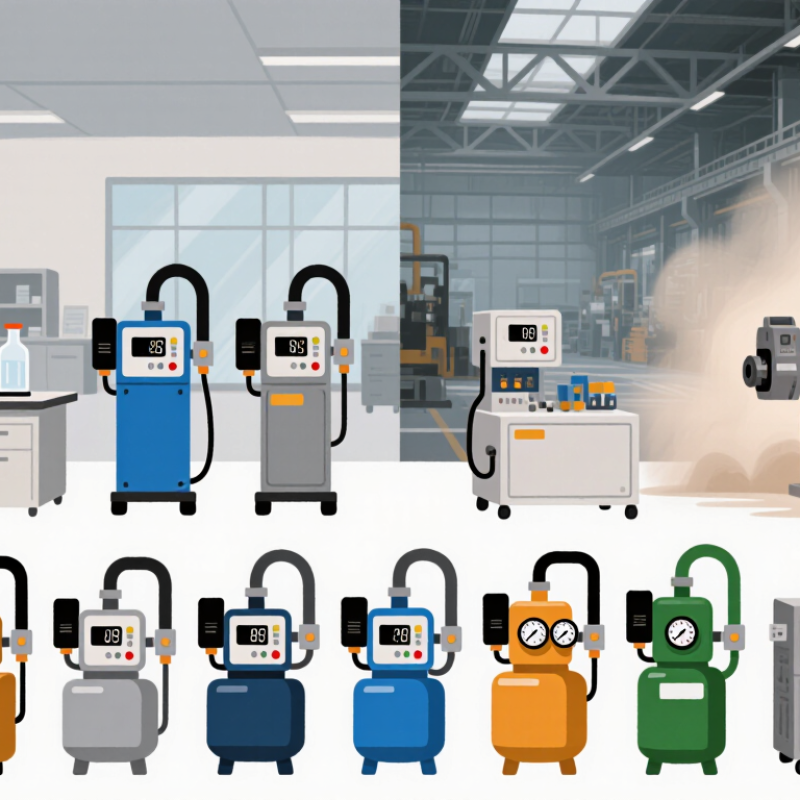
Digital air compressors combine compression hardware with sensors and electronic controls.
Some also use variable-speed drives. Pressure and temperature readings help controllers adjust motor output as demand changes. A display may show operating hours, alarms, and energy use. These details are useful in workshops where tools start and stop throughout the day. Digital control can reduce unnecessary idling, but savings depend on correct sizing and regular maintenance. The screen is useful; it cannot fix a leaking hose.
Applications range from small production lines using pneumatic tools to larger facilities with central compressor systems.
Buyers should compare airflow at the required pressure, duty cycle, noise level, service access, and electrical supply. A quoted efficiency figure alone can mislead because demand changes by shift. For instrument air, specify filtration and drying separately; compressor controls alone do not ensure air quality. This part is sometimes overlooked.
Tips:
Log pressure and run hours for a week before choosing a unit. Check filters and drain condensate on schedule. Ask how alarms are interpreted, not just whether they appear.
A digital reading can be wrong or misunderstood, so verify unusual values with a qualified technician. Teams skip this more often than they should.

Global buyers should compare suppliers at the same operating point, not by headline motor power. Request measured free-air delivery, working pressure, input power, and noise data. Check whether performance figures follow ISO 1217 test methods. Numbers need context. The U.S. Department of Energy’s Improving Compressed Air System Performance sourcebook notes that compressed-air systems use about 10% of industrial electricity, with higher shares in some facilities. That makes efficiency claims worth verifying against your own load profile.
Service matters just as much. Ask for documented commissioning steps, local technician coverage, spare-parts lead times, warranty terms, and references from similar climates or industries. A low purchase price can look attractive, yet delayed parts or poor controls may raise lifetime costs. Review lifecycle estimates and confirm their assumptions, including electricity price, annual operating hours, and maintenance intervals. Some estimates remain uncertain; challenge them.
Tips: Request a test report and a written service-response target. Compare specific power at your actual pressure. Keep the assumptions. A supplier’s clear explanation of limits can be more useful than a perfect-looking brochure.
Digital air compressor suppliers differ less by brochure claims than by the work their equipment must perform. A rotary-screw specialist may suit a factory running long shifts, while a compact-equipment supplier may serve repair shops with limited floor space. An oil-free air supplier focuses on clean output for sensitive production. Check stated air purity against your process requirements. A variable-speed supplier emphasizes output adjustment as demand changes; actual savings depend on operating patterns. They vary.
Other profiles include a supplier pairing compressors with dryers and filters, and a custom-engineering supplier adapting controls or pipe connections to an existing plant. A service-led supplier may offer nearby technicians and stocked parts. Ask about response times, not just service coverage. An export-focused supplier handles shipping and documentation, while a rental specialist provides temporary capacity during maintenance or peak demand. A digital-monitoring supplier offers operating data, but buyers should confirm what sensors measure and how alerts are handled.
These ten profiles describe different supplier strengths, not guaranteed performance. Compare quoted airflow at the required pressure, noise levels, warranty terms, and maintenance intervals. Request a duty-cycle estimate using your real production schedule. A minor omission matters: installation space and ventilation can change the practical fit. Check those details before choosing.
Digital air compressor suppliers differ in more than model range. Compare compressor type, rated flow, working pressure, and control options against your actual demand. A workshop running several tools may need different capacity from a continuous production line. Check whether the digital controls show pressure, temperature, operating hours, and alarms clearly. Useful data should help operators spot problems, not just fill a screen.
Performance figures need context. Ask for airflow at the pressure your site uses, not only a headline capacity. Compare energy consumption, noise levels, and performance under changing demand. A unit may look efficient on paper but behave differently during frequent start-stop cycles. Test conditions matter. Some supplier comparisons are not perfectly apples to apples, so request the measurement basis and, where possible, verified operating data.
Support can shape the real cost of ownership. Ask who handles commissioning, how quickly common spare parts can be supplied, and whether technicians can assist remotely. Check that manuals explain routine maintenance in plain language. A polished dashboard can impress, yet it cannot replace timely service when pressure drops on a busy shift. I would also compare warranty terms carefully; they can be harder to interpret than product specifications. That detail is easy to miss.
Global buyers should compare more than purchase price. Check rated flow, pressure, specific power, and performance at your actual duty cycle. The U.S. Department of Energy’s Improving Compressed Air System Performance: A Sourcebook for Industry estimates that compressed air uses about 10% of industrial electricity. That matters. Request test conditions, calibration records, and an explanation of how digital readings are verified. An attractive dashboard proves little by itself.
Before ordering, map destination requirements. Confirm applicable pressure-equipment, electrical-safety, and energy-efficiency rules with a qualified local assessor; requirements vary by market. Specify an ISO 8573-1 air-quality class when product quality requires it. Document voltage, frequency, enclosure rating, and interface protocols. Do not assume a digital connection will integrate cleanly. Ask who controls alarm data and software updates.
After-sales terms deserve equal scrutiny. The DOE sourcebook notes that leaks may waste 20–30% of compressed-air output. Local leak checks and rapid parts access matter. Get service-response targets, spare-part lead times, warranty exclusions, and technician training in writing. Test a real escalation path before shipment. One uncomfortable question remains: can the supplier support the unit five years from now, in your region?


For those larger-sized parts, or smaller quantity runs, we have 2 independent powder coat booths and ovens. The quality, durability and affordability of today’s powder coating finishes make this the process of choice for world-class companies.
Powder coating advantages over other forms of coating are many. Materials used in the Powder coating process can be metals and non-metals that come in a multitude of thicknesses, textures, colors, etc. Another of Powder coating’s biggest advantages over conventional coatings is its ability to create finishes in many different textures. Powder Coating Booths allow us the ability to apply these advantages to large products.
Tri-State Fabricators runs a full-service conveyor line for painting. Wet painting can provide protection or decoration to many different part styles. From start to finish, every project is easier to undergo random and point-based inspection by our skilled painting team.
Advantages to our Wet Paint Line are these lines start with product prep and ends with a thorough inspection of a high quality finished product. Our ability to complete large and small projects with a superior finish and doing so in a timely and economical fashion. This passes along the savings in production to our customers. When powder coating ins not an option, our Wet Paint Line gets the job done right the first time.
When the parts get big and heavy we roll-out our custom paint racks and oversize booth. By utilizing our partnerships with all the major paint brands, we can match virtually any color with wet paint.
The advantages of having access to a Wet Paint Booth are many. Large projects of many different shapes can be loaded into the booth. The Wet Paint Booth offers an environment that is much more controlled than a typical parts painting operation.
Not only are they used because of their controlled environment, but they’re are also advantageous when it comes to applying paint to parts that are needed in industries that require specialty coatings such as medical, aerospace, etc.
Our military forces have some very high standards when it comes to the finish of their vehicles and equipment. From the first pre-treatment step to final coat, it takes a great deal of knowledge and experience to protect the men and women of our armed forces. They deserve only the best, and Tri-State Fabricators provides it.
All of our processes are closely monitored by our staff and management teams. Both of which are highly trained in the processes of metal fabrication and finishing. Tri-State Fabricators’ goal is to always fully satisfy each and every customer, including the military. We will always put a 110% into what we do.
Abrasive media blasting is an excellent way to remove old paint, rust, and increase the paint/powder adhesion. Glass beads produce a much smoother and brighter finish than angular abrasives; leaving the part clean yet without any dimensional change. Chemically inert and environmentally friendly, we can recycle our beads approximately 30 times; making them a more preferred method of metal cleaning or surface finishing.
Advantages to Glass Bead Blasting are many. Glass bead blast media is used when a project is needing rough surfaces need to become smooth for applications of coatings such as paint. It is typically used to clean paint and rust from a product surface without deforming the surface it is being used on. Overall, compared to many other blasting media, Glass Bead Blasting is a very economical choice and those savings are always passed on to our customers.
Tri-State Fabricators utilize a zinc phosphate wash to clean and etch the material to ensure the best paint adhesion possible. The unique design of our 3-stage wash system does the work like a 5-stage. From Cleaning and rinsing to conversion coating and post-treatment, Our Part Washing process is a complete service and works throughout the fabrication service and the finishing service.
Along with the previously mentioned benefits, Curing is a vital chemical reaction that leaves the product finish hard and relatively safe from mild abrasion and aggressive corrosion. This process can be done in more than one way; ambient air-dry or in curing ovens at temps that exceed 240°.
From fixing paint mistakes (someone else’s of course) to simply cleaning our paint line hooks, our burn-off oven is put to good use. After a quick burn-off, a little clean up, and a fresh coat of paint, your parts will look better than new.
Why does our Burn-Off Oven work so well? Because super heating the air around parts turns the materials into ashes. From paint and powder coatings to rubber and machining oils, high temps do the job without degrading the integrity of the part.
Masking is a vital part of producing high quality products. We have die-cut masking patterns to protect machined surfaces as well as a wide range of plugs and caps to protect threaded holes and bolts. We provide permanent and temporary masking.
Masking allows the selected sections of a product to be protected from a fabrication or finishing service. This can be with both chemicals when etching and tapes, paints when only finishing just a section of the product. Masking is great in aiding the customization process of a project.
Screen printing is a photographic process that transfers artwork onto a porous nylon screen which allows colored ink to flow through the screen and be deposited on an aluminum or plastic component. We can generally have just about any design created onto a screen for your parts.
Some of the advantages of Screen Printing are, brand recognition for your business displaying on your products, assembly instructions, product warnings/hazards, etc. Tri-State Fabricators produces Screen Printing of the highest quality so you know it’s durable.
Metal Finishing is the art of treating the exterior portion of product, often metal but can also be made of other materials, so that the surface is clean and free of any debris. Then the process of applying coats or either paint of powder coat takes place. This coating process improves the quality of the product in both appearance and resistance to wear and corrosion.
Tri-State Fabricators, Inc., understands that a project typically isn’t complete until a high-quality finish has been added to your product. This is why our painting and powder coating teams continuously inspect the products throughout the Metal Finishing process.

