


What Are the Top Decanter Centrifuges in 2026?

Choosing among the top Decanter Centrifuges in 2026 takes more than comparing advertised capacity. The right machine must match the material, operating conditions, and separation target. A unit that performs well with steady, fine solids may struggle when feed consistency changes. Real plants see those changes. Sometimes daily.

This guide examines the factors that make a decanter centrifuge a practical choice: bowl size and speed, differential speed control, torque capacity, wear protection, energy use, and ease of maintenance. These details matter on the shop floor. For example, abrasive feed can shorten the life of scroll flights, while poor solids discharge may interrupt an otherwise stable process. Buyers should also check installation requirements, spare-parts access, service response, and documented performance under comparable conditions. A brochure alone is not enough.

Rather than treating one brand as the universal winner, the comparison should weigh machine design against the needs of each application. Manufacturer specifications, independent references, and trial results can help verify performance, though available data may not always be directly comparable. That limitation deserves attention. The best shortlist will depend on the feed, required throughput, separation quality, and total operating cost—not just purchase price. Use this overview to identify candidates, prepare questions for suppliers, and decide what evidence to request before making a final selection.
What Are the Top Decanter Centrifuges in 2026?

What Is a Decanter Centrifuge and How Does It Work?

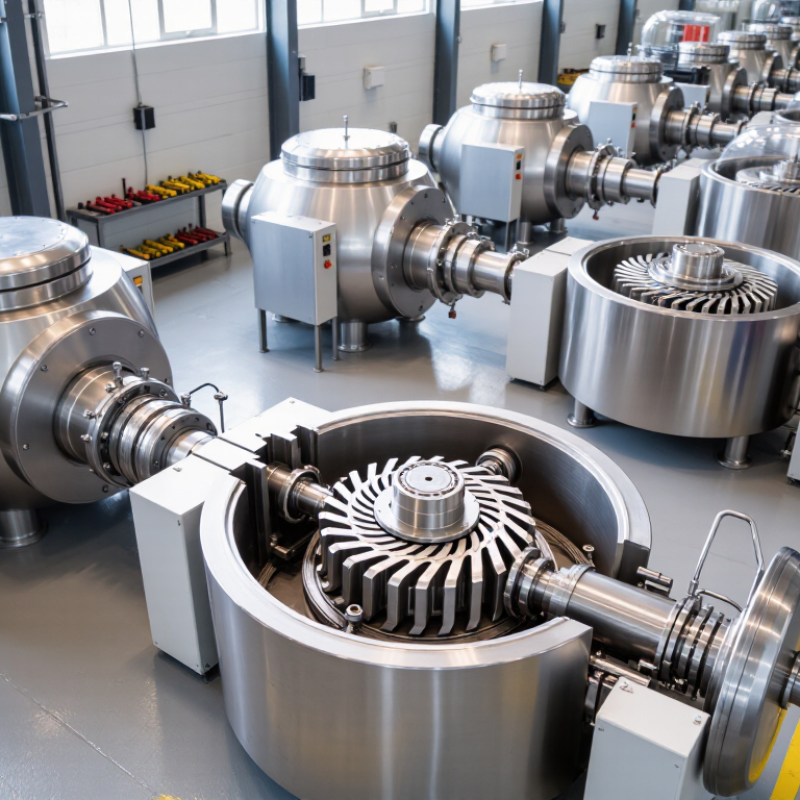
A decanter centrifuge separates suspended solids from liquid by spinning a mixture inside a horizontal bowl. Centrifugal force pushes denser particles toward the bowl wall, while the lighter liquid forms an inner layer. A screw conveyor turns at a slightly different speed from the bowl. It moves settled solids toward the conical end, where they leave through discharge ports. Clarified liquid exits from the opposite end, often across adjustable weirs.

That is the basic mechanism. The details matter. Feed rate, bowl speed, and the conveyor’s differential speed affect dryness, clarity, and throughput. For example, a wetter feed may require a slower feed rate or a different speed setting to reduce solids carryover. Operators monitor vibration, temperature, and torque because sudden changes can signal an imbalance or buildup. The machine does not separate every mixture equally well. Fine particles, changing feed composition, or poor conditioning can reduce performance, even when the equipment is correctly operated. That limitation is easy to underestimate. A useful selection starts with testing the actual feed, not relying only on a capacity figure. Cleaning access and wear-part maintenance also deserve attention; they are less visible than bowl speed, but they shape dependable daily operation.


Which Features Distinguish Top Decanter Centrifuges in 2026?

A strong decanter centrifuge in 2026 is defined by how well it handles changing feed, not by maximum bowl speed alone. Look for adjustable differential speed and responsive torque control. These features help maintain solids dryness when flow or particle size shifts. Stable vibration monitoring can flag imbalance before it causes an unscheduled stop. Small changes matter.

Wear protection is another key distinction. Replaceable tiles or liners in high-impact zones can reduce maintenance time, especially with abrasive slurries. Check how easily operators can inspect the scroll, bearings, and discharge ports. Sealed lubrication points and accessible washdown areas also support reliable operation.

Energy use deserves scrutiny, too. A high-capacity machine may still perform poorly if it needs frequent throttling or produces wet cake. No single specification tells the whole story; results depend on feed testing and correct setup.

Tips: Request a trial using representative material, and record throughput, cake dryness, and power draw. Ask how quickly wear parts can be changed. Compare readings across several operating conditions, not one ideal run.

What Types of Decanter Centrifuges Serve Different Industries?

Decanter centrifuges differ mainly in how they separate liquid and solids. Two-phase models produce a clarified liquid and a damp solids cake. They are common in municipal wastewater treatment, mineral processing, and food production. At a treatment plant, operators may adjust bowl speed and feed rate as sludge thickens after heavy rain. Small changes can affect both cake dryness and throughput.

Three-phase decanters separate two liquids and solids in one continuous process. They suit applications such as recovering oil and water from industrial mixtures, or separating fats, water, and solids in food-processing streams. The right setup depends on differences in density and the amount of suspended material. It is not a magic fix. Feed composition can shift, and performance may need regular checking.

Industry-specific designs also vary in materials, sealing, and cleanability. Food and beverage plants often need smooth, washable surfaces and careful control of product temperature. Mining operations may prioritize abrasion-resistant parts because gritty slurry wears equipment quickly. Wastewater facilities, meanwhile, often focus on reliable operation across changing flows. A useful specification starts with actual feed samples, not just a target capacity. That detail is easy to overlook. Engineers should also compare energy use, maintenance access, and the solids cake quality required downstream.

What Are the Top Decanter Centrifuges in 2026? - What Types of Decanter Centrifuges Serve Different Industries?

Decanter type Separation produced Industries and typical uses Typical feed Key selection considerations
Two-phase solid–liquid Separates suspended solids from one liquid phase; produces a solids-rich cake and clarified liquid. Municipal and industrial wastewater, mineral processing, food processing, and chemical production. Slurries or suspensions containing settleable solids in a liquid. Solids loading, particle size, cake dryness, liquid clarity, abrasion, and required throughput.
Three-phase liquid–liquid–solid Separates solids and two immiscible liquid phases, typically a heavier and a lighter liquid. Edible oil recovery, rendering, dairy by-product processing, and selected chemical or petrochemical processes. Feeds containing solids plus two liquids with different densities that do not readily mix. Density difference, viscosity, emulsion tendency, desired phase purity, and solids concentration.
Oil-recovery decanter Recovers oil from a solids-containing feed; the process arrangement may separate two or three phases. Olive oil, vegetable oil, fish oil, and other food or biomass oil extraction and recovery operations. Oil-bearing mash, press liquor, or process streams containing water and suspended solids. Oil yield, product quality, temperature sensitivity, feed variability, and cleanability requirements.
High-solids sludge dewatering Concentrates suspended sludge into a dewatered cake while discharging a liquid centrate. Municipal wastewater treatment, industrial effluent treatment, and sludge management. Biological, chemical, or mixed sludge, often conditioned with polymer before separation. Feed solids, polymer compatibility, cake handling, centrate quality, and operating cost.
Clarifying decanter Removes fine suspended particles from a liquid, with solids discharged separately. Beverage and food processing, fermentation, and process-liquid recovery. A relatively low-solids liquid containing fine or settleable particles. Required clarity, particle characteristics, product loss, hygienic design, and downstream filtration needs.
Wear-resistant mineral-processing decanter Separates abrasive mineral solids from process water or other liquid streams. Mining, mineral beneficiation, sand and aggregate processing, and tailings management. Dense, abrasive slurries with variable particle sizes and solids concentrations. Wear protection, solids conveyance, slurry density, maintenance access, and water-recovery targets.

Decanter performance depends on feed properties, process conditions, and equipment configuration. Confirm separation targets with application-specific testing.

How Do Leading Decanter Centrifuge Models Compare in 2026?

In 2026, leading decanter centrifuges are best compared by duty, not headline capacity. A high-throughput, large-bowl model may suit steady mineral or wastewater streams, while a compact unit can fit plants with limited floor space. Compare rated flow with the actual feed, including solids concentration and particle size. A brochure number alone can mislead.

For separation quality, examine bowl diameter and length, adjustable differential speed, torque reserve, and pond-depth settings. Higher bowl speed can improve clarification, but it may raise wear, energy use, and vibration sensitivity. A model with responsive controls can hold performance as feed conditions shift. Ask for test data using a representative sample, not clean water. Small detail.

Build and serviceability matter as much as separation figures. Check wetted-material specifications, replaceable wear protection, bearing access, guarding, and routine cleaning time. Compare motor efficiency, noise readings, and spare-part lead times under the same operating assumptions. Operators should verify start-up behavior and alarm logs during a site trial. Fit matters. Feed chemistry and maintenance habits can overturn a paper ranking, and those are easy to underestimate.

What Should Buyers Consider When Selecting a Decanter Centrifuge?

What Are the Top Decanter Centrifuges in 2026?

What Should Buyers Consider When Selecting a Decanter Centrifuge?

Choosing a decanter centrifuge starts with the material it must process, not a headline capacity figure. Check feed rate, solids concentration, particle size, and how much these vary during a normal shift. Then define the required cake dryness and liquid clarity. These targets can conflict, so ask suppliers to explain the operating trade-offs. A machine that performs well with a steady test feed may behave differently when the feed changes.

Tips: Request a trial using representative material. Record throughput, cake moisture, and centrate quality. Small details matter.

Review wear protection, bowl and conveyor materials, drive control, and access to parts that need routine inspection. Ask how operators can adjust speed and differential speed, and whether the controls show useful process data. Also compare energy use, noise, footprint, and maintenance time—not just purchase price. A compact layout may look ideal on paper, yet leave little room to remove components. That is easy to overlook. Confirm service support and spare-part availability for your location, and request references from similar applications. Specifications help narrow the field, but they do not replace a realistic test. I would also leave some room for uncertainty: feed properties can drift, and no quote captures every operating condition.

Powder Coat Booths

For those larger-sized parts, or smaller quantity runs, we have 2 independent powder coat booths and ovens. The quality, durability and affordability of today’s powder coating finishes make this the process of choice for world-class companies.

Powder coating advantages over other forms of coating are many. Materials used in the Powder coating process can be metals and non-metals that come in a multitude of thicknesses, textures, colors, etc. Another of Powder coating’s biggest advantages over conventional coatings is its ability to create finishes in many different textures. Powder Coating Booths allow us the ability to apply these advantages to large products.

Wet Paint Line

Tri-State Fabricators runs a full-service conveyor line for painting. Wet painting can provide protection or decoration to many different part styles. From start to finish, every project is easier to undergo random and point-based inspection by our skilled painting team.

Advantages to our Wet Paint Line are these lines start with product prep and ends with a thorough inspection of a high quality finished product. Our ability to complete large and small projects with a superior finish and doing so in a timely and economical fashion. This passes along the savings in production to our customers. When powder coating ins not an option, our Wet Paint Line gets the job done right the first time.

Wet Paint Booths

When the parts get big and heavy we roll-out our custom paint racks and oversize booth. By utilizing our partnerships with all the major paint brands, we can match virtually any color with wet paint.

The advantages of having access to a Wet Paint Booth are many. Large projects of many different shapes can be loaded into the booth. The Wet Paint Booth offers an environment that is much more controlled than a typical parts painting operation.

Not only are they used because of their controlled environment, but they’re are also advantageous when it comes to applying paint to parts that are needed in industries that require specialty coatings such as medical, aerospace, etc.

Military CARC

Our military forces have some very high standards when it comes to the finish of their vehicles and equipment. From the first pre-treatment step to final coat, it takes a great deal of knowledge and experience to protect the men and women of our armed forces. They deserve only the best, and Tri-State Fabricators provides it.

All of our processes are closely monitored by our staff and management teams. Both of which are highly trained in the processes of metal fabrication and finishing. Tri-State Fabricators’ goal is to always fully satisfy each and every customer, including the military. We will always put a 110% into what we do.

Glass-Bead Blasting

Abrasive media blasting is an excellent way to remove old paint, rust, and increase the paint/powder adhesion. Glass beads produce a much smoother and brighter finish than angular abrasives; leaving the part clean yet without any dimensional change. Chemically inert and environmentally friendly, we can recycle our beads approximately 30 times; making them a more preferred method of metal cleaning or surface finishing.

Advantages to Glass Bead Blasting are many. Glass bead blast media is used when a project is needing rough surfaces need to become smooth for applications of coatings such as paint. It is typically used to clean paint and rust from a product surface without deforming the surface it is being used on. Overall, compared to many other blasting media, Glass Bead Blasting is a very economical choice and those savings are always passed on to our customers.

Part Washing

Tri-State Fabricators utilize a zinc phosphate wash to clean and etch the material to ensure the best paint adhesion possible. The unique design of our 3-stage wash system does the work like a 5-stage. From Cleaning and rinsing to conversion coating and post-treatment, Our Part Washing process is a complete service and works throughout the fabrication service and the finishing service.

Along with the previously mentioned benefits, Curing is a vital chemical reaction that leaves the product finish hard and relatively safe from mild abrasion and aggressive corrosion. This process can be done in more than one way; ambient air-dry or in curing ovens at temps that exceed 240°.

Burn-Off Oven

From fixing paint mistakes (someone else’s of course) to simply cleaning our paint line hooks, our burn-off oven is put to good use. After a quick burn-off, a little clean up, and a fresh coat of paint, your parts will look better than new.

Why does our Burn-Off Oven work so well? Because super heating the air around parts turns the materials into ashes. From paint and powder coatings to rubber and machining oils, high temps do the job without degrading the integrity of the part.

Masking

Masking is a vital part of producing high quality products. We have die-cut masking patterns to protect machined surfaces as well as a wide range of plugs and caps to protect threaded holes and bolts. We provide permanent and temporary masking.

Masking allows the selected sections of a product to be protected from a fabrication or finishing service. This can be with both chemicals when etching and tapes, paints when only finishing just a section of the product. Masking is great in aiding the customization process of a project.

Screen Printing

Screen printing is a photographic process that transfers artwork onto a porous nylon screen which allows colored ink to flow through the screen and be deposited on an aluminum or plastic component. We can generally have just about any design created onto a screen for your parts.

Some of the advantages of Screen Printing are, brand recognition for your business displaying on your products, assembly instructions, product warnings/hazards, etc. Tri-State Fabricators produces Screen Printing of the highest quality so you know it’s durable.

Metal Finishing

Metal Finishing is the art of treating the exterior portion of product, often metal but can also be made of other materials, so that the surface is clean and free of any debris. Then the process of applying coats or either paint of powder coat takes place. This coating process improves the quality of the product in both appearance and resistance to wear and corrosion.

Tri-State Fabricators, Inc., understands that a project typically isn’t complete until a high-quality finish has been added to your product. This is why our painting and powder coating teams continuously inspect the products throughout the Metal Finishing process.
