China Top CNC Screw Machine Manufacturers?
Choosing among China’s top CNC screw machine manufacturers requires more than comparing price lists. A Cnc Screw Machine can produce repeatable turned components for automotive, electronics, medical-device, and industrial applications. The right supplier depends on the part. Small brass fittings, stainless-steel shafts, and high-volume fasteners place different demands on tooling, tolerances, and cycle time.
This guide explains how to assess manufacturers using practical evidence: machine configuration, bar-feeder capacity, supported materials, quality controls, and production history. Ask for sample inspection reports, tolerance capability data, and details about in-process checks. A clean workshop matters, but documented procedures and consistent measurements matter more. If a supplier claims tight tolerances, confirm the measurement method and the conditions under which results were achieved. Details count.
Communication is part of capability. Clear drawings, revision control, realistic lead times, and responsive engineering support can prevent costly delays. Some factories may offer competitive quotes yet provide limited information about setup, finishing, or packaging. That gap deserves attention. No supplier list can replace a trial order or direct technical review. Even a promising manufacturer may not fit every project. Use the comparisons below as a starting point, then verify each company against your material, annual volume, inspection needs, and delivery plan. The best choice is not automatically the largest factory or the lowest bid. It is the partner that can explain its process, show relevant evidence, and repeat the result.
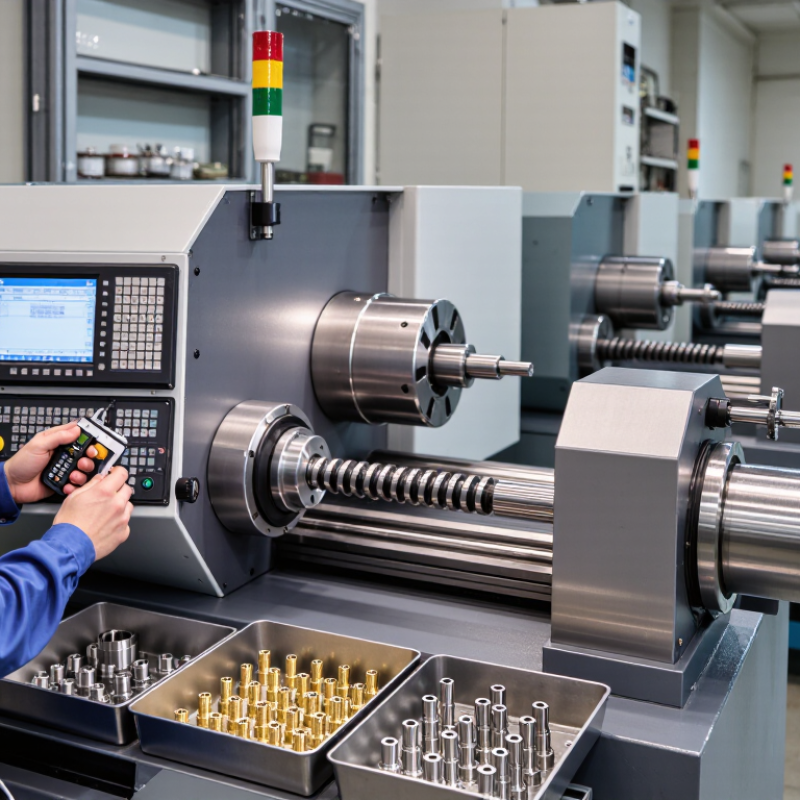
What CNC Screw Machines Are and How They Work
A CNC screw machine is an automated lathe designed to produce small, precise parts from bar stock. Despite the name, it can make far more than screws, including pins, bushings, connectors, and threaded components. The cutting tools shape the rotating material according to programmed instructions.
In a Swiss-type machine, the bar advances through a guide bushing while the cutting tools work close to the support point. This reduces deflection, which is especially useful for long, slender parts. Other CNC screw machines may hold the work differently, so the machine design should match the part’s dimensions and required tolerances. Small details matter.
A typical cycle may combine turning, drilling, grooving, and threading without removing the part from the machine. The CNC coordinates tool movement, spindle speed, and bar feed, while sensors and operator checks help keep production consistent. A first part still needs careful measurement. Tool wear, material variation, and setup errors can affect size or surface finish. A setup is rarely perfect on the first run. Operators often adjust offsets after inspecting early parts, then monitor dimensions during production. That practical check can be easy to underestimate.
Key Types and Capabilities of CNC Screw Machines
CNC screw machines are built for turning small, repeatable parts from bar stock. Swiss-type machines guide slender material close to the cutting tool, reducing deflection during machining. They suit long pins, medical-style components, and precision connectors. Small diameters need careful setup.
Fixed-headstock machines hold the bar in a stationary spindle while tools work near the chuck. They are often chosen for shorter, sturdier parts, such as bushings, fittings, and fasteners. Multi-spindle machines can perform several operations at once, helping high-volume production move quickly. Speed is not everything.
Capabilities vary with machine configuration, tooling, and material. A shop may combine turning, drilling, threading, and milling in one cycle, then use a bar feeder to support longer runs. Stainless steel, brass, and aluminum are common choices, but each cuts differently. Tool wear can change dimensions before it becomes obvious.
When comparing machine types, check the part drawing, required tolerances, batch size, and secondary operations. Ask how the shop measures critical features and manages chip removal. A polished sample is useful, but it does not reveal every production issue. That deserves a closer look.
Key CNC Screw Machine Types: Typical Bar Capacity
Indicative bar-stock diameter ranges commonly found across machine types; actual capacities vary by model and configuration.
How to read this chart: Each bar shows a representative capacity range in millimeters. Swiss-type machines are suited to slender, precision parts; fixed-headstock single-spindle machines often handle larger stock; multi-spindle machines can produce multiple parts concurrently.
How to Evaluate CNC Screw Machine Manufacturers in China
Evaluating CNC screw machine manufacturers in China takes more than comparing quoted prices. Ask which bar diameters, materials, and part tolerances their machines can handle. A supplier should explain spindle speed, tooling layout, and cycle-time assumptions in plain terms. Request a sample part made from your actual stock, not a polished demonstration piece. Check thread fit, burrs, surface finish, and dimensions against your drawing. Bring a micrometer. Measure more than one piece.
Then review the process behind the sample. Ask for inspection records, calibration dates, and a clear response plan when dimensions drift. A short video of a machine running helps, but it cannot replace a factory visit or a detailed technical call. Look at chip handling, coolant condition, guarding, and operator setup sheets. These reveal daily discipline. Also confirm spare-parts availability, training, commissioning support, and realistic delivery times. Low prices can hide weak after-sales support; high prices do not prove better engineering. Compare written specifications and exclusions line by line. One awkward point: buyers sometimes overlook their own incomplete drawings. Clarify tolerances and inspection methods before paying a deposit. Good evaluation is rarely neat, and some uncertainty remains.
Leading CNC Screw Machine Manufacturers in China
China’s CNC screw machine manufacturers serve industries that need consistent, high-volume production of small turned parts. Their equipment may handle brass, aluminum, and steel components, from threaded pins to precision bushings. Machine capability varies, so compare bar capacity, spindle configuration, tooling options, and achievable tolerances against your actual drawing. Details matter.
A credible manufacturer should explain how it controls quality during production, not only show a polished sample. Ask about first-article inspection, in-process checks, tool wear management, and measurement records. If possible, review sample parts and discuss the inspection method for critical dimensions. A catalogue cannot prove stable performance across a long production run. We should not assume otherwise. Clear communication about material, finish, quantity, and delivery expectations also helps prevent costly misunderstandings.
Tips: Request a quotation based on a complete drawing and material specification. Ask for recent inspection data on comparable parts. Confirm who handles revisions and how changes are documented. A small trial order can reveal gaps before larger production begins.
Industries and Applications Served by Chinese Manufacturers
China Top CNC Screw Machine Manufacturers? Industries and Applications Served by Chinese Manufacturers
Chinese CNC screw machine manufacturers serve industries that need repeatable, small-diameter metal components. Automotive production is a major market. OICA reported approximately 93.5 million vehicles produced worldwide in 2023. That scale creates steady demand for turned pins, bushings, shafts, and fuel-system fittings. Small parts matter. A slight burr or inconsistent diameter can complicate assembly, so buyers should assess tolerance records and sample parts, not just machine specifications.
Electronics and electrical equipment are another important application area. The Semiconductor Industry Association reported global semiconductor sales of $627.6 billion in 2024. CNC turning does not make chips, but it can produce connector shells, contacts, and precision housings used in related equipment. Manufacturers also supply hydraulic and pneumatic systems with valve components and threaded fittings. Some workshops serve medical-device suppliers with small stainless-steel parts, where surface finish and traceability need careful review. Yet a catalog claim is not enough. Production material, inspection method, and batch consistency may differ. Ask for a process sheet and inspect a representative run before committing.





