


China Top Circular Knitting Machine Manufacturers?

Choosing among China’s top Circular knitting machine manufacturers requires more than comparing prices or browsing polished product photos. A Circular knitting machine must match the fabric, production volume, and operating conditions of the mill. Gauge, cylinder diameter, feeder configuration, and knitting speed all affect what a machine can produce. Small specification differences can change fabric weight, texture, and output consistency.

Details matter.

This guide introduces manufacturers and the factors buyers can use to assess them. It considers machine range, customization options, quality-control practices, technical documentation, and after-sales support. Buyers should also ask for clear specifications, sample-fabric results, spare-parts availability, and realistic delivery and service commitments. Where possible, a factory visit or live machine demonstration can help verify how equipment performs beyond the catalogue. Not every machine fits every mill. A high-speed model may appear attractive, yet prove unsuitable for a particular yarn or production plan. Manufacturer claims should therefore be checked against actual requirements and, ideally, independent references. The comparisons that follow aim to make that evaluation more practical, while recognizing that product lines and service quality can change over time. The right choice is not simply a famous name; it is a dependable machine and support arrangement suited to the buyer’s work.
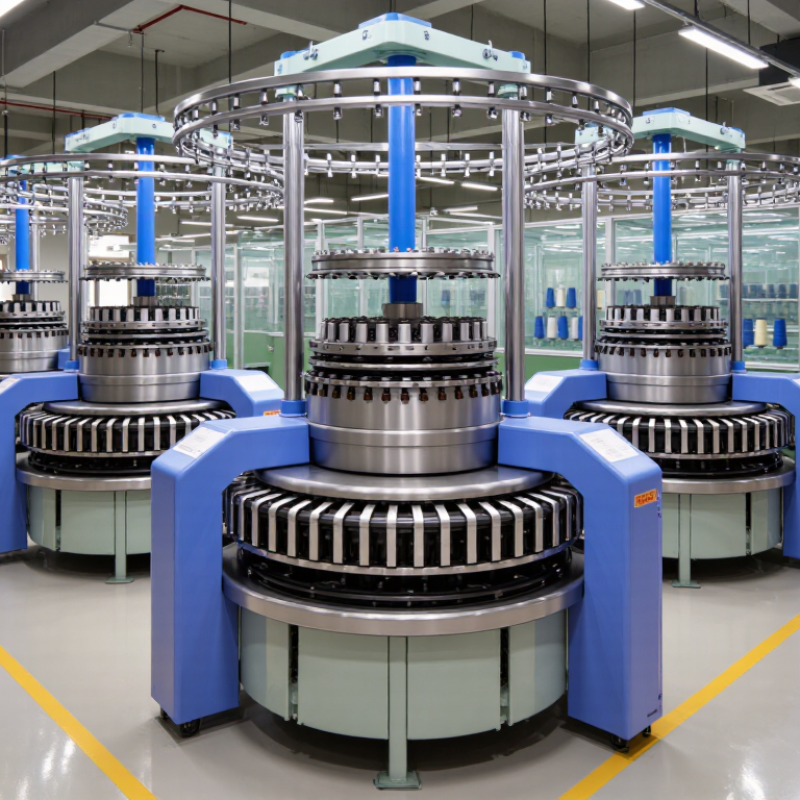
China Top Circular Knitting Machine Manufacturers?

Overview of China's Circular Knitting Machine Industry

China’s circular knitting machine industry is closely tied to a large, varied textile base. The China National Textile and Apparel Council reported that above-designated-size textile enterprises generated about RMB 4.7 trillion in operating revenue in 2023. That figure covers the wider textile sector, not knitting machinery alone, but it shows the scale of the domestic market. Demand comes from producers making jersey, rib, and interlock fabrics for apparel, underwear, and home textiles.

Machine selection depends on fabric type, gauge, diameter, and expected production speed. Buyers should also examine needle and cylinder quality, electronic control stability, spare-part availability, and the time needed for routine maintenance. Small details matter. A consistent stitch on a sample roll may not guarantee stable output across a long production run. The International Textile Machinery Federation’s International Textile Machinery Shipment Statistics tracks machinery shipments by category and region, offering useful context on investment cycles. However, shipment figures do not reveal every factory’s utilization or service experience. That gap deserves attention. China’s manufacturing ecosystem offers broad equipment choices, yet specifications and after-sales support can vary between suppliers. A careful assessment should include fabric trials, energy use, and repair response times—not only quoted speed or purchase price.

China Top Circular Knitting Machine Manufacturers? - Overview of China's Circular Knitting Machine Industry
Industry Dimension Overview Practical Details
Industry Scope China's circular knitting machine industry supplies equipment for producing tubular knitted fabrics. The manufacturing ecosystem includes machine assembly, knitting components, control systems, spare parts, and technical services. Capabilities vary by manufacturer and model.
Single Jersey Machines Produce single-knit fabrics with a distinct face and back. Common fabric uses include T-shirts, lightweight apparel, and some lining materials. Machine configuration and yarn selection determine fabric weight and hand feel.
Rib and Interlock Machines Use needle arrangements on more than one needle bed to form double-knit structures. Rib fabrics are commonly used for cuffs, collars, and stretch garments; interlock fabrics are often used where a more balanced, stable surface is required.
Fleece and Terry Machines Designed to form fabrics with a looped or fleecy back, depending on the machine setup. Typical applications include sweatshirts, casualwear, and selected towel or terry fabrics. Yarn feeding and loop formation affect fabric appearance and performance.
Jacquard Machines Provide pattern-selection capabilities for knitted designs. Depending on the system, they can produce patterned fabrics for apparel, sportswear, and home textiles. Pattern complexity and production speed depend on machine design and settings.
Key Specifications Important specifications include cylinder diameter, machine gauge, number of feeders, and knitting system. Gauge describes needle density along the needle bed and is commonly expressed as needles per inch. Diameter, gauge, and feeder count should be selected for the target fabric and production requirements.
Yarn Compatibility Machine suitability depends on yarn type, yarn size, fabric structure, and feeding equipment. Commonly knitted fibers include cotton, polyester, viscose, nylon, and blends. Elastane can be used on appropriately equipped machines and requires suitable yarn-feeding control.
Production Factors Output is influenced by machine speed and configuration as well as the fabric being produced. Stitch length, yarn characteristics, feeder count, machine diameter, pattern complexity, and downtime all affect production. Actual output should be confirmed through a model-specific trial.
Quality and Maintenance Consistent fabric production relies on correct setup, component condition, and process control. Routine checks commonly cover needles, sinkers, cams, yarn tension, lubrication, fabric defects, and machine cleanliness. Spare-part availability and service support are important purchasing considerations.
Purchasing Checklist Match the machine to the intended fabric, yarn, and production plan. Compare machine structure, supported gauges and diameters, automation, energy requirements, commissioning, training, warranty terms, spare parts, and after-sales support. Confirm specifications directly with the supplier.

Note: This overview describes common machine categories and selection factors. Specifications and performance depend on the individual machine model and operating conditions.


Types and Applications of Circular Knitting Machines

Circular knitting machines produce fabric in continuous tubes, but their construction determines the fabric’s weight, stretch, and surface. Single-jersey machines use one needle bed and commonly make T-shirts, lightweight tops, and linings. Rib machines use cylinder and dial needles to create stretchy cuffs, collars, and fitted garments. Interlock machines also use two needle beds, producing a stable, smooth fabric often chosen for underwear and sportswear. Specialized fleece machines can form a soft, brushed surface for sweatshirts and blankets.

Applications depend on more than machine type. Needle gauge, cylinder diameter, yarn choice, and feed setup all affect the finished fabric. A fine-gauge setup can create a lighter knit, while larger needles may suit thicker yarns.

In a production room, operators may check the fabric tube for dropped stitches and uneven tension before a full run. Categories can blur; a machine’s actual capabilities vary with its configuration, and that detail is easy to overlook.

Tips: Match the machine to the fabric sample, then confirm gauge and yarn compatibility. Ask for a test run. Check the tube under consistent lighting, since small flaws can hide in folded fabric.

Leading Chinese Manufacturers and Their Product Specialties

Chinese circular knitting machine manufacturers often focus on distinct fabric needs rather than one universal machine. Some specialize in single-jersey equipment for T-shirts and lightweight sportswear. Others build rib and interlock machines for cuffs, collars, underwear, and thicker knits. Jacquard models add patterned structures, though setup can take longer and requires careful yarn control. Details matter.

A manufacturer’s specialty is best judged by the fabrics its machines can reliably produce. Ask for sample swatches, machine gauge, cylinder diameter, and demonstrated production speed. For example, a fine-gauge machine may suit smooth, lightweight fabric, while a coarser setup can make heavier textures. These are not interchangeable choices. Also check whether technicians can help with installation, needle selection, and routine maintenance. A fast quoted speed means little if fabric quality drops during a long run. Some brochures make comparisons look simpler than they are; yarn, operator skill, and finishing all affect results. Small differences count. A factory visit or live production test can reveal details that a specification sheet misses.

Manufacturing Technologies and Quality Standards

Circular knitting machine performance depends on more than speed. Manufacturing begins with stable frames, accurately machined needle beds, and carefully aligned cylinders. CNC machining can reduce dimensional variation, while controlled heat treatment helps components resist wear. Skilled assembly still matters. Even a small misalignment can create dropped stitches or uneven fabric.

Quality checks should test both parts and finished machines. Ask for documented tolerances, component traceability, and inspection records. A practical run-in test can reveal vibration, oil leaks, unusual noise, and feeder inconsistencies. Request a fabric sample made at the intended gauge and operating speed. Quality systems such as ISO 9001 may support consistent processes, but certification alone does not prove a machine suits every fabric. A polished report is not the whole story; test conditions and acceptance limits need review.

Tips: Compare test results under similar settings. Check spare-part availability and maintenance instructions. Ask how rejected components are handled. These details can expose gaps that a showroom demonstration may miss. No inspection catches everything, and buyers should leave room for follow-up checks.

How to Evaluate and Select a Chinese Manufacturer

China Top Circular Knitting Machine Manufacturers?
How to Evaluate and Select a Chinese Manufacturer

Choosing a Chinese circular knitting machine manufacturer takes more than comparing quoted prices. Ask for a live trial using your yarn, target gauge, and fabric construction. Watch the machine run, then inspect the fabric under consistent lighting for dropped stitches, barré, and uneven loops. Request documented speed, needle-life, energy-use, and maintenance figures. A polished showroom helps, but it may not reveal the daily realities of production.

Material flexibility matters. Textile Exchange’s Materials Market Report 2024 estimates that global fiber production reached 124 million tonnes in 2023, with polyester making up about 57%. That scale underscores the need to confirm performance across the yarns your mill actually uses—not just one sample. Compare suppliers using the same test conditions, and ask for customer references with similar production needs. Check spare-parts availability, technician response times, training, and warranty terms in writing. A missed detail can become expensive.

Tips: Bring a fabric specification and a checklist to the factory. Ask the supplier to run your yarn for several hours, not just a brief demonstration. Request a sample roll and test it independently. Ask for proof. Then verify the claims.

How to Evaluate and Select a Chinese Circular Knitting Machine Manufacturer

Suggested evaluation weights for comparing suppliers. These are buyer-defined priorities, not market statistics or ratings of specific manufacturers.

Prioritize machine performance and quality assurance, then verify service capability, delivery terms, customization options, and total cost. Adjust the weights to match your product and production requirements.

Powder Coat Booths

For those larger-sized parts, or smaller quantity runs, we have 2 independent powder coat booths and ovens. The quality, durability and affordability of today’s powder coating finishes make this the process of choice for world-class companies.

Powder coating advantages over other forms of coating are many. Materials used in the Powder coating process can be metals and non-metals that come in a multitude of thicknesses, textures, colors, etc. Another of Powder coating’s biggest advantages over conventional coatings is its ability to create finishes in many different textures. Powder Coating Booths allow us the ability to apply these advantages to large products.

Wet Paint Line

Tri-State Fabricators runs a full-service conveyor line for painting. Wet painting can provide protection or decoration to many different part styles. From start to finish, every project is easier to undergo random and point-based inspection by our skilled painting team.

Advantages to our Wet Paint Line are these lines start with product prep and ends with a thorough inspection of a high quality finished product. Our ability to complete large and small projects with a superior finish and doing so in a timely and economical fashion. This passes along the savings in production to our customers. When powder coating ins not an option, our Wet Paint Line gets the job done right the first time.

Wet Paint Booths

When the parts get big and heavy we roll-out our custom paint racks and oversize booth. By utilizing our partnerships with all the major paint brands, we can match virtually any color with wet paint.

The advantages of having access to a Wet Paint Booth are many. Large projects of many different shapes can be loaded into the booth. The Wet Paint Booth offers an environment that is much more controlled than a typical parts painting operation.

Not only are they used because of their controlled environment, but they’re are also advantageous when it comes to applying paint to parts that are needed in industries that require specialty coatings such as medical, aerospace, etc.

Military CARC

Our military forces have some very high standards when it comes to the finish of their vehicles and equipment. From the first pre-treatment step to final coat, it takes a great deal of knowledge and experience to protect the men and women of our armed forces. They deserve only the best, and Tri-State Fabricators provides it.

All of our processes are closely monitored by our staff and management teams. Both of which are highly trained in the processes of metal fabrication and finishing. Tri-State Fabricators’ goal is to always fully satisfy each and every customer, including the military. We will always put a 110% into what we do.

Glass-Bead Blasting

Abrasive media blasting is an excellent way to remove old paint, rust, and increase the paint/powder adhesion. Glass beads produce a much smoother and brighter finish than angular abrasives; leaving the part clean yet without any dimensional change. Chemically inert and environmentally friendly, we can recycle our beads approximately 30 times; making them a more preferred method of metal cleaning or surface finishing.

Advantages to Glass Bead Blasting are many. Glass bead blast media is used when a project is needing rough surfaces need to become smooth for applications of coatings such as paint. It is typically used to clean paint and rust from a product surface without deforming the surface it is being used on. Overall, compared to many other blasting media, Glass Bead Blasting is a very economical choice and those savings are always passed on to our customers.

Part Washing

Tri-State Fabricators utilize a zinc phosphate wash to clean and etch the material to ensure the best paint adhesion possible. The unique design of our 3-stage wash system does the work like a 5-stage. From Cleaning and rinsing to conversion coating and post-treatment, Our Part Washing process is a complete service and works throughout the fabrication service and the finishing service.

Along with the previously mentioned benefits, Curing is a vital chemical reaction that leaves the product finish hard and relatively safe from mild abrasion and aggressive corrosion. This process can be done in more than one way; ambient air-dry or in curing ovens at temps that exceed 240°.

Burn-Off Oven

From fixing paint mistakes (someone else’s of course) to simply cleaning our paint line hooks, our burn-off oven is put to good use. After a quick burn-off, a little clean up, and a fresh coat of paint, your parts will look better than new.

Why does our Burn-Off Oven work so well? Because super heating the air around parts turns the materials into ashes. From paint and powder coatings to rubber and machining oils, high temps do the job without degrading the integrity of the part.

Masking

Masking is a vital part of producing high quality products. We have die-cut masking patterns to protect machined surfaces as well as a wide range of plugs and caps to protect threaded holes and bolts. We provide permanent and temporary masking.

Masking allows the selected sections of a product to be protected from a fabrication or finishing service. This can be with both chemicals when etching and tapes, paints when only finishing just a section of the product. Masking is great in aiding the customization process of a project.

Screen Printing

Screen printing is a photographic process that transfers artwork onto a porous nylon screen which allows colored ink to flow through the screen and be deposited on an aluminum or plastic component. We can generally have just about any design created onto a screen for your parts.

Some of the advantages of Screen Printing are, brand recognition for your business displaying on your products, assembly instructions, product warnings/hazards, etc. Tri-State Fabricators produces Screen Printing of the highest quality so you know it’s durable.

Metal Finishing

Metal Finishing is the art of treating the exterior portion of product, often metal but can also be made of other materials, so that the surface is clean and free of any debris. Then the process of applying coats or either paint of powder coat takes place. This coating process improves the quality of the product in both appearance and resistance to wear and corrosion.

Tri-State Fabricators, Inc., understands that a project typically isn’t complete until a high-quality finish has been added to your product. This is why our painting and powder coating teams continuously inspect the products throughout the Metal Finishing process.
