


Choosing China’s top Spindle Hub Bearing Assembly manufacturers requires more than comparing prices. Quality depends on materials, machining accuracy, heat treatment, sealing, and final inspection. This guide examines suppliers through those practical factors, rather than relying only on marketing claims or factory size.
Fit comes first. Manufacturers should demonstrate experience with wheel-end systems, spindle tolerances, bearing preload, and demanding operating conditions. Look for clear drawings, traceable material certificates, inspection records, and documented quality procedures. Reliable suppliers can explain their production process from forging or machining to assembly and packing. They should also discuss load ratings, lubrication, corrosion protection, and expected service life in measurable terms.
Details matter. A serious evaluation may include sample testing, dimensional checks, hardness verification, and installation trials. It should also review communication speed, engineering support, minimum order quantities, and replacement availability. Certifications can support credibility, but they do not replace independent verification. That assumption fails.
This article presents a practical framework for identifying capable Chinese manufacturers and comparing their strengths. Some suppliers may excel in custom engineering, while others focus on high-volume production or commercial vehicle applications. Their capabilities can change over time, so buyers should confirm current equipment, standards, and references directly. The strongest decision combines technical evidence, factory experience, transparent communication, and consistent delivery performance. Even a well-prepared shortlist needs review before a long-term purchasing agreement.
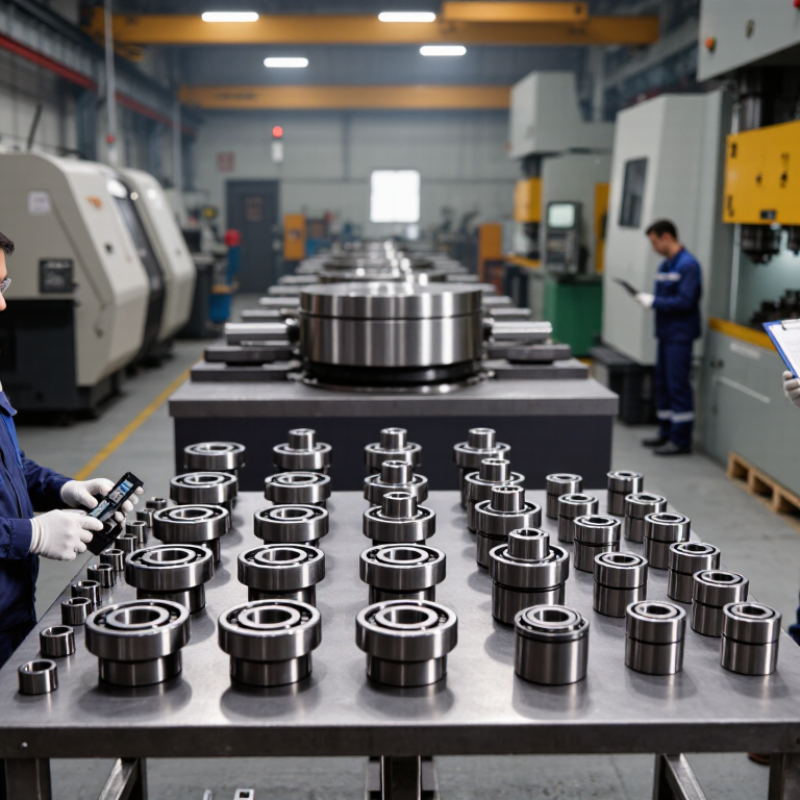
A spindle hub bearing assembly is a precision wheel-end component. It supports the hub, controls wheel rotation, and carries radial and axial loads. The assembly usually combines a bearing, hub flange, seals, and mounting features. Some designs include an integrated speed sensor. This reduces separate installation steps.
During inspection, I look for smooth rotation, correct preload, and even seal seating. A healthy assembly should rotate quietly without grinding or side play. The hub must also align accurately with the spindle and brake components. Small installation errors can create vibration, uneven tire wear, or premature bearing damage. Clean handling matters. Dirt can enter quickly.
Tips: Check the part number, mounting pattern, and sensor connector before installation. Use calibrated tools for fastener torque. Never force the assembly with a hammer. If resistance appears, inspect alignment and corrosion first.
Experienced technicians should also verify the spindle surface. A worn seating area may prevent proper bearing alignment. I have seen new assemblies fail because the mounting face was not cleaned. That mistake is easy to overlook. Temperature, load, road moisture, and maintenance quality affect service life. Manufacturer selection should include material quality, dimensional testing, sealing performance, and traceable inspection records. A low price alone says little about reliability. Even a detailed checklist can miss a hidden spindle defect.

China Top Spindle Hub Bearing Assembly Manufacturers?
Spindle hub bearing assemblies begin with load mapping, not machining. Engineers calculate radial, axial, and overturning forces from vehicle mass, cornering, braking, and road impacts. ISO 281 defines L10 bearing life as the load cycle point reached by 90% of identical bearings. This formula guides raceway diameter and rolling-element size. It remains a calculation, not a promise. Real roads are less polite.
Most assemblies use forged or hot-formed steel hubs. Turning establishes the flange, journal, and mounting faces. Heat treatment then raises hardness while controlling distortion. Grinding follows. Critical fits often require micrometer-level control, because excessive clearance creates noise, while excessive preload generates heat. ISO 492 provides dimensional and running-accuracy classes for rolling bearings. Manufacturers also measure flange runout, axial play, and torque after assembly.
Seals are fitted before calibrated grease filling. Automated presses help prevent brinelling and uneven force. End-of-line tests may check vibration, rotational resistance, temperature rise, and sensor output. IATF 16949-based quality systems connect these results with batch traceability and process controls. A 2024 automotive bearing market report estimated continued growth driven by electrification and higher wheel-speed demands. The figure varies by research method. That uncertainty deserves attention. Electric vehicles are quieter, so minor bearing defects become easier to hear. Design teams must therefore balance durability, friction, sealing, and acoustic performance rather than chase load capacity alone.
Choosing Chinese spindle hub bearing assembly manufacturers requires more than comparing catalog prices. Evaluate documented capability, process control, and communication discipline. A reliable factory should explain its bearing preload method, shaft runout limits, sealing design, and grease selection. Ask for current drawings and revision records.
Check ISO 9001 certification, but verify its scope and issuing body. Automotive applications may require IATF 16949 and customer-specific quality procedures. Request material certificates for steel, heat-treatment records, and dimensional inspection reports. Measurement equipment should show calibration dates, not vague assurances. Look for traceability from incoming steel to final assembly.
Request samples from the same production line, not a special laboratory batch. Test radial play, rotational torque, noise, temperature rise, and corrosion resistance under defined conditions. A capable manufacturer should provide control plans, failure analysis, and corrective-action records. PPAP support can also reveal process maturity.
Visit the factory when possible. Observe cleanliness, storage conditions, operator training, and inspection flow. A polished audit file is not proof of stable production. Small details matter, such as labeled bins and protected bearing races. Some suppliers may offer impressive testing but lack consistent lot traceability. That risk deserves attention.
Pricing should include tooling, inspection, packaging, and replacement terms. Communication speed is useful, but technical accuracy matters more. Ask difficult questions. Vague answers often indicate an unfinished quality system. Even experienced buyers can overvalue certificates and undervalue repeatability. Track several trial lots before approving regular shipments.
China Top Spindle Hub Bearing Assembly Manufacturers
Leading China-based spindle hub bearing assembly manufacturers support demanding applications in machine tools, automation equipment, and precision vehicle systems. Experienced factories usually manage turning, heat treatment, grinding, assembly, and inspection under one production system. This helps reduce variation between bearing rings, hubs, seals, and rolling elements. Buyers should review radial runout, axial clearance, preload stability, rotational noise, and operating temperature data. A reliable manufacturer should provide material certificates, inspection records, sample reports, and clear production traceability.
Tips: Ask for a complete drawing review before sampling. Confirm shaft size, mounting tolerance, grease type, sealing structure, load rating, and expected speed. Request endurance testing when the assembly will face continuous rotation or vibration. Small details matter. A clean test bench and calibrated measuring tools often reveal more than polished sales language. It is also useful to inspect packaging, rust protection, and batch labels before shipment.
No supplier is flawless. Even capable China-based manufacturers may need several sample adjustments when tolerances are extremely tight. I have found that open communication about failure conditions improves the final design. However, some specifications remain unclear until real operating data appears. Select manufacturers with documented quality procedures, engineering support, stable machining capacity, and responsive after-sales communication. Factory audits, trial orders, and independent dimensional checks can expose weaknesses early. Price matters, but unstable preload or uneven hub rotation can create higher costs later.
Technical comparison framework based on commonly used bearing standards, materials, inspection practices, and spindle hub assembly specifications. Company names and brand data are intentionally excluded.
| Evaluation Dimension | Common Industry Specification | Typical Technical Data | Assembly Relevance | Recommended Verification |
|---|---|---|---|---|
| Bearing steel | High-carbon chromium bearing steel | AISI 52100 / EN ISO 683-17 equivalent grades are widely used for rolling-element bearing rings and balls. | Supports high hardness, rolling-contact fatigue resistance, and dimensional stability after heat treatment. | Review material certificates, hardness records, and metallographic inspection reports. |
| Dimensional tolerance | ISO 492 bearing tolerance classes | P0 is the normal class; P6, P5, P4, and P2 provide progressively tighter dimensional and rotational tolerances. | Tighter classes can improve spindle runout and vibration performance when the shaft, housing, and preload are properly matched. | Request measurement data for bore, outside diameter, width, and radial runout. |
| Typical deep-groove bearing size | Common metric series | 6205: 25 mm bore × 52 mm outside diameter × 15 mm width; 6306: 30 mm × 72 mm × 19 mm. | Provides reference dimensions for checking assembly interchangeability and housing design. | Confirm the complete bearing designation, internal clearance, seal type, and dimensional drawings. |
| Angular-contact configuration | Single-row or paired angular-contact bearings | Common contact angles include 15°, 25°, and 40°, depending on speed and axial-load requirements. | Suitable for spindle assemblies requiring combined radial and axial load capacity. | Check contact angle, arrangement, preload class, and matched-set identification. |
| Preload control | Light, medium, or heavy preload classes | Preload is normally specified by axial force or displacement; the correct value depends on bearing size, speed, stiffness, and thermal conditions. | Controls spindle stiffness, running accuracy, heat generation, and service life. | Require preload measurement records at a defined temperature and rotational speed. |
| Sealing arrangement | Open, shielded, or contact-sealed design | Common designations include open, ZZ or 2Z shielded, and 2RS contact-sealed configurations. | Affects contamination protection, friction torque, lubricant retention, and maximum operating speed. | Verify seal material, seal construction, torque, leakage resistance, and speed rating. |
| Cage material | Steel, brass, or engineered polymer cage | Steel and brass cages are used for demanding load or temperature conditions; polyamide cages are common in many general-purpose applications. | Influences mass, friction, chemical compatibility, temperature capability, and noise behavior. | Check cage material, operating-temperature limits, lubricant compatibility, and batch traceability. |
| Hub material | Machined or forged alloy steel | Medium-carbon and alloy steels are commonly selected for hub strength, fatigue resistance, and dimensional stability. | The hub transmits torque and supports the bearing seats, flange, shaft interface, or tool interface. | Review chemical composition, heat-treatment condition, concentricity, and surface-hardness results. |
| Runout performance | Radial and axial total indicated runout | The allowable value must be defined by the spindle application; precision spindle systems generally require tighter limits than standard rotating equipment. | Directly affects machining accuracy, vibration, surface finish, and tool or rotor stability. | Measure the assembled unit on calibrated equipment using a documented datum and test speed. |
| Surface finish | Ground bearing seats and precision locating surfaces | Surface roughness requirements are application-specific; bearing seats typically require a controlled, damage-free finish rather than a generic visual standard. | Improves fit consistency, load distribution, sealing performance, and resistance to fretting. | Request profilometer results and records for cylindricity, roundness, taper, and seat geometry. |
| Quality management | ISO 9001 quality-management framework | ISO 9001 defines requirements for a quality-management system; certification does not by itself guarantee a specific bearing performance level. | Helps establish controlled purchasing, process monitoring, corrective action, and product traceability. | Verify certificate validity, scope, audit status, and process-specific inspection records. |
| Final assembly testing | Noise, vibration, torque, temperature, and runout testing | Test limits should be defined in the purchase specification and linked to the spindle’s rated speed and operating load. | Confirms that the bearing, hub, preload, lubrication, and sealing system operate as an integrated assembly. | Request a batch-specific inspection report with equipment calibration references and acceptance criteria. |
How to Select the Right Chinese Spindle Hub Bearing Assembly Manufacturer
China remains a major sourcing base for precision bearing assemblies. A 2024 IMARC Group assessment valued the global bearing market at more than USD 130 billion. This scale creates options, but also uneven quality. Select a manufacturer by matching evidence to your spindle’s actual operating conditions. Confirm speed, radial load, axial load, temperature, grease type, and required runout. Do not rely on a catalogue code alone.
Ask for ISO 9001 certification, material certificates, heat-treatment records, and inspection reports. ISO 281 provides a recognized method for calculating bearing rating life. Request measured results for concentricity, clearance, vibration, and surface finish. A capable supplier should explain its test equipment and sampling plan clearly. Check whether final assembly occurs under controlled cleanliness conditions. Small contaminants can become expensive failures.
Production capacity matters, but consistency matters more. Request samples from different batches, then compare noise, torque, and runout. The 2023 World Bank Logistics Performance Index shows that supply-chain reliability varies across markets, so inspect packaging and traceability controls carefully. A video audit helps, though it cannot replace an independent inspection. I would not accept impressive factory photographs as proof. They are only a starting point. Also, leave room for technical mistakes; your first specification may be incomplete. A pilot order, documented corrective-action process, and realistic lead-time review can reveal weaknesses before full production.
The chart presents a practical evaluation weighting for comparing manufacturers without relying on company or brand data. Product fit and quality assurance receive the highest priority, followed by testing capability, traceability, delivery performance, and communication. Buyers should confirm bearing dimensions, load ratings, speed requirements, tolerance class, sealing configuration, inspection records, and applicable ISO quality controls before placing an order.


For those larger-sized parts, or smaller quantity runs, we have 2 independent powder coat booths and ovens. The quality, durability and affordability of today’s powder coating finishes make this the process of choice for world-class companies.
Powder coating advantages over other forms of coating are many. Materials used in the Powder coating process can be metals and non-metals that come in a multitude of thicknesses, textures, colors, etc. Another of Powder coating’s biggest advantages over conventional coatings is its ability to create finishes in many different textures. Powder Coating Booths allow us the ability to apply these advantages to large products.
Tri-State Fabricators runs a full-service conveyor line for painting. Wet painting can provide protection or decoration to many different part styles. From start to finish, every project is easier to undergo random and point-based inspection by our skilled painting team.
Advantages to our Wet Paint Line are these lines start with product prep and ends with a thorough inspection of a high quality finished product. Our ability to complete large and small projects with a superior finish and doing so in a timely and economical fashion. This passes along the savings in production to our customers. When powder coating ins not an option, our Wet Paint Line gets the job done right the first time.
When the parts get big and heavy we roll-out our custom paint racks and oversize booth. By utilizing our partnerships with all the major paint brands, we can match virtually any color with wet paint.
The advantages of having access to a Wet Paint Booth are many. Large projects of many different shapes can be loaded into the booth. The Wet Paint Booth offers an environment that is much more controlled than a typical parts painting operation.
Not only are they used because of their controlled environment, but they’re are also advantageous when it comes to applying paint to parts that are needed in industries that require specialty coatings such as medical, aerospace, etc.
Our military forces have some very high standards when it comes to the finish of their vehicles and equipment. From the first pre-treatment step to final coat, it takes a great deal of knowledge and experience to protect the men and women of our armed forces. They deserve only the best, and Tri-State Fabricators provides it.
All of our processes are closely monitored by our staff and management teams. Both of which are highly trained in the processes of metal fabrication and finishing. Tri-State Fabricators’ goal is to always fully satisfy each and every customer, including the military. We will always put a 110% into what we do.
Abrasive media blasting is an excellent way to remove old paint, rust, and increase the paint/powder adhesion. Glass beads produce a much smoother and brighter finish than angular abrasives; leaving the part clean yet without any dimensional change. Chemically inert and environmentally friendly, we can recycle our beads approximately 30 times; making them a more preferred method of metal cleaning or surface finishing.
Advantages to Glass Bead Blasting are many. Glass bead blast media is used when a project is needing rough surfaces need to become smooth for applications of coatings such as paint. It is typically used to clean paint and rust from a product surface without deforming the surface it is being used on. Overall, compared to many other blasting media, Glass Bead Blasting is a very economical choice and those savings are always passed on to our customers.
Tri-State Fabricators utilize a zinc phosphate wash to clean and etch the material to ensure the best paint adhesion possible. The unique design of our 3-stage wash system does the work like a 5-stage. From Cleaning and rinsing to conversion coating and post-treatment, Our Part Washing process is a complete service and works throughout the fabrication service and the finishing service.
Along with the previously mentioned benefits, Curing is a vital chemical reaction that leaves the product finish hard and relatively safe from mild abrasion and aggressive corrosion. This process can be done in more than one way; ambient air-dry or in curing ovens at temps that exceed 240°.
From fixing paint mistakes (someone else’s of course) to simply cleaning our paint line hooks, our burn-off oven is put to good use. After a quick burn-off, a little clean up, and a fresh coat of paint, your parts will look better than new.
Why does our Burn-Off Oven work so well? Because super heating the air around parts turns the materials into ashes. From paint and powder coatings to rubber and machining oils, high temps do the job without degrading the integrity of the part.
Masking is a vital part of producing high quality products. We have die-cut masking patterns to protect machined surfaces as well as a wide range of plugs and caps to protect threaded holes and bolts. We provide permanent and temporary masking.
Masking allows the selected sections of a product to be protected from a fabrication or finishing service. This can be with both chemicals when etching and tapes, paints when only finishing just a section of the product. Masking is great in aiding the customization process of a project.
Screen printing is a photographic process that transfers artwork onto a porous nylon screen which allows colored ink to flow through the screen and be deposited on an aluminum or plastic component. We can generally have just about any design created onto a screen for your parts.
Some of the advantages of Screen Printing are, brand recognition for your business displaying on your products, assembly instructions, product warnings/hazards, etc. Tri-State Fabricators produces Screen Printing of the highest quality so you know it’s durable.
Metal Finishing is the art of treating the exterior portion of product, often metal but can also be made of other materials, so that the surface is clean and free of any debris. Then the process of applying coats or either paint of powder coat takes place. This coating process improves the quality of the product in both appearance and resistance to wear and corrosion.
Tri-State Fabricators, Inc., understands that a project typically isn’t complete until a high-quality finish has been added to your product. This is why our painting and powder coating teams continuously inspect the products throughout the Metal Finishing process.

