


China Top Temperature Thermistor Manufacturers and Suppliers

China’s temperature-sensing supply chain serves demanding applications, from electric-vehicle battery packs to building controls and medical equipment. At the center is the Temperature Thermistor: a compact sensor whose resistance changes predictably with temperature. Small component. Serious responsibility.

Choosing a manufacturer takes more than comparing unit prices. Buyers should examine resistance at 25°C (R25), tolerance, response time, long-term stability, packaging, and calibration records. A probe mounted against a metal surface may behave differently from one exposed to moving air. Those details affect performance in real use. They deserve careful review.

Reliable comparisons also need traceable evidence. NIST Technical Note 1297, by metrologists Barry N. Taylor and Chris E. Kuyatt, explains how measurement uncertainty should accompany reported results. Their guidance supports a practical point for thermistor buyers: request test conditions and uncertainty information, not just a nominal accuracy figure. This is a paraphrase, not a direct quotation. Industry forecasts can help frame demand, but estimates vary with product scope and market definitions; any figures should be checked against the original report. This introduction does not invent a market statistic or an expert quotation.

The following guide examines China-based manufacturers and suppliers through product range, quality controls, customization, documentation, and communication. Certifications matter. So does a clear answer about lead time. A polished catalog is useful, but sample testing and consistent batch records offer stronger evidence. No supplier fits every application. The right choice depends on the temperature range, installation conditions, and acceptable measurement uncertainty.
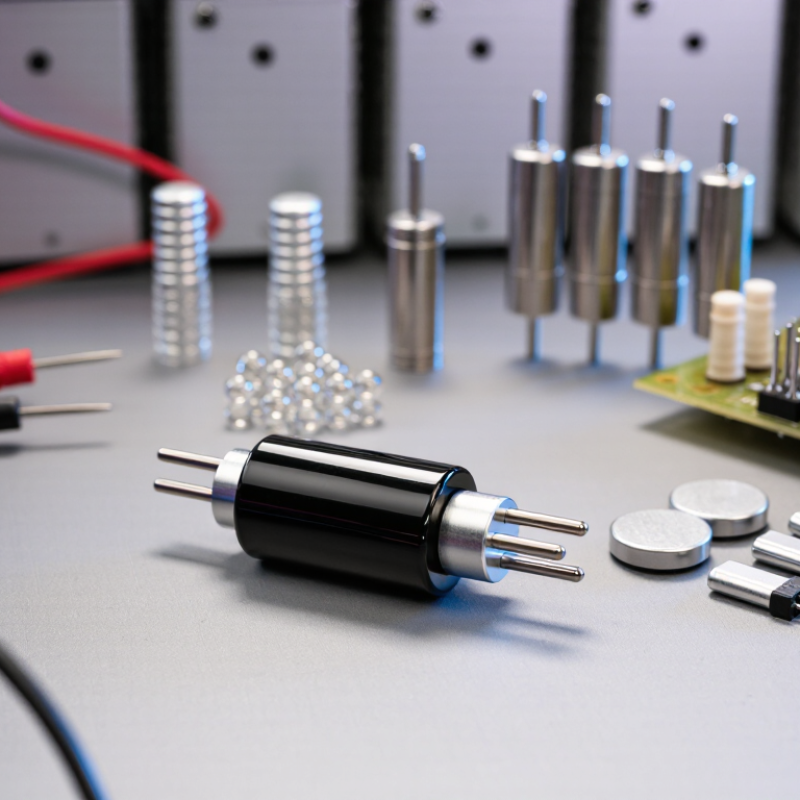
China Top Temperature Thermistor Manufacturers and Suppliers

What Temperature Thermistors Are and How They Work

A temperature thermistor is a semiconductor sensor whose electrical resistance changes as its temperature changes. Most common designs are NTC types: resistance falls as temperature rises. PTC types behave differently, with resistance increasing over a specified range. Small, but sensitive. This response makes thermistors useful for monitoring air, liquid, equipment surfaces, and battery packs.

Inside the sensor, temperature changes the movement of charge through its material. A measuring circuit detects the resulting resistance and converts it into a temperature reading. The relationship is nonlinear, so accurate readings depend on the thermistor’s calibration data and the circuit design. Placement matters too. A sensor pressed against a warm metal pipe may read differently from one exposed to moving air. A tidy lab result can still mislead in real use.

Tips: Check the operating range, tolerance, and response time before choosing a thermistor. Use suitable calibration data, and avoid passing excessive current through the sensor; self-heating can distort its reading. Secure the sensing tip firmly, but consider how insulation or airflow may affect the result. That detail is easy to miss.


Main Types and Applications of Temperature Thermistors

Temperature thermistors are resistive sensors whose resistance changes with temperature. The two main types are NTC and PTC. NTC thermistors decrease in resistance as they warm, making them useful for precise measurement and temperature compensation. PTC thermistors increase in resistance, so they can support over-temperature protection and current limiting. A small bead or probe can sit close to a battery cell, motor winding, or appliance surface.

Applications vary with the required response, temperature range, and circuit design. NTC parts are common in HVAC equipment, medical instruments, automotive systems, and consumer electronics. PTC devices often serve as resettable protection components in power supplies and motors. MarketsandMarkets’ Temperature Sensor Market report estimates that the broader temperature-sensor market will grow from USD 6.3 billion in 2023 to USD 8.1 billion by 2028. This figure covers multiple sensor technologies, not thermistors alone, so it should not be read as a thermistor-specific forecast.

Selection depends on more than nominal resistance. Engineers check tolerance, dissipation, response time, and the sensor’s thermal contact with the measured surface. Poor placement can make readings lag behind the real temperature. Fit matters. Encapsulation also affects response and durability, especially where vibration or moisture is present. Bench testing under actual operating conditions can reveal errors that a datasheet will not.

China’s Temperature Thermistor Manufacturing Landscape

China’s temperature thermistor manufacturing landscape spans component production, custom assembly, and application support. Suppliers commonly work with bead, disc, and probe-style sensors, matching resistance curves to a customer’s operating range. Ceramic formulation and firing conditions influence consistency. So does lead attachment.

In a factory, technicians may inspect dimensions, measure resistance at controlled temperatures, and compare readings against reference instruments. A stainless-steel probe might be tested in a stirred bath, while a small bead sensor needs careful handling to avoid damage. Calibration details matter. Ask for the measurement range, tolerance, response time, and test conditions—not just a nominal resistance value.

The supply chain includes material processors, sensor assemblers, cable and probe fabricators, and testing laboratories. This structure can support tailored designs, but documentation quality may vary between suppliers. That deserves a closer look. Request sample test reports and clarify how batches are traced. Field conditions also complicate selection: airflow, moisture, vibration, and installation depth can shift real-world readings. A technically sound specification still needs validation in the intended equipment.

China Top Temperature Thermistor Manufacturers and Suppliers - China’s Temperature Thermistor Manufacturing Landscape
Dimension Industry Overview Practical Sourcing or Design Consideration
Product categories Temperature thermistors are commonly classified as NTC (negative temperature coefficient) or PTC (positive temperature coefficient). NTC devices generally decrease in resistance as temperature rises; PTC devices generally increase in resistance over their operating region. Specify the required resistance-versus-temperature behavior and whether the part is intended for measurement, compensation, temperature limitation, or protection.
Common sensing materials NTC elements are commonly made from mixed metal-oxide ceramics. PTC temperature-sensing elements can use ceramic materials with a pronounced resistance change near a transition temperature. Material composition and processing affect the resistance curve, stability, response, and usable temperature range. Request the applicable datasheet and performance limits for the exact part.
Typical product formats Available formats include leaded beads, glass-encapsulated probes, epoxy-coated sensors, disc or chip components, and probe assemblies with insulated leads or housings. Choose a format based on mounting method, environmental exposure, electrical insulation, mechanical durability, and required response time.
Resistance specification NTC thermistors are often specified by their resistance at a reference temperature, commonly 25 °C, together with a resistance tolerance and temperature-resistance data. Compare the reference resistance, tolerance, B-value or full resistance table, and measurement conditions. A single resistance value is not enough to define a sensor.
Temperature range Operating and storage limits vary substantially with element material, encapsulation, lead construction, and probe assembly. There is no single temperature range that applies to all thermistors. Confirm both operating and storage limits from the product datasheet, including any derating requirements and the temperature range over which accuracy is specified.
Manufacturing workflow Typical production may include ceramic powder preparation, forming, sintering, electrode application, lead attachment, encapsulation or assembly, calibration, and final inspection. The sequence depends on product type. Ask which process steps are controlled in-house and how changes to materials, tooling, or production sites are managed.
Quality verification Relevant checks can include resistance measurement at a defined temperature, resistance-temperature curve verification, insulation or withstand testing where applicable, visual inspection, and environmental or reliability testing. Request test methods, acceptance criteria, sampling plans, traceability details, and reports appropriate to the application. Requirements should be agreed before production.
Application areas Temperature thermistors are used in electronics, household appliances, battery systems, automotive equipment, HVAC, and industrial monitoring and control. For safety-critical or regulated equipment, verify component qualification, operating conditions, and end-product compliance requirements rather than relying on a general product description.
Standards references IEC 60539-1 covers generic requirements for directly heated NTC thermistors. IEC 60738-1 covers generic requirements for directly heated PTC thermistors. Confirm the current applicable edition and whether a specific product is tested or declared to meet the relevant requirements; the standard reference alone does not establish product certification.
Supplier evaluation Manufacturers and suppliers may differ in product range, customization capability, production capacity, documentation, inspection controls, and support for design validation. Evaluate the exact part number and manufacturing site. Compare datasheets, samples, change-control practices, lead times, and quality documentation before qualification.
Data note This table summarizes general thermistor technologies and sourcing considerations. Performance values and capabilities are product-specific and should be confirmed in the applicable manufacturer datasheet and test documentation.

Leading Temperature Thermistor Manufacturers and Suppliers in China

China’s leading temperature thermistor manufacturers and suppliers serve appliance, automotive, medical, and industrial customers. Their capabilities vary: some focus on high-volume NTC probes, while others build custom assemblies for demanding temperature ranges. MarketsandMarkets’ Temperature Sensor Market report projected growth from USD 6.3 billion in 2023 to USD 8.1 billion by 2028. This broader market includes several sensor types, not thermistors alone, but it signals rising demand for dependable measurement.

For buyers, a useful supplier review starts with the application. Compare resistance tolerance, B-value accuracy, response time, operating range, and long-term drift. Ask how samples are tested, and request traceable calibration records where measurement accuracy is critical. A probe that performs well in still air may respond differently when embedded in a metal housing. Small details matter. Cable length, sealing method, and lead attachment can change field performance.

Manufacturers should also provide repeatable production data, not only a polished datasheet. Check batch consistency and clarify how design changes are communicated. A neat datasheet is not enough. In practice, buyers sometimes overlook validation under real mounting conditions; that shortcut can create avoidable redesign work. Supplier selection is strongest when engineering teams test representative samples under the actual temperature cycles, vibration, and moisture expected in service.

How to Evaluate and Select a Chinese Thermistor Supplier

When evaluating a Chinese thermistor supplier, start with the application, not the catalogue. A probe for a battery pack faces different thermal cycling, vibration, and response-time demands than one used in an appliance. The International Energy Agency’s Global EV Outlook 2024 reports nearly 14 million electric-car sales in 2023, about 18% of global car sales. That scale makes robust thermal monitoring increasingly important.

Ask suppliers for resistance-temperature curves, tolerance limits, beta values, response-time data, and test conditions. Request sample parts from regular production, then compare readings across several units and temperatures. For NTC devices, check whether testing aligns with IEC 60539-1. Review material traceability, calibration records, change-control procedures, and evidence of consistent lot quality. An ISO 9001 certificate helps, but it does not prove a particular thermistor will meet your design.

Look closely at the details. Can the supplier explain how lead length or encapsulation affects response time? Are failure reports specific, or just reassuring? I would not treat a neat certificate as proof of stable production; paper can look better than a factory floor. The Grand View Research thermistor market report describes continued market growth, but demand forecasts cannot replace direct verification. Keep a dated sample, agree on acceptance criteria, and document who approves any design or material change.

NTC Thermistor Resistance vs. Temperature

Illustrative values calculated with the beta model for a 10 kΩ NTC thermistor at 25°C and a beta value of 3950 K.

Use this characteristic as a reference when reviewing supplier datasheets. Confirm the nominal resistance, beta value, tolerance, operating-temperature range, and test conditions for each thermistor; actual component values may differ.

Powder Coat Booths

For those larger-sized parts, or smaller quantity runs, we have 2 independent powder coat booths and ovens. The quality, durability and affordability of today’s powder coating finishes make this the process of choice for world-class companies.

Powder coating advantages over other forms of coating are many. Materials used in the Powder coating process can be metals and non-metals that come in a multitude of thicknesses, textures, colors, etc. Another of Powder coating’s biggest advantages over conventional coatings is its ability to create finishes in many different textures. Powder Coating Booths allow us the ability to apply these advantages to large products.

Wet Paint Line

Tri-State Fabricators runs a full-service conveyor line for painting. Wet painting can provide protection or decoration to many different part styles. From start to finish, every project is easier to undergo random and point-based inspection by our skilled painting team.

Advantages to our Wet Paint Line are these lines start with product prep and ends with a thorough inspection of a high quality finished product. Our ability to complete large and small projects with a superior finish and doing so in a timely and economical fashion. This passes along the savings in production to our customers. When powder coating ins not an option, our Wet Paint Line gets the job done right the first time.

Wet Paint Booths

When the parts get big and heavy we roll-out our custom paint racks and oversize booth. By utilizing our partnerships with all the major paint brands, we can match virtually any color with wet paint.

The advantages of having access to a Wet Paint Booth are many. Large projects of many different shapes can be loaded into the booth. The Wet Paint Booth offers an environment that is much more controlled than a typical parts painting operation.

Not only are they used because of their controlled environment, but they’re are also advantageous when it comes to applying paint to parts that are needed in industries that require specialty coatings such as medical, aerospace, etc.

Military CARC

Our military forces have some very high standards when it comes to the finish of their vehicles and equipment. From the first pre-treatment step to final coat, it takes a great deal of knowledge and experience to protect the men and women of our armed forces. They deserve only the best, and Tri-State Fabricators provides it.

All of our processes are closely monitored by our staff and management teams. Both of which are highly trained in the processes of metal fabrication and finishing. Tri-State Fabricators’ goal is to always fully satisfy each and every customer, including the military. We will always put a 110% into what we do.

Glass-Bead Blasting

Abrasive media blasting is an excellent way to remove old paint, rust, and increase the paint/powder adhesion. Glass beads produce a much smoother and brighter finish than angular abrasives; leaving the part clean yet without any dimensional change. Chemically inert and environmentally friendly, we can recycle our beads approximately 30 times; making them a more preferred method of metal cleaning or surface finishing.

Advantages to Glass Bead Blasting are many. Glass bead blast media is used when a project is needing rough surfaces need to become smooth for applications of coatings such as paint. It is typically used to clean paint and rust from a product surface without deforming the surface it is being used on. Overall, compared to many other blasting media, Glass Bead Blasting is a very economical choice and those savings are always passed on to our customers.

Part Washing

Tri-State Fabricators utilize a zinc phosphate wash to clean and etch the material to ensure the best paint adhesion possible. The unique design of our 3-stage wash system does the work like a 5-stage. From Cleaning and rinsing to conversion coating and post-treatment, Our Part Washing process is a complete service and works throughout the fabrication service and the finishing service.

Along with the previously mentioned benefits, Curing is a vital chemical reaction that leaves the product finish hard and relatively safe from mild abrasion and aggressive corrosion. This process can be done in more than one way; ambient air-dry or in curing ovens at temps that exceed 240°.

Burn-Off Oven

From fixing paint mistakes (someone else’s of course) to simply cleaning our paint line hooks, our burn-off oven is put to good use. After a quick burn-off, a little clean up, and a fresh coat of paint, your parts will look better than new.

Why does our Burn-Off Oven work so well? Because super heating the air around parts turns the materials into ashes. From paint and powder coatings to rubber and machining oils, high temps do the job without degrading the integrity of the part.

Masking

Masking is a vital part of producing high quality products. We have die-cut masking patterns to protect machined surfaces as well as a wide range of plugs and caps to protect threaded holes and bolts. We provide permanent and temporary masking.

Masking allows the selected sections of a product to be protected from a fabrication or finishing service. This can be with both chemicals when etching and tapes, paints when only finishing just a section of the product. Masking is great in aiding the customization process of a project.

Screen Printing

Screen printing is a photographic process that transfers artwork onto a porous nylon screen which allows colored ink to flow through the screen and be deposited on an aluminum or plastic component. We can generally have just about any design created onto a screen for your parts.

Some of the advantages of Screen Printing are, brand recognition for your business displaying on your products, assembly instructions, product warnings/hazards, etc. Tri-State Fabricators produces Screen Printing of the highest quality so you know it’s durable.

Metal Finishing

Metal Finishing is the art of treating the exterior portion of product, often metal but can also be made of other materials, so that the surface is clean and free of any debris. Then the process of applying coats or either paint of powder coat takes place. This coating process improves the quality of the product in both appearance and resistance to wear and corrosion.

Tri-State Fabricators, Inc., understands that a project typically isn’t complete until a high-quality finish has been added to your product. This is why our painting and powder coating teams continuously inspect the products throughout the Metal Finishing process.
