


China Top Engine Control System Parts Suppliers?

China has become an important sourcing base for Engine Control System Parts, serving passenger cars, commercial vehicles, agricultural equipment, and industrial engines. Its supplier network includes manufacturers of engine control units, wiring connectors, pressure sensors, temperature sensors, relays, and related electronic modules. However, “top” should not mean the largest factory alone. It should reflect engineering capability, production consistency, documentation, and after-sales support.

A dependable supplier can explain its testing process clearly. Look for supplier quality records, component traceability, electrical testing, and controlled calibration procedures. Certifications such as IATF 16949 or ISO 9001 can support confidence, but certificates should never replace practical verification. Request samples, inspection reports, connector drawings, operating-temperature data, and warranty terms before placing a larger order. Small details matter. A loose terminal, incomplete pin definition, or unstable sensor signal can create costly field problems.

This guide examines leading Chinese suppliers through a practical purchasing lens. It considers product range, customization ability, manufacturing experience, export communication, delivery performance, and technical responsiveness. Factory visits, video inspections, and independent sample testing may reveal differences that online catalogs hide. No supplier is perfect. Even experienced manufacturers may face material changes, tooling delays, or communication gaps. That reality deserves attention rather than polished promises. Buyers should compare evidence, not just quotations, and maintain clear specifications throughout the project. The strongest partnership usually develops through transparent feedback, documented corrective action, and steady performance over time.
China Top Engine Control System Parts Suppliers?

Define Engine Control Parts Within China’s 2023 Vehicle Base of 30.16M Units

China’s 2023 vehicle market reached 30.16 million units, creating a broad demand base for engine control components. These parts regulate fuel delivery, air intake, ignition, emissions, and engine protection. The main group includes electronic control units, sensors, actuators, throttle modules, fuel injectors, wiring harnesses, and sealed connectors.

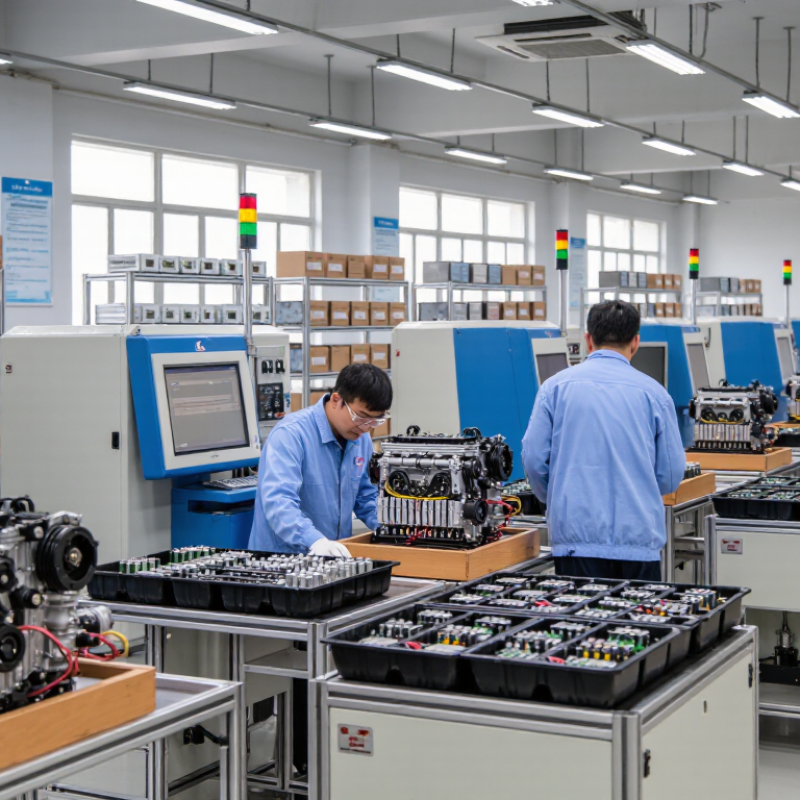
A reliable supplier should provide stable output across high production volumes. During a factory visit, buyers may inspect automated soldering lines, connector sealing tests, and traceability labels. Practical checks also include cold-start testing, vibration testing, heat exposure, and communication testing between the control unit and sensors. Quality systems such as IATF 16949 can support consistency, but certificates alone are not enough. Real process records matter.

Look closely at failure data. A sensor may work on a clean laboratory bench but drift after months of heat and engine vibration. That detail is easy to miss. Suppliers should explain calibration control, software version management, material changes, and warranty analysis. They should also provide clear inspection reports and sample approval records. “Top” should not mean the largest factory. It should mean dependable performance, responsive engineering, and traceable production. No checklist is perfect, and buyers should review field results before approving long-term supply.

China Top Engine Control System Parts Suppliers? - Define Engine Control Parts Within China’s 2023 Vehicle Base of 30.16M Units

Part Family Definition Within an Engine Control System Primary Vehicle Applicability 2023 China Market Context Typical Technical Requirements Supplier Evaluation Metrics
Engine Control Unit (ECU) Embedded controller that processes sensor signals and commands fuel, ignition, air, emissions and protection functions. Gasoline, diesel, plug-in hybrid and other vehicles using an internal-combustion engine. Relevant mainly to the non-new-energy portion of China’s vehicle market; new-energy vehicles represented 31.6% of 2023 vehicle sales, based on official annual sales data. Automotive-grade electronics, real-time processing, functional safety capability, cybersecurity support and diagnostic communication. Software maturity, hardware traceability, failure-rate data, cybersecurity process, validation coverage and production capacity.
Crankshaft and Camshaft Position Sensors Provide rotational position and speed information required for injection timing, ignition timing and engine synchronization. Most electronically controlled gasoline and diesel engines. Part of the control architecture for internal-combustion engines within China’s 2023 production base of 30.161 million vehicles. Stable pulse output, resistance to heat and vibration, accurate air-gap tolerance and reliable sealing. Signal accuracy, thermal cycling performance, vibration durability, ingress protection and end-of-line testing.
Air, Pressure and Temperature Sensors Measure intake air mass or pressure, manifold pressure, intake temperature, coolant temperature and related operating conditions. Gasoline, diesel and hybrid powertrains with electronically managed air-fuel control. Supports fuel-efficiency and emissions control across the internal-combustion segment; exact installed volume is not separately reported in national vehicle statistics. Accurate measurement over wide temperature and pressure ranges, fast response and resistance to oil, moisture and chemical exposure. Calibration stability, drift rate, response time, environmental durability and consistency between production lots.
Oxygen and Exhaust-Gas Sensors Monitor exhaust oxygen or gas composition so the controller can adjust combustion and verify emissions-system performance. Gasoline and diesel vehicles equipped with closed-loop combustion or emissions control. Important for vehicles subject to China VI emission requirements; applicability depends on engine type and exhaust architecture. Fast activation, measurement accuracy, high-temperature endurance and contamination resistance. Response time, aging performance, heater reliability, exhaust durability and conformity-test results.
Electronic Throttle and Air-Control Actuators Regulate airflow into the engine and support torque management, idle control and safety fallback functions. Primarily gasoline and hybrid engines using electronic throttle control. Directly linked to electronically controlled passenger-car and light-commercial powertrains produced in China during 2023. Position sensing redundancy where required, precise motor control, low friction and fail-safe operation. Position accuracy, response time, duty-cycle endurance, return-to-safe-state behavior and diagnostic capability.
Fuel Injectors and Fuel-Metering Modules Meter and deliver fuel according to ECU commands to achieve the required air-fuel ratio and engine torque. Gasoline direct injection, port injection and diesel engine systems. Applicable to the internal-combustion and hybrid portion of China’s 2023 vehicle base; battery-electric vehicles do not use engine fuel injectors. Flow uniformity, spray pattern consistency, pressure resistance, chemical compatibility and low leakage. Flow deviation, response repeatability, durability testing, cleanliness control and batch traceability.
Ignition Coils and Spark-Control Components Convert low-voltage electrical energy into the high-voltage spark required for gasoline-engine combustion. Gasoline and gasoline-electric hybrid vehicles. Relevant to gasoline-powered vehicles within the non-new-energy and hybrid market; not used by battery-electric vehicles. High-voltage insulation, electromagnetic compatibility, thermal endurance and reliable spark energy. Secondary-voltage stability, misfire performance, heat-cycle durability, insulation resistance and EMC results.
Exhaust-Gas Recirculation and Variable-Valve Actuators Control exhaust recirculation, valve timing or valve lift to improve efficiency, torque and emissions performance. Modern gasoline, diesel and hybrid engines, depending on engine design. Increasingly relevant to engines designed for lower emissions and improved fuel economy under China’s current emission framework. Position control, resistance to soot and oil deposits, thermal durability and accurate response under changing load. Actuation accuracy, deposit tolerance, cycle life, leakage control and calibration compatibility.
Wiring, Connectors and Communication Interfaces Transmit power and sensor/actuator signals between the ECU, engine components and vehicle networks. All electronically controlled internal-combustion and hybrid vehicles. Required across the engine-control supply chain, although national vehicle statistics do not separately disclose connector or harness volumes. Low contact resistance, terminal retention, sealing, heat resistance, vibration durability and electromagnetic compatibility. Crimp quality, pull-out force, continuity testing, water ingress protection, material consistency and delivery reliability.
Diagnostics, Calibration and Software Services Provide fault detection, parameter calibration, service diagnostics, functional monitoring and software updates. All vehicles using electronically controlled engines, including hybrids. Supports compliance, warranty analysis and lifecycle maintenance for the engine-equipped portion of the 2023 market. Diagnostic communication, data integrity, secure updates, fault coverage and documented calibration control. Defect-detection rate, software release control, cybersecurity governance, test coverage and after-sales support capability.
Market reference: China produced approximately 30.161 million motor vehicles and sold approximately 30.094 million in 2023. New-energy vehicle sales reached approximately 9.495 million, equal to about 31.6% of total vehicle sales. The remaining sales share is not identical to engine-equipped vehicles because hybrid definitions and vehicle classifications can vary; therefore, part-level installed volumes are not presented as official national totals.
Reference basis: China Association of Automobile Manufacturers (CAAM), 2023 annual automobile production and sales statistics; China VI emission requirements; commonly applied automotive quality, functional-safety, EMC and environmental-durability practices. No company or brand data is included.

Classify China’s ECU, Sensor, Injector, Ignition, and Actuator Suppliers

China Top Engine Control System Parts Suppliers

China’s engine control system suppliers can be classified by ECU, sensor, injector, ignition, and actuator capability. ECU suppliers should demonstrate circuit protection, software calibration support, and stable communication testing. Ask for test records covering voltage changes, heat exposure, vibration, and moisture. Sensor suppliers commonly produce oxygen, pressure, temperature, speed, and position sensors. Their accuracy depends on calibration equipment and connector quality. A clean catalog is not proof of stable production.

Injector suppliers need precise flow control, spray-pattern inspection, and leak testing. Request sample data at different pressures and temperatures. Ignition suppliers may provide coils, control modules, and related components. Check insulation strength, heat resistance, and spark consistency. Actuator suppliers often cover throttle, idle-air, valve, and turbo-control applications. Confirm response time, mounting dimensions, gear durability, and feedback-signal accuracy. Small differences can cause difficult engine faults.

Tips: Compare samples from at least two production batches. Check markings, packaging, connector fit, and measured performance. Request material certificates and a clear warranty process. During evaluation, keep written test conditions. I would recheck calibration after shipping, because transport damage is easy to overlook. Also, some suppliers explain specifications poorly. That does not always mean poor engineering, but it deserves careful questioning.

Rank Suppliers by IATF 16949, ISO 26262, and OE Certification

China Top Engine Control System Parts Suppliers?

Ranking engine control system parts suppliers requires more than checking price or delivery speed. IATF 16949 should carry the highest weight because it shows disciplined automotive quality management. Review the certificate scope, site address, expiry date, and recent audit findings. A certificate from another facility is not enough. That detail is often missed.

ISO 26262 evidence deserves the next ranking position for safety-related control units and electronic modules. Look for documented hazard analysis, safety goals, traceability, and independent assessment records. Supplier engineers should explain how software changes are reviewed and tested. Clear answers matter. Vague answers are warning signs.

OE certification can confirm production approval, dimensional consistency, and compatibility with vehicle platforms. However, buyers should verify whether approval covers the exact engine control part, not merely a similar product family.

40%
IATF 16949
35%
ISO 26262 capability
25%
OE certification

I would rank suppliers using weighted evidence: IATF 16949 at 40 percent, ISO 26262 capability at 35 percent, and OE certification at 25 percent. Factory audits, sample testing, warranty data, and change-control records should adjust the final score. This method is practical, but not perfect.

Certification dates can be current while daily execution slips. Local process observations still matter. Ask to see calibration logs, end-of-line test results, and controlled storage areas. Reliable suppliers can show these records without hesitation.

Compare Production Capacity Against China’s 2023 Vehicle Exports of 4.91M

China Top Engine Control System Parts Suppliers?

China exported 4.91 million vehicles in 2023, creating a demanding benchmark for engine control system parts suppliers. However, vehicle exports do not equal electronic component output. A reliable supplier should show monthly production capacity, tested assembly lines, and documented expansion plans. Ask for evidence, not confident estimates. Factory visits can reveal whether capacity is real or mostly outsourced.

In practical sourcing work, I compare annual output with forecast demand, then check peak-month performance. A supplier producing 100,000 control units monthly may appear strong, but testing limits can reduce usable capacity. Look for automated inspection, software validation, traceable batches, and stable component sourcing. Capacity should include quality control. Otherwise, the number looks impressive but explains little. This is where many comparisons become imperfect.

Tips: Request twelve months of production records, not one strong month. Compare available capacity with China’s 4.91 million exported vehicles, but keep a safety margin. Review failure rates, lead times, and emergency response procedures. Ask how quickly the supplier can add a testing shift. Small details matter. A supplier may pass an audit yet struggle during seasonal demand, so reassess capacity before signing a long-term contract.

Evaluate Quality, Lead Time, Compatibility, and Total Procurement Cost

China Top Engine Control System Parts Suppliers?

China offers a broad supplier base for engine control system parts, including sensors, actuators, wiring assemblies, and control modules. Quality should be verified through material records, dimensional reports, electrical testing, and traceable batch numbers. A supplier with documented process controls is more dependable than one relying on inspection alone. Ask for sample units before approving regular production.

Lead time needs practical review. Confirm component availability, tooling status, production capacity, and inspection schedules in writing. A quoted delivery date may exclude testing or export preparation. Request a small pilot order and measure the actual cycle time. This reveals delays that a polished quotation can hide.

Compatibility requires more than matching a part number. Check voltage range, connector geometry, communication protocol, temperature tolerance, and software requirements. Engineering teams should compare drawings and test samples against the existing engine system. Minor differences can create expensive field failures. Total procurement cost includes tooling, sampling, freight, duties, testing, warranty handling, and possible production downtime. The lowest unit price is not always the lowest cost. I have seen a cheaper component require extra inspection and rework, weakening its original advantage. Supplier evaluation is rarely perfect. Leave room for technical questions, corrective actions, and a second review before scaling orders.

China Engine Control System Parts Supplier Benchmark

Procurement comparison across quality, lead-time reliability, compatibility coverage, and total cost efficiency. All values are normalized benchmark indices from 0 to 100; higher scores indicate better procurement performance.

The benchmark reflects common automotive electronics sourcing criteria: quality-system maturity, delivery reliability, vehicle and ECU compatibility coverage, and total landed cost including logistics, inspection, warranty exposure, and after-sales handling. OEM-authorized supply typically scores highest for quality and compatibility, while regional distribution channels may offer stronger cost efficiency.

Powder Coat Booths

For those larger-sized parts, or smaller quantity runs, we have 2 independent powder coat booths and ovens. The quality, durability and affordability of today’s powder coating finishes make this the process of choice for world-class companies.

Powder coating advantages over other forms of coating are many. Materials used in the Powder coating process can be metals and non-metals that come in a multitude of thicknesses, textures, colors, etc. Another of Powder coating’s biggest advantages over conventional coatings is its ability to create finishes in many different textures. Powder Coating Booths allow us the ability to apply these advantages to large products.

Wet Paint Line

Tri-State Fabricators runs a full-service conveyor line for painting. Wet painting can provide protection or decoration to many different part styles. From start to finish, every project is easier to undergo random and point-based inspection by our skilled painting team.

Advantages to our Wet Paint Line are these lines start with product prep and ends with a thorough inspection of a high quality finished product. Our ability to complete large and small projects with a superior finish and doing so in a timely and economical fashion. This passes along the savings in production to our customers. When powder coating ins not an option, our Wet Paint Line gets the job done right the first time.

Wet Paint Booths

When the parts get big and heavy we roll-out our custom paint racks and oversize booth. By utilizing our partnerships with all the major paint brands, we can match virtually any color with wet paint.

The advantages of having access to a Wet Paint Booth are many. Large projects of many different shapes can be loaded into the booth. The Wet Paint Booth offers an environment that is much more controlled than a typical parts painting operation.

Not only are they used because of their controlled environment, but they’re are also advantageous when it comes to applying paint to parts that are needed in industries that require specialty coatings such as medical, aerospace, etc.

Military CARC

Our military forces have some very high standards when it comes to the finish of their vehicles and equipment. From the first pre-treatment step to final coat, it takes a great deal of knowledge and experience to protect the men and women of our armed forces. They deserve only the best, and Tri-State Fabricators provides it.

All of our processes are closely monitored by our staff and management teams. Both of which are highly trained in the processes of metal fabrication and finishing. Tri-State Fabricators’ goal is to always fully satisfy each and every customer, including the military. We will always put a 110% into what we do.

Glass-Bead Blasting

Abrasive media blasting is an excellent way to remove old paint, rust, and increase the paint/powder adhesion. Glass beads produce a much smoother and brighter finish than angular abrasives; leaving the part clean yet without any dimensional change. Chemically inert and environmentally friendly, we can recycle our beads approximately 30 times; making them a more preferred method of metal cleaning or surface finishing.

Advantages to Glass Bead Blasting are many. Glass bead blast media is used when a project is needing rough surfaces need to become smooth for applications of coatings such as paint. It is typically used to clean paint and rust from a product surface without deforming the surface it is being used on. Overall, compared to many other blasting media, Glass Bead Blasting is a very economical choice and those savings are always passed on to our customers.

Part Washing

Tri-State Fabricators utilize a zinc phosphate wash to clean and etch the material to ensure the best paint adhesion possible. The unique design of our 3-stage wash system does the work like a 5-stage. From Cleaning and rinsing to conversion coating and post-treatment, Our Part Washing process is a complete service and works throughout the fabrication service and the finishing service.

Along with the previously mentioned benefits, Curing is a vital chemical reaction that leaves the product finish hard and relatively safe from mild abrasion and aggressive corrosion. This process can be done in more than one way; ambient air-dry or in curing ovens at temps that exceed 240°.

Burn-Off Oven

From fixing paint mistakes (someone else’s of course) to simply cleaning our paint line hooks, our burn-off oven is put to good use. After a quick burn-off, a little clean up, and a fresh coat of paint, your parts will look better than new.

Why does our Burn-Off Oven work so well? Because super heating the air around parts turns the materials into ashes. From paint and powder coatings to rubber and machining oils, high temps do the job without degrading the integrity of the part.

Masking

Masking is a vital part of producing high quality products. We have die-cut masking patterns to protect machined surfaces as well as a wide range of plugs and caps to protect threaded holes and bolts. We provide permanent and temporary masking.

Masking allows the selected sections of a product to be protected from a fabrication or finishing service. This can be with both chemicals when etching and tapes, paints when only finishing just a section of the product. Masking is great in aiding the customization process of a project.

Screen Printing

Screen printing is a photographic process that transfers artwork onto a porous nylon screen which allows colored ink to flow through the screen and be deposited on an aluminum or plastic component. We can generally have just about any design created onto a screen for your parts.

Some of the advantages of Screen Printing are, brand recognition for your business displaying on your products, assembly instructions, product warnings/hazards, etc. Tri-State Fabricators produces Screen Printing of the highest quality so you know it’s durable.

Metal Finishing

Metal Finishing is the art of treating the exterior portion of product, often metal but can also be made of other materials, so that the surface is clean and free of any debris. Then the process of applying coats or either paint of powder coat takes place. This coating process improves the quality of the product in both appearance and resistance to wear and corrosion.

Tri-State Fabricators, Inc., understands that a project typically isn’t complete until a high-quality finish has been added to your product. This is why our painting and powder coating teams continuously inspect the products throughout the Metal Finishing process.


