China Top SMC Enclosure Hydraulic Press Manufacturer?
Choosing the right China manufacturer for a Smc Enclosure Hydraulic Press requires more than comparing prices. The machine must deliver stable pressure, accurate temperature control, and repeatable molding results. These details directly affect enclosure strength, surface finish, and production waste.
An experienced manufacturer should understand SMC compression molding from mold design through final commissioning. Look for suitable pressing capacity, often ranging from 1,000 to 3,000 tons for large electrical enclosures. A rigid frame, balanced hydraulic cylinders, and precise platen parallelism are essential. Heating zones should maintain even temperatures across the mold surface. Small temperature differences can create visible defects.
Ask for practical evidence. This may include factory videos, equipment drawings, customer references, test reports, and sample enclosures. A reliable supplier should explain cycle times, energy use, maintenance requirements, and safety controls clearly. International certifications can support credibility, but certificates alone do not prove manufacturing quality.
No supplier is perfect. A careful review should identify limitations, including delivery schedules, spare parts support, or software compatibility. This part is often overlooked. It should not be.
Factory visits and live testing provide valuable experience before purchase. During testing, inspect pressure stability, hydraulic noise, oil temperature, control response, and mold opening accuracy. The best partner is not always the largest company. It is the manufacturer that combines engineering knowledge, transparent communication, documented quality control, and responsive after-sales service. Such evaluation helps buyers select a Smc Enclosure Hydraulic Press that performs reliably in demanding production environments.
What Is an SMC Enclosure Hydraulic Press?
What Is an SMC Enclosure Hydraulic Press?
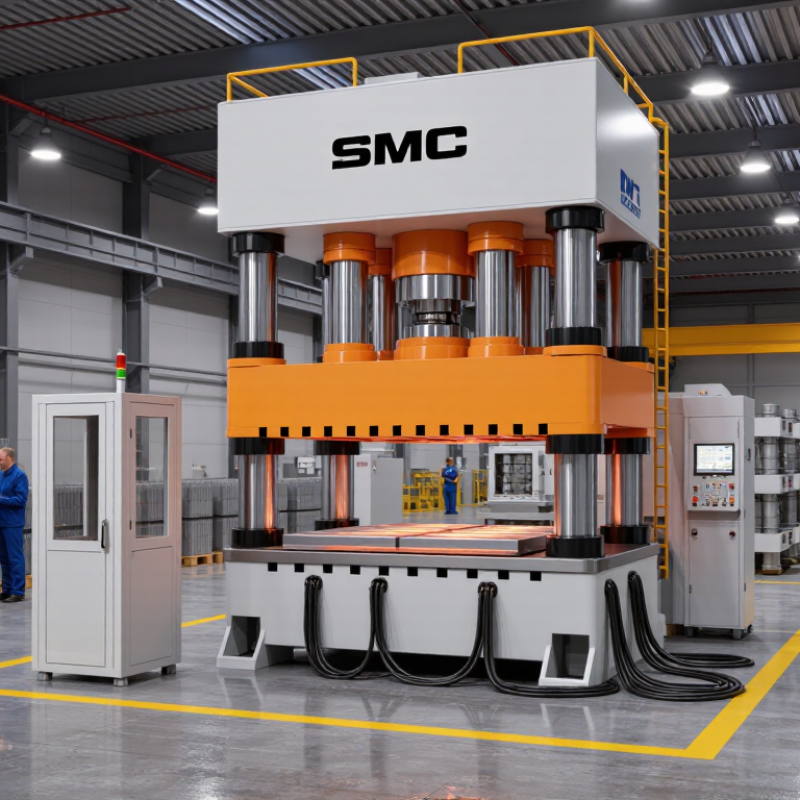
An SMC enclosure hydraulic press forms sheet molding compound into protective electrical housings. SMC combines resin, glass fibers, fillers, and additives. Under controlled heat and pressure, this material flows into a steel mold. The press then creates a rigid enclosure with consistent walls and precise mounting points.
A typical production cycle starts with measured SMC charges placed inside a heated mold. Hydraulic cylinders close the mold evenly, while temperature and pressure remain closely monitored. Many systems operate between 140°C and 170°C, depending on the compound and mold design. The result can include cable openings, hinges, ribs, and textured surfaces. These details reduce later machining.
Press selection requires more than checking nominal tonnage. Engineers should review projected area, mold size, closing force, daylight, stroke, and ejection method. A suitable control system records pressure, temperature, and cycle time for each batch. This supports traceability and helps identify process drift before defects increase.
Real production is rarely perfect. A first mold trial may show flash, uneven gloss, or slight warping. Small adjustments to charge placement and heating often solve these issues. However, excessive pressure can damage inserts or shorten mold life. Operators need practical training, not only a technical manual. Regular inspection remains essential. Even a strong enclosure can fail when corners, seals, or mounting holes receive poor attention.
How SMC Enclosure Hydraulic Presses Work
An SMC enclosure hydraulic press converts hydraulic energy into controlled molding force. Pre-cut sheet molding compound is placed inside a heated steel mold. The press closes slowly, allowing the material to soften and flow into ribs, corners, and mounting bosses. Pressure then consolidates the glass-fiber composite against the cavity walls.
A practical cycle uses several coordinated stages. The hydraulic system builds clamping force, while cartridge heaters maintain an even mold temperature. Typical SMC molding pressures range from about 70 to 150 bar, depending on geometry and material formulation. Press capacity may exceed 1,000 tons for large electrical enclosures. The exact value depends on projected area, not guesswork.
Industry data supports the process. Grand View Research’s 2024 analysis estimates continued growth in the global SMC market through the next decade, driven by electrical, transport, and construction applications. A U.S. Department of Energy materials review also identifies fiber-reinforced composites as useful for reducing component weight and corrosion exposure. In factory work, those benefits appear as lighter covers and cleaner edges. Yet temperature balance remains difficult. A cold mold corner can leave a dull surface or incomplete rib. That assumption often fails. Operators should verify pressure, temperature, cure time, and part thickness with recorded measurements. Even experienced teams sometimes trust the machine display too much. A small sensor error can become a warped enclosure.
How to Evaluate an SMC Enclosure Press Supplier
China Top SMC Enclosure Hydraulic Press Manufacturer?
How to Evaluate an SMC Enclosure Press Supplier
Choosing an SMC enclosure hydraulic press supplier requires more than comparing prices. Review the supplier’s engineering experience with enclosure molds, electrical cabinets, and reinforced composite materials. Ask for verified data on clamping force, platen parallelism, heating uniformity, cycle time, and energy use. Ask for evidence.
A reliable supplier should provide clear drawings, hydraulic diagrams, control-system details, and safety documentation. Request sample parts made with similar SMC materials. Examine their surface finish, wall thickness, trimming accuracy, and deformation after cooling. Factory acceptance testing should include pressure holding, temperature control, emergency stops, and repeated production cycles. Visit the workshop when possible. A video cannot show everything.
Tips: Check whether installation training, spare parts, software support, and response times are written into the contract. Speak with recent customers, not only selected references. Compare the warranty with the machine’s actual workload. A low quotation may exclude mold trials, shipping protection, or commissioning. That detail is easy to miss. A careful review still has limits, because future material changes can affect cycle stability. Leave room for process trials, design adjustments, and honest technical discussion before approval.
How to Evaluate an SMC Enclosure Press Supplier
A practical supplier assessment should prioritize verified production capability, process quality, lifecycle support, and commercial reliability. The weighting below is an illustrative procurement scorecard for comparing SMC enclosure hydraulic press suppliers.
Use the scorecard with documented evidence such as press specifications, sample-part results, quality records, service response commitments, and total-cost-of-ownership calculations.
Applications and Benefits of SMC Enclosure Hydraulic Presses
SMC enclosure hydraulic presses are built for consistent, high-pressure molding of electrical and industrial enclosures. SMC, or sheet molding compound, combines resin, glass fiber, and mineral fillers. Under heat and pressure, it forms rigid parts with accurate dimensions.
These presses support meter boxes, control cabinets, junction boxes, and protective housings. Their closed-mold process helps create clean surfaces and repeatable wall thickness. Operators can also produce ribs, mounting points, and cable openings in one molding cycle. This reduces secondary cutting and assembly work. The result is often lighter than metal, while resisting moisture, corrosion, and outdoor exposure.
In practical production, stable temperature control matters as much as pressing force. Uneven heating may cause warping, weak corners, or visible flow marks. That problem is easy to underestimate. Proper mold maintenance, material storage, and pressure adjustment improve reliability. Automated controls can shorten cycle times, but they cannot replace skilled inspection. A small mold defect may appear across hundreds of enclosures.
The best equipment should match the product size, mold structure, and expected production volume. Engineers usually review platen parallelism, hydraulic stability, safety controls, and energy use before selection. Testing with the actual SMC formulation remains essential. Laboratory results may not fully represent factory conditions. Careful trials reveal air pockets, release issues, and dimensional changes before regular production begins.





