


Choosing a Rubber Deflashing Machine supplier in China takes more than comparing quoted prices. Rubber parts vary in size, hardness, shape, and flash thickness. A machine suited to small molded seals may not handle larger, irregular components efficiently. Details matter.
This guide introduces practical ways to assess Chinese suppliers and their equipment. It considers machine type, processing capacity, control options, and the support available after purchase. For cryogenic systems, ask about operating requirements, cooling procedures, and how sample parts perform after deflashing. For mechanical methods, examine the tooling, part-handling process, and possible effects on delicate edges. Request clear specifications, not just broad claims.
A factory visit can help. So can a live demonstration using your own parts. Ask how cycle time is measured, which consumables are needed, and whether replacement components are readily available. Check installation guidance, operator training, warranty terms, and response times for technical questions. These points may seem ordinary. They often shape the real cost of ownership.
No supplier is automatically the best fit for every application. Published capacity figures may not reflect your actual part mix, and a polished sample may not reveal routine production limits. That deserves a second look. Before shortlisting a supplier, compare test results, communication quality, and documented service commitments. This overview offers a grounded starting point, while final decisions should follow trials with representative parts and a careful review of your production needs.
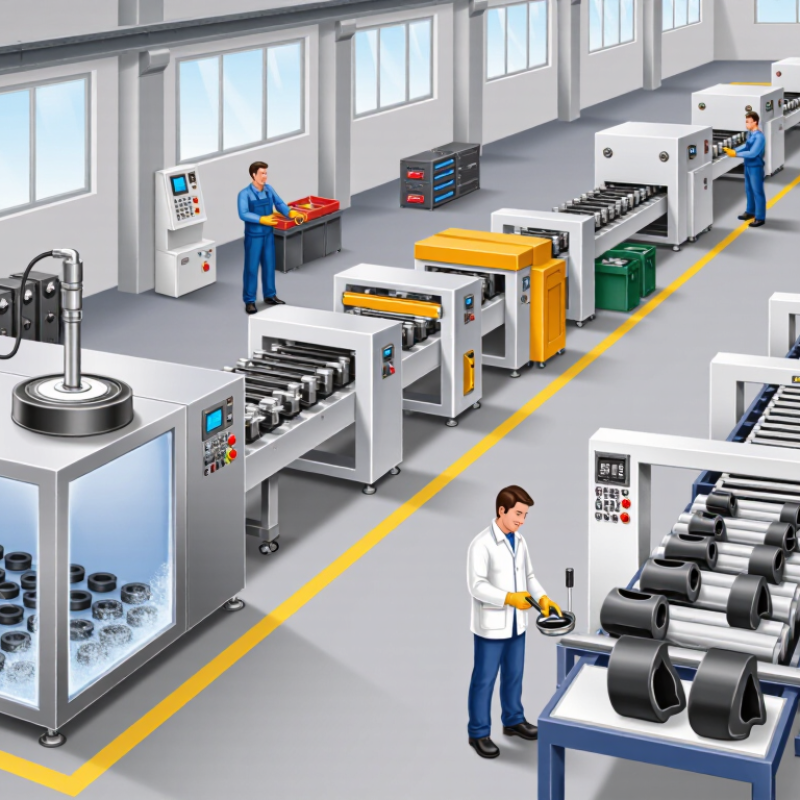
A rubber deflashing machine removes thin excess material, called flash, from molded rubber parts. Flash forms where mold sections meet or around vents. It can leave a rough edge on a seal, gasket, or small component. The machine cleans these edges more consistently than hand trimming, though results depend on the part and process.
One common method is cryogenic deflashing. The machine cools rubber parts, often with liquid nitrogen, until their thin flash becomes brittle. A controlled stream of media then knocks away the flash while the thicker parts remain intact. Other machines use mechanical cutting or tumbling. Each method suits different shapes, compounds, and production volumes. That distinction matters. A compound that performs well in one process may crack or retain flash in another. Operators should inspect sample parts and check for surface damage before setting production parameters.
Tips: Ask suppliers about process trials, cycle time, media recovery, and cleaning needs. Compare finished samples under consistent lighting. Small details count. A little flash left in a groove can still affect fit, so inspection criteria should be agreed upon before purchasing.

Rubber deflashing machines remove thin flash left around molded parts, but different compounds need different settings. Cryogenic systems cool components until the flash becomes brittle, then use tumbling or impact to separate it. Temperature control matters: too little cooling leaves ragged edges, while excessive cooling can stress delicate parts. Short trials with actual production samples are more useful than relying on a catalog description.
Compare chamber capacity, batch size, cycle time, and nitrogen consumption under similar operating conditions. Ask how temperature is measured and whether recipes can be saved for different rubber formulations. Screen openings and part geometry also affect separation; tiny seals may pass through an unsuitable screen. Test parts carefully. A specification sheet can omit details that become obvious only during unloading.
For supplier evaluation, request sample results, maintenance guidance, and clear explanations of safety interlocks and ventilation needs. Check access to the chamber, filters, and worn components; these details shape daily downtime. Noise and energy use deserve attention too. There is no universal machine setting, and a promising trial may not match every mold or shift. That uncertainty should be discussed openly.
China’s rubber deflashing machine supplier market is layered, not dominated by one supplier type. Large equipment makers often serve tire and automotive component plants, while smaller specialist workshops build compact machines for molded seals, gaskets, and precision parts. Some suppliers integrate automation; others focus on the machine, leaving loading and inspection to the buyer. The distinction matters. A polished catalog does not prove stable results across different rubber compounds.
Demand provides context, but not a direct measure of deflashing-machine sales. The International Rubber Study Group’s 2024 outlook projected global rubber demand growth of about 1.8% that year, supporting continued production activity across rubber goods. Buyers should compare suppliers by process capability: batch size, part geometry, trimming method, cycle time, and scrap rate. Ask for trials using the actual compound and representative parts. Watch the edge closely. A small burr can become a costly defect downstream.
China-based suppliers also differ in service depth. Some provide tooling, installation, and operator training; others rely on local partners or remote support. Check spare-part lead times, safety documentation, and whether quoted output includes manual handling. One point is easy to miss: published capacity may assume ideal parts and experienced operators. Request test records, then confirm the result on your own line.
Typical supplier archetypes and their relative breadth of deflashing-related offerings
Specialist machine builders focus on deflashing equipment, while integrated equipment makers may offer a broader range of machinery and services. Rubber molding equipment suppliers and trading or export sourcing firms can also serve buyers. The 1–5 scores are a qualitative comparison of typical offering breadth—not supplier counts, market shares, or audited market data.
When evaluating Chinese rubber deflashing machine suppliers, look beyond catalog photos and headline capacity. Ask for a test using parts close to your own rubber compound, shape, and flash thickness. Ask for evidence. Request cycle-time data, finished-part samples, and a clear description of the deflashing method. A polished sample is useful, but it does not show how consistently a machine performs across a full production shift.
Inspect the machine’s working details. Check guarding, access for cleaning, control-panel language, and how operators adjust temperature or processing time. Ask what routine maintenance involves and which wear parts may need replacement. If possible, observe a live test or request an unedited video showing loading, processing, and unloading. Small details matter. A supplier that explains limitations plainly may be more dependable than one promising a perfect result for every part.
Service quality needs specific answers. Who handles installation guidance, troubleshooting, and operator training? What response time can the supplier commit to, and what support is available after delivery? Ask for a written spare-parts list and clear warranty terms. Compare replies to the same technical questions, not just quoted prices. I would still verify every claim with a trial; remote demonstrations can miss problems that appear during longer runs. Keep records of agreed specifications, sample results, and service commitments before placing an order.
A rubber deflashing machine quote is useful only when its scope is clear. Compare the same part, material, flash thickness, and target output with every supplier. Ask whether the price includes tooling, installation, operator training, and initial spare parts. Small omissions add up.
Request a sample test using your actual molded components. Check edges under consistent lighting, then record cycle time, reject rate, and surface damage. Ask for the recommended operating range and expected maintenance intervals. A polished video is not enough. The test should reflect your production conditions, not just a supplier’s best-case setup.
When comparing suppliers in China, review technical drawings, inspection records, and references for similar rubber parts. Confirm who handles commissioning and how quickly common wear parts can be shipped. Warranty terms matter, but so does practical support after delivery. One detail may remain uncertain: quoted capacity can change with part geometry and operator skill. Ask the supplier to state assumptions in writing, then compare the full operating cost rather than the headline price.


For those larger-sized parts, or smaller quantity runs, we have 2 independent powder coat booths and ovens. The quality, durability and affordability of today’s powder coating finishes make this the process of choice for world-class companies.
Powder coating advantages over other forms of coating are many. Materials used in the Powder coating process can be metals and non-metals that come in a multitude of thicknesses, textures, colors, etc. Another of Powder coating’s biggest advantages over conventional coatings is its ability to create finishes in many different textures. Powder Coating Booths allow us the ability to apply these advantages to large products.
Tri-State Fabricators runs a full-service conveyor line for painting. Wet painting can provide protection or decoration to many different part styles. From start to finish, every project is easier to undergo random and point-based inspection by our skilled painting team.
Advantages to our Wet Paint Line are these lines start with product prep and ends with a thorough inspection of a high quality finished product. Our ability to complete large and small projects with a superior finish and doing so in a timely and economical fashion. This passes along the savings in production to our customers. When powder coating ins not an option, our Wet Paint Line gets the job done right the first time.
When the parts get big and heavy we roll-out our custom paint racks and oversize booth. By utilizing our partnerships with all the major paint brands, we can match virtually any color with wet paint.
The advantages of having access to a Wet Paint Booth are many. Large projects of many different shapes can be loaded into the booth. The Wet Paint Booth offers an environment that is much more controlled than a typical parts painting operation.
Not only are they used because of their controlled environment, but they’re are also advantageous when it comes to applying paint to parts that are needed in industries that require specialty coatings such as medical, aerospace, etc.
Our military forces have some very high standards when it comes to the finish of their vehicles and equipment. From the first pre-treatment step to final coat, it takes a great deal of knowledge and experience to protect the men and women of our armed forces. They deserve only the best, and Tri-State Fabricators provides it.
All of our processes are closely monitored by our staff and management teams. Both of which are highly trained in the processes of metal fabrication and finishing. Tri-State Fabricators’ goal is to always fully satisfy each and every customer, including the military. We will always put a 110% into what we do.
Abrasive media blasting is an excellent way to remove old paint, rust, and increase the paint/powder adhesion. Glass beads produce a much smoother and brighter finish than angular abrasives; leaving the part clean yet without any dimensional change. Chemically inert and environmentally friendly, we can recycle our beads approximately 30 times; making them a more preferred method of metal cleaning or surface finishing.
Advantages to Glass Bead Blasting are many. Glass bead blast media is used when a project is needing rough surfaces need to become smooth for applications of coatings such as paint. It is typically used to clean paint and rust from a product surface without deforming the surface it is being used on. Overall, compared to many other blasting media, Glass Bead Blasting is a very economical choice and those savings are always passed on to our customers.
Tri-State Fabricators utilize a zinc phosphate wash to clean and etch the material to ensure the best paint adhesion possible. The unique design of our 3-stage wash system does the work like a 5-stage. From Cleaning and rinsing to conversion coating and post-treatment, Our Part Washing process is a complete service and works throughout the fabrication service and the finishing service.
Along with the previously mentioned benefits, Curing is a vital chemical reaction that leaves the product finish hard and relatively safe from mild abrasion and aggressive corrosion. This process can be done in more than one way; ambient air-dry or in curing ovens at temps that exceed 240°.
From fixing paint mistakes (someone else’s of course) to simply cleaning our paint line hooks, our burn-off oven is put to good use. After a quick burn-off, a little clean up, and a fresh coat of paint, your parts will look better than new.
Why does our Burn-Off Oven work so well? Because super heating the air around parts turns the materials into ashes. From paint and powder coatings to rubber and machining oils, high temps do the job without degrading the integrity of the part.
Masking is a vital part of producing high quality products. We have die-cut masking patterns to protect machined surfaces as well as a wide range of plugs and caps to protect threaded holes and bolts. We provide permanent and temporary masking.
Masking allows the selected sections of a product to be protected from a fabrication or finishing service. This can be with both chemicals when etching and tapes, paints when only finishing just a section of the product. Masking is great in aiding the customization process of a project.
Screen printing is a photographic process that transfers artwork onto a porous nylon screen which allows colored ink to flow through the screen and be deposited on an aluminum or plastic component. We can generally have just about any design created onto a screen for your parts.
Some of the advantages of Screen Printing are, brand recognition for your business displaying on your products, assembly instructions, product warnings/hazards, etc. Tri-State Fabricators produces Screen Printing of the highest quality so you know it’s durable.
Metal Finishing is the art of treating the exterior portion of product, often metal but can also be made of other materials, so that the surface is clean and free of any debris. Then the process of applying coats or either paint of powder coat takes place. This coating process improves the quality of the product in both appearance and resistance to wear and corrosion.
Tri-State Fabricators, Inc., understands that a project typically isn’t complete until a high-quality finish has been added to your product. This is why our painting and powder coating teams continuously inspect the products throughout the Metal Finishing process.

