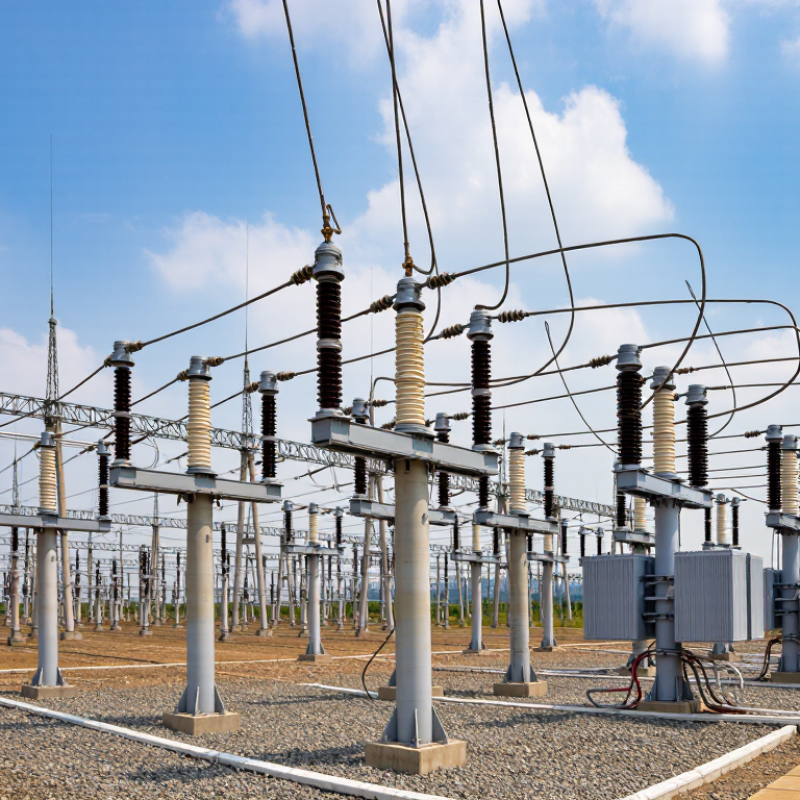
Who Are the Top China Outdoor Circuit Breaker Manufacturers?

China’s power network is expanding, and Outdoor Circuit Breaker technology is becoming increasingly important. The International Energy Agency’s Electricity 2024 report expects global electricity demand to grow strongly through 2026. China remains a major driver of that expansion. The National Energy Administration reported 2,920 gigawatts of installed generation capacity by the end of 2023. That figure increased 13.9% year on year.

This growth creates serious demands for dependable outdoor switching equipment. High-voltage breakers must interrupt fault currents quickly. They must also withstand rain, dust, heat, ice, and repeated mechanical operation. IEC 62271-100 provides a key reference for high-voltage alternating-current circuit breakers. IEC President Jo Cops has described standards as “the foundation for a safer, more sustainable and more efficient world.” His point matters here. A low purchase price cannot replace tested performance, service support, or traceable quality.

This article examines leading China Outdoor Circuit Breaker manufacturers, including their product ranges, testing capabilities, export experience, and project references. Companies such as China XD, Pinggao, Sieyuan, Taikai, and CHINT often appear in international procurement discussions. However, a ranking is never perfect. Product strength can vary by voltage class, insulation technology, factory, and local service team. A manufacturer may excel at 126 kV equipment but offer weaker support for 550 kV projects. Buyers should study type-test certificates, short-circuit ratings, operating mechanisms, delivery records, and after-sales response. The details are less visible than a brand logo. They often decide whether a breaker performs safely beside a remote substation, during a storm, years after installation.

Who Are the Top China Outdoor Circuit Breaker Manufacturers?

What Defines a Leading China Outdoor Circuit Breaker Manufacturer?

A leading China outdoor circuit breaker manufacturer is defined by evidence, not production volume alone. Its products should withstand rain, dust, ultraviolet exposure, temperature changes, and coastal salt. Enclosures need suitable ingress protection, while terminals require secure insulation and corrosion-resistant treatment. Small details matter.

Experienced manufacturers combine design knowledge with disciplined factory control. Engineers should verify interruption performance, temperature rise, mechanical endurance, and dielectric strength through documented type tests. Each finished unit also needs routine inspection before shipment.

Clear serial numbers, test records, and component traceability make failures easier to investigate. This is especially important when a breaker operates beside a remote transformer or on an exposed industrial site.

Reliable suppliers also understand installation conditions instead of selling one standard model everywhere. They ask about altitude, fault current, switching frequency, control voltage, and local weather. Their technical team should provide wiring diagrams, mounting guidance, maintenance intervals, and realistic delivery information. Certifications aligned with applicable IEC or national standards add authority, but certificates alone prove little. Factory audits and independent test reports are stronger evidence.

No factory gets every shipment perfect. A credible manufacturer admits that risk and explains corrective actions. I would examine complaint records, spare-part support, and field feedback before choosing a supplier. Some documentation may be less polished than expected. That gap deserves questions, not assumptions.

Key Types and Applications of Outdoor Circuit Breakers in China

China’s outdoor circuit breaker market is shaped by grid expansion, renewable integration, and demanding weather conditions. The National Energy Administration reported that non-fossil power exceeded half of China’s installed generation capacity in 2024. This shift increases demand for reliable switching equipment near wind farms, solar parks, and coastal substations.

Vacuum circuit breakers dominate many medium-voltage applications, commonly from 12 kV to 40.5 kV. They suit distribution feeders, industrial plants, and renewable collector systems because they reduce fire risks and routine maintenance. For high-voltage networks, SF6 circuit breakers remain widely used at 72.5 kV, 126 kV, and 252 kV levels. China’s technical framework follows GB/T 1984 and aligns closely with IEC 62271-100 testing principles.

Outdoor designs require more than a strong interrupting rating. Buyers should examine creepage distance, altitude correction, anti-condensation heating, corrosion protection, and mechanical endurance. The China Electricity Council’s 2024 power industry data showed continued growth in grid-connected renewable capacity, but site conditions vary sharply between deserts, plateaus, and humid coastal regions. A specification that works in Jiangsu may fail in a dusty northwestern substation. That detail is often underestimated.

Leading Chinese manufacturers typically compete through customized voltage classes, faster delivery, type-test documentation, and field service capability. Procurement teams should verify short-circuit performance, lightning impulse withstand, temperature limits, and maintenance records. Paper compliance is not enough. Field evidence still matters.

Major China Outdoor Circuit Breaker Manufacturers and Their Strengths

China’s outdoor circuit breaker manufacturers are gaining attention as grid investment expands. The China Electricity Council reported that China’s installed power generation capacity reached about 3.35 billion kilowatts in 2024. Non-fossil capacity represented roughly 56.4% of the total. This expansion increases demand for reliable outdoor switching equipment at substations, renewable-energy sites, and industrial parks.

Major manufacturers show different strengths. Large electrical groups usually offer complete engineering support, domestic testing resources, and stable production capacity. Specialized manufacturers often compete through compact vacuum circuit breakers, composite insulators, corrosion-resistant enclosures, and remote condition monitoring.

Some factories also provide 72.5 kV to 550 kV outdoor solutions, depending on their certification scope. The International Energy Agency’s Renewables 2024 report expects China to deliver nearly 60% of global renewable capacity additions through 2030. That forecast makes fast switching, weather resistance, and grid automation increasingly important.

Tips: Check type-test reports, short-circuit ratings, altitude limits, and temperature performance. Ask for enclosure protection data, not only product photographs. IEC 62271 compliance matters, but local project approvals and maintenance support matter too. A low price can hide weaker sealing or slower spare-parts service. This is easy to overlook. Procurement teams should compare measured contact resistance, operating-cycle results, and warranty exclusions. A polished brochure is not proof; independent inspection remains the safer choice.

How to Compare China’s Outdoor Circuit Breaker Suppliers

When comparing China’s outdoor circuit breaker suppliers, start with the application, not the catalog price. Define voltage, current, short-circuit capacity, altitude, and switching frequency. Ask whether each manufacturer provides complete type-test and routine-test reports. These documents should identify the tested model, standard, laboratory, and test date.

Outdoor equipment faces rain, sunlight, dust, temperature changes, and salt exposure. Check enclosure ratings, UV-resistant materials, corrosion protection, and sealing details. A credible factory should explain its design choices clearly. Request photographs of production lines, inspection stations, and temperature-rise testing. Factory experience matters here.

Look closely at manufacturing control. Compare incoming-material checks, assembly procedures, calibration records, and final inspection methods. Ask for serial-number traceability and replacement-part availability. Visit the factory when possible, or arrange a documented remote audit. A polished website proves very little.

Pricing can hide important differences. Compare delivery terms, packaging, customization limits, warranty coverage, and technical support. Request a sample before placing a large order. Test its operation in realistic outdoor conditions, including repeated switching and moisture exposure. I have seen buyers focus heavily on price and overlook installation guidance. That mistake becomes expensive later.

Supplier evaluation is rarely perfect. Test reports may be valid, yet communication can remain slow. A responsive sales contact may not guarantee strong engineering support. Check both sides. Ask difficult questions, record the answers, and compare actual evidence rather than confident promises. Be careful with unusually cheap offers. They may exclude testing, accessories, or after-sales assistance.

Who Are the Top China Outdoor Circuit Breaker Manufacturers? - How to Compare China’s Outdoor Circuit Breaker Suppliers

Comparison Dimension Outdoor Low-Voltage MCCB Outdoor Medium-Voltage Vacuum Circuit Breaker Outdoor Automatic Recloser What to Verify with a Supplier
Primary application Distribution panels, outdoor feeder cabinets, solar plants, and industrial low-voltage systems. Medium-voltage substations, utility feeders, industrial plants, and outdoor switchgear. Overhead distribution networks where temporary faults can be cleared and service restored automatically. Ask for application references using the same voltage class, environmental conditions, and network configuration.
Typical rated voltage Up to 1,000 V AC, depending on the product design and applicable standard. Common distribution classes include 3.6 kV, 7.2 kV, 12 kV, 24 kV, and 40.5 kV. Common distribution classes include 12 kV, 24 kV, and 36 kV; the exact rating depends on the network. Confirm rated voltage, insulation level, power-frequency withstand voltage, and lightning impulse withstand voltage.
Rated current range Frequently available from approximately 16 A to 1,600 A, with the exact range depending on the frame size. Common distribution designs are available from several hundred amperes up to approximately 3,150 A. Common network ratings are approximately 200 A to 630 A, depending on the configuration. Check continuous-current test reports, temperature-rise limits, conductor size, and derating at high ambient temperature.
Short-circuit performance Breaking-capacity classes commonly range from tens of kiloamperes to around 100 kA, depending on voltage and frame size. Short-circuit ratings commonly range from about 16 kA to 40 kA in medium-voltage distribution applications. Typical distribution reclosers are commonly specified around 12.5 kA to 16 kA, subject to the selected voltage class. Compare rated short-circuit breaking current, making current, short-time withstand current, and test-duty requirements.
Main interruption technology Thermal-magnetic or electronic trip unit with molded-case contacts. Vacuum interrupter with mechanical or motor-charged operating mechanism. Vacuum interrupter combined with protection, control, and automatic reclosing functions. Confirm operating sequence, mechanical endurance, electrical endurance, and availability of replacement parts.
Relevant international standards IEC 60947-2 is the principal standard for low-voltage circuit breakers. IEC 62271-100 covers high-voltage AC circuit breakers; IEC 62271-1 provides common specifications. IEC 62271-111 covers automatic circuit reclosers for alternating-current systems. Request certificates showing the exact model, rated values, standard edition, laboratory, and test date.
Enclosure and ingress protection Outdoor assemblies may use sealed cabinets with IP ratings selected for dust, rain, and access protection. Outdoor metal or polymer enclosures are commonly designed with separate ratings for the cabinet and operating compartments. Pole-mounted housings are designed for rain, dust, condensation, and exposure to solar radiation. Verify IP rating under IEC 60529, door-sealing details, drainage, anti-condensation heating, and corrosion protection.
Outdoor environmental capability Performance depends on ambient temperature, humidity, altitude, UV exposure, and enclosure ventilation. Design evaluation normally includes altitude correction, condensation control, pollution level, and insulation coordination. Must withstand weather exposure, vibration, temperature cycling, and long periods of outdoor service. Provide site altitude, minimum and maximum temperature, humidity, pollution severity, wind, salt exposure, and seismic requirements.
Protection and control functions Overload and short-circuit protection; electronic versions may add adjustable long-time, short-time, instantaneous, and ground-fault functions. Protection may use overcurrent, earth-fault, undervoltage, shunt-trip, and remote-control accessories. Typically supports phase and earth-fault protection, event records, communications, and programmable reclosing sequences. Compare protection curves, relay accuracy, communication protocols, cybersecurity controls, and configuration software.
Factory and type-test documentation Look for routine-test records and applicable short-circuit, temperature-rise, dielectric, and mechanical tests. Look for type-test evidence covering dielectric, temperature rise, short-circuit, mechanical endurance, and environmental conditions. Look for recloser-specific tests covering interruption, reclosing sequences, controller functions, and communications. Reject generic certificates that do not identify the offered model and complete rated-value combination.
Best supplier-selection criteria Verified low-voltage test data, accurate trip settings, enclosure quality, accessory compatibility, and after-sales support. Verified medium-voltage type tests, vacuum interrupter quality, insulation coordination, operating reliability, and service capability. Protection and control integration, field communication, battery system reliability, reclosing logic, and utility acceptance. Use the same technical specification, inspection plan, sample-testing procedure, warranty terms, and spare-parts list for every shortlisted supplier.

Note: The figures shown are commonly used industry ranges and reference values, not claims about any specific supplier. Final selection should be based on the exact product datasheet, applicable standards, accredited test reports, and project conditions.

How to Choose the Right Manufacturer for Your Project

The best China outdoor circuit breaker manufacturer is not always the one offering the lowest quotation. Choose a supplier that understands your voltage level, climate, installation method, and maintenance limits. A coastal project needs stronger corrosion protection. A mountain site may require altitude correction and careful insulation design. Ask for enclosure ratings, operating temperature ranges, and short-circuit data before comparing prices.

Request current type-test reports, routine test records, and applicable quality certificates. Check whether the reports match the exact breaker model, not a similar product. Review the manufacturer’s experience with outdoor substations, industrial feeders, or renewable-energy sites. Factory audits can reveal practical details, such as clean assembly areas, calibrated testing equipment, and traceable serial numbers. Small details matter.

Ask for a complete drawing package, spare-parts list, delivery schedule, and warranty procedure. Require a sample or inspection unit when the project is technically sensitive. Speak with recent customers, if possible. Their feedback may expose slow technical support or unclear troubleshooting. I would not trust a polished catalogue alone. My checklist can still miss problems. Confirm communication quality through real engineering questions, not friendly promises. A manufacturer that explains limitations clearly is often safer than one claiming every solution is perfect.

Powder Coat Booths

For those larger-sized parts, or smaller quantity runs, we have 2 independent powder coat booths and ovens. The quality, durability and affordability of today’s powder coating finishes make this the process of choice for world-class companies.

Powder coating advantages over other forms of coating are many. Materials used in the Powder coating process can be metals and non-metals that come in a multitude of thicknesses, textures, colors, etc. Another of Powder coating’s biggest advantages over conventional coatings is its ability to create finishes in many different textures. Powder Coating Booths allow us the ability to apply these advantages to large products.

Wet Paint Line

Tri-State Fabricators runs a full-service conveyor line for painting. Wet painting can provide protection or decoration to many different part styles. From start to finish, every project is easier to undergo random and point-based inspection by our skilled painting team.

Advantages to our Wet Paint Line are these lines start with product prep and ends with a thorough inspection of a high quality finished product. Our ability to complete large and small projects with a superior finish and doing so in a timely and economical fashion. This passes along the savings in production to our customers. When powder coating ins not an option, our Wet Paint Line gets the job done right the first time.

Wet Paint Booths

When the parts get big and heavy we roll-out our custom paint racks and oversize booth. By utilizing our partnerships with all the major paint brands, we can match virtually any color with wet paint.

The advantages of having access to a Wet Paint Booth are many. Large projects of many different shapes can be loaded into the booth. The Wet Paint Booth offers an environment that is much more controlled than a typical parts painting operation.

Not only are they used because of their controlled environment, but they’re are also advantageous when it comes to applying paint to parts that are needed in industries that require specialty coatings such as medical, aerospace, etc.

Military CARC

Our military forces have some very high standards when it comes to the finish of their vehicles and equipment. From the first pre-treatment step to final coat, it takes a great deal of knowledge and experience to protect the men and women of our armed forces. They deserve only the best, and Tri-State Fabricators provides it.

All of our processes are closely monitored by our staff and management teams. Both of which are highly trained in the processes of metal fabrication and finishing. Tri-State Fabricators’ goal is to always fully satisfy each and every customer, including the military. We will always put a 110% into what we do.

Glass-Bead Blasting

Abrasive media blasting is an excellent way to remove old paint, rust, and increase the paint/powder adhesion. Glass beads produce a much smoother and brighter finish than angular abrasives; leaving the part clean yet without any dimensional change. Chemically inert and environmentally friendly, we can recycle our beads approximately 30 times; making them a more preferred method of metal cleaning or surface finishing.

Advantages to Glass Bead Blasting are many. Glass bead blast media is used when a project is needing rough surfaces need to become smooth for applications of coatings such as paint. It is typically used to clean paint and rust from a product surface without deforming the surface it is being used on. Overall, compared to many other blasting media, Glass Bead Blasting is a very economical choice and those savings are always passed on to our customers.

Part Washing

Tri-State Fabricators utilize a zinc phosphate wash to clean and etch the material to ensure the best paint adhesion possible. The unique design of our 3-stage wash system does the work like a 5-stage. From Cleaning and rinsing to conversion coating and post-treatment, Our Part Washing process is a complete service and works throughout the fabrication service and the finishing service.

Along with the previously mentioned benefits, Curing is a vital chemical reaction that leaves the product finish hard and relatively safe from mild abrasion and aggressive corrosion. This process can be done in more than one way; ambient air-dry or in curing ovens at temps that exceed 240°.

Burn-Off Oven

From fixing paint mistakes (someone else’s of course) to simply cleaning our paint line hooks, our burn-off oven is put to good use. After a quick burn-off, a little clean up, and a fresh coat of paint, your parts will look better than new.

Why does our Burn-Off Oven work so well? Because super heating the air around parts turns the materials into ashes. From paint and powder coatings to rubber and machining oils, high temps do the job without degrading the integrity of the part.

Masking

Masking is a vital part of producing high quality products. We have die-cut masking patterns to protect machined surfaces as well as a wide range of plugs and caps to protect threaded holes and bolts. We provide permanent and temporary masking.

Masking allows the selected sections of a product to be protected from a fabrication or finishing service. This can be with both chemicals when etching and tapes, paints when only finishing just a section of the product. Masking is great in aiding the customization process of a project.

Screen Printing

Screen printing is a photographic process that transfers artwork onto a porous nylon screen which allows colored ink to flow through the screen and be deposited on an aluminum or plastic component. We can generally have just about any design created onto a screen for your parts.

Some of the advantages of Screen Printing are, brand recognition for your business displaying on your products, assembly instructions, product warnings/hazards, etc. Tri-State Fabricators produces Screen Printing of the highest quality so you know it’s durable.

Metal Finishing

Metal Finishing is the art of treating the exterior portion of product, often metal but can also be made of other materials, so that the surface is clean and free of any debris. Then the process of applying coats or either paint of powder coat takes place. This coating process improves the quality of the product in both appearance and resistance to wear and corrosion.

Tri-State Fabricators, Inc., understands that a project typically isn’t complete until a high-quality finish has been added to your product. This is why our painting and powder coating teams continuously inspect the products throughout the Metal Finishing process.