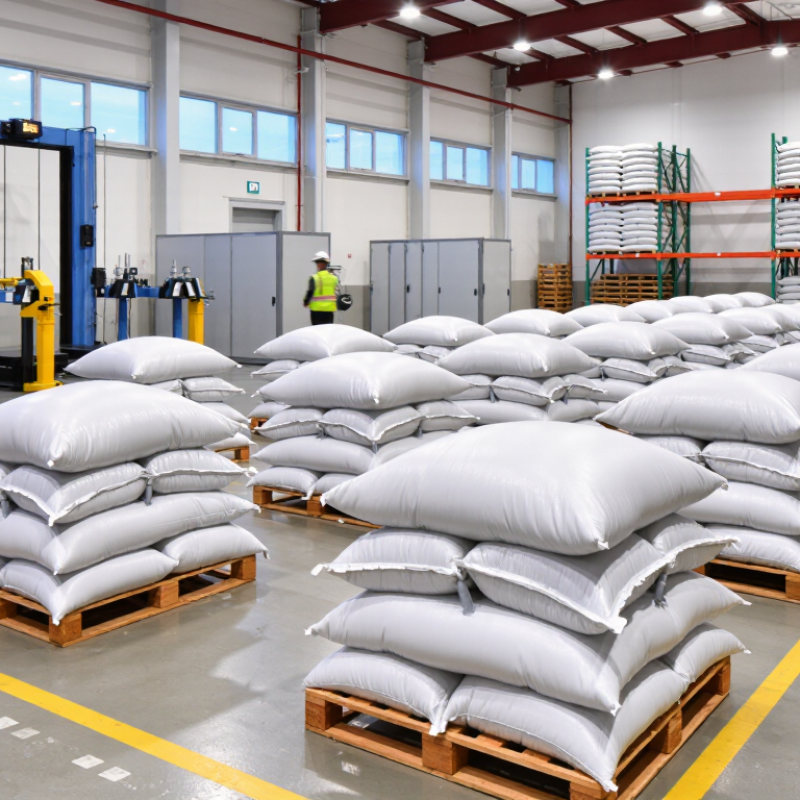
Top China Moisture Proof FIBC Manufacturers Global Buyers

Global buyers increasingly seek reliable bulk packaging for powders, granules, minerals, chemicals, and agricultural products. Moisture can enter through fabric seams, liners, closures, or damaged pallets. Therefore, selecting a qualified China Moisture Proof Fibc Manufacturer requires more than comparing prices.

Experienced manufacturers typically use coated polypropylene fabric, polyethylene liners, moisture-resistant sewing methods, and carefully tested discharge systems. They should provide clear specifications for fabric weight, liner thickness, safe working load, safety factor, and filling conditions. Factory audits can reveal practical details, including clean production areas, calibrated testing equipment, traceable batch records, and controlled storage. These details matter when containers travel through humid ports or remain in warehouses during rainy seasons.

A dependable supplier should explain test methods instead of offering vague promises. Buyers may request moisture-barrier testing, seam-strength reports, product samples, and inspection records before placing large orders. Relevant quality systems and export experience also support confidence, but certificates alone are not enough. Real performance depends on design, handling, and storage.

Small mistakes matter.

Even an excellent FIBC may fail when its liner is folded incorrectly, its closure remains open, or pallets sit directly on wet floors. Buyers should review loading procedures, packaging instructions, and after-sales support with the manufacturer. This guide examines leading Chinese suppliers through product quality, technical capability, customization, communication, delivery reliability, and documented buyer experience. Some evaluations remain difficult because supplier information changes over time. Careful verification is still necessary.

Top China Moisture Proof FIBC Manufacturers Global Buyers

Moisture-Proof FIBC Bags: Definition, Structure, and Core Functions

Moisture-proof FIBC bags are flexible bulk containers designed to reduce water vapor, surface moisture, and condensation damage. They commonly hold powders, granules, minerals, agricultural materials, and other dry goods. However, “moisture-proof” does not mean completely waterproof. That distinction matters during long-distance shipping and humid warehouse storage.

The main structure combines woven polypropylene fabric with an inner liner or laminated layer. The outer fabric provides strength and shape stability. The liner creates a moisture barrier around the contents. Heat-sealed seams, secure closures, and reinforced lifting loops support safer handling. Some designs also include coated fabric, discharge spouts, and document pockets. Each component affects performance. A strong fabric cannot compensate for a poorly sealed liner.

Core functions include limiting humidity exposure, reducing contamination, and protecting material flow during transport. Properly designed bags also improve loading efficiency and pallet stability. In practical inspections, buyers should check liner thickness, seam quality, lifting-loop stitching, and closure fit. Moisture testing and compression testing add useful evidence. Still, results can vary with storage conditions and handling habits. Even a well-made bag may fail when placed on a wet floor or left open overnight. Supplier specifications should match the material, filling weight, climate, and transport route. Small details often decide whether the contents arrive dry.

Moisture-Proof FIBC Bags: Indicative Water Vapor Transmission by Structure

Lower WVTR indicates stronger moisture protection. The ranges shown are representative engineering benchmarks in g/m²/day under approximately 38°C and 90% relative humidity. Actual performance varies with film thickness, sealing quality, liner design, and test method. Aluminum-foil laminate liners provide the highest moisture barrier, while uncoated woven polypropylene is not a moisture barrier.

Key Materials and Manufacturing Processes Used by Chinese FIBC Producers

Chinese FIBC producers commonly use polypropylene (PP) tapes as the main structural material. These tapes are extruded, stretched, and woven into strong circular fabric. The fabric often weighs between 140 and 220 grams per square meter, depending on the load requirement.

Moisture protection usually comes from laminated PP fabric or an inner liner made from LDPE or HDPE film. A liner can reduce contact with humidity, while lamination seals many openings between woven tapes. Some producers add UV stabilizers or moisture-resistant masterbatch during extrusion. This choice should match storage conditions, because extra additives can affect flexibility and cost.

The manufacturing process includes tape extrusion, circular weaving, cutting, sewing, liner insertion, and final inspection. Skilled factories check fabric strength, seam quality, liner sealing, and lifting-loop balance. Water-pressure tests and humidity simulations can reveal weak points before shipment. In practice, a bag may look robust but still fail around its bottom seam. No barrier is perfect. Small pinholes, poor folding, or careless loading can reduce protection. Buyers should review test records, inspect samples, and confirm liner thickness before approving production. Local factory experience matters, but documented controls matter more.

How to Evaluate China’s Moisture-Proof FIBC Manufacturers

Evaluating China’s moisture-proof FIBC manufacturers requires more than comparing prices. Buyers should examine material specifications, production controls, and documented testing. Ask how the supplier prevents moisture during fabric weaving, coating, sewing, and storage. A reliable factory can explain each step clearly. During a factory visit, inspect sealed packaging, clean warehouses, and protected raw materials. Look closely.

Request technical data for coated fabric, inner liners, seams, and moisture transmission performance. Check whether testing follows recognized industry methods and whether reports match the actual production batch. Pay attention to liner thickness, closure design, and stitching density. These details affect protection during long-distance transport and humid storage. Do not accept vague promises. Request samples from different production lots. A small sample may perform well, while large-scale consistency remains uncertain. That gap deserves attention.

Tips: Compare at least three suppliers using the same checklist. Ask for factory audit records, quality certificates, sample test results, and corrective-action reports. Confirm production capacity before placing a large order. Keep sealed samples for later comparison. No checklist is perfect. Field feedback may reveal issues that laboratory tests miss, such as condensation inside containers or damaged liners after loading. Discuss these risks openly, and ask how the manufacturer records complaints and improves future batches.

Top China Moisture Proof FIBC Manufacturers Global Buyers - How to Evaluate China’s Moisture-Proof FIBC Manufacturers
Evaluation Dimension What Global Buyers Should Verify Practical Benchmark or Requirement Recommended Evidence Buyer Evaluation Method
FIBC Construction Confirm the bag type, filling and discharge design, lifting loops, liner, seams, and safe working load. The stated safe working load should match the intended cargo and handling method, with a documented safety factor. Technical drawing, product specification sheet, sample inspection, and load-test report. Compare the specification with the actual loading weight, lifting equipment, stacking method, and transport conditions.
Moisture Protection Evaluate whether moisture resistance comes from a coated woven fabric, an internal polyethylene liner, a laminated layer, or a combination of these features. The moisture-control design should be selected according to the product’s sensitivity to humidity, condensation, and water exposure. Material structure diagram, liner specification, coating details, and water-resistance test information. Request a production sample and conduct a controlled visual, seam, liner, and packaging inspection before approval.
Fabric Material Check the type and quality consistency of polypropylene fabric and any polyethylene liner used for moisture protection. Material specifications should remain consistent with the approved sample and purchase contract. Material declaration, incoming inspection records, sample comparison, and batch traceability documents. Compare fabric weight, texture, coating uniformity, liner thickness, and dimensions across multiple samples.
Seam Integrity Inspect stitching quality, seam allowance, thread selection, corner construction, and liner sealing. Seams should be continuous, even, free from skipped stitches, and appropriate for the specified load and moisture barrier. Seam inspection checklist, sewing standard, production photographs, and finished-product inspection records. Inspect high-stress areas such as lifting loops, bottom discharge seams, top closure, and liner connections.
Safe Working Load Verify the maximum working load for the complete FIBC design rather than relying only on fabric strength. The declared safe working load should be supported by testing of the finished bag and should not be confused with breaking load. Third-party or in-house test report, finished-bag load test, and product label information. Match the test configuration to the buyer’s intended lifting, filling, discharge, and reuse conditions.
Safety Factor Determine whether the manufacturer provides a documented safety factor appropriate to the FIBC’s design and use. Common FIBC designs use a 5:1 or 6:1 safety factor, depending on the intended use and applicable requirements. Design calculation, test report, technical declaration, and compliance documentation. Confirm that the stated ratio applies to the complete finished bag and the specified reuse conditions.
Electrostatic Control Identify whether the bag is Type A, B, C, or D when handling combustible powders or operating in potentially hazardous areas. Type selection must correspond to the product, filling environment, grounding procedure, and applicable hazardous-area assessment. Electrostatic classification, test report, grounding instructions, and handling procedure. Have a qualified safety professional verify the selected FIBC type before use with combustible or flammable materials.
Dimensional Accuracy Check finished length, width, height, inlet, outlet, liner fit, and lifting-loop position. Dimensions and tolerances should be defined in the approved drawing and measured consistently during production. Approved technical drawing, inspection report, measurement records, and pre-shipment sample. Measure production samples and confirm compatibility with filling machines, pallets, racks, and containers.
Product Cleanliness Assess dust, oil, foreign fibers, odor, moisture, and contamination risks for the intended cargo. Cleanliness requirements should be stated according to the cargo, such as food, pharmaceutical, chemical, or industrial use. Cleaning procedure, hygiene statement, inspection record, and packaging specification. Define an acceptable cleanliness level and inspect both the internal liner and external fabric before shipment.
Quality Management Review whether the manufacturing site operates documented procedures for purchasing, production, inspection, corrective action, and traceability. A consistent quality system should link raw-material batches, production records, inspection results, and shipment lots. Quality manual, process-control plan, internal audit records, and corrective-action reports. Use a supplier questionnaire and verify records during a remote or on-site audit.
Testing Capability Determine whether the manufacturer can test fabric, seams, dimensions, load performance, and moisture-related features. Testing should cover the finished FIBC and use documented methods with calibrated equipment. Equipment list, calibration certificates, test procedures, and representative test reports. Ask for recent test records from the same or an equivalent construction, not only generic laboratory documents.
Standards and Compliance Identify the standards and legal requirements applicable to the destination market and cargo. Compliance claims should specify the exact standard, product scope, test date, and issuing organization. Declaration of conformity, relevant certificates, test reports, and regulatory statements. Check certificate validity, scope, manufacturer details, and whether the document covers the ordered specification.
Moisture-Control Packaging Review how empty bags are folded, wrapped, sealed, stored, and protected before export. Packaging should prevent rain, condensation, dust, and prolonged warehouse humidity from reaching the FIBCs. Packaging specification, photographs, warehouse procedure, and container-loading plan. Confirm the use of sealed outer packaging and dry, covered storage during manufacturing and transportation.
Production Capacity Assess whether the facility can meet the required monthly quantity without reducing inspection or material consistency. Capacity should be demonstrated for the same construction, dimensions, liner type, and quality requirements. Capacity statement, production schedule, machinery list, and recent delivery records. Compare forecast demand with actual production lead time and establish a realistic shipment schedule.
Lead Time Control Evaluate raw-material availability, sample approval timing, production planning, and export-document preparation. The supplier should provide milestone dates from technical confirmation through inspection and shipment. Order timeline, production plan, inspection booking record, and shipping-document checklist. Use contractual milestones and require prompt notification of material, production, or shipment delays.
Traceability Confirm that finished bags can be linked to production dates, material batches, inspection results, and shipment lots. Lot identification should remain legible on packaging and in the manufacturer’s records. Lot-code system, batch records, packing list, inspection report, and retention-sample procedure. Request a sample traceability record and verify that the system can support complaint investigation.
Pre-Shipment Inspection Establish how many bags are inspected and which characteristics are checked before loading. Inspection criteria should cover dimensions, appearance, seams, accessories, liner condition, packaging, and quantity. Inspection checklist, sampling plan, inspection photographs, and final inspection report. Use an agreed acceptance standard and, for critical orders, arrange independent inspection before shipment.
Customization Capability Check the ability to customize dimensions, inlet and outlet styles, liners, coatings, labels, printing, and pallet configuration. Custom features should be documented in a controlled drawing and approved sample before mass production. Technical drawings, sample-development records, change-control documents, and approval sign-off. Freeze the specification after approval and require written authorization for later changes.
Total Cost of Ownership Consider unit price together with liner performance, failure risk, packaging, inspection, freight, and disposal or reuse requirements. The lowest quotation is not necessarily the lowest-cost option if moisture damage or handling failures create downstream losses. Itemized quotation, packing details, freight assumptions, warranty terms, and quality-cost records. Compare suppliers using the same specification, delivery terms, inspection level, and expected service life.
Communication and After-Sales Support Evaluate response speed, technical understanding, complaint handling, replacement policy, and corrective-action capability. A reliable supplier should provide a named contact, written corrective actions, and documented resolution timelines. Communication records, complaint procedure, warranty terms, and corrective-action examples. Test the supplier with a detailed pre-order questionnaire and assess the quality of technical responses.

Quality Standards, Testing Methods, and Certification Requirements

Moisture-proof FIBC manufacturers should prove performance through documented testing, not attractive samples. Buyers should request fabric specifications, coating details, liner thickness, and seam construction. ISO 21898 provides a useful framework for FIBC design and performance. However, it does not replace destination-specific requirements.

A serious quality plan includes water penetration, seam leakage, and water vapor transmission testing. Laboratories may use recognized methods such as ASTM E96 or ISO 2528 for vapor transmission. Drop tests, top-lift tests, and cyclic loading checks reveal weaknesses during storage and transport. I have found that corner seams often deserve extra inspection. They can look strong but fail after repeated handling.

Test reports should identify the production batch, sample quantity, test conditions, and laboratory competence. Independent laboratories accredited to ISO/IEC 17025 offer stronger evidence than internal declarations alone. For regulated cargo, applicable UN performance certification may be required. Food-contact applications also need suitable regulatory documentation for the destination market. ISO 9001 can support process control, but it is not proof of moisture resistance. No test plan is perfect. Buyers should compare laboratory results with warehouse humidity, stacking height, and expected transport time. A small pilot shipment can expose problems that paperwork misses.

Global Purchasing, Customization, Logistics, and Supplier Management

Top China Moisture Proof FIBC Manufacturers Global Buyers

Global buyers need more than a moisture-resistant bag. They need stable specifications, traceable production, and practical communication. Experienced Chinese FIBC manufacturers can supply woven polypropylene bags with coated surfaces and fitted inner liners. PE liners help reduce humidity exposure during storage and transport. For sensitive powders, buyers should request liner thickness, seam details, and moisture test records. Small samples reveal folding, sealing, and discharge performance. Samples matter.

Customization should begin with the cargo, filling method, and destination climate. Buyers may select lifting loops, inlet designs, outlet structures, printing, and safety factors. A supplier should confirm bag dimensions through a technical drawing. This prevents costly misunderstandings between purchasing and production teams. Product certificates must match the actual shipment. Generic documents are not enough. Some specifications may need revision after a loading trial.

Logistics planning should cover production capacity, inspection dates, packing methods, and port schedules. Moisture-proof packaging can still fail if containers are damp or bags remain exposed outdoors. Use dry containers, protective wrapping, and clear loading instructions. Confirm Incoterms, export documents, carton marks, and customs requirements before dispatch. Supplier management works better with monthly records for defects, lead time, corrective actions, and response speed. A perfect forecast is unrealistic. Leave room for seasonal delays and material changes. Regular video inspections can support trust, but they cannot replace independent testing when the cargo is critical.

Powder Coat Booths

For those larger-sized parts, or smaller quantity runs, we have 2 independent powder coat booths and ovens. The quality, durability and affordability of today’s powder coating finishes make this the process of choice for world-class companies.

Powder coating advantages over other forms of coating are many. Materials used in the Powder coating process can be metals and non-metals that come in a multitude of thicknesses, textures, colors, etc. Another of Powder coating’s biggest advantages over conventional coatings is its ability to create finishes in many different textures. Powder Coating Booths allow us the ability to apply these advantages to large products.

Wet Paint Line

Tri-State Fabricators runs a full-service conveyor line for painting. Wet painting can provide protection or decoration to many different part styles. From start to finish, every project is easier to undergo random and point-based inspection by our skilled painting team.

Advantages to our Wet Paint Line are these lines start with product prep and ends with a thorough inspection of a high quality finished product. Our ability to complete large and small projects with a superior finish and doing so in a timely and economical fashion. This passes along the savings in production to our customers. When powder coating ins not an option, our Wet Paint Line gets the job done right the first time.

Wet Paint Booths

When the parts get big and heavy we roll-out our custom paint racks and oversize booth. By utilizing our partnerships with all the major paint brands, we can match virtually any color with wet paint.

The advantages of having access to a Wet Paint Booth are many. Large projects of many different shapes can be loaded into the booth. The Wet Paint Booth offers an environment that is much more controlled than a typical parts painting operation.

Not only are they used because of their controlled environment, but they’re are also advantageous when it comes to applying paint to parts that are needed in industries that require specialty coatings such as medical, aerospace, etc.

Military CARC

Our military forces have some very high standards when it comes to the finish of their vehicles and equipment. From the first pre-treatment step to final coat, it takes a great deal of knowledge and experience to protect the men and women of our armed forces. They deserve only the best, and Tri-State Fabricators provides it.

All of our processes are closely monitored by our staff and management teams. Both of which are highly trained in the processes of metal fabrication and finishing. Tri-State Fabricators’ goal is to always fully satisfy each and every customer, including the military. We will always put a 110% into what we do.

Glass-Bead Blasting

Abrasive media blasting is an excellent way to remove old paint, rust, and increase the paint/powder adhesion. Glass beads produce a much smoother and brighter finish than angular abrasives; leaving the part clean yet without any dimensional change. Chemically inert and environmentally friendly, we can recycle our beads approximately 30 times; making them a more preferred method of metal cleaning or surface finishing.

Advantages to Glass Bead Blasting are many. Glass bead blast media is used when a project is needing rough surfaces need to become smooth for applications of coatings such as paint. It is typically used to clean paint and rust from a product surface without deforming the surface it is being used on. Overall, compared to many other blasting media, Glass Bead Blasting is a very economical choice and those savings are always passed on to our customers.

Part Washing

Tri-State Fabricators utilize a zinc phosphate wash to clean and etch the material to ensure the best paint adhesion possible. The unique design of our 3-stage wash system does the work like a 5-stage. From Cleaning and rinsing to conversion coating and post-treatment, Our Part Washing process is a complete service and works throughout the fabrication service and the finishing service.

Along with the previously mentioned benefits, Curing is a vital chemical reaction that leaves the product finish hard and relatively safe from mild abrasion and aggressive corrosion. This process can be done in more than one way; ambient air-dry or in curing ovens at temps that exceed 240°.

Burn-Off Oven

From fixing paint mistakes (someone else’s of course) to simply cleaning our paint line hooks, our burn-off oven is put to good use. After a quick burn-off, a little clean up, and a fresh coat of paint, your parts will look better than new.

Why does our Burn-Off Oven work so well? Because super heating the air around parts turns the materials into ashes. From paint and powder coatings to rubber and machining oils, high temps do the job without degrading the integrity of the part.

Masking

Masking is a vital part of producing high quality products. We have die-cut masking patterns to protect machined surfaces as well as a wide range of plugs and caps to protect threaded holes and bolts. We provide permanent and temporary masking.

Masking allows the selected sections of a product to be protected from a fabrication or finishing service. This can be with both chemicals when etching and tapes, paints when only finishing just a section of the product. Masking is great in aiding the customization process of a project.

Screen Printing

Screen printing is a photographic process that transfers artwork onto a porous nylon screen which allows colored ink to flow through the screen and be deposited on an aluminum or plastic component. We can generally have just about any design created onto a screen for your parts.

Some of the advantages of Screen Printing are, brand recognition for your business displaying on your products, assembly instructions, product warnings/hazards, etc. Tri-State Fabricators produces Screen Printing of the highest quality so you know it’s durable.

Metal Finishing

Metal Finishing is the art of treating the exterior portion of product, often metal but can also be made of other materials, so that the surface is clean and free of any debris. Then the process of applying coats or either paint of powder coat takes place. This coating process improves the quality of the product in both appearance and resistance to wear and corrosion.

Tri-State Fabricators, Inc., understands that a project typically isn’t complete until a high-quality finish has been added to your product. This is why our painting and powder coating teams continuously inspect the products throughout the Metal Finishing process.