China Top Premium Granite Base Suppliers and Factory Prices
China has become a major sourcing market for premium granite base products, serving construction, memorial, landscaping, furniture, and architectural projects. However, “factory price” does not always mean the lowest total cost. Material grade, block yield, cutting accuracy, surface treatment, packaging, and shipping distance can change the final quotation significantly.
Natural-stone sourcing consultant Michael Reis once noted, “A granite base is only premium when its material, workmanship, and supply chain remain consistent.” This principle deserves attention. A polished black granite base may look flawless under showroom lighting, yet small edge chips can appear after transport. That detail is easy to miss.
Reliable Chinese suppliers usually provide quarry information, stone samples, dimensional tolerances, finish options, production photos, and export packaging details. Buyers should also confirm whether pricing covers inspection, crates, loading, and documentation. Some factories offer attractive prices but limited customization. Others charge more because they use better blocks and tighter quality controls.
This guide examines China’s top premium granite base suppliers and factory prices through practical sourcing criteria. It considers production experience, material consistency, machining capability, quality assurance, and communication reliability. It also highlights common quotation gaps. Not every low price is a bargain.
The market is competitive. Mistakes still happen. A carefully selected supplier can reduce waste, delays, and replacement costs. Yet buyers should remain realistic, because color variation and natural veins cannot be eliminated completely. Careful sampling remains essential before approving bulk production.
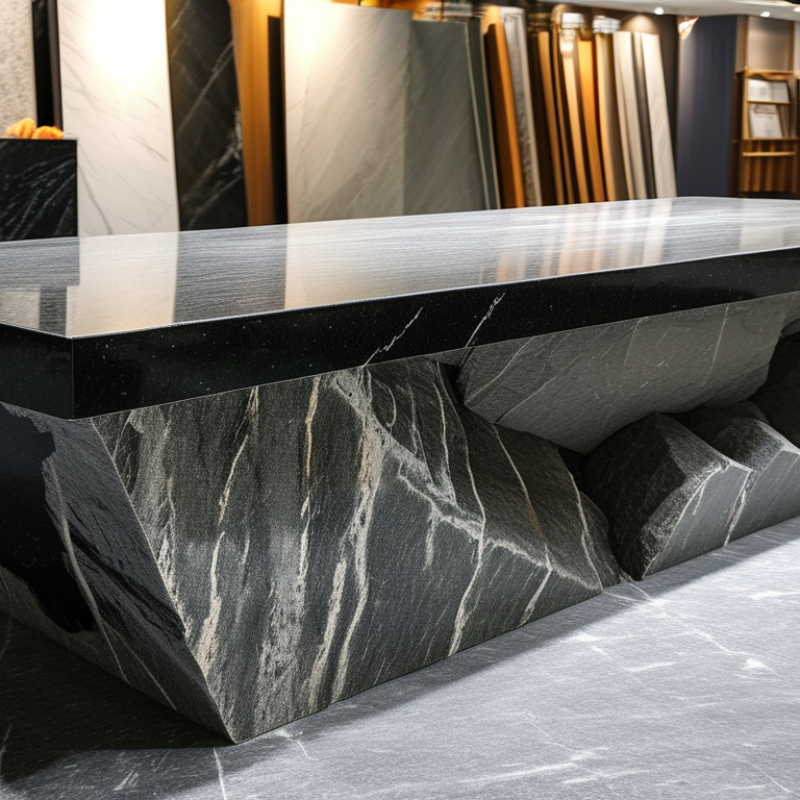
What Defines a Premium Granite Base
A premium granite base is defined by performance, not color alone. It should show consistent mineral structure, controlled water absorption, and strong resistance to impact. ASTM C615/C615M identifies granite as dimension stone suitable for demanding architectural applications. ASTM C170/C170M provides the accepted method for measuring compressive strength.
Testing matters.
Reliable suppliers should provide quarry origin, slab thickness, density, absorption, and strength results for each production batch. The Natural Stone Institute recommends evaluating stone samples under actual lighting, because small veins and shade changes may appear after polishing. A base with a dense, even surface usually machines more cleanly and resists chipping around drilled holes.
Factory pricing also reflects more than raw stone. Cutting accuracy, CNC shaping, edge finishing, packaging, inspection, and rejected pieces all influence the final quotation. Grand View Research valued the global natural stone market at approximately USD 51.5 billion in 2023, showing the scale of this sector, but market size does not guarantee consistent quality. Each order still needs verification.
In practical inspection, check a dry sample beside a wet sample. Look for open pits, resin-filled cracks, uneven polish, and unstable corners. Premium material should feel balanced and solid, not merely heavy. This is where buyers can misjudge. A lower factory price may reduce finishing or inspection, while an expensive quote may still lack documented testing. Supplier experience, measurable data, and careful sample approval define real value.
Leading China Granite Base Suppliers and Their Product Strengths
China’s granite base suppliers serve furniture, sculpture, landscaping, and architectural projects. Experienced factories usually offer several granite colors, cut-to-size services, and controlled surface finishes. Their strength is practical production capacity, not only attractive catalogs.
During supplier evaluations, ask for recent photos, sample pieces, and dimensional inspection records. A reliable factory should explain stone origin, water absorption, edge treatment, and packaging methods clearly. For example, a 600 mm square base needs stable thickness and carefully softened corners. Polished surfaces should look even under direct light. Small shade differences can still appear between batches.
Factory prices often become more competitive with regular sizes and larger quantities. However, a low quotation may exclude wooden crates, protective foam, inspection, or shipping preparation. I have seen buyers compare prices before checking these details. That approach saves money on paper, but not always in practice. Request a complete specification sheet and confirm tolerances in writing.
Tips: Compare equal specifications. Check sample consistency. Ask how damaged pieces are handled. Confirm production time before paying a deposit. A short video from the workshop can reveal cutting, polishing, and packing conditions, although it cannot replace independent inspection. Some suppliers communicate well but provide weak quality records. That should encourage further questions, not immediate rejection.
Granite Types, Finishes, Shapes, and Custom Options
China’s premium granite suppliers serve monuments, countertops, stairs, and heavy architectural bases. Granite types include black, white, gray, red, and veined varieties. Their mineral patterns vary between quarry blocks, so a small sample cannot show every movement. That matters when matching several pieces. The Global Granite Market Report by Grand View Research estimated the market at over USD 16 billion in 2022, with continued growth expected through 2030. Demand is moving toward durable, customized surfaces.
Finishes change both appearance and performance. Polished granite reflects light and highlights crystal structure. Honed granite feels softer and hides minor scratches better. Flamed surfaces provide texture for outdoor steps, while leathered finishes add subtle relief. Bush-hammered textures suit demanding exterior applications.
ASTM C615 guidance supports granite selection for dimension-stone use, but buyers should still request absorption, strength, and thickness data. Appearance alone is not enough.
Shapes range from square slabs to circles, ovals, tapered bases, and irregular architectural profiles. Factory customization may include CNC cutting, edge chamfers, drilled holes, grooves, and engraved details. Factory prices usually depend on stone type, slab thickness, finish, order volume, processing time, packing, and shipping distance. The U.S. Geological Survey’s Mineral Commodity Summaries tracks dimension stone as an established construction-material category, reflecting its continuing industrial use. A polished sample can still mislead. Ask for batch photographs, tolerances, and a pre-production drawing. Small dimensional errors can become expensive during installation. That is where judgment matters.
How Chinese Factory Prices Are Determined
Chinese premium granite base factory prices depend on more than stone weight. In my sourcing experience, the first cost comes from block quality, quarry location, and usable yield. A dark, uniform slab usually costs more because fewer sections are rejected. Thickness, edge profiles, drilling, polishing, and tolerance also change labor hours. Large custom bases need stronger crates and careful handling. Freight is calculated separately, often by volume rather than value. This distinction surprises new buyers.
Factories usually build quotations from material, processing, packaging, labor, energy, and operating margin. Currency movement and seasonal quarry supply can shift the final figure. A reliable supplier should explain each major item and provide drawings before production. Ask for a sample, inspection photos, water absorption data, and dimensional tolerances. These records show practical quality control, not only attractive promises. Still, no quotation is perfect. Breakage risk, remade pieces, or port delays may be underestimated. Buyers should compare specifications, not only the lowest number.
Tips: Request an itemized quote with stone grade, dimensions, finish, packing method, lead time, and shipping terms. Confirm whether taxes, molds, inspection, and replacement costs are included. Keep one approved sample for comparison. A small mismatch can become expensive across a full order.





