


China Top 10 FTTA Cable Manufacturers for Global Buyers

China’s Ftta Cable manufacturing base is becoming more important as mobile networks move toward denser 4G and 5G sites. GSMA Intelligence’s The Mobile Economy 2024 report forecasts 5G connections will reach about 1.6 billion worldwide by the end of 2025. That expansion creates steady demand for reliable fiber links between radio units, antennas, and baseband equipment.

The market is not only about low prices. A rooftop installation may face ultraviolet exposure, wind movement, water ingress, and repeated maintenance. Buyers should examine bend performance, tensile strength, insertion loss, connector quality, and sheath materials. IEC compliance, ISO 9001 systems, factory test records, and traceable samples matter more than polished catalogs. Dell’Oro Group’s telecom equipment research also shows that network investment remains uneven. Supplier selection therefore requires practical risk control, not simple ranking.

Jim Hayes, president of the Fiber Optic Association, has stated, “Fiber optics has become the dominant medium for high-speed communications.” His observation remains relevant to FTTA deployment, where small optical losses can affect long-term network stability. This guide reviews ten Chinese manufacturers through product range, export experience, customization capability, testing practices, and buyer support. The ranking is a useful starting point, not a final verdict. Some supplier claims still need independent verification. That is where this comparison becomes valuable. A real evaluation should include sample testing, cable measurements, installation feedback, and careful review of warranty terms before a global purchase.
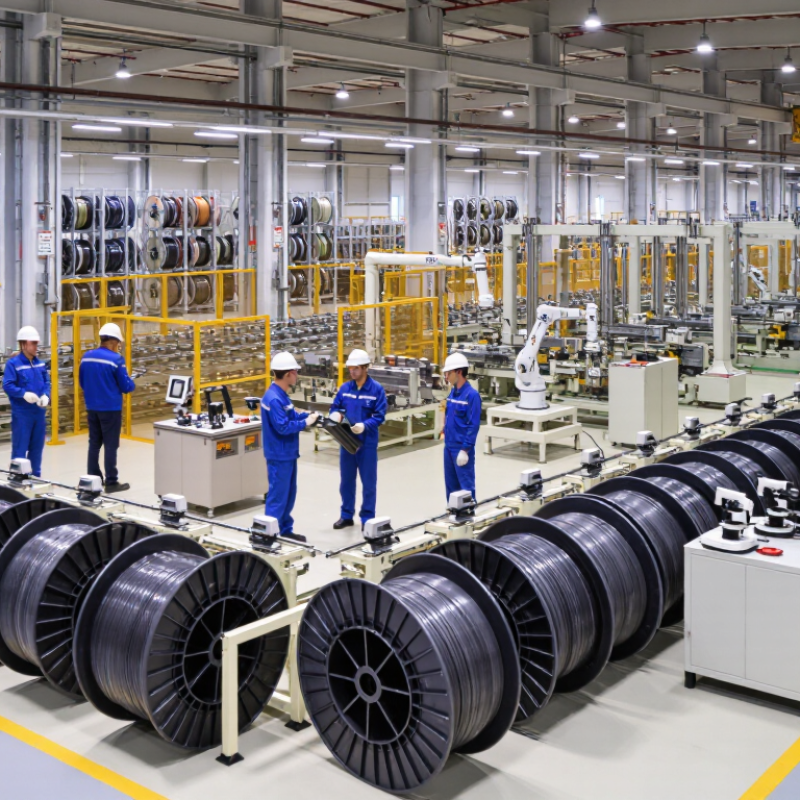
China Top 10 FTTA Cable Manufacturers for Global Buyers

What FTTA Cables Are and Why Global Buyers Need Them

FTTA cables, or Fiber to the Antenna cables, connect radio equipment to remote antennas in wireless networks. They carry data through optical fibers and often include power conductors in one outdoor assembly. This design reduces separate cable runs on towers, rooftops, and poles. The result is a cleaner installation with less wind load and fewer connection points.

That matters.

Global buyers need FTTA cables when networks face moisture, ultraviolet exposure, vibration, and wide temperature changes. A suitable cable should match fiber type, connector interface, length, bend radius, and power requirements. Jacket material and sealing quality deserve close inspection.

A cable can look strong while failing after repeated freezing, sunlight, or sharp bending. Experienced buyers request test records for insertion loss, return loss, tensile strength, and water resistance. They also verify compatibility with local installation tools and maintenance practices.

From a procurement perspective, consistency is as important as a low unit price. Accurate drawings, traceable materials, and clear packaging reduce mistakes at remote sites. Labels help.

However, specifications are not always perfect. Some projects reveal unexpected routing limits, connector stress, or insufficient slack. Buyers should review real installation conditions, not only catalog figures.

A practical inspection plan can include sample testing, visual checks, and documented acceptance criteria before shipment.


How China’s FTTA Cable Manufacturers Are Evaluated

Evaluating China’s FTTA cable manufacturers requires more than comparing prices. Grand View Research estimated the global fiber optic cable market at about USD 12.4 billion in 2023, with continued growth expected through 2030. This expansion increases supplier choices, but it also makes technical screening essential. Buyers should request measured insertion loss, return loss, tensile strength, bend performance, and operating-temperature results for each cable assembly.

Reliable factories normally provide batch-level traceability. Labels should connect the finished cable to fiber lots, connector components, test records, and packing dates. IEC 60794 test methods offer a useful reference for mechanical and environmental verification. For outdoor antenna systems, evaluators should also check water penetration, ultraviolet resistance, salt mist exposure, and connector sealing. IP ratings must match the installation environment. Documentation matters.

Factory experience becomes visible during an audit. Inspectors can review polishing equipment, end-face inspection images, calibration certificates, and sample retention procedures.

A serious supplier should explain how rejected assemblies are isolated and corrected. Delivery data also deserves attention. Compare promised lead times with the previous six months of shipment records, not with optimistic quotations. Not just price.

A practical weakness remains: one successful sample does not prove stable mass production. I would test samples from different batches and, when possible, from different production dates. Some evaluations still overvalue glossy facilities and undercheck field support. Clear drawings, multilingual test reports, spare-unit policies, and responsive technical communication often reveal more than factory size. These details help global buyers judge consistency, not merely manufacturing capacity.

Profiles of China’s Top 10 FTTA Cable Manufacturers

China Top 10 FTTA Cable Manufacturers for Global Buyers

Profiles of China’s Top 10 FTTA Cable Manufacturers

China’s leading FTTA cable manufacturers serve demanding 5G, DAS, and outdoor wireless projects. Their profiles differ in design depth, testing discipline, and export experience. The FTTH Council Global Alliance’s 2024 market overview indicates continued global expansion of fiber access networks, increasing demand for compact, bend-resistant assemblies. ITU-T G.657 guidance remains important for tight routing near poles, cabinets, and radio units.

The first profile focuses on bend-insensitive single-mode fiber and low-loss connectors. The second specializes in ruggedized aerial assemblies for harsh weather. Another emphasizes pre-terminated solutions that reduce tower installation time. One manufacturer develops hybrid power-and-fiber cables for remote radio units. A further profile centers on microduct-compatible designs and smaller outer diameters. Two suppliers stand out for high-volume production and automated end-face inspection. Another offers customized breakout lengths for multi-operator sites. The remaining profiles highlight LSZH jackets, armored construction, or short delivery cycles.

Practical buyers should examine IEC 60794 test records, insertion-loss data, tensile results, and temperature cycling evidence. Traceability matters. Factory audits can reveal connector polishing gaps that brochures rarely mention. The top ten profiles may look similar, yet their real differences appear during installation, rework, and warranty handling. This assessment is not perfect; published capacity figures can change quickly, and some suppliers provide limited field data. Buyers should request recent samples, batch reports, and project references before approval.

China Top 10 FTTA Cable Manufacturers for Global Buyers - Profiles of China’s Top 10 FTTA Cable Manufacturers

Profile Primary FTTA Focus Typical Fiber Count Common Fiber Types Cable Construction Operating Temperature Typical Tensile Strength Common Standards Typical MOQ Indicative Lead Time
Profile 01 Remote radio unit connectivity 2–12 fibers Single-mode G.657.A1/A2 Outdoor loose-tube or breakout design −40°C to +70°C 800–1,500 N IEC 60794; IEC 61300; RoHS 500–1,000 m 15–25 working days
Profile 02 High-density 4G/5G antenna systems 4–24 fibers G.652.D and G.657.A2 Central-tube armored or non-armored −40°C to +70°C 1,000–2,200 N IEC 60794; EN 50575; CPR options 1,000–2,000 m 20–30 working days
Profile 03 Pre-terminated FTTA assemblies 2–12 fibers G.657.A2; bend-insensitive SMF Factory-terminated hybrid or fiber-only cable −40°C to +85°C 600–1,200 N IEC 61754; IEC 61300; IP67 options 100–500 assemblies 20–35 working days
Profile 04 Harsh-climate and coastal deployments 2–24 fibers G.652.D; G.657.A1/A2 UV-resistant, water-blocked outdoor jacket −40°C to +80°C 1,000–2,500 N IEC 60794; IEC 60811; RoHS/REACH options 1,000–3,000 m 25–35 working days
Profile 05 Lightweight tower and rooftop installations 2–8 fibers G.657.A2 Small-diameter non-metallic design −30°C to +70°C 500–1,000 N IEC 60794; IEC 61300 500–1,000 m 15–25 working days
Profile 06 Hybrid power and fiber cable systems 2–12 fibers G.652.D; G.657.A2 Fiber cores combined with copper conductors −40°C to +70°C 1,000–2,000 N IEC 60794; IEC 60228; IEC 60502 options 500–1,000 m 25–40 working days
Profile 07 Rapid-deployment network upgrades 2–16 fibers G.657.A1/A2 Pre-connectorized modular cable assemblies −40°C to +75°C 700–1,500 N IEC 61754; IEC 61300; IP65/IP67 options 100–500 assemblies 15–30 working days
Profile 08 High-flexibility maintenance cable 2–8 fibers G.657.A2; G.657.B3 options Tight-buffered, bend-optimized design −30°C to +70°C 500–1,200 N IEC 60794; IEC 61300; RoHS 500–1,000 m 15–25 working days
Profile 09 Long-haul outdoor backhaul to radio sites 12–48 fibers G.652.D; G.657.A1 Stranded loose-tube, water-blocked construction −40°C to +70°C 1,500–3,000 N IEC 60794; ITU-T G.652; RoHS 2,000–5,000 m 25–40 working days
Profile 10 Customized export and private-label projects 2–48 fibers G.652.D; G.657.A1/A2 Custom jacket, connector, length, and marking options −40°C to +85°C 800–2,500 N IEC 60794; IEC 61754; RoHS/REACH options 500–2,000 m 25–45 working days

Note: The specifications shown are indicative procurement ranges commonly used for FTTA cable evaluation. Final values depend on cable structure, connector type, jacket material, installation environment, and buyer-specific requirements. Confirm current test reports, certifications, MOQ, and delivery schedules directly before purchase.

Comparing Products, Certifications, Capacity, and Export Services

For global buyers, comparing FTTA cable manufacturers requires more than checking price lists. Product evaluation starts with fiber count, bend performance, jacket materials, and connector compatibility. Common options include 12, 24, and 48-core designs for outdoor radio networks. G.657A1 or G.657A2 fiber can reduce signal loss around tight installation points. Ask whether each cable has passed tensile, crush, water penetration, and temperature-cycle tests. Small details matter.

Certifications need careful verification. Reliable suppliers should provide current ISO 9001 records, IEC 60794 test reports, and relevant RoHS or REACH declarations. Request batch-level inspection data, not only a general certificate. Factory capacity also deserves practical review. A stated output of 500 kilometers monthly means little without production schedules, equipment lists, and quality staffing. During supplier audits, I would check extrusion lines, fiber testing rooms, labeling systems, and final packing areas. Published capacity can look impressive. It may still be optimistic.

Export service often separates a capable manufacturer from a difficult supplier. Buyers should confirm sample timelines, standard lead times, packaging strength, and shipment documentation. Clear commercial invoices, packing lists, cable-length records, and customs data reduce delays. Suppliers experienced with overseas projects can support technical drawings, installation guidance, and multilingual documents. One practical warning: samples may receive more attention than mass production. Compare sample results with later batch reports. Documented evidence is stronger than confident promises, though even good factories can make occasional mistakes and should explain how they correct them.

How Global Buyers Can Select the Right FTTA Cable Supplier

China Top 10 FTTA Cable Manufacturers for Global Buyers

Global buyers choosing an FTTA cable supplier need more than a low quotation. Start with the installation environment: tower height, bend radius, wind exposure, temperature range, and connector type. A suitable supplier should provide fiber counts, jacket materials, tensile ratings, and attenuation data. Ask for test reports from calibrated equipment. Do not accept vague “telecom grade” claims. Good suppliers explain why a cable fits the route, not just why it is inexpensive.

Request samples before placing a large order. Check connector polish, waterproof sealing, pulling eyes, markings, and packing protection. Field experience matters here. A cable that performs well in a laboratory may become difficult during rooftop installation. Ask whether the factory has handled repeated bending, vibration, and outdoor moisture. Production records, batch traceability, and documented inspection steps reveal process maturity. Shorter lead time is useful, but stable quality matters more.

Compare the supplier’s engineering response, not only its sales speed. Can it adjust cable length, branch structure, or connector configuration without weakening protection? Confirm compliance with applicable regional standards and import documents. Clarify warranty limits, replacement procedures, and technical support hours. Some buyers overlook installer training materials. That mistake can create avoidable damage. Clear drawings and a small pilot shipment often expose problems early. No supplier is perfect; the real question is how openly it manages defects and corrective action.

China Top 10 FTTA Cable Manufacturers for Global Buyers

How Global Buyers Can Select the Right FTTA Cable Supplier

This standards-based reference uses the maximum attenuation values defined for single-mode fiber performance in the ITU-T G.652.D specification. When comparing shortlisted FTTA cable suppliers, buyers should verify that the offered cable meets or improves these optical limits, while also checking ingress protection, temperature range, mechanical strength, connector quality, and test documentation.

Lower attenuation indicates lower optical signal loss. The chart is a technical benchmark and does not represent company rankings or market share.

Article Source:

Powder Coat Booths

For those larger-sized parts, or smaller quantity runs, we have 2 independent powder coat booths and ovens. The quality, durability and affordability of today’s powder coating finishes make this the process of choice for world-class companies.

Powder coating advantages over other forms of coating are many. Materials used in the Powder coating process can be metals and non-metals that come in a multitude of thicknesses, textures, colors, etc. Another of Powder coating’s biggest advantages over conventional coatings is its ability to create finishes in many different textures. Powder Coating Booths allow us the ability to apply these advantages to large products.

Wet Paint Line

Tri-State Fabricators runs a full-service conveyor line for painting. Wet painting can provide protection or decoration to many different part styles. From start to finish, every project is easier to undergo random and point-based inspection by our skilled painting team.

Advantages to our Wet Paint Line are these lines start with product prep and ends with a thorough inspection of a high quality finished product. Our ability to complete large and small projects with a superior finish and doing so in a timely and economical fashion. This passes along the savings in production to our customers. When powder coating ins not an option, our Wet Paint Line gets the job done right the first time.

Wet Paint Booths

When the parts get big and heavy we roll-out our custom paint racks and oversize booth. By utilizing our partnerships with all the major paint brands, we can match virtually any color with wet paint.

The advantages of having access to a Wet Paint Booth are many. Large projects of many different shapes can be loaded into the booth. The Wet Paint Booth offers an environment that is much more controlled than a typical parts painting operation.

Not only are they used because of their controlled environment, but they’re are also advantageous when it comes to applying paint to parts that are needed in industries that require specialty coatings such as medical, aerospace, etc.

Military CARC

Our military forces have some very high standards when it comes to the finish of their vehicles and equipment. From the first pre-treatment step to final coat, it takes a great deal of knowledge and experience to protect the men and women of our armed forces. They deserve only the best, and Tri-State Fabricators provides it.

All of our processes are closely monitored by our staff and management teams. Both of which are highly trained in the processes of metal fabrication and finishing. Tri-State Fabricators’ goal is to always fully satisfy each and every customer, including the military. We will always put a 110% into what we do.

Glass-Bead Blasting

Abrasive media blasting is an excellent way to remove old paint, rust, and increase the paint/powder adhesion. Glass beads produce a much smoother and brighter finish than angular abrasives; leaving the part clean yet without any dimensional change. Chemically inert and environmentally friendly, we can recycle our beads approximately 30 times; making them a more preferred method of metal cleaning or surface finishing.

Advantages to Glass Bead Blasting are many. Glass bead blast media is used when a project is needing rough surfaces need to become smooth for applications of coatings such as paint. It is typically used to clean paint and rust from a product surface without deforming the surface it is being used on. Overall, compared to many other blasting media, Glass Bead Blasting is a very economical choice and those savings are always passed on to our customers.

Part Washing

Tri-State Fabricators utilize a zinc phosphate wash to clean and etch the material to ensure the best paint adhesion possible. The unique design of our 3-stage wash system does the work like a 5-stage. From Cleaning and rinsing to conversion coating and post-treatment, Our Part Washing process is a complete service and works throughout the fabrication service and the finishing service.

Along with the previously mentioned benefits, Curing is a vital chemical reaction that leaves the product finish hard and relatively safe from mild abrasion and aggressive corrosion. This process can be done in more than one way; ambient air-dry or in curing ovens at temps that exceed 240°.

Burn-Off Oven

From fixing paint mistakes (someone else’s of course) to simply cleaning our paint line hooks, our burn-off oven is put to good use. After a quick burn-off, a little clean up, and a fresh coat of paint, your parts will look better than new.

Why does our Burn-Off Oven work so well? Because super heating the air around parts turns the materials into ashes. From paint and powder coatings to rubber and machining oils, high temps do the job without degrading the integrity of the part.

Masking

Masking is a vital part of producing high quality products. We have die-cut masking patterns to protect machined surfaces as well as a wide range of plugs and caps to protect threaded holes and bolts. We provide permanent and temporary masking.

Masking allows the selected sections of a product to be protected from a fabrication or finishing service. This can be with both chemicals when etching and tapes, paints when only finishing just a section of the product. Masking is great in aiding the customization process of a project.

Screen Printing

Screen printing is a photographic process that transfers artwork onto a porous nylon screen which allows colored ink to flow through the screen and be deposited on an aluminum or plastic component. We can generally have just about any design created onto a screen for your parts.

Some of the advantages of Screen Printing are, brand recognition for your business displaying on your products, assembly instructions, product warnings/hazards, etc. Tri-State Fabricators produces Screen Printing of the highest quality so you know it’s durable.

Metal Finishing

Metal Finishing is the art of treating the exterior portion of product, often metal but can also be made of other materials, so that the surface is clean and free of any debris. Then the process of applying coats or either paint of powder coat takes place. This coating process improves the quality of the product in both appearance and resistance to wear and corrosion.

Tri-State Fabricators, Inc., understands that a project typically isn’t complete until a high-quality finish has been added to your product. This is why our painting and powder coating teams continuously inspect the products throughout the Metal Finishing process.
