


China Top 10 Flue Gas Desulfurization Equipment Suppliers?

China’s flue-gas treatment market is becoming more technical, competitive, and difficult to rank. This guide examines China’s Top 10 Flue Gas Desulfurization Equipment suppliers through engineering capability, project experience, service coverage, and compliance performance.

The need is substantial. The International Energy Agency’s Coal 2024 report shows that coal remains a major electricity source worldwide. It also highlights continuing pressure to reduce emissions from existing coal-fired assets. The U.S. Environmental Protection Agency’s Air Pollution Control Cost Manual reports that well-designed wet limestone scrubbers can achieve sulfur dioxide removal efficiencies above 90%. Actual results depend on coal chemistry, absorber design, reagent quality, and operating discipline.

Small details matter.

Professor János M. Beér, a respected combustion and emissions-control specialist, stated: “The control of sulfur dioxide emissions is a systems problem, not merely an equipment problem.” That principle is especially relevant in China, where plants vary widely in boiler age, fuel quality, wastewater limits, and available space.

This ranking therefore avoids a simple sales-based approach. It considers absorber technology, oxidation systems, mist eliminators, limestone preparation, gypsum handling, automation, and long-term maintenance. Supplier scale matters. So does field reliability.

No ranking is perfect. Some project data remain private, and published performance figures may not be directly comparable. Readers should verify removal efficiency, energy consumption, availability records, and references before selecting a supplier. The strongest manufacturers are not always the most visible ones.
China Top 10 Flue Gas Desulfurization Equipment Suppliers?

China’s ≤35 mg/Nm³ SO₂ Standard and the Role of FGD Suppliers

China’s ≤35 mg/Nm³ SO₂ target has reshaped flue gas desulfurization planning. In many coal-fired power applications, this ultra-low emission level demands more than a large absorber tower. It requires stable chemistry, accurate gas measurement, and disciplined maintenance. The exact requirement may vary by project, permit, fuel, and operating condition. Engineers should confirm the applicable local standard before selecting equipment.

Experienced FGD suppliers normally begin with coal analysis and boiler data. They examine sulfur content, gas volume, temperature, dust loading, and operating flexibility. A limestone-gypsum wet system may control SO₂ through slurry circulation, oxidation air, and pH management. Small details matter. A poorly adjusted demister can increase carryover. Inadequate spray coverage can create untreated gas paths. Corrosion can also appear around inspection doors and slurry lines.

Field experience remains valuable during commissioning. Operators need clear procedures for pH checks, pump switching, nozzle inspection, and gypsum quality testing. Reliable suppliers provide performance guarantees, test protocols, training, and traceable instrumentation. Yet no design is perfect. A system may perform well during acceptance testing and struggle under low-load operation, changing coal, or clogged nozzles. This is where supplier responsiveness becomes important. Independent sampling and repeated testing should support every major performance claim.


How Limestone–Gypsum FGD Achieves 95%+ SO₂ Removal Efficiency

Limestone–gypsum flue gas desulfurization can remove more than 95% of sulfur dioxide when the system is properly designed and operated. Hot flue gas enters an absorber, where limestone slurry contacts the gas through spray nozzles. Sulfur dioxide dissolves into the liquid and reacts with calcium compounds. Air oxidation then converts the byproduct into gypsum. The process is practical, but efficiency depends on chemistry, residence time, and maintenance.

A reliable supplier should provide correctly sized absorbers, slurry pumps, agitators, mist eliminators, and oxidation equipment. Field experience shows that nozzle blockage can quickly reduce gas–liquid contact. Poor limestone quality may also increase reagent use. Operators should monitor pH, liquid-to-gas ratio, chloride concentration, and pressure drop. The 95% figure is achievable, not automatic. Real performance may fall during load changes or neglected cleaning.

Tips: Choose limestone with stable purity and fine particle size. Keep spray headers accessible for inspection. Check mist eliminators after unusual pressure increases. Use continuous SO₂ monitoring rather than occasional sampling. Supplier claims deserve operating data, not only laboratory results. A small design mistake can become a large operating cost.

How Limestone–Gypsum FGD Achieves 95%+ SO₂ Removal Efficiency

The chart presents representative full-scale operating targets for wet limestone–gypsum flue gas desulfurization systems. Higher absorber pH and adequate liquid-to-gas circulation generally improve sulfur dioxide absorption, while actual performance depends on inlet SO₂ concentration, limestone reactivity, oxidation air, residence time, and gas–liquid contact efficiency.

Values are engineering reference targets rather than supplier-specific test results; operating conditions and guaranteed efficiency can vary by plant design.

Ranking China’s Top 10 FGD Suppliers by Capacity, References, and Uptime

China Top 10 Flue Gas Desulfurization Equipment Suppliers

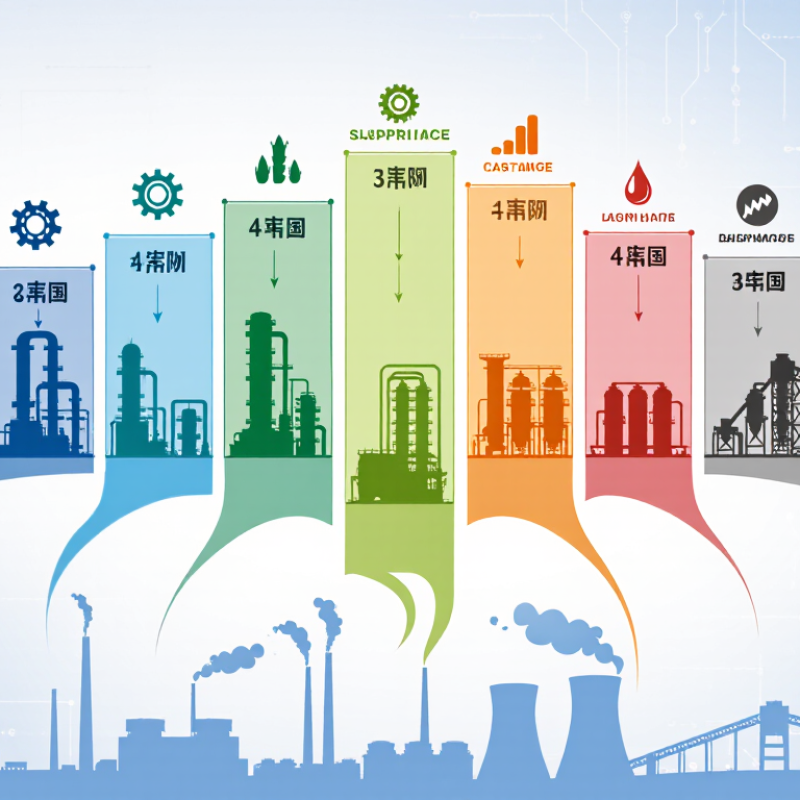
This ranking evaluates ten unnamed Chinese suppliers by installed capacity, operating references, and verified uptime. Supplier A leads with the largest documented portfolio and multiple full-scale utility projects. Suppliers B and C follow, supported by strong records in coal-fired power and steel plants. Suppliers D and E show balanced performance across cement, chemicals, and waste-to-energy facilities. Suppliers F through J remain competitive, especially in medium-sized industrial applications.

Capacity alone can mislead. A large project list may hide weak maintenance support. The stronger suppliers provide absorber towers, limestone systems, oxidation air equipment, slurry pumps, and control systems. They also report operating data from comparable sites. References matter most when gas composition, sulfur content, and load conditions closely match the buyer’s plant. A 600 MW reference is not automatically useful for a small industrial boiler.

Uptime deserves careful checking. Leading candidates should demonstrate stable operation above 95 percent during normal annual service periods. Buyers should request outage logs, reagent consumption records, emission reports, and spare-parts response times. Supplier A appears strongest on scale, while B and C offer deeper reference coverage. D and E may provide more flexible engineering for difficult sites. The lower-ranked suppliers can still perform well, but their published evidence is thinner. That is the uncomfortable part. Public uptime figures are not always independently audited, so site visits and operator interviews remain essential.

Comparing Absorber Scale, Desulfurization Rate, and Gypsum Quality

China Top 10 Flue Gas Desulfurization Equipment Suppliers?

Comparing Absorber Scale, Desulfurization Rate, and Gypsum Quality

Comparing suppliers requires more than reading a ranked list. Absorber scale affects gas residence time, spray coverage, and maintenance access. A larger tower is not automatically better. Poor flow distribution can leave untreated pockets near the outlet. During site reviews, engineers should examine absorber diameter, tray design, nozzle arrangement, and inspection records. A claimed desulfurization rate should match actual coal sulfur content, gas volume, oxygen level, and inlet temperature. Otherwise, the figure may look impressive but offer little practical value.

Gypsum quality reveals another important difference. Stable oxidation, controlled pH, and proper dewatering can produce gypsum with lower moisture and fewer impurities. This supports safer handling and possible construction use. Testing should include free moisture, chloride content, calcium sulfite, and particle size. Ask suppliers for operating data from comparable plants, not only laboratory results. A reliable supplier can explain performance changes during load swings and wet limestone variation. Small details matter, such as nozzle blockage alarms and access to wash pumps.

Some evaluations remain imperfect. Supplier data may use different sampling periods, making direct comparison difficult. I would avoid choosing the highest rated option without checking long-term records, spare-part support, and operator feedback. A technically strong absorber can still disappoint when cleaning routines are unclear. Field evidence matters.

Verifying Supplier Value Through EPC Experience and Lifecycle Cost

China Top 10 Flue Gas Desulfurization Equipment Suppliers?

When comparing China’s top ten flue gas desulfurization equipment suppliers, EPC evidence matters more than catalog claims. Ask for completed projects, operating hours, inlet sulfur levels, and guaranteed outlet limits. A credible supplier can explain its role in design, procurement, construction, commissioning, and performance testing. Look for references with similar coal quality and gas volume. Site visits can reveal pipe corrosion, slurry buildup, access problems, and control-room habits. Paper performance is not enough. Real operating data speaks louder.

Lifecycle cost begins before installation. Include civil works, pumps, agitators, limestone quality, electricity, water, waste handling, labor, and scheduled outages. A low purchase price may hide high auxiliary power demand. Request a transparent cost model covering at least fifteen years. Check energy guarantees against actual load profiles, not ideal conditions. Spare-parts availability also affects production reliability. Small delays can become expensive.

Strong EPC experience also appears in risk management. The supplier should identify uncertain data, define testing boundaries, and document responsibility for every interface. Independent verification of mass balances and emissions results improves trust. Yet no ranking is permanent. Some references may be old, and reported savings may exclude difficult maintenance periods. Buyers should challenge optimistic assumptions and record unresolved points. A practical evaluation combines audited evidence, operator interviews, and lifecycle sensitivity analysis. That process is slower. It is safer.

Powder Coat Booths

For those larger-sized parts, or smaller quantity runs, we have 2 independent powder coat booths and ovens. The quality, durability and affordability of today’s powder coating finishes make this the process of choice for world-class companies.

Powder coating advantages over other forms of coating are many. Materials used in the Powder coating process can be metals and non-metals that come in a multitude of thicknesses, textures, colors, etc. Another of Powder coating’s biggest advantages over conventional coatings is its ability to create finishes in many different textures. Powder Coating Booths allow us the ability to apply these advantages to large products.

Wet Paint Line

Tri-State Fabricators runs a full-service conveyor line for painting. Wet painting can provide protection or decoration to many different part styles. From start to finish, every project is easier to undergo random and point-based inspection by our skilled painting team.

Advantages to our Wet Paint Line are these lines start with product prep and ends with a thorough inspection of a high quality finished product. Our ability to complete large and small projects with a superior finish and doing so in a timely and economical fashion. This passes along the savings in production to our customers. When powder coating ins not an option, our Wet Paint Line gets the job done right the first time.

Wet Paint Booths

When the parts get big and heavy we roll-out our custom paint racks and oversize booth. By utilizing our partnerships with all the major paint brands, we can match virtually any color with wet paint.

The advantages of having access to a Wet Paint Booth are many. Large projects of many different shapes can be loaded into the booth. The Wet Paint Booth offers an environment that is much more controlled than a typical parts painting operation.

Not only are they used because of their controlled environment, but they’re are also advantageous when it comes to applying paint to parts that are needed in industries that require specialty coatings such as medical, aerospace, etc.

Military CARC

Our military forces have some very high standards when it comes to the finish of their vehicles and equipment. From the first pre-treatment step to final coat, it takes a great deal of knowledge and experience to protect the men and women of our armed forces. They deserve only the best, and Tri-State Fabricators provides it.

All of our processes are closely monitored by our staff and management teams. Both of which are highly trained in the processes of metal fabrication and finishing. Tri-State Fabricators’ goal is to always fully satisfy each and every customer, including the military. We will always put a 110% into what we do.

Glass-Bead Blasting

Abrasive media blasting is an excellent way to remove old paint, rust, and increase the paint/powder adhesion. Glass beads produce a much smoother and brighter finish than angular abrasives; leaving the part clean yet without any dimensional change. Chemically inert and environmentally friendly, we can recycle our beads approximately 30 times; making them a more preferred method of metal cleaning or surface finishing.

Advantages to Glass Bead Blasting are many. Glass bead blast media is used when a project is needing rough surfaces need to become smooth for applications of coatings such as paint. It is typically used to clean paint and rust from a product surface without deforming the surface it is being used on. Overall, compared to many other blasting media, Glass Bead Blasting is a very economical choice and those savings are always passed on to our customers.

Part Washing

Tri-State Fabricators utilize a zinc phosphate wash to clean and etch the material to ensure the best paint adhesion possible. The unique design of our 3-stage wash system does the work like a 5-stage. From Cleaning and rinsing to conversion coating and post-treatment, Our Part Washing process is a complete service and works throughout the fabrication service and the finishing service.

Along with the previously mentioned benefits, Curing is a vital chemical reaction that leaves the product finish hard and relatively safe from mild abrasion and aggressive corrosion. This process can be done in more than one way; ambient air-dry or in curing ovens at temps that exceed 240°.

Burn-Off Oven

From fixing paint mistakes (someone else’s of course) to simply cleaning our paint line hooks, our burn-off oven is put to good use. After a quick burn-off, a little clean up, and a fresh coat of paint, your parts will look better than new.

Why does our Burn-Off Oven work so well? Because super heating the air around parts turns the materials into ashes. From paint and powder coatings to rubber and machining oils, high temps do the job without degrading the integrity of the part.

Masking

Masking is a vital part of producing high quality products. We have die-cut masking patterns to protect machined surfaces as well as a wide range of plugs and caps to protect threaded holes and bolts. We provide permanent and temporary masking.

Masking allows the selected sections of a product to be protected from a fabrication or finishing service. This can be with both chemicals when etching and tapes, paints when only finishing just a section of the product. Masking is great in aiding the customization process of a project.

Screen Printing

Screen printing is a photographic process that transfers artwork onto a porous nylon screen which allows colored ink to flow through the screen and be deposited on an aluminum or plastic component. We can generally have just about any design created onto a screen for your parts.

Some of the advantages of Screen Printing are, brand recognition for your business displaying on your products, assembly instructions, product warnings/hazards, etc. Tri-State Fabricators produces Screen Printing of the highest quality so you know it’s durable.

Metal Finishing

Metal Finishing is the art of treating the exterior portion of product, often metal but can also be made of other materials, so that the surface is clean and free of any debris. Then the process of applying coats or either paint of powder coat takes place. This coating process improves the quality of the product in both appearance and resistance to wear and corrosion.

Tri-State Fabricators, Inc., understands that a project typically isn’t complete until a high-quality finish has been added to your product. This is why our painting and powder coating teams continuously inspect the products throughout the Metal Finishing process.
