China Top 10 Diamond Hole Saw Suppliers for Global Buyers
Choosing a reliable Diamond Hole Saw supplier requires more than comparing prices, product photos, or export claims. Global buyers need evidence of cutting performance, manufacturing consistency, material knowledge, and dependable after-sales support. A clean website helps. It proves little.
This guide, “China Top 10 Diamond Hole Saw Suppliers for Global Buyers,” examines manufacturers through practical purchasing criteria. These include diamond grit quality, segment bonding, core strength, hole accuracy, drilling speed, packaging, customization, and delivery capability. The review also considers whether suppliers provide technical data, sample testing, production photographs, and clear communication. Small details matter. A poorly welded segment can damage porcelain, glass, concrete, or engineered stone within seconds.
Diamond-tooling specialist Dr. Li Wei explains, “The best hole saw is not the most aggressive one; it is the one that cuts predictably from the first hole to the hundredth.” That principle guides this comparison. Buyers should match the tool to the substrate, machine speed, cooling method, and expected workload. A saw designed for ceramic tile may perform poorly on reinforced concrete. The reverse can be equally costly.
No supplier ranking is perfect. Performance can change between batches, and published specifications may not reveal everything. Therefore, this introduction encourages buyers to request samples, inspect tolerances, and confirm production capacity before placing large orders. The selected companies represent promising options, not automatic guarantees. Careful verification remains essential for safe, efficient, and commercially reliable sourcing.
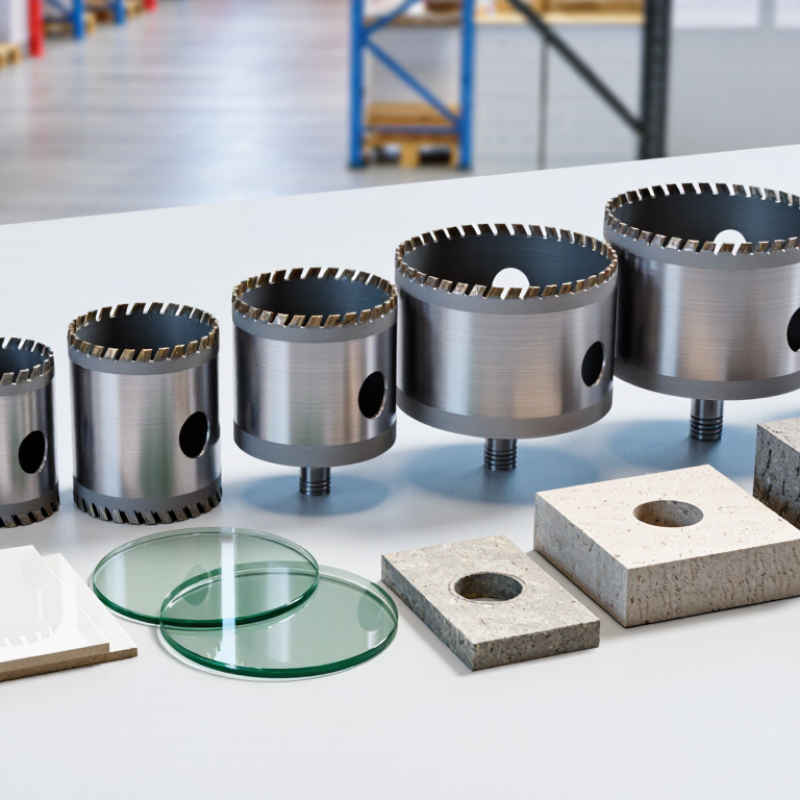
Diamond Hole Saw Suppliers: Market Scope and Buyer Selection Criteria
China Top 10 Diamond Hole Saw Suppliers for Global Buyers
The diamond hole saw market serves construction, stone processing, ceramics, and precision renovation. Grand View Research estimates the global diamond tools market exceeded USD 10 billion in 2023, with steady growth expected through 2030. Demand is shifting toward longer tool life, cleaner cuts, and reduced material waste. China remains an important sourcing base because suppliers often support customized diameters, threaded arbors, and private-label packaging.
Buyer selection requires more than comparing unit prices. Check the diamond grit size, segment height, bond hardness, cutting depth, and arbor compatibility. A 68 mm saw for porcelain should not be evaluated like a 100 mm model for granite. Ask for test-cut videos, runout measurements, coating details, and batch inspection records. ISO 9001 certification can support process control, but it does not guarantee cutting performance.
Test samples matter.
The U.S. Geological Survey reports continued industrial demand for synthetic and natural diamond materials, reinforcing the need for stable raw-material sourcing. Request production capacity, minimum order quantities, packaging protection, and replacement policies. Review technical drawings carefully. One overlooked thread size can delay an entire installation schedule. I have found that cheaper tools sometimes create higher labor costs through overheating, chipped edges, or repeated replacement. Even experienced buyers can overvalue certificates and undervalue real cutting trials. A practical supplier comparison should combine laboratory data, field feedback, transparent communication, and total cost per finished hole.
Key Product Types and Specifications Offered by Chinese Manufacturers
China Top 10 Diamond Hole Saw Suppliers for Global Buyers
Chinese manufacturers commonly offer electroplated, vacuum-brazed, sintered, and laser-welded diamond hole saws. Electroplated models suit glass, ceramic tile, and occasional drilling. Vacuum-brazed types remove dust faster from porcelain and stone. Sintered versions provide longer service life in concrete and reinforced masonry.
Common diameters range from 6 to 200 mm, with M14, 5/8-11, SDS, and hex shanks. Working depths usually measure 35, 50, or 70 mm. Segment heights often range from 8 to 12 mm.
A 2024 Grand View Research assessment estimated the global diamond tools market would grow at over 6% annually through 2030. That trend increases demand for stable grit exposure and compatible arbors. Chinese suppliers also specify diamond concentration, bond hardness, RPM limits, and cooling requirements.
For example, wet-cut models may recommend 800–3,000 RPM, while dry-cut versions need intermittent drilling. ISO 9001 production systems and EN 13236 safety guidance improve purchasing confidence, but certification claims still require document checks.
Ask for test data on porcelain, granite, or reinforced concrete. Catalog figures can look precise. They are not always comparable.
A 10 mm segment may cut quickly yet wear unevenly on dense porcelain. Sample testing remains essential.
China’s Leading Diamond Hole Saw Suppliers and Their Strengths
China’s leading diamond hole saw suppliers serve different cutting needs, from ceramic tiles to reinforced concrete. The strongest suppliers usually offer several bonding methods, including electroplated, vacuum-brazed, and sintered designs. Each method affects cutting speed, edge life, and heat resistance.
In practical supplier evaluations, manufacturing control matters as much as product variety. Reliable factories inspect diamond grit distribution, core alignment, thread accuracy, and segment attachment. Some provide sample testing with porcelain slabs, granite blocks, or concrete panels. This evidence helps buyers compare actual performance instead of trusting catalog claims. Suppliers with modern CNC equipment often deliver more consistent hole diameters. Their technical teams can also recommend dry or wet cutting methods for specific materials. Clear drawings, batch records, and traceable inspection reports strengthen purchasing confidence.
However, no supplier is perfect. A low price may hide uneven diamond exposure or weak packaging. One supplier may cut quickly but wear faster on abrasive stone. Another may last longer but require slower feeding. Buyers should request samples, production photos, tolerance data, and current compliance documents before placing large orders. Communication quality also reveals operational strength. Slow replies can become costly when custom shanks, private packaging, or revised dimensions are involved. Careful testing remains necessary, even when a factory appears highly experienced.
Export Services, Pricing Factors, and Global Buyer Considerations
Choosing among China’s top diamond hole saw suppliers requires more than comparing catalog prices. Export service can decide whether a shipment arrives ready for production. UNCTAD’s Review of Maritime Transport reports that over 80% of global trade moves by sea, so port selection, booking reliability, and protective packaging deserve close attention. Ask suppliers for commercial invoices, packing lists, certificates of origin, and clear Incoterms. Verify the HS code with your customs broker. Small details matter.
Pricing usually reflects diamond concentration, segment height, steel quality, diameter, tolerances, and order volume. A low quote can still win—on paper. Request sample cutting tests using your actual concrete, tile, stone, or masonry material. Record cutting speed, service life, vibration, and core removal. The World Bank’s 2023 Logistics Performance Index evaluates 139 economies, highlighting customs and delivery predictability as practical buying concerns. Compare landed cost, not factory price. Include freight, duties, inspection, replacement parts, and possible delays. That is costly. Supplier audits, batch photographs, and written quality tolerances support E-E-A-T-based purchasing decisions. ISO 9001 certification may indicate process control, but it does not prove cutting performance. Ask for evidence. I would also challenge optimistic lifetime claims; field conditions vary, and one test rarely represents every jobsite.
Common Diamond Hole Saw Sizes for Global Buyers
The chart presents commonly specified metric diameters used for diamond hole saws in international purchasing. Metric sizes are shown in millimeters, with approximate inch equivalents in the labels. Final export pricing is typically influenced by diameter, diamond concentration, cutting depth, shank type, order quantity, packaging, shipping terms, and destination market requirements.





